Sora Won the Tech but Lost the Business: The Inside Story of OpenAI's Video Model Shutdown

Sora was cut by OpenAI due to opportunity cost; the tech isn't dead, it just changed shells.
Sora took nearly ten months from research preview to launch, losing its first-mover advantage to Kling, Runway, and MiniMax, and the launch version cut duration from one minute to 20 seconds. Sora 2 pivoted to an AI video social network but downloads and DAU surged then fell fast, as most users only consumed rather than created. The real cause of death was opportunity cost: video generation is compute-hungry and hard to monetize short-term, so OpenAI prioritized GPUs for ChatGPT, Codex, and enterprise products. Chinese companies progressed in commercialization through business ecosystems and cost-reduction experience. OpenAI shut down an independent video product line, not the technology; the original team is negotiating to license Sora tech to a new film-industry-focused company.
OpenAI's Sora practically defined the starting point of AI video, yet it was officially shut down in April 2026. Why did a name that once electrified the entire industry lose momentum so quickly after launch? On the surface, it looks like the competition got too fierce, but the real reason lies hidden in OpenAI's internal resource ledger.
From Research Preview to Official Launch: Ten Months Erased the First-Mover Advantage
According to a breakdown by a Bilibili creator, when OpenAI released Sora on February 15, 2024, peers like Runway and Pika could already generate decent three-to-five-second videos, while Sora directly delivered continuous one-minute footage, complex camera movements, and even shot transitions. OpenAI positioned it as a "Research Preview," neither opening registration nor providing a usable timeline.
That wait lasted nearly ten months. In June 2024, Kuaishou released Kling, with v2 officially opening at the end of July; at the end of August, MiniMax's video model entered public beta; Runway and Pika kept updating. The entire industry had already started putting users to real work, while Sora was still in preview. In October, one of Sora's co-leads, Tim Brooks, jumped ship to Google. It wasn't until December 9 that Sora officially launched, and what users got was Sora Turbo—faster, but capable of generating only 20 seconds at most, cutting the one-minute capability originally showcased.

The shrinking duration was driven by cost. Then-OpenAI CTO Mira Murati said Sora's cost pressure was far higher than that of image generation models. Early Sora was slow and had a high dud rate; one creator estimated the usable ratio at about 1 in 300. Much of OpenAI's work over those ten months went into cutting costs and improving speed.
The Technical Report Was the Real Gift: The Path Was Validated, and Peers Started Running Together
The technical report accompanying Sora's first release laid out the general direction: videos are first compressed into latent space, cut into spacetime patches, then diffused using a Transformer; images and videos of different sizes and durations can be trained within a unified framework. Most critically, OpenAI proved through actual results that this approach could scale—as long as the recipe was sound, making the model bigger, compressing more data, and piling on compute would steadily improve results.
According to analyses by the Bilibili creator and YouTube channels, that statement was worth far more to peers than a demo. The path wasn't magical, but it was too expensive—choosing the wrong direction could burn tens of millions of dollars in compute. Once Sora appeared, several domestic video generation companies mentioned a similar feeling: one of Sora's greatest meanings was proving this path was viable.
At the same time, Sora conveniently validated market demand. Users wanted it badly—OpenAI just failed to catch it.
Spacetime Patches are a key design in Sora's technical approach. Traditional image generation models typically divide images into two-dimensional patches, while video adds a temporal dimension. Sora's approach first compresses video into a low-dimensional latent space, then divides the latent representation into three-dimensional "spacetime patches"—each covering both a local region of the frame and a short span of time. This way, videos of different resolutions, durations, and aspect ratios can all be represented as a unified sequence of patches for the Transformer to process. This is precisely the structural foundation that enables Sora to handle images and videos uniformly and exhibit cross-duration generalization.
Latent Diffusion refers to performing the diffusion process not in pixel space but in a compressed latent space. Diffusion models generate data by progressively denoising; operating directly on pixels makes computation skyrocket with resolution, and video is especially expensive. First compressing video into a low-dimensional latent space with an autoencoder, then diffusing within that latent space, can greatly reduce compute requirements with controllable quality loss. Sora extended this idea from images to video, which is the prerequisite for its balance between cost and quality.
Scaling Law refers to the empirical rule that model performance improves predictably with increases in parameters, data, and compute. Sora proved through actual results that video generation also obeys this law: as long as the architecture and method are correct, making the model bigger, compressing more data, and piling on compute will steadily improve results. The significance for peers lies in reducing the risk of path selection—previously no one was sure whether video generation could also "brute-force miracles," and Sora gave a definitive answer.
Sora 2 Pivots to Social and Content Platform: The Growth Flywheel Didn't Spin
Lessons from the first productization made OpenAI wiser with Sora 2. According to multiple sources, Sora 2 launched on September 30, 2025, with more complex character movements, more coherent shots, and native generation of ambient sound, sound effects, and character dialogue. But the star of this generation was the product, not the model.
Sora 2 didn't want to be just a creation tool; it wanted to be an AI-video-based social network plus content platform. The productization breakthrough was Cameo: users record a video, Sora recognizes that the character is you, and after authorization, others can insert you into their videos. During internal testing, everyone frantically remixed each other, and the heat persisted after a week, leading the team to judge that video generation could become a form of interaction.
Launch numbers were explosive: within five days, Sora App downloads surpassed one million, faster than ChatGPT back in the day. But according to AppFigures data, Sora downloads fell 32% month-over-month in December, then another 45% in January of the following year; SimilarWeb statistics showed daily active users once surged to about one million, dropping below 500,000 a few months later.
Sam Altman later mentioned a key data point: only 20% to 30% of all users actually generate videos themselves, with most still sending them privately to friends and family. The "scroll—create—remix" growth flywheel OpenAI envisioned never spun among external users. A low creator ratio on content platforms is normal, but AI video faces an even crueler problem—it isn't that watchable; every piece of content requires someone to first come up with something worth watching, and the easiest things to make viral—spoofs of real people, celebrities, and big IPs—happen to tread on the red lines of portrait rights, privacy, and copyright.
Cameo is the core product feature of Sora 2, borrowing the concept of a "guest appearance" from the film and television industry. After a user records a video containing their own image and completes authorization, Sora extracts and locks in that character's appearance features; thereafter, other users can invoke this character in their own generated videos, making "you" appear in someone else's creative scene. This design attempts to transform video generation from a single-player creation tool into a multiplayer social玩法: you generate a video, a friend inserts their character for a remix, then I relay and adapt it, with content flowing through social relationships to drive more people to generate. During internal testing, this mutual remixing did generate sustained heat, but after launch, external user behavior did not replicate this pattern—most people just watch and share privately, with active creation and secondary creation ratios far below expectations, and Cameo failed to become the engine of the growth flywheel.
Growth Flywheel is a growth model commonly used by internet products, referring to a set of mutually reinforcing loops: more content attracts more users, more users produce more content, and content distribution brings more exposure and creators. The flywheel Sora 2 envisioned was "scroll—create—remix": users scroll to an interesting video, feel the urge to create, generate their own version, and then get remixed and spread by others. But the prerequisite for the flywheel to spin is a sufficient proportion of active creators. When only 20% to 30% of users actually generate and most content still requires someone to first come up with an idea worth watching, the supply side cannot sustain the consumption-side loop, and the flywheel naturally stalls among external users.
The Real Cause of Death Is Opportunity Cost: Where a Single GPU Goes
If the social and platform bet was lost, could they retreat to making a generation tool? Peers are doing just fine. According to the source material, Kling achieved $100 million in annualized revenue within 10 months of launch, reaching about $500 million annualized by March 2026; C Dance became a cash cow for Volcano Engine. Demand clearly exists, and people are paying real money for it.
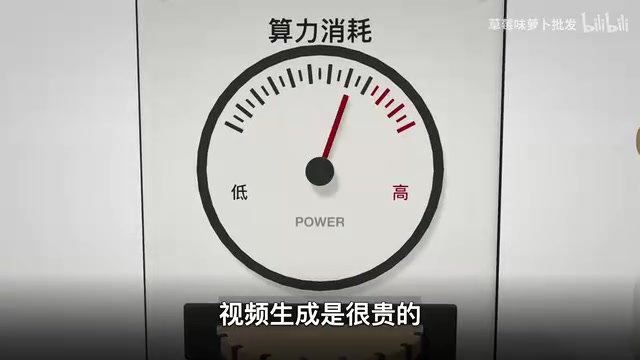
But video generation is extremely compute-hungry. Sora 2 was free, and lead Bill Peebles admitted the economic model was completely unsustainable. The Wall Street Journal disclosed that Sora was losing about $1 million a day.

More critically, OpenAI doesn't lack good projects. Sora needs GPUs, ChatGPT needs GPUs, Codex needs GPUs, and foundation model research and enterprise customers all need GPUs. The theoretical benefit of unified multimodal foundations did not produce obvious spillover to the core language model through Sora; meanwhile, the commercial value of Coding and Agents has already been validated, with Claude Code beating OpenAI in the enterprise market. With the same compute, investing in Sora might make some money, while investing in Codex and enterprise products is almost certain to make big money.
The Sora team was originally preparing to train the next-generation video model, but after calculating the costs, the company decided not to train it, prioritizing compute allocation to where it could create the greatest long-term economic value. That is Sora's real cause of death—not losing to Veo, not losing to C Dance, but losing OpenAI's internal priority battle.

Why Chinese Companies Can Stay: They're Fighting a Different Battle
According to the source analysis, ByteDance, Kuaishou, MiniMax, and OpenAI are not fighting the same battle. OpenAI proved the upper limit of AI video; the next question is how to make users use it every day while still making money. Chinese companies' strengths lie exactly here: business ecosystems and cost-reduction experience. How creators work, why advertisers pay, what materials e-commerce needs—they encounter these real business problems every day.
MiniMax's Hailuo 02 introduced an NCR optimization, with the idea that when a diffusion model generates video, the early stages are all noise and there's no need to compute in fine detail; once the character's movements roughly emerge, then increase compute. The source material claims this optimization improved training and inference efficiency by 2.5x, and the saved compute was used to make the model bigger—parameters tripled compared to the previous generation, and training data quadrupled. Similar optimizations were done extensively across companies, which is what brought video generation costs down. There were once rumors that C Dance's gross margin could reach 70% or even 90%; Tan Dai denied it but said Volcano Engine has pursued profitable scale since its founding.
NCR Optimization is a compute resource allocation strategy adopted by MiniMax in the Hailuo 02 video model. The process of diffusion model video generation is progressive denoising: in the early stages, the frame is almost entirely noise, with character outlines and movements not yet formed; investing equal compute in fine calculation for every frame and every position at this point yields very low marginal returns. NCR's idea is to reduce computational precision or volume in the early denoising stages, then concentrate compute on detail generation once the rough structure of character movements emerges. According to the source material, this optimization improved training and inference efficiency by about 2.5x. The saved compute was not left idle but used to expand model scale—parameters increased to three times the previous generation, and training data to four times—forming a positive cycle of "save compute—expand model—better results." Such engineering optimizations are an important reason why video generation costs can continue to fall, and one of the key means by which Chinese companies build cost advantages in commercial competition.
Annualized Revenue is a commonly used metric for measuring the scale of subscription or recurring revenue businesses, typically calculated by multiplying a month's or quarter's revenue by 12 to estimate the full-year level. It reflects the current revenue rate rather than realized full-year revenue, and therefore fluctuates with business conditions. The statement in the text that Kling achieved "$100 million annualized revenue within 10 months of launch and about $500 million by March 2026" illustrates the speed of its revenue growth and current scale, used to contrast with the loss pressure under Sora's free model.
Sora's Legacy: The Tech Isn't Dead, It Just Changed Shells
What OpenAI cut was an independent and expensive video product line, not its real-world research. Some Sora team members moved on to long-term projects such as robotics. According to the US tech media outlet The Information, after Sora's original lead left OpenAI, he co-founded a new company with DreamWorks co-founder and former Disney Studios chairman Jeffrey Katzenberg and former Dropbox CFO Suje Jaswa, and is in talks with OpenAI to take over Sora—not to make an AI video app, but to deeply customize it and sell it to filmmakers. If the partnership materializes, OpenAI will receive equity in the new company.
Film and television industry customers are few, with high per-customer value and tasks that can be queued and batch-processed, and models can be optimized for specific scenarios—a path Kling, C Dance, Veo, and Runway are all already taking. For OpenAI, licensing technology in exchange for equity is far easier than personally bearing high-concurrency free users.
Sora's story shows that technological leadership does not equal commercial success. When a company holds more profitable cards, even the sexiest technology can be squeezed out by priority. Having one more strong player return to compete in video generation is ultimately good for users.
One-line Summary
Sora was cut by OpenAI due to opportunity cost; the tech isn't dead, it just changed shells.
Paragraph Summary
Sora took nearly ten months from research preview to official launch, with its first-mover advantage diluted by competitors like Kling, Runway, and MiniMax, and the launch version cut duration from one minute to 20 seconds. Sora 2 pivoted to an AI video social network and content platform, with downloads and daily active users surging then quickly falling back, mainly because most users only consume rather than create, and the growth flywheel failed to materialize among external users. Sora's real cause of death was opportunity cost: video generation is extremely compute-hungry and hard to profit from short-term, so OpenAI chose to prioritize GPUs for ChatGPT, Codex, and enterprise products. Chinese companies made progress in commercialization thanks to business ecosystems and cost-reduction experience. What OpenAI shut down was an independent video product line, not the technology itself; the original team is negotiating to license Sora technology to a new company targeting the film and television industry.
Related articles

Gemini 4 Neon Review: Benchmark Scores Rival Carbon, API Pricing and Quota Breakdown
Google Gemini 4 Neon is now live, benchmark scores closely tracking Carbon, API pricing 3/15 at twice Hydrogen's rate. This article compiles Bilibili creator testing: Neon can replace 90% of Carbon scenarios, AntiGravity quota consumption is only one-third of Carbon, plus subscription channel restrictions and 2API ban risks.

Gemini 4 Helium Coming Soon? Signals of Google Loosening Subscription Restrictions
Google team member hints releases will continue; community speculates Gemini 4 Helium (Flash Lite) may be next. Subscription ban controversy gets a response as product lead says "Soon," suggesting restrictions may be lifted. This article covers Gemini developments, OpenAI Coding Agent and risk management, Doubao real-time audio-video API, and compute business dynamics.

AI-Assisted React Development in Practice: Optimizing a Video App and Handling Errors
A 14-year veteran developer demonstrates AI-assisted React video app optimization: compressing video from 80MB to 5MB (~94%) via ImageKit, plus reliable error handling and retry mechanisms. Includes planning, code understanding, and verification methods for working with AI.