Spamhaus's New November Email Sending Rules: What Senders Need to Know

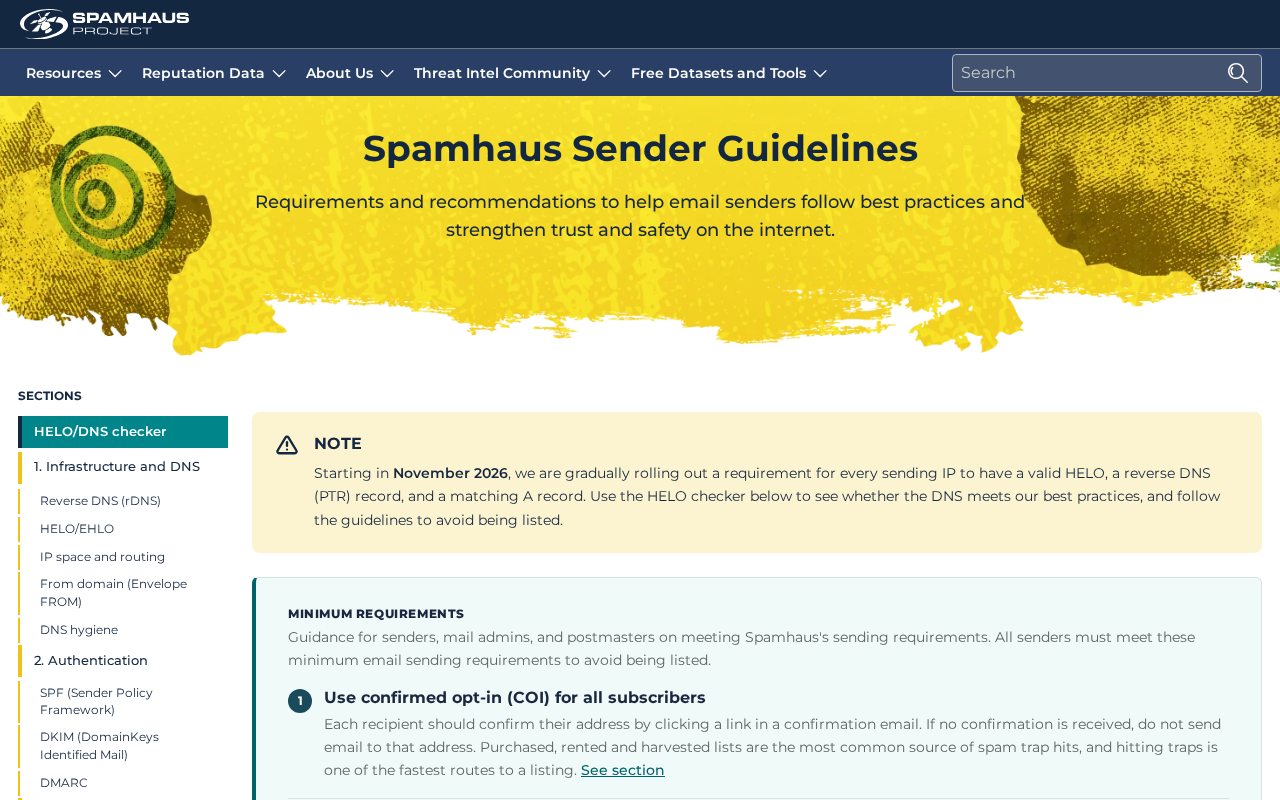
Spamhaus will impose new requirements on email senders in November, focusing on identity transparency and sending-behavior traceability.
Spamhaus, one of the most influential organizations in global anti-spam, maintains the SBL, XBL, and PBL real-time blocklists that many email providers and anti-spam gateways reference, so its rule changes carry near-industry-standard authority over email deliverability. According to Hacker News, Spamhaus will impose new requirements on email senders in November, centered on sender identity transparency and sending-behavior traceability—typically involving compliant use of SPF, DKIM, and DMARC, sending domain reputation management, and stricter scrutiny of bulk sends. The article recommends that teams running their own email services review domain authentication configurations and IP reputations before November, watch for platform compliance requirements that third-party providers may raise in response, and treat email sending as infrastructure that requires ongoing maintenance.
As one of the most influential organizations in the global anti-spam space, Spamhaus is about to impose new requirements on email senders in November. The news sparked discussion on Hacker News—though it didn't gain much traction—but it's worth paying attention to in advance for businesses and developers who rely on email to reach users.
Why Spamhaus's Rules Matter
Spamhaus maintains several widely used real-time blocklists (such as SBL, XBL, and PBL), and a large number of email service providers and anti-spam gateways worldwide reference its data. Once a sender's IP or domain is added to a list, the likelihood of emails reaching the inbox drops significantly—or they may be rejected outright.
In other words, Spamhaus's "requirements" aren't legally binding, but in the actual delivery chain they carry near-industry-standard authority. When its rules change, that change tends to cascade into email providers' policies and companies' sending practices.
Spamhaus's blocklists aren't a single list but are divided by dimension: SBL (Spamhaus Block List) contains known spam-sending sources, including IPs of compromised botnets; XBL (Exploits Block List) focuses on hosts infected by malware that can be exploited to launch attacks; and PBL (Policy Block List) lists IP ranges that shouldn't send email directly to mail servers, such as dynamically assigned residential broadband addresses. Email providers typically query multiple lists when receiving mail, and a hit on any one of them can lead to rejection or being flagged as spam. Because of this, Spamhaus's data effectively forms a hidden threshold in the global email delivery chain.
The Core Direction of the New Rules
According to information disclosed on Hacker News, Spamhaus's new requirements focus on sender identity transparency and the traceability of sending behavior. Although the original material doesn't spell out the specific provisions, judging from overall trends in the anti-spam field, such adjustments typically involve sender authentication (e.g., compliant use of SPF, DKIM, and DMARC), reputation management for sending domains, and stricter scrutiny of bulk email sending behavior.
For senders of marketing emails, transactional notifications, and subscription emails, this means the old "as long as it sends, it's fine" approach will become increasingly hard to sustain.
SPF, DKIM, and DMARC are the three foundational mechanisms of email identity authentication today and are often used together. SPF (Sender Policy Framework) publishes a list of authorized IPs in a domain's DNS, declaring which servers are allowed to send mail on behalf of that domain; DKIM (DomainKeys Identified Mail) attaches a cryptographic signature to each email, allowing the recipient to verify via a public key in DNS that the content hasn't been tampered with and was indeed issued by the domain owner; and DMARC (Domain-based Message Authentication, Reporting and Conformance) builds on SPF and DKIM, telling recipients what to do when authentication fails (e.g., reject or quarantine) and requiring senders to receive aggregate reports. Working together, the three can significantly reduce the risk of domains being forged for phishing and spam, and they are the technical lever that organizations like Spamhaus use to push for sender transparency.
Practical Impact on Developers and Businesses
Email Infrastructure Needs Review
If your system runs its own email sending service or uses a third-party SMTP relay, you should check before November whether your domain authentication configuration is complete and whether your sending IPs have a clean reputation. Once listed by Spamhaus, the appeal and recovery process is often time-consuming and uncertain.
Sending Behavior Needs to Be More Disciplined
The new rules' focus on sending behavior means bounce handling, complaint rate control, and list quality management are no longer "optional." Practices such as failing to clean invalid addresses before bulk sends, or continuing to send after users unsubscribe, can all become triggers for problems.
Knock-on Effects for Third-Party Email Services
Teams using hosted email services aren't entirely off the hook. To meet Spamhaus's requirements, providers may adjust their platform policies—for example, requiring customers to complete domain verification, restricting certain sending patterns, or suspending accounts when customers violate rules. Understanding policy changes from your provider in advance can help avoid business disruption.
Hosted email platforms typically maintain data-level cooperation with blocklist organizations like Spamhaus, and some providers proactively monitor the reputation scores of their customers' sending IPs. When a platform's overall IP range is damaged by individual customer violations, the platform has an incentive to tighten admission policies—for example, requiring new customers to complete domain ownership verification, setting send-volume ramp-up periods, and requiring compliance information such as unsubscribe links and physical addresses. For businesses using these platforms, compliance responsibility doesn't disappear because it's outsourced, and account suspension often directly affects business notifications and user outreach.
Industry Trends and Observations
The email ecosystem is steadily tightening its requirements for senders. From major email providers enforcing DMARC policies to Spamhaus updating its own rules, the direction is consistent: make legitimate senders easier to identify and suspicious sending behavior harder to hide.
For technical teams, treating email sending as infrastructure that requires ongoing maintenance—rather than a one-time configuration task—is the safest way to respond to these kinds of changes.
It should be noted that the original discussion didn't provide the full text of the new rules' provisions, and this article is based on disclosed information and industry context. As November approaches, it's recommended to consult Spamhaus's officially published specific requirements directly and defer to the official documentation.
One-line Summary
Spamhaus will impose new requirements on email senders in November, focusing on identity transparency and sending-behavior traceability.
Paragraph Summary
Spamhaus, one of the most influential organizations in the global anti-spam space, maintains real-time blocklists such as SBL, XBL, and PBL that are referenced by a large number of email providers and anti-spam gateways, so its rule changes carry near-industry-standard authority over email deliverability. According to Hacker News, Spamhaus will impose new requirements on email senders in November, centered on sender identity transparency and sending-behavior traceability—typically involving compliant use of authentication mechanisms like SPF, DKIM, and DMARC, sending domain reputation management, and stricter scrutiny of bulk sends. The article recommends that teams running their own email services review domain authentication configurations and IP reputations before November, watch for platform compliance requirements that third-party email providers may raise in response, and treat email sending as infrastructure that requires ongoing maintenance.
Related articles

Zed Editor Releases v1.29.2: Observations on a Routine Version Iteration
Zed editor releases patch v1.29.2, version bump by @JosephTLyons, commit verified via GitHub signature. This article covers the release's basic info, what a patch version means, and practical upgrade advice for users.

Anthropic IPO Questioned: Hacker News Debates Timing of Going Public
A Hacker News post titled "Just say no to Anthropic's IPO" sparks debate on the timing of Anthropic's public listing and AI capitalization, touching on valuation bubbles and mission independence.

Hands-On with the Genie 4 World Model: Directing Worlds in Real Time Like a Puppeteer
Google DeepMind's Genie 4 world model in depth: Special Guest X's hands-on demo of real-time scene direction via prompts, custom interactive apps in Project Genie, and prompts-as-seeds reproducibility.