Spotify AI DJ Upgrade: New Voices, Personalities, and the Option to Talk Less
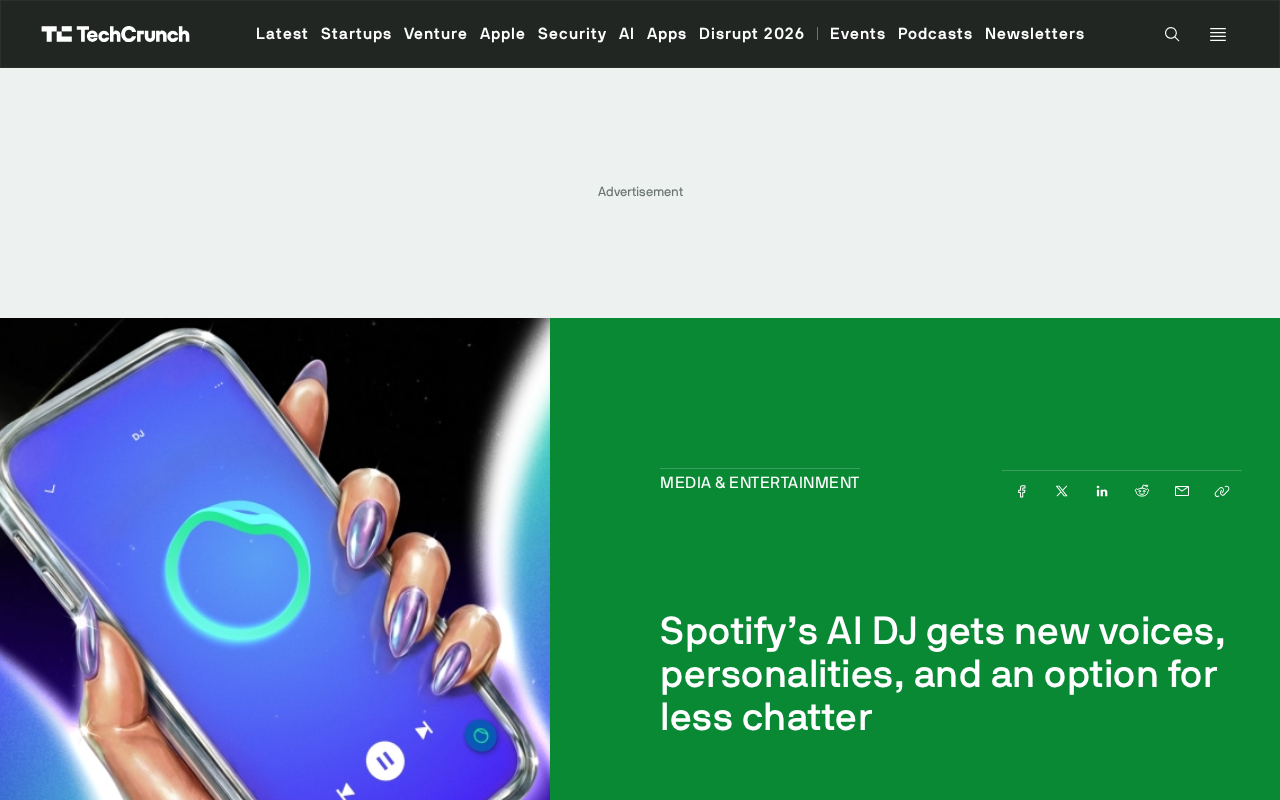
Spotify AI DJ adds multiple voices, personality switching, and an option to turn off commentary, available only to Premium users.
Spotify has updated its AI DJ feature. Premium users can now switch between multiple synthetic voices with different personalities and choose to turn off commentary between songs. Previously, AI DJ had only a uniform voice and fixed commentary style, leaving users to passively accept it. The article argues that this adjustment may look like just a reskin, but it actually touches on the core tension of AI recommendation products: the smarter the algorithm, the more users want to retain control over how they interact with it. Opening up voice customization adds "personalized companionship," while the commentary switch turns anthropomorphic link scripts from a default into an option, avoiding disruption of the listening rhythm. Overall, competition in AI features is shifting from "whether it can be done" to "how users use it," and the configurability of the interaction layer is becoming a new dimension of differentiation, while also helping improve Premium user retention. The specific number of voices and personality types has not yet been disclosed.
Spotify's AI DJ feature has received a noteworthy update. According to RSS sources, Spotify Premium users can now give their AI DJ a new voice, choose different personalities, and even turn off commentary between songs.
From a Single Voice to Personalized Choices
Previously, Spotify's AI DJ appeared with a uniform synthetic voice and a fixed commentary style, leaving users to passively accept it. The new version hands control back to listeners: users can switch between multiple voices with different personalities, making the DJ's tone, pacing, and recommendation approach better fit their personal preferences.
This change may look like just a "reskin," but it actually touches on a core tension in AI recommendation products—the smarter the algorithm, the more users want to retain control over how they interact with it. By opening up customization at the voice level, Spotify is adding "personalized companionship" on top of personalized recommendations.
The technical foundation of AI DJ: Spotify's AI DJ is not a simple text-to-speech tool, but a combined product built on Spotify's long-accumulated recommendation system and OpenAI's speech generation technology. It analyzes users' listening history, time-of-day preferences, and skip behavior to dynamically generate segments of "link scripts," which are then read aloud by synthetic voice. This means that "changing the voice" actually involves two separable sets of variables: first, the recommendation logic (what songs to play and in what order), and second, the expression layer (what voice and tone to use to say it). This update mainly opens up the latter, so it has limited impact on recommendation quality itself, but it significantly changes users' subjective experience.
Synthetic voice and personalized companionship: Traditional TTS (text-to-speech) pursues clarity and naturalness, while products like AI DJ pursue a "sense of personality"—speech rate, pauses, catchphrases, and emotional fluctuations together shape listeners' perception of the DJ. Offering multiple personality voices essentially lets users choose a voice persona they are willing to spend time with over the long term, which is also a common tactic used by streaming platforms to compete for emotional stickiness against the backdrop of "feature homogenization."
Turning Off Commentary: Giving Users Who Don't Want to Be "Interrupted" a Switch
The most practical option in the update is perhaps allowing users to turn off commentary between songs. The selling point of AI DJ was originally to string playlists together in an anthropomorphic tone, but for some users, frequent interjections actually interrupt the rhythm of listening.
Offering options to "talk less" or even "not talk at all" shows that Spotify realizes that the penetration of AI features should not come at the expense of experience. Making commentary optional rather than default is a signal of increased product maturity.
What It Means for AI Recommendation Products
This adjustment to AI DJ sends a clear industry signal: competition in AI features is shifting from "whether it can be done" to "how users use it." Details such as voice, personality, and commentary frequency essentially turn AI from a black-box algorithm into an adjustable tool.
For Spotify, Premium users are the revenue base, and giving them more control helps improve retention. For other platforms, this also provides a reference—beyond recommendation algorithms, the configurability of the interaction layer also affects users' favorability toward AI features.
At present, these options are available only to Premium users, and the specific number of voices and personality types has not yet been disclosed in the source material. What is certain is that AI DJ is moving from a single-style experimental feature toward a more segmented personalized service.
Premium tiering and feature differentiation: Spotify has long operated on a dual-track model of "free + ads" and "Premium subscription," and generative features such as AI DJ are often used as hooks for subscription conversion. Limiting new voices, personality switching, and commentary toggles to the Premium tier both controls the computing costs brought by speech synthesis and strengthens the perceived value of paying. For recommendation products, such "interaction-layer privileges" are becoming subscription selling points alongside catalog size and audio quality tiers.
Background
The conflict between commentary inserts and listening scenarios: The core use scenarios of music streaming include commuting, fitness, focused work, and background playback, with the latter two having extremely high requirements for continuity. AI DJ's anthropomorphic commentary is a plus in the "discovering new songs" scenario, but in the "immersive listening" scenario it constitutes an interruption. The industry usually calls this type of design "controllable interruption"—retaining the feature's presence while leaving the decision of whether to trigger it to the user. Allowing commentary to be turned off essentially downgrades AI DJ from "default host" to "optional host," preventing feature penetration from eroding the core experience.
One-line Summary
Spotify AI DJ adds multiple voices, personality switching, and an option to turn off commentary, available only to Premium users.
Paragraph Summary
Spotify has updated its AI DJ feature. Premium users can now switch between multiple synthetic voices with different personalities and choose to turn off commentary between songs. Previously, AI DJ had only a uniform voice and fixed commentary style, leaving users to passively accept it. The article argues that this adjustment may look like just a reskin, but it actually touches on the core tension of AI recommendation products: the smarter the algorithm, the more users want to retain control over how they interact with it. Opening up voice customization adds "personalized companionship," while the commentary switch turns anthropomorphic link scripts from a default into an option, avoiding disruption of the listening rhythm. Overall, competition in AI features is shifting from "whether it can be done" to "how users use it," and the configurability of the interaction layer is becoming a new dimension of differentiation, while also helping improve Premium user retention. The specific number of voices and personality types has not yet been disclosed.
Related articles
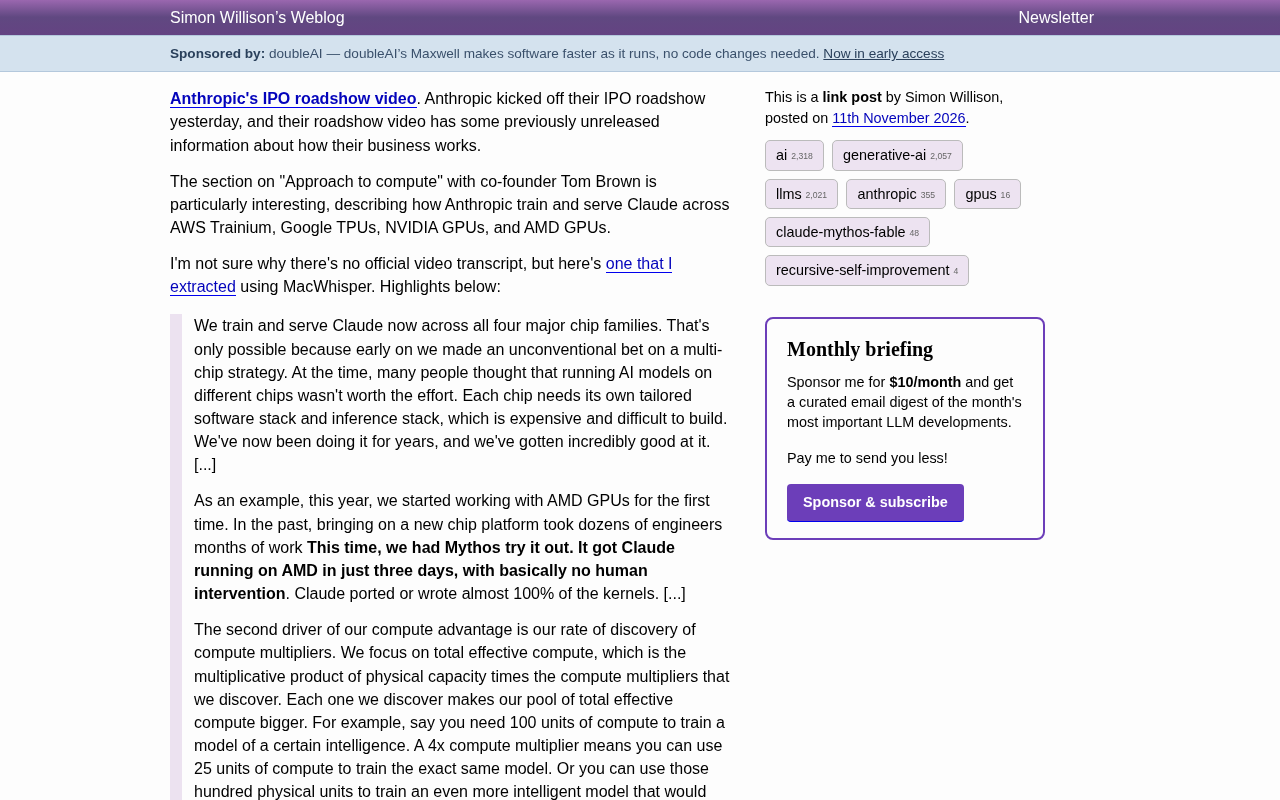
Anthropic IPO Roadshow Revealed: Multi-Chip Strategy and AI Self-Improvement
Anthropic's IPO roadshow video reveals its multi-chip strategy: Claude is trained across AWS, Google, NVIDIA, and AMD chips, and Mythos completed AMD adaptation in three days. Co-founder Tom Brown also discussed compute multipliers and recursive self-improvement, letting AI autonomously discover compute optimization solutions.

Marktechpost Launches GPU Leaderboard and Deployment Tool Extension
Marktechpost launches a GPU Leaderboard and the Deploy It Chrome extension—the former aggregates GPU performance comparisons under AI workloads, the latter attempts to simplify model deployment in the browser. This article reviews both tools' positioning, information gaps, and practical value for developers.

Where Should AI Photo Editing Draw the Line? How E-commerce Sellers Can Avoid Misleading Customers with Product Photos
How can e-commerce sellers draw the line for AI product photo editing? Cleaning backgrounds and optimizing lighting are acceptable, but altering product shape, texture, and size may be misleading. This article summarizes Reddit sellers' practical experience and tool selection advice.