Spotify Launches Paid Podcast Memberships: Creators Keep 90%, More Than Just Exclusive Content

Spotify launches paid podcast memberships with creators keeping 90% of revenue, moving podcasts toward a hybrid paid model.
Spotify has launched paid podcast memberships, allowing podcasters to sell memberships to fans while keeping 90% of revenue. Benefits include ad-free listening, early access to new episodes, and bonus content—going beyond the single "pay to unlock hidden episodes" model. The high 90% keep rate is seen as a strategy to attract creators to migrate paid relationships from tools like Patreon, aiming to build scale first before deeper commercialization. The article analyzes how this feature will platformize podcast monetization tools, redraw the boundary between ads and subscriptions, and train listeners to pay directly for spoken audio. But success depends on conversion rates, pricing flexibility, and creators' ability to keep producing paid content.
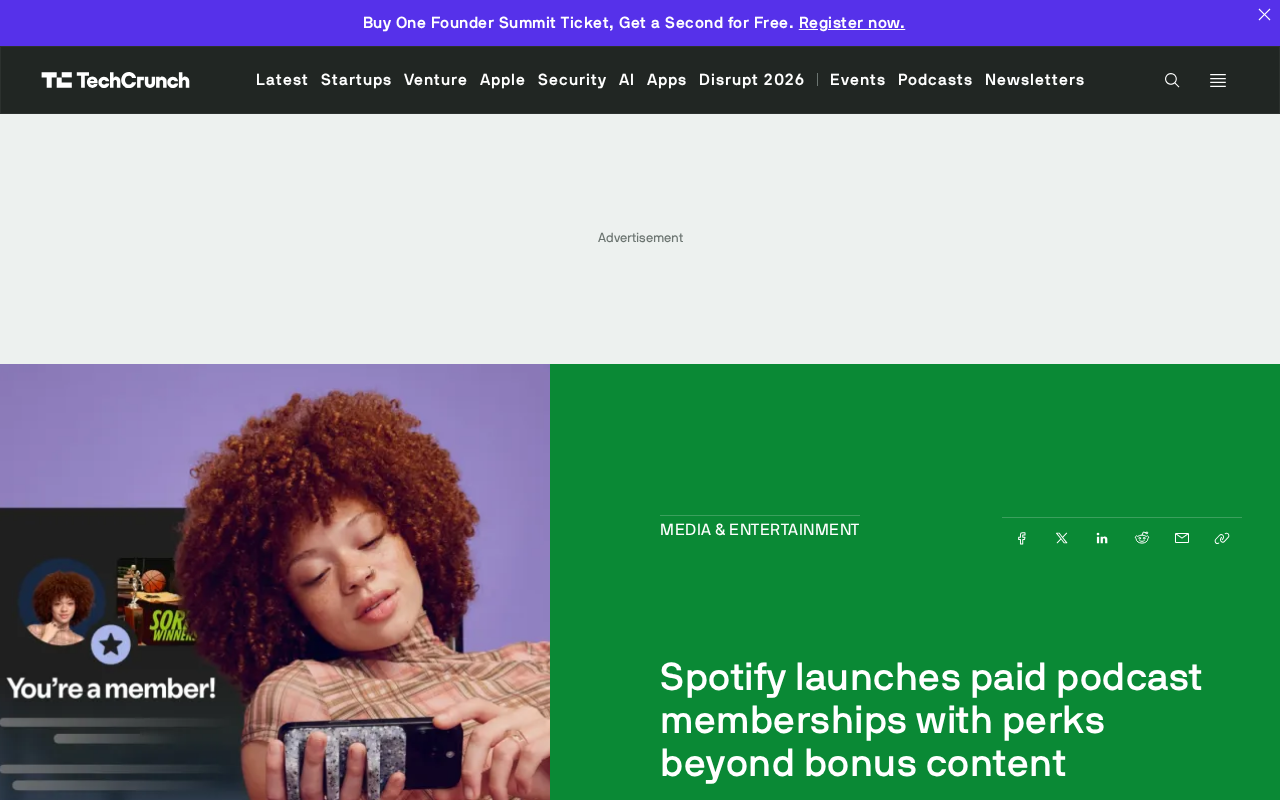
Spotify is putting the power of podcast monetization into creators' hands. According to RSS sources, Spotify has launched a paid podcast membership feature that allows podcasters to sell memberships to fans with exclusive perks, and creators can keep 90% of the revenue. This isn't simply "pay to unlock hidden episodes"—it's a membership system built around ad reduction, early access, and bonus content.
Member Benefits Go Beyond "Bonus Content"
According to the official description, Spotify's paid membership covers three core benefits: ad-free listening, early access to new episodes, and bonus content. The original text explicitly mentions "beyond bonus content," meaning the platform intends to expand the paid proposition from a single "hidden episodes" feature to the listening experience itself.
This is a signal for the podcast ecosystem. For a long time, podcast monetization has relied on ads and sponsorships, and listeners already have a mature understanding of "pay to remove ads" (music streaming has already validated this model). By bundling ad-free listening into podcast memberships, Spotify is essentially migrating the mental accounting of music subscriptions to the podcast context—users don't need to understand the abstract logic of "paying to support creators"; they only need to pay because "I don't want to hear ads."
Early access is another layer of value. For news and narrative podcasts, timeliness is critical, and early unlocking can create subscription motivation; for serialized shows, early access can also create a time gap for social buzz.
Podcast ad formats differ significantly from music streaming: music ads are usually short audio spots, while podcast ads are mostly host-read sponsorship segments that can last 30–60 seconds or longer and are deeply tied to the show's content. Therefore, "ad-free listening" in the podcast context means skipping these host-read segments, which creates a stronger perceived improvement in the listening experience—but it also directly touches podcasting's most mainstream monetization method: sponsorship ads. By bundling ad-free listening into memberships, Spotify is effectively redistributing revenue between advertising and subscription rather than simply replicating the ad-removal logic of music subscriptions.
The 90% Split: The Platform's Calculation Behind the Concession
Creators keeping 90% of revenue is the most noteworthy number in this launch. Compared with industry norms—YouTube channel memberships, Patreon, and other platforms typically take a higher cut—Spotify is clearly leaving the lion's share to creators.
The logic behind this pricing strategy isn't hard to infer. Podcast creators are currently scattered across tools like Patreon, Apple Podcasts subscriptions, and Supercast, and migration costs are low. If Spotify took too high a cut, creators would have no reason to move their paid relationships over. The 90% split is more like a "migration invitation": bring your existing paying fans to Spotify, and the platform will first build scale, then discuss deeper commercialization.
For creators, a 90% keep rate means a membership pool of 1,000 people at $5 per month yields about $4,500 after the platform's cut—close to a stable side income. This provides predictable cash flow when the ad market fluctuates.
Patreon is one of the most commonly used membership monetization tools for podcast creators, and its cut typically ranges from 5% to 12%. That may look lower than Spotify's 10%, but creators also have to bear payment processing fees, private RSS hosting fees, and other additional costs themselves—and Patreon doesn't provide content discovery traffic. YouTube channel memberships follow a revenue-sharing logic similar to ad revenue, with the platform taking about 30%. Spotify's 90% keep rate should be understood in the context of "a platform with built-in discovery and listening scenarios": creators sacrifice a small share of revenue in exchange for the opportunity to convert paying users directly from Spotify's listener pool, which isn't entirely comparable to the cost structure of pure tool platforms.
Three Impacts on the Podcast Industry
First, podcast monetization tools are becoming more platformized. In the past, creators had to combine Patreon for payments, private RSS for distributing paid content, and email lists for maintaining relationships. Now Spotify is trying to bring "discovery—listening—payment" together in one place. The more complete the loop, the deeper creators' dependence on a single platform—that's the price of convenience.
Second, the boundary between advertising and subscription is being redrawn. Ad-free memberships mean some high-value listeners disappear from ad inventory, but membership fee revenue can partially offset that. For small and mid-sized podcasts, subscription revenue may be more realistic than advertising—advertisers favor top shows, and long-tail creators have long lacked bargaining power.
Third, listeners' paying habits are being trained. Music subscriptions have already proven that users are willing to pay continuously for "ad-free + convenience," and podcast memberships extend the same logic to the spoken audio space. If this works, the share of direct payment for audio content will rise, and the revenue-sharing tug-of-war between platforms and creators will heat up accordingly.
It's worth noting that whether this mechanism works depends on whether Spotify can turn podcast listeners' willingness to pay into actual conversion rates. The appeal of member benefits, pricing flexibility, and creators' ability to continuously produce content worth paying for—all three are indispensable. The 90% split solves "are you willing to come," but whether they stay depends on whether the membership product itself can gain traction.
For podcast creators looking for monetization paths, this is a channel worth testing; for listeners, the increase in paywalls also means the free listening experience may be re-segmented. With this step, Spotify is pushing podcasts from "ad-supported free media" toward "hybrid paid media."
Private RSS is a common distribution method for paid podcast content: creators use tools like Patreon and Supercast to generate an exclusive RSS link accessible only to paid subscribers, and listeners manually add it to their podcast client to hear exclusive episodes. The advantage of this mechanism is cross-platform access and creators retaining control of the subscriber relationship; the drawback is a fragmented user experience—listeners need to switch between multiple apps, and the path to discovering new shows is separated from the payment path. Spotify's membership feature attempts to replace the manual setup of private RSS with an in-platform loop, lowering the payment barrier—but at the cost of partially transferring the subscriber relationship from creators to the platform side.
One-line Summary
Spotify launches paid podcast memberships with creators keeping 90% of revenue, pushing podcasts toward a hybrid paid model.
Paragraph Summary
Spotify has launched a paid podcast membership feature that allows podcasters to sell memberships to fans, with creators keeping 90% of revenue. Member benefits cover ad-free listening, early access to new episodes, and bonus content, breaking beyond the single "pay to unlock hidden episodes" model. The high 90% keep rate is seen as a strategy to attract creators to migrate paid relationships from tools like Patreon, aiming to build scale first and then pursue deeper commercialization. The article analyzes how this feature will drive platformization of podcast monetization tools, redraw the boundary between advertising and subscription, and train listeners to pay directly for spoken audio. However, the model's success depends on conversion rates, pricing flexibility, and creators' ability to continuously produce paid content.
Related articles

Cursor AI Programming in Practice: Build a Student Management System from Scratch in 30 Minutes
A Bilibili creator demonstrates Cursor AI programming: generating a student management system in 30 minutes with natural language. Details on Agent mode, Claude selection, prompt techniques, and thresholds.

Top 20 AI Coding Tools Ranking: From Rock-Solid to Lackluster, a Scored Matrix
Bilibili creator releases top 20 AI coding tools ranking, tiered T0–T4 from rock-solid to lackluster, with Claude Code and Codex tied at T0. This article details the scoring dimensions (capability, reliability, robustness, durability, cost, domestic availability) and tool performances to help developers choose the right AI coding assistant.

Vibe Coding Systematic Tutorial: Master AI-Assisted Programming from Zero
A three-month Vibe Coding tutorial from a Bilibili creator covering Codex, ClaudeCode, and Cursor, from core logic to commercial project practice for beginners.