Spotify Removes 50 Million AI Slop Songs: Recommendation System Now Favors Human Artists

Spotify removed 50M+ AI slop songs from recommendations in a year and shifted its algorithm toward human creators.
Spotify announced it has removed over 50 million songs deemed AI-generated slop or low-quality filler from its recommendation system over the past year. These songs remain searchable but no longer enter personalized recommendations or algorithmic playlists. The platform also adjusted its ranking to boost exposure for human artists, combining automated detection with editorial review. The move is seen as the first large-scale systematic response to generative AI content flooding, but leaves unresolved issues around the boundary between AI-assisted and pure AI creation, opaque criteria, and potential harm to real creators.
Spotify announced on Tuesday that over the past year it has removed more than 50 million songs deemed "AI-generated slop" or spam from user recommendations, and has adjusted its recommendation system to give greater prominence to works by human artists. The move is seen as the streaming platform's first large-scale, systematic response to the flood of generative AI content.
50 Million Songs Blocked from Recommendations
According to Spotify's official announcement, the removed tracks have not been taken down from the platform entirely—they simply no longer enter the recommendation traffic pool. In other words, these songs remain accessible via search or direct links, but will not appear in personalized recommendations, algorithmic playlists, or other core distribution channels.
Against the backdrop of Spotify's catalog of over 100 million tracks, 50 million is no small number. It shows the platform now has the capability to identify low-quality AI content at scale, and suggests that the problem of mass AI song uploads is more widespread than outsiders might imagine.
Spotify emphasized in its announcement that its editorial team maintains standards consistent with the algorithm. This means that in addition to automated detection, human review is also involved in determining which content qualifies as "slop" (low-quality filler content).
What Is the "Recommendation Traffic Pool"?
A streaming platform's catalog is typically divided into two layers: "accessible" and "distributable." Accessible means users can find a song through search, shared links, or an artist's page; distributable means the song is eligible to enter proactive exposure scenarios such as personalized recommendations, algorithmic playlists, and radio. Platforms generally manage the latter through a separate recommendation index, and only tracks that pass thresholds for quality, copyright, and metadata completeness are included. Removing a song from the recommendation pool effectively cuts off its main channel for organic traffic while preserving long-tail access—a compromise governance approach that balances copyright compliance with user experience.
How the Recommendation System Now Favors Human Creators
The announcement mentions that Spotify has made changes to its recommendation system with the goal of giving more exposure to music created by human artists. The specific mechanisms have not been fully disclosed, but based on the wording, the platform has added weights to its ranking signals to counter mass AI content.
For independent musicians, this adjustment could bring tangible benefits: recommendation slots are the most important exposure resource in the streaming era, and reducing competition from AI filler tracks effectively returns limited recommendation traffic to real creators.
However, the platform has not explained how it distinguishes "AI-assisted creation" from "pure AI generation." Whether artists who use AI tools for arranging, mixing, or generating some materials will be inadvertently affected remains an open question.
Ranking Signals and Adversarial Weights
Recommendation systems typically rely on collaborative filtering (based on user behavioral similarity) and content features (audio, metadata) for ranking. When mass-uploaded AI tracks fake behavioral signals through play-count manipulation and mutual promotion, pure behavioral ranking becomes polluted. The platform's countermeasure is to introduce adversarial features such as "source credibility" or "human-creation confidence" into the ranking model, reducing the weight of suspected mass-generated content. Such signals may come from upload behavior patterns (e.g., high-frequency uploads from a single account), audio fingerprint duplication, and the degree of metadata templating. Because the platform does not disclose specific weights, creators have difficulty self-checking, which also forms part of the transparency controversy.
The Tension Between Platform Governance and the Creator Ecosystem
Spotify's move touches on a larger industry problem: when generative AI drives the cost of music production and uploading close to zero, streaming platforms' catalogs will inevitably be diluted by low-quality content. If recommendation systems rank solely by behavioral signals such as plays and completion rates, they are easily gamed by mass content.
From the platform's perspective, cleaning up the recommendation pool is a necessary action to protect user experience and subscription revenue. From creators' perspective, whether the criteria are transparent and whether appeal channels are accessible will determine whether this policy is seen as protection or as a new form of unfairness.
Spotify says it will continue to iterate on its detection methods. Given that AI generation technology itself is evolving rapidly, this confrontation between platforms and spam content is likely a long-term game rather than a one-time cleanup.
The Challenge of Defining "AI-Assisted Creation" vs. "Pure AI Generation"
There is currently no unified technical standard in the industry to distinguish the two. AI-assisted creation may involve using generative models for harmony suggestions, timbre design, mastering, or vocal synthesis, with the final work still containing substantial human decision-making; pure AI generation means the melody, arrangement, and vocals are all completed end-to-end by a model. If the platform takes an all-or-nothing approach based on "whether AI tools were used," it will inadvertently harm many legitimate creators; if it judges solely by "generation ratio," it lacks reliable detection methods. Audio watermarking, generation logs, and metadata declarations are currently explorable directions, but all are easily circumvented. This boundary issue will affect the credibility of platform governance for a long time to come.
FAQ
Can removed songs still be listened to? Yes. Removal only affects recommendation distribution; the songs themselves remain on the platform and can be found through search and other means.
How is a song determined to be AI slop? Spotify has not published complete criteria, stating only that it combines automated detection with editorial team review.
Will artists who use AI tools be affected? The company has not clearly distinguished AI-assisted creation from pure AI generation, and this boundary remains an unresolved issue.
One-line Summary
Spotify removed over 50 million AI slop songs from its recommendation pool in a year and adjusted its algorithm to favor human creators.
Paragraph Summary
Spotify announced that over the past year it has removed more than 50 million songs deemed AI-generated slop or low-quality filler from its recommendation system. These songs remain searchable but no longer enter personalized recommendations or algorithmic playlists. The platform has also adjusted its recommendation ranking to increase the exposure weight of works by human artists, with determinations combining automated detection and manual review by its editorial team. The move is seen as the streaming platform's first large-scale systematic response to the flood of generative AI content, but it leaves unresolved issues: the unclear boundary between AI-assisted creation and pure AI generation, opaque criteria, and the potential to inadvertently harm real creators.
Related articles

M&M's Spent Millions Replacing Artificial Blue Dye — Why Is It So Hard?
Mars spent millions trying to replace artificial blue dye in M&M's with spirulina, but thick material clogs pipes and residue risks mold, forcing a full production-line rebuild. Here's the engineering behind the reformulation.
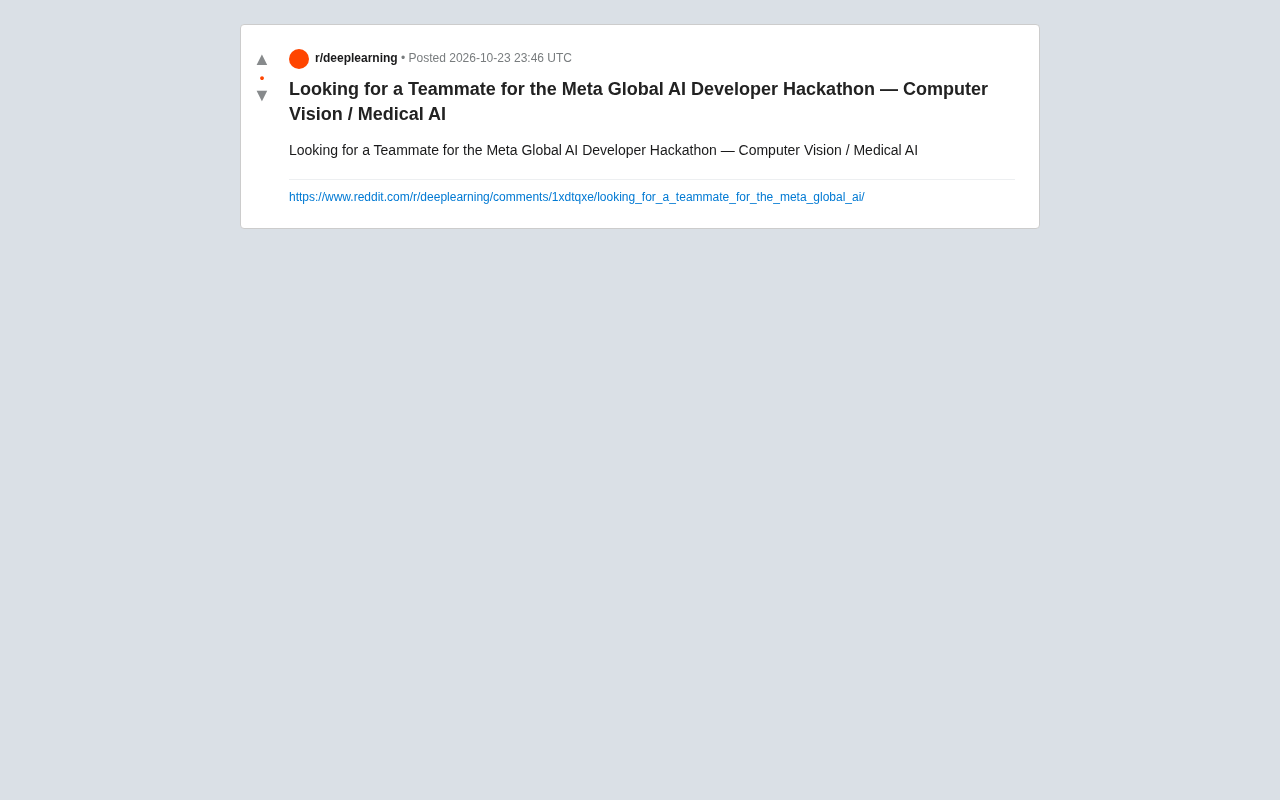
Teammate Wanted for Meta Global AI Developer Hackathon: Computer Vision & Medical AI
A Reddit developer seeks teammates for the Meta Global AI Developer Hackathon, focusing on computer vision and medical AI. This article analyzes the track logic, skills-complementarity needs, and topic selection strategy behind this teaming signal.
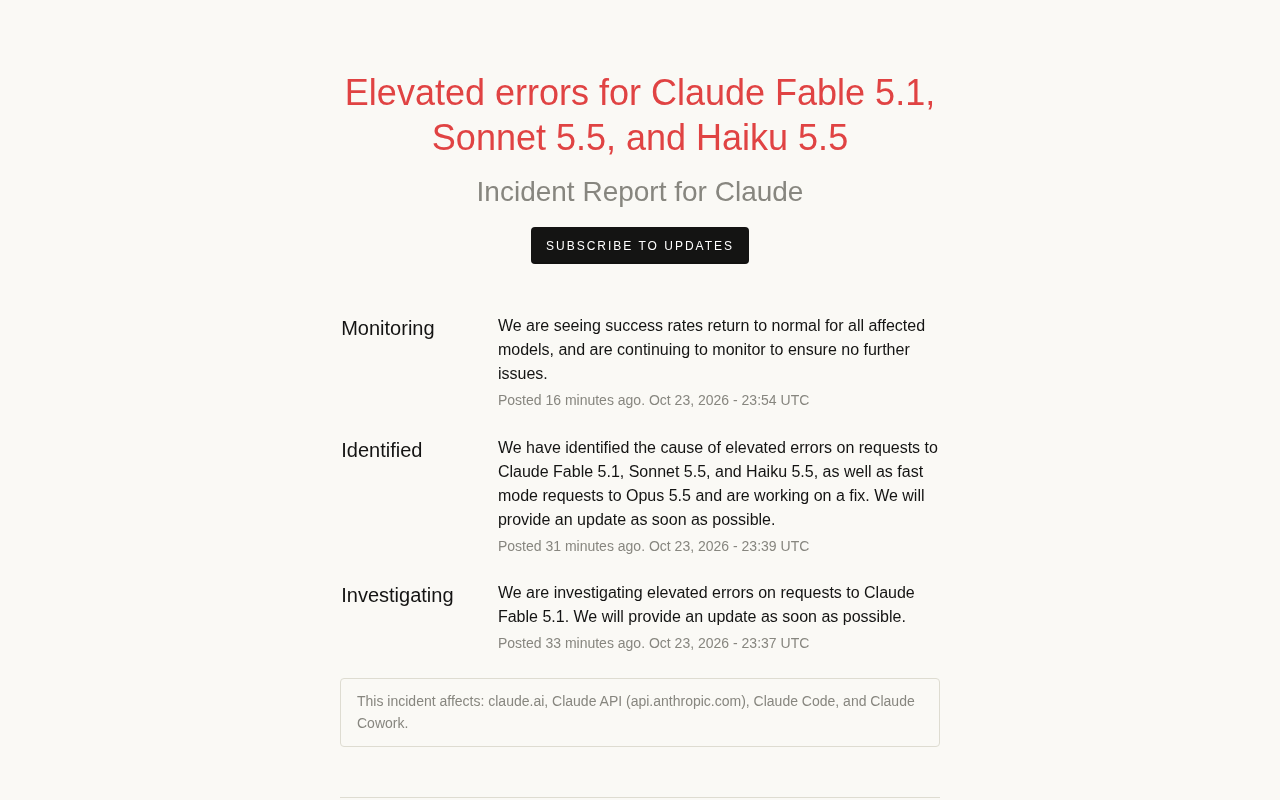
Multiple Claude Models Hit by Errors: A Postmortem of Fable 5.1, Sonnet 5.5, and Haiku 5.5
Claude Fable 5.1, Sonnet 5.5, Haiku 5.5, and Opus 5.5 fast mode saw elevated errors; Anthropic identified and resolved the issue in 17 minutes. This postmortem covers the timeline, the technical reasons for the multi-model cascading failure, and practical lessons for retry and degradation strategies.