SSD Prices May Fall in the Second Half of 2027: A Turning Point for the Storage Market?

Analysis predicts SSD prices may fall in H2 2027, sparking developer debate over storage costs.
drivevault.io analysis predicts SSD prices may begin declining in the second half of 2027, a topic that earned 275 points and 217 comments on Hacker News, reflecting developers' and hardware enthusiasts' high sensitivity to storage prices. The article outlines two main reasons for high prices: AI data centers' high-capacity storage demand is crowding out consumer-grade capacity, and NAND manufacturers have proactively cut capacity and capex after a low-price cycle, reducing supply elasticity. The turning point judgment is essentially an extrapolation of the capacity deployment cycle and is a conditional forecast, not a definitive conclusion. For ordinary users, waiting over two years is unrealistic; a more pragmatic strategy is to tier media by data hotness and track NAND contract prices and manufacturer capex dynamics.
The persistently high prices in the storage market are finally showing signs of easing. According to an analysis article on drivevault.io, SSD prices may begin to decline in the second half of 2027. This judgment sparked widespread discussion on Hacker News, with the post earning 275 points and 217 comments, demonstrating just how sensitive developers and hardware enthusiasts are to storage prices.

Why SSD Prices Have Remained High
For some time now, the price trends of SSDs and mechanical hard drives have put pressure on many PC builders and small-to-medium teams. The core factors driving this round of price increases, as widely discussed in the industry, center on both supply and demand: on one hand, AI data centers' growing demand for high-capacity storage continues to climb, crowding out capacity for the consumer market; on the other hand, NAND flash manufacturers, after experiencing several years of low prices, have proactively adjusted capacity and capital expenditure, significantly reducing supply-side flexibility.
This structural tightness cannot be resolved in the short term. drivevault.io's analysis points to the second half of 2027 as the price turning point, essentially betting on the timeline for new capacity to come online—fab expansion and the introduction of new process nodes both take time, and the journey from investment decision to actual shipment often spans several quarters or even longer.
NAND Flash and the Capacity Cycle: The core medium of SSDs is NAND flash, whose price directly determines SSD cost structure. NAND manufacturing is a classic capital-intensive, strongly cyclical industry: building a new fab from groundbreaking to mass production typically takes 2-3 years, and process upgrades (such as evolving from 176-layer to 2xx-layer stacking) also require sustained capital expenditure and yield ramp-up. When prices are low, manufacturers cut capital expenditure and slow expansion, reducing supply elasticity; when demand suddenly rebounds (such as being driven by AI data centers), capacity cannot be quickly replenished in the short term, and prices enter an upward trajectory. Understanding this "investment—construction—mass production" lag chain is key to understanding why the price turning point is projected years into the future.
AI Data Centers Crowding Out Storage Capacity: AI training and inference not only consume GPUs but also generate massive amounts of data requiring high-speed read/write and long-term storage, directly driving up demand for enterprise-grade high-capacity SSDs. Because enterprise products carry higher unit prices and profits, manufacturers often prioritize allocating capacity to data center customers, tightening supply for the consumer market. This "crowding-out effect" is a major driver of the current round of consumer SSD price increases, and it also means that the decline in consumer prices largely depends on whether data center demand growth slows down.
The Logic Behind the Second Half of 2027 Turning Point
The original article's title makes a fairly clear judgment: SSD prices may begin to decline in the second half of 2027. The choice of this timing implies a judgment about the storage industry's capacity cycle. In the Hacker News comment section, much of the discussion revolved around the credibility of this prediction—some believe it is a reasonable extrapolation based on historical price cycles, while others worry that uncertainty in AI demand could make the forecast inaccurate.
What needs to be viewed objectively is that such price predictions are essentially conditional deductions based on supply-demand models, not definitive conclusions. The storage market's history is full of "turning point imminent" judgments, but actual trends often deviate from expectations due to unforeseen events—such as a major manufacturer cutting production or a surge in demand for a particular type of end device.
The Difference Between Contract Prices and Spot Prices: When observing storage prices, you will often encounter two measures: "contract price" and "spot price." Contract prices are bulk purchase prices negotiated monthly or quarterly between manufacturers and major customers (such as module makers and OEMs), with relatively mild fluctuations that better reflect medium- to long-term supply and demand; spot prices are real-time transaction prices in the channel market, extremely sensitive to short-term sentiment and inventory changes, and often fluctuate more widely. The "price turning points" predicted by analysts are usually based primarily on contract price trends, while the prices consumers see on e-commerce platforms are also affected by channel inventory, exchange rates, and promotional timing—the two are not always synchronized.
The Cyclical Nature of the Storage Industry: Storage is one of the most cyclical categories in semiconductors, with repeated historical cycles of "price increase—capacity expansion—oversupply—price decline—production cuts." Manufacturers' capital expenditure decisions tend to be concentrated when prices are high, but by the time new capacity comes online, demand may have already changed, creating oversupply and pushing prices down. This is why extrapolation based on historical cycles has some reference value, but the specific timing of the turning point remains highly uncertain.
Practical Impact on Ordinary Users and Developers
If the price turning point does indeed arrive in the second half of 2027, the most direct beneficiaries will be two groups. First, individual PC builders and DIY enthusiasts, who may find it easier to afford high-capacity SSDs; second, small development teams and self-hosting geeks who depend on storage costs, for whom the cost-effectiveness of backup, archiving, and cold data storage will improve accordingly.
However, there is still a window between prediction and reality. For users who genuinely need storage expansion in the near term, waiting more than two years is not realistic. A more pragmatic approach is to tier storage according to actual needs: high-performance SSDs for hot data, large-capacity mechanical hard drives or cloud storage for cold data and backups, spreading cost pressure across different media.
Long-Term Variables in the Storage Market
Setting aside specific timing, the real value of this discussion lies in reminding us that storage prices never move in one direction. The data deluge from AI training and inference, the pace of flash process evolution, and manufacturers' inventory strategies—these three factors intertwine to determine the range of price fluctuations. drivevault.io's prediction provides an observation window, but the final answer must be left to the market.
For readers concerned about hardware costs, continuously tracking NAND contract prices and manufacturers' capital expenditure dynamics is more useful than any single-point price prediction.
One-line Summary
Analysis predicts SSD prices may fall in the second half of 2027, sparking heated discussion among developers about storage costs.
Paragraph Summary
drivevault.io's analysis predicts that SSD prices may begin to decline in the second half of 2027—a topic that earned 275 points and 217 comments on Hacker News, reflecting the high sensitivity of developers and hardware enthusiasts to storage prices. The article outlines two major reasons for high prices: AI data centers' demand for high-capacity storage is crowding out consumer-grade capacity, and NAND manufacturers, after experiencing a low-price cycle, have proactively cut capacity and capital expenditure, reducing supply elasticity. The turning point judgment is essentially an extrapolation of the capacity deployment cycle—fab expansion, new process introduction, and so on—and is a conditional forecast rather than a definitive conclusion. For ordinary users, waiting more than two years is unrealistic; a more pragmatic strategy is to tier media by data hotness and continuously track NAND contract prices and manufacturer capital expenditure dynamics.
Related articles
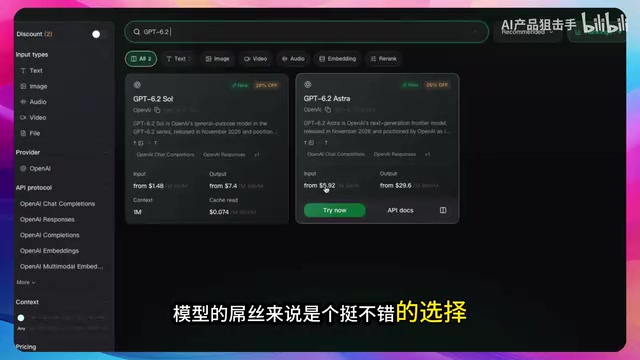
GPT 6.2 Astra Hands-On: Benchmark Failures and Highlights
Bilibili creator tests GPT 6.2 Astra on a new Benchmark via ModelGo, covering instruction following, SVG, liquid glass, watermark removal, and more.

AI Ate Math: Why Are Mathematicians Panicking?
Rivka Galchen reveals on a podcast how AI is disrupting mathematics: from solving Erdős problems to collective anxiety, what does this crisis foreshadow for education and creativity?

Does AI Think Like the Human Brain? Inside Claude's Internal Mechanisms
New research shows AI models resemble the human brain in word prediction and meaning construction, but Anthropic's observations of Claude reveal AI self-explanations may be completely divorced from its actual computations.