Stop Using Dumb Models: Why the 'Floor' of Frontier AI Matters More Than the 'Ceiling'
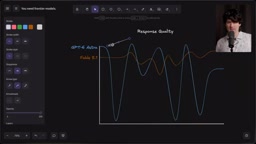
Frontier AI's real edge is a higher floor (fewer dumb mistakes), not a higher ceiling — and that gap compounds exponentially with task width.
An AI developer pushes back on the claim that switching to older models makes no difference, arguing that model evaluation should focus on worst-case behavior (the floor), not peak performance (the ceiling). He introduces the concept of "prompt width" — the number of steps and the distance from problem to solution — and shows that wider tasks expose model floors dramatically. Real log data shows agent median runtimes growing from 53 seconds to 2m20s, with P95 nearly tripling. A simple series-reliability model explains why dropping per-step failure rates by just 2% can translate into a 20-percentage-point improvement over a four-hour run. Top engineers who don't feel the difference are often those who have drifted from daily coding and are still writing prompts "the old way."
A well-known AI developer and YouTuber recently took direct aim at Sentry founder David Cramer (Zeeg) over a comment Cramer made: that people using high-end models like Fable or Astra might as well switch back to Opus, Sonnet, or other high-reasoning models, because "you'll probably find task performance is no different." The response was blunt — "this is the worst take you've ever had" — and it sparked a deep dive into what it actually means to use a coding agent correctly.
At its core, this debate touches on a fundamental misunderstanding most engineers have about AI coding models.
Where the Argument Started: Does Switching Models Really Make No Difference?
The author admits he made this video because he kept seeing engineers in the comments express views similar to Cramer's — switching back to an older model or dropping down a tier felt like it made no difference. His verdict was straightforward: if that's genuinely your experience, "your prompts are just bad."
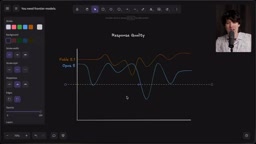
He drew a careful distinction between two different comparisons. Astra vs. Sonnet is a completely different conversation from Fable vs. Opus or Sonnet. Astra can do things no model has ever done before, but it also makes mistakes he "hasn't seen since first seriously using Gemini in 2025." Because Astra is so inconsistent — brilliant one moment, bafflingly stupid the next — it muddies the whole discussion. So he simply removed Astra from his charts in the video, saying flatly that its worst moments were "no different from Flash."
He admits he's made this mistake himself: fixating on a model's best performances (like Opus 5) and concluding it was great, when in reality it was failing far more often than he realized.
Ceiling vs. Floor: The Ignored "Lower Bound" of Model Performance
The most valuable insight in the video is this: most people evaluate models by obsessing over the "ceiling" (best-case performance) while badly neglecting the "floor" (worst-case performance).
His core argument is that raising the floor is more valuable than raising the ceiling. "I don't care if a model can solve novel math problems if it can't understand what I mean by 'revert.'" He gives a painful example: Astra genuinely got confused about what the word "revert" meant, and also failed to center an icon inside a div.
This leads to a key distinction: "I like Fable not because it's smarter, but because it does fewer stupid things. 'Fewer stupid things' and 'smarter' are almost opposites — they sit at different ends of the capability spectrum." What makes frontier models truly special is not that they hit higher peaks, but that they hit the "stupidity floor" far less often, and that floor has been raised significantly.
The Key Concept: Prompt "Width," Not "Difficulty"
The author introduces an elegant framework to explain the root of the disagreement — prompt width.
Width, he explains, isn't about how hard or deep a task is. It's about "the number of things that need to happen, and the distance from start to finish." Wider prompts require a higher model floor to sustain them.
He concedes that Cramer is right in a specific scenario: if your goal is strictly "from Jira ticket to code" — a well-formatted ticket with file paths and expected behavior spelled out — then Opus, Fable, or even Gemini can handle it reliably enough, and the differences are minimal.
But what actually excites him is something entirely different: "I get a screenshot of a bug reported by a user on my phone, paste it to an agent in T3 Chat, and say 'fix it, test it, record a video proving it works, send me the PR link when you're done, and keep watching until all review comments are resolved.'" This end-to-end flow isn't cognitively harder than editing a Jira ticket — but its width is far greater. The model has to travel from a vague problem description to a working solution with zero human intervention.
On token costs, his position is clear: "Tokens are expensive, but my engineers and my time are more expensive. If Julius can get three times the output by spending tokens, that's a winning trade."
The concept of prompt "width" maps closely onto what AI researchers call task horizon — the number of steps a model can execute independently without seeking human feedback. Academics use it to measure the boundaries of an agent's autonomy: models with short horizons can only handle single-step instructions, while models with long horizons can maintain goal coherence across multi-step, multi-tool, multi-file scenarios. A "wide prompt" in practice is equivalent to demanding a longer task horizon — starting from a vague problem description and working through code localization, modification, testing, and submission, all without human intervention. This is why the author emphasizes "width" over "difficulty": a problem can be cognitively simple yet still demand intense sustained reasoning and error recovery simply because it involves many steps and complex context.
Two Core Metrics: Runtime and "Correctness Rate When a Human Steps In"
The author distills agent evaluation into two key dimensions: how long a model can run without input, and the probability that the task is already correct when a human finally intervenes.
He also shares a counterintuitive practice — he no longer watches the agent work, and no longer mentions specific filenames in his prompts. He ran two audience polls, the results of which left him by turns disappointed and encouraged. He pushes developers to "raise the trust threshold for agents" and to only intervene the first time there's a seriously wrong output — because the real value of watching is "learning why it went wrong."
He cites a colleague, Jamin, who frames overnight autonomous runs not as a way to generate lots of code, but as a way to trigger a pile of failure cases — which then drives a rebuild of the codebase and systems. A sharp analogy: "If you put a senior developer who's never seen your codebase into your project and they haven't contributed code by end of day, that's a problem with your codebase, not with the developer."
Proving the "Exponential" Gains With Math
When someone challenged the "exponential" framing as hyperbole, the author pulled out his own real log data.
From March to now, his median prompt runtime has grown from 53 seconds to 2 minutes 20 seconds — more than doubling. His P95 climbed from under 7 minutes to over 16 minutes 20 seconds. And at the June milestone when Fable and Sonnet launched, the top 5% of request durations jumped from 12 minutes to 22 minutes — nearly doubling month over month.
He uses a simple math argument to show why "a small improvement in the floor" produces "exponential gains in runtime": suppose a model has a 5% failure rate per 10-minute window (95% success rate). Over 30 minutes that's 0.95 cubed. Run it for an hour and the failure rate climbs to 73%. Two hours: around 50%. Four hours: only a 30% success rate.
The key insight: if you drop the per-10-minute failure rate from 5% to 3%, the four-hour failure rate falls from 70% to 50%. "That 2% improvement gets amplified into a 20-percentage-point difference at the four-hour scale." This is the mathematical basis for why he insists that improvements to the floor have exponential downstream effects.

Viewers in the chat echoed this, with some reporting their runtimes going "from 5–15 minutes to 1–4 hours." The author even mentioned cases of agents running continuously for two days without intervention.
This mathematical logic is essentially a series-system reliability model from reliability engineering. If you decompose a long agent run into independent time windows, each with success probability p, then the probability of all n windows succeeding is pⁿ. This mirrors how industrial systems calculate Mean Time to Failure (MTTF): a small reliability improvement in a single component produces nonlinear gains across a multi-component chain. For software agents, every tool call and every context switch is a potential failure point — meaning the "floor" (minimum per-step success rate) is the bottleneck for long-horizon task completion, not the model's peak performance on any particular hard subtask. This explains why developers who don't notice model differences on short tasks will find the gap becomes impossible to ignore once the task window stretches to several hours.
Why the Best Developers Are the Ones Who Can't See the Difference
In the closing section, the author makes a fascinating observation: why is it that talented engineers like Cramer or David K (author of xstate) are the ones who don't feel the benefit of newer models?
His explanation: these technical leaders have largely stepped away from daily coding. Their energy goes into what happens before coding and after coding — the preparation and the validation. They developed those skills precisely to grow from strong individual contributors into strong leaders, which makes it harder for them to let go. "They're using these models to fight a battle they stopped fighting themselves long ago — writing the code in the middle, which models could already handle months ago. They're not wrong, but the moment they let the model reach a little further in either direction, they'll immediately see how close the boundary is."
In other words, their prompts are still written "the February way" — which is fundamentally a failure to correctly price their own time.
The author's advice is clear and practical: if your tasks aren't extremely narrow and short, you should be working to push a single prompt to fill the model's capability window. Reshape your codebase, route around the model's weak spots, and smooth out the rough edges so agents can run longer with less guidance. He mentions a teammate, Maria, who spent three or four days studying traces and refining skills — and now "a single prompt lands a PR."
Core takeaway: Don't judge a model by its peak capability. Judge it by its worst-case behavior. When you make your tasks wider rather than harder, the higher floor that frontier models provide delivers exponential real-world gains.
Related articles

AI Programming at Xiamen University: A Full Breakdown from Textbook to Teaching
Xiamen University's Lin Ziyu shares how he built an AI programming course — covering three coding eras, Claude Code's production-ready milestone, three methodologies, and a fully free, reproducible curriculum design.

A DeepSeek Researcher's Confession: The AI He Trained Is About to Replace Him
DeepSeek V4.1 kernel engineer Liu Shengyu admits the AI he trained will surpass his own skills within a year—yet he keeps pushing forward. Here's why.
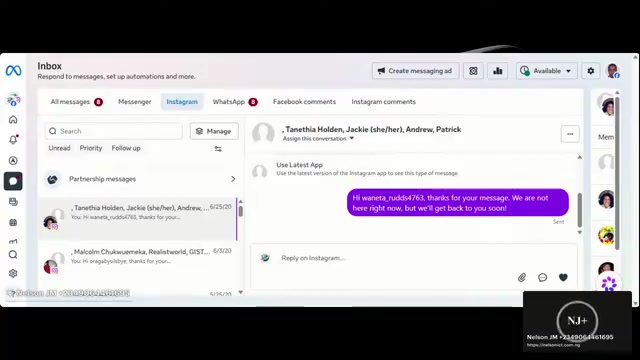
n8n Automation in Practice: How AI Workflows Help SMBs Cut Costs and Boost Efficiency
Learn how SMBs use n8n and AI tools to automate multi-platform messaging, AI customer service replies, and bulk exam data entry — real-world workflows for cutting costs.