Supapool: Creating Isolated Databases for AI Coding Agents in 400 Milliseconds
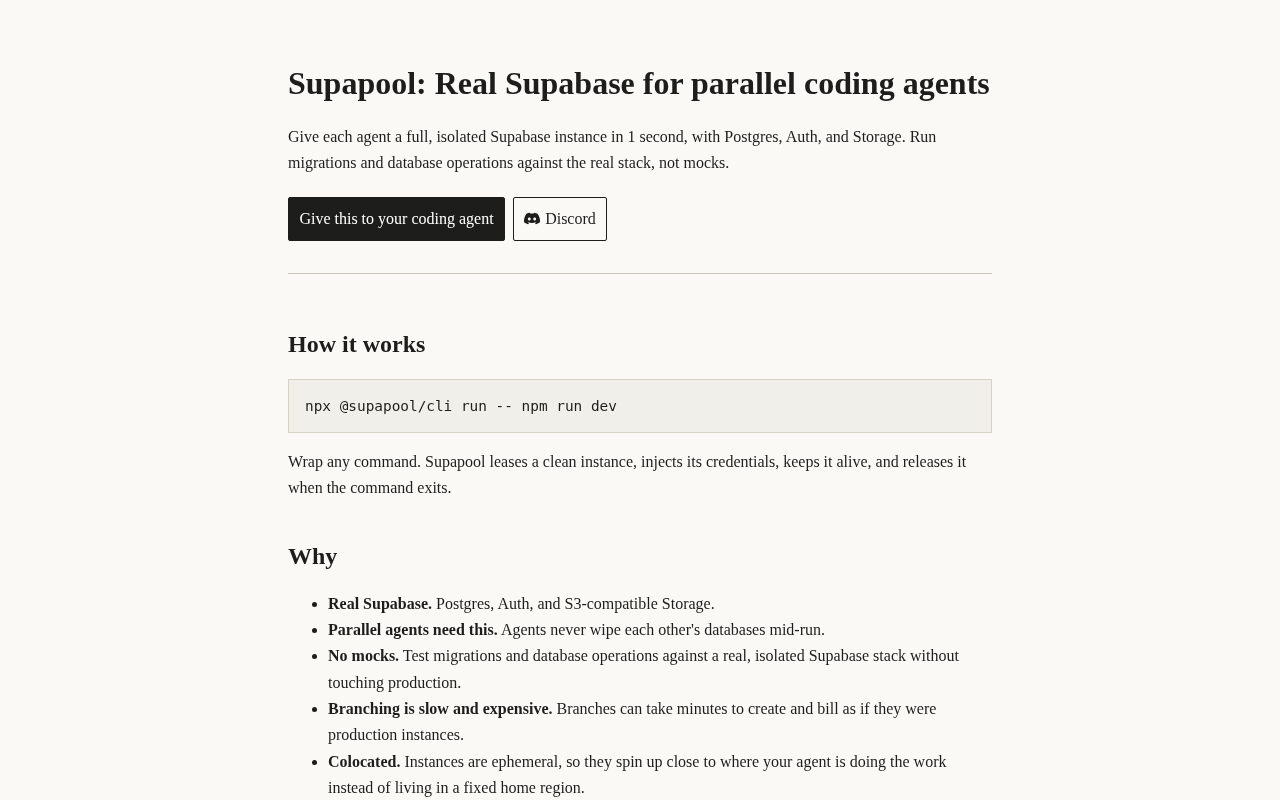
Supapool provisions isolated Supabase databases in 400ms for AI coding agents via pool prewarming.
Supapool is a new infrastructure tool that creates isolated Supabase database instances in approximately 400 milliseconds for AI coding agents like Claude Code, Cursor, and Devin. Using pool prewarming and snapshot techniques, it transforms cold starts into hot allocations, enabling AI agents to work in clean, disposable environments. The project represents the broader trend of AI-native infrastructure designed for agent-specific consumption patterns.
When AI Coding Agents Hit the Database Isolation Problem
With the rapid adoption of AI coding agents like Claude Code, Cursor, and Devin, a new infrastructure pain point has emerged: How do you provide each AI agent with an independent, clean, and disposable database environment?
These AI coding agents represent a new paradigm in software development. They're not just code completion tools — they're intelligent agents capable of autonomous planning, execution, and debugging. Devin, for example, can independently handle the entire workflow from requirements analysis to code deployment, while Cursor can understand an entire codebase's context and perform cross-file refactoring. When these agents execute tasks, they frequently need to interact with real backend services — creating database tables, writing test data, validating API responses — placing unprecedented demands on elastic infrastructure provisioning.
A recent Show HN project, Supapool, targets precisely this niche. Its core promise is striking — it can spin up an independent Supabase instance for each coding agent in approximately 400 milliseconds. Behind this number lies a new set of requirements that AI-assisted development workflows impose on database provisioning speed.
Why Every Agent Needs Its Own Database
In traditional development, a single database typically serves one project or one team. But in scenarios where AI agents autonomously execute tasks at scale, the situation changes fundamentally:
- Concurrent execution: Multiple agents may run different development tasks simultaneously. Shared databases lead to data pollution and mutual interference.
- Reproducibility: AI-generated code often needs to be repeatedly tested, validated, and rolled back in a clean environment, requiring a deterministic initial state each time.
- Security isolation: Agent operations are inherently unpredictable. Isolated sandbox environments prevent accidental modifications from affecting production data or other tasks.
These requirements all point to one conclusion: databases need to be like containers — quickly created, quickly destroyed, and isolated from each other. Supabase, as an open-source Firebase alternative offering PostgreSQL, authentication, storage, and other complete backend capabilities, is naturally suited as an agent's backend environment.
Specifically, Supabase's core architecture is built on PostgreSQL, with a suite of complementary services layered on top: PostgREST provides auto-generated RESTful APIs, GoTrue handles user authentication and authorization, Realtime Server supports WebSocket real-time data subscriptions, and Kong serves as the API gateway for traffic management. Each Supabase instance is essentially the coordinated operation of these components, which explains why cold-starting a complete instance from scratch takes significant time — each component needs to initialize, register with the others, and complete health checks.
What Supapool's 400ms Database Provisioning Really Means
Speed is Supapool's core selling point. To understand the value of 400 milliseconds, we need to compare it with traditional approaches.
Speed Bottlenecks in Traditional Database Creation
Typically, starting a complete Supabase instance from scratch (including PostgreSQL database, PostgREST API, Auth service, and other components) takes seconds or even tens of seconds. If relying on Docker container cold starts or cloud resource orchestration, latency is often even higher. This level of delay is acceptable in manual development, but becomes a severe efficiency bottleneck when AI agents need to request environments at high frequency and in large batches.
Consider an automated test pipeline: if an agent needs to request an independent database for each test case, and each request takes 10 seconds, then 100 test cases would require over 15 minutes just for environment preparation. Compressing this to 400 milliseconds means overall efficiency could improve by one to two orders of magnitude.
Pool Prewarming: The Technical Path to Fast Provisioning
While project details are limited, the name "pool" suggests its technical approach:
- Prewarmed pooling: Pre-create and prewarm a batch of Supabase instances, placing them in a resource pool. When an agent makes a request, allocate a ready instance directly from the pool, transforming "cold start" into "hot allocation."
- Template snapshots: Use database templates or filesystem snapshots (such as Copy-on-Write) to rapidly clone new instances, avoiding initialization from scratch.
- Lightweight isolation: Possibly employing schema-level or database-level isolation rather than spinning up completely independent processes for each instance, thereby reducing resource overhead.
Among these, Copy-on-Write is a key technology for fast cloning. The principle: when cloning a database, don't immediately copy all data pages. Instead, let the old and new instances share the same physical data. Only when one side needs to modify data does the system create an independent copy of the affected pages. This means the cloning operation has time complexity approaching O(1), nearly independent of database size. Modern filesystems like ZFS and Btrfs natively support this feature, and the PostgreSQL community is actively exploring how to leverage these capabilities for sub-second database cloning.
This "pooling + snapshot" combination is a common engineering approach for achieving sub-second database provisioning, and is directly reflected in Supapool's name.
The Emerging Trend of AI-Native Infrastructure
Supapool's emergence is not an isolated case — it's a microcosm of the broader trend toward "AI-native infrastructure."
AI Agents Are Becoming the New Consumers of Infrastructure
In the past, infrastructure served human developers and end users. Now, AI agents themselves are becoming direct consumers of infrastructure. Their resource usage patterns differ fundamentally from humans: higher frequency, shorter duration, more automated, and requiring stronger isolation. This has spawned a new category of tools designed specifically for agents, including temporary sandbox environments, code execution services, and the instant database provisioning discussed here.
The infrastructure being built around AI agents is forming a new ecosystem. E2B (Environment to Bot) provides cloud sandboxes where agents can safely execute arbitrary code; Modal and Fly.io offer compute instances with millisecond-level cold starts; Browserbase provides programmable browser environments for agents. These products share a common design philosophy: resource provisioning must be API-first, sub-second response, pay-per-use, and strongly isolated. Supapool fills the "instant database environment" gap in this landscape, complementing rather than competing with the tools mentioned above.
Disposable Database Environments Are Becoming Essential
Supapool reveals a clear product philosophy: environments should be cheap and disposable. When creating a database costs as little as 400 milliseconds, developers and agents can use and discard them without hesitation. This fundamentally changes the mindset around resource management — from "conserve and reuse" to "grab and toss."
This philosophy aligns with Serverless in cloud computing and database branching, all pursuing ultimate elasticity and low friction in resource provisioning. In the database branching space, Neon can create full PostgreSQL branches in milliseconds using its custom storage engine, where each branch has independent compute nodes but shares historical data at the storage layer. PlanetScale, built on Vitess and MySQL, offers Git-workflow-like database branch management. Compared to these solutions, Supapool's differentiation lies in providing not just database branches, but complete backend environment isolation including authentication, APIs, and storage — which is far more practical for AI agents that need to test full application stacks.
Realistic Considerations and Limitations of an Early-Stage Project
As a Show HN project that just appeared on Hacker News (with only 12 points and 0 comments at the time of posting), Supapool is still at a very early stage, and evaluation should remain grounded:
- Insufficient validation: There's currently no community discussion or third-party verification. Whether the claimed 400 milliseconds can be consistently achieved under real production loads remains to be seen.
- Unknown cost model: Maintaining a prewarmed resource pool means keeping idle resources available. How these costs are allocated and whether pricing is sustainable are critical challenges for products like this.
- Scope limitations: Sub-second provisioning is relatively easy to achieve with small, templated databases. But when agents need large seed datasets or complex schemas, the speed advantage may diminish.
Conclusion
Supapool is a precisely targeted small tool. It doesn't try to reinvent the database — instead, it focuses on the emerging pain point of rapidly provisioning isolated database environments for AI coding agents. The trend it represents deserves attention: as AI agents increasingly become independent actors in the software development process, "agent-native infrastructure" built around them is becoming a real and rapidly growing market.
Regardless of whether Supapool itself ultimately succeeds, the question it answers — how to make infrastructure keep pace with AI automation — will be one of the core themes in the future of developer tools.
Related articles
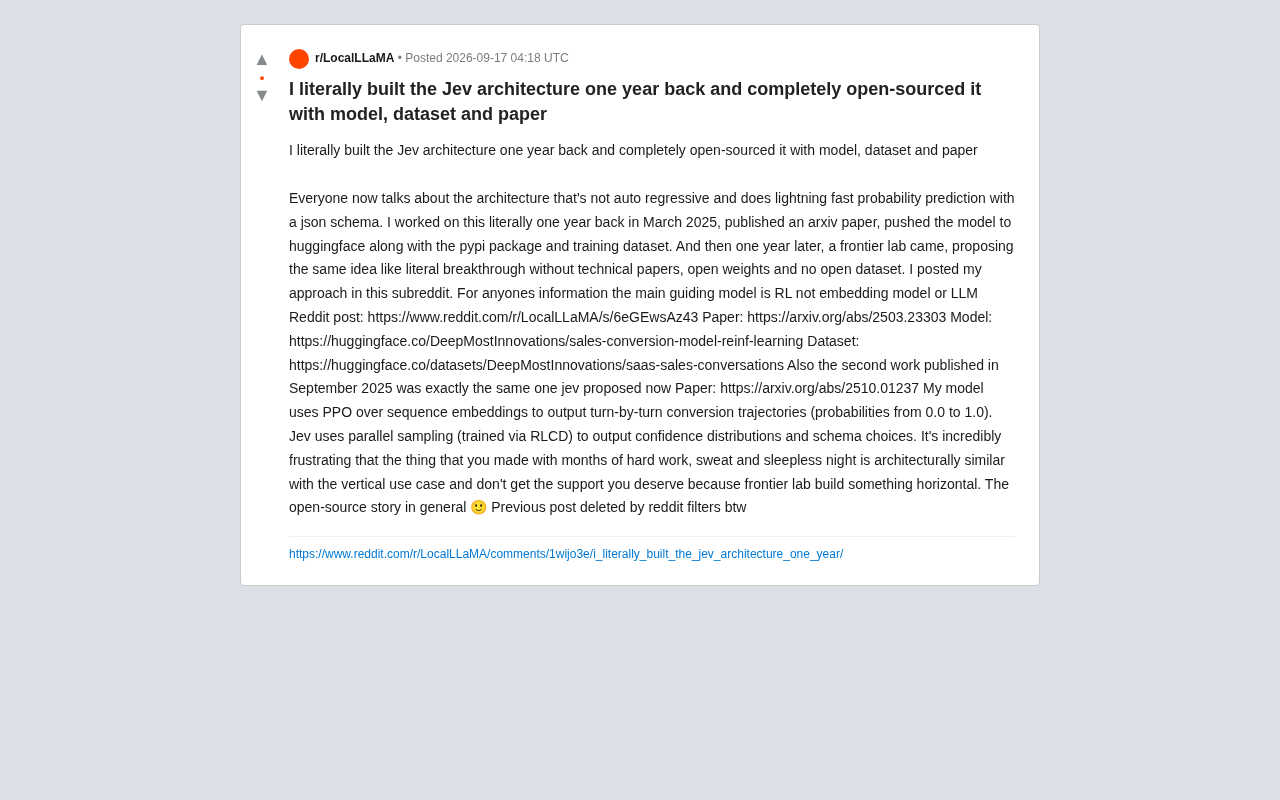
The Open Source Dilemma: A Non-Autoregressive Architecture Pioneer Overshadowed by Frontier Labs
An indie developer claims a frontier lab repackaged his year-old open-source non-autoregressive RL architecture as a breakthrough. We compare PPO sequence embeddings vs. RLCD parallel sampling and examine open source attribution gaps.
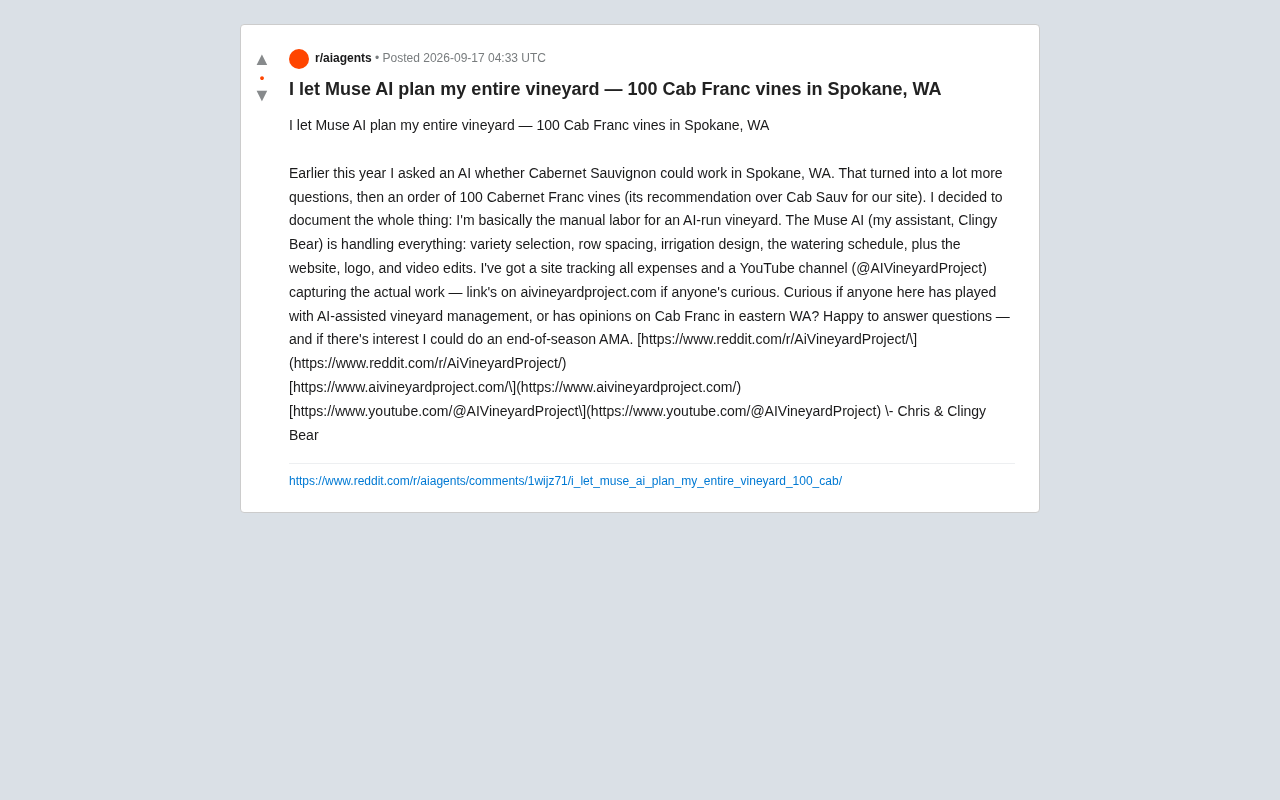
AI Plans an Entire Vineyard: A Real-World Experiment with 100 Grapevines
A Spokane hobbyist let Muse AI plan his entire vineyard — variety, spacing, irrigation, even the logo. He planted 100 Cabernet Franc vines and is documenting everything publicly.

Iceland's Treble Raises $18M to Bet on Voice Simulation Platform
Iceland-based voice simulation company Treble raises $18M. Its platform serves voice AI developers, AI wearables, and robotics firms. A deep dive into the technology and what the funding signals.