Swiss Government Ditches Microsoft on 3,000 Computers in Favor of Open Source: A New Digital Sovereignty Experiment
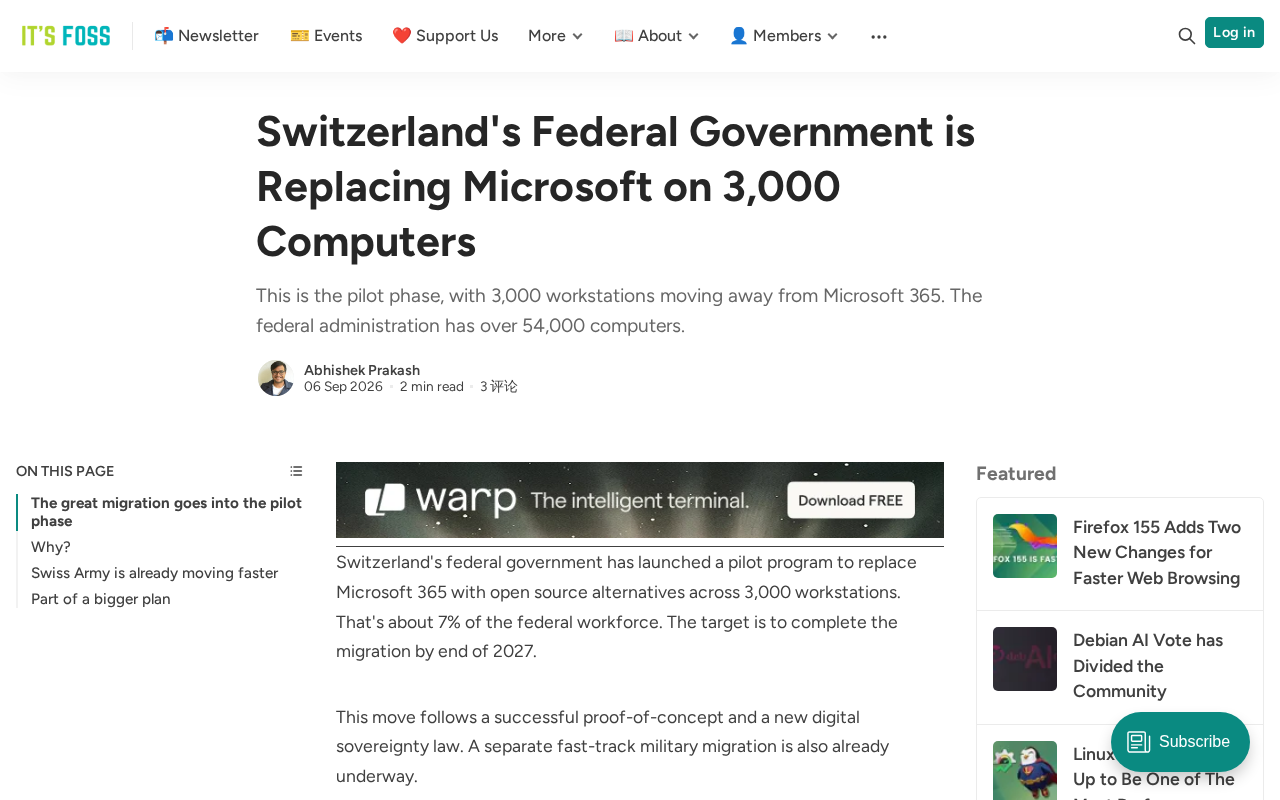
Switzerland pilots open-source migration on 3,000 government computers to reduce Microsoft dependency.
The Swiss government is testing open-source alternatives to Microsoft on 3,000 computers as part of its digital sovereignty strategy. This pilot addresses vendor lock-in, licensing costs, and data control concerns. While modest in scale, it reflects a broader European trend toward technological independence.
Switzerland's Digital Sovereignty Experiment
The Swiss federal government recently launched a notable pilot program: gradually replacing Microsoft products on approximately 3,000 government computers with open-source solutions. While modest in scale, this initiative reflects European governments' growing concern over technological autonomy.
According to It's FOSS, this pilot isn't an isolated incident but part of Switzerland's broader "digital sovereignty" strategy. Digital sovereignty refers to a nation's or organization's ability to maintain autonomous control over its digital infrastructure, data, and technology ecosystem. This concept gained widespread attention in the late 2010s as cloud computing proliferated and cross-border data flows intensified. Core concerns include: controllability of data storage locations, autonomous maintainability of critical technology stacks, independence in technology decision-making to avoid vendor lock-in, and the ability to maintain digital service continuity amid geopolitical conflicts. The EU's 2020 European Data Strategy explicitly identified digital sovereignty as a strategic objective, promoting domestic cloud computing projects like Gaia-X. For governments, digital sovereignty encompasses not just technology choices but national security, economic independence, and long-term strategic autonomy. Against a backdrop of growing global geopolitical uncertainty, an increasing number of government agencies are reassessing their deep dependence on a single American tech giant.
Why Governments Are Starting to "Escape" Microsoft
Vendor Lock-In Concerns
For years, government agencies have been highly dependent on the Microsoft ecosystem for office software, operating systems, and cloud services. This dependence creates significant "vendor lock-in" risk—once path dependency forms, migration costs continually escalate over time while negotiating power steadily declines.
Vendor lock-in refers to situations where users are forced to continue using a specific vendor's products and services due to prohibitively high switching costs. In software, lock-in mechanisms include: proprietary file formats (like .docx), private APIs, customized integrations, employee skill investments, and data migration complexity. The Microsoft ecosystem's lock-in effect is particularly pronounced—Active Directory domain control, Exchange email systems, SharePoint collaboration platforms, and the Office suite form a tightly coupled technology stack. Once government agencies have built workflows and automation scripts on this foundation over years or even decades, migration costs grow exponentially. Economic research shows that in lock-in situations, vendor bargaining power can increase by 40%-60%, explaining why Microsoft can continually raise subscription prices.
One of Switzerland's core motivations for this pilot is to verify whether open-source solutions can meet the daily operational needs of government in a real office environment. If successful, the technical barriers to future large-scale migration will be significantly reduced.
Cost and Licensing Fee Considerations
Microsoft's licensing fees, especially with the proliferation of subscription-based business models, make long-term IT spending difficult for government agencies to control. In recent years, Microsoft has gradually shifted traditional perpetual licenses toward cloud subscriptions, meaning governments must pay continuously to maintain normal software use.
Open-source software has natural advantages in licensing costs. Open Source Software refers to software whose source code is publicly available and allows free use, modification, and distribution. In the office domain, major alternatives include: LibreOffice (document processing suite, derived from OpenOffice), Linux operating systems (like Ubuntu, Debian), Nextcloud (collaboration platform), Thunderbird (email client), and others. The core advantages of the open-source model lie in transparency, auditability, and community-driven continuous improvement. Government adoption of open source avoids licensing fees but requires investment in technical support, custom development, and employee training. The global open-source market exceeded $30 billion in 2023 with an annual growth rate of about 20%. It's worth noting that open source doesn't equal free—companies like Red Hat generate over $3 billion in annual revenue by providing enterprise-level support services, proving the sustainable business model of open source. While migration and maintenance also require investment, from a long-term fiscal sustainability perspective, eliminating high licensing fees is quite attractive for public budgets.
Data Sovereignty and Security
A deeper driving force comes from concerns about data sovereignty. When sensitive government data storage and processing all depend on foreign vendors' cloud infrastructure, actual control over data exists in a gray area. Adopting autonomously controllable open-source solutions allows governments stronger say over where data is stored and how it's processed.
Real-World Migration Challenges
From the heated community discussion (the news received 209 upvotes and 170 comments on Hacker News), such migrations have historically been full of controversy and practical difficulties.
Lessons from History: Munich's LiMux Project
European government agencies' attempts at open-source migration aren't new. The most famous case is Germany's Munich LiMux project—the city undertook a large-scale migration to Linux in the 2000s but ultimately partially returned to Microsoft around 2017, sparking widespread discussion. This history has become a frequently cited "cautionary tale" by opponents.
Munich's LiMux project is the most controversial case in open-source migration history. Launched in 2004, the city decided to migrate 15,000 computers from Windows to LiMux, a custom Linux distribution based on Ubuntu, along with LibreOffice and open-source applications. The project took over a decade and cost tens of millions of euros. In 2013, the project was declared complete, but problems gradually emerged: document compatibility issues with external organizations, some professional software lacking Linux versions, and increasing user complaints. In 2017, the new municipal government decided to return to Windows, citing technical debt, maintenance costs, and user satisfaction. However, the reversal decision was equally controversial—critics pointed out this was more about political factors (Microsoft relocating its German headquarters to Munich) than purely technical considerations. This case revealed the core challenges of government open-source migration: requiring long-term political commitment, adequate technical preparation, and ecosystem support—all indispensable.
Munich's reversal demonstrates that technology migration isn't just a software replacement issue but involves complex factors including user training, ecosystem compatibility, third-party application support, and sustained political will.
Compatibility and User Habits
In office scenarios, document format compatibility is often the thorniest issue. When governments need to frequently exchange files with external organizations and businesses, format conversion issues between open-source office suites (like LibreOffice) and Microsoft Office can cause real problems.
Office document format standards are a key technical barrier to open-source migration. The .docx/.xlsx/.pptx formats used by Microsoft Office are based on the open Office Open XML standard, but Microsoft's implementation includes numerous proprietary extensions and undisclosed format details. LibreOffice's natively supported Open Document Format (ODF, like .odt) is an ISO international standard but has far lower market share than Microsoft formats. When LibreOffice opens complex .docx files, issues commonly arise including format misalignment, font substitution, and macro code failures—and vice versa. This isn't just a technical problem but involves ecosystem inertia—hundreds of millions of users worldwide use Office, forming a de facto standard. The EU has promoted ODF as a government document standard, but implementation has been limited. Format compatibility issues are particularly acute in cross-departmental government collaboration and external communication, often becoming the direct trigger for migration failure.
Additionally, long-established user habits are non-negligible migration resistance. Any workflow change requires time to adapt, and short-term efficiency may decline.
Strategic Significance of the Pilot
A notable detail: Switzerland is taking a "pilot" rather than "complete replacement" approach. This incremental method reflects a pragmatic attitude:
- Controllable Risk: The scale of 3,000 computers is sufficient to generate meaningful data without causing catastrophic consequences if it fails
- Accumulating Experience: Validation in a real environment can reveal potential issues and optimize migration plans
- Creating Leverage: Even without complete migration, demonstrating the existence of viable alternatives itself strengthens the government's bargaining power in negotiations with Microsoft
A Broader European Trend
Switzerland's move isn't isolated. In recent years, multiple European government agencies have been advancing similar "de-Microsoft" efforts. Germany's Schleswig-Holstein state has announced it will migrate to Linux and open-source software, and France, Denmark, and other countries have taken related actions.
Behind this trend is Europe's macro aspiration to seek strategic autonomy in the digital realm. The EU's digital autonomy strategy stems from multiple pressures: American tech giants (Google, Microsoft, Amazon, Apple, Meta) monopolize key technology sectors, China is rapidly rising in 5G and AI, while Europe lacks homegrown tech giants. The 2020 European Data Strategy proposed establishing 'European Data Spaces,' and the 2021 'Digital Compass 2030' set digital sovereignty goals. Specific initiatives include: the Gaia-X cloud infrastructure project, the Digital Markets Act and Digital Services Act regulating American platforms, and the European Chips Act investing in semiconductor industry. At the software level, the European Commission itself is promoting an open-source strategy; the 'Open Source Software Strategy 2020-2023' published in 2020 encourages public sector adoption and contribution to open-source projects. These efforts reflect Europe's ambition to regain technological and economic voice in the digital age, but face multiple challenges including funding, talent, and ecosystem maturity. In a landscape where American tech giants dominate global digital infrastructure, Europe hopes to reduce dependence on single vendors and build a more diverse, controllable technology stack.
Symbolic Significance Outweighs Scale
Objectively speaking, 3,000 computers represent only a small portion of the Swiss federal government's vast IT system. This pilot's short-term technical impact is limited, but its symbolic significance and exploratory value shouldn't be underestimated.
It signals that government agencies are taking issues of digital sovereignty, vendor lock-in, and long-term costs seriously. Regardless of the pilot's ultimate success or failure, it will provide valuable firsthand experience for similar decisions in other countries and regions. For the open-source community, this is also an important opportunity to prove the reliability of its solutions in critical sectors.
In the coming years, whether such government-led open-source migrations can break through Munich-style "reversal dilemmas" will become an important measure of open-source software maturity in critical public sectors.
Key Takeaways
Related articles
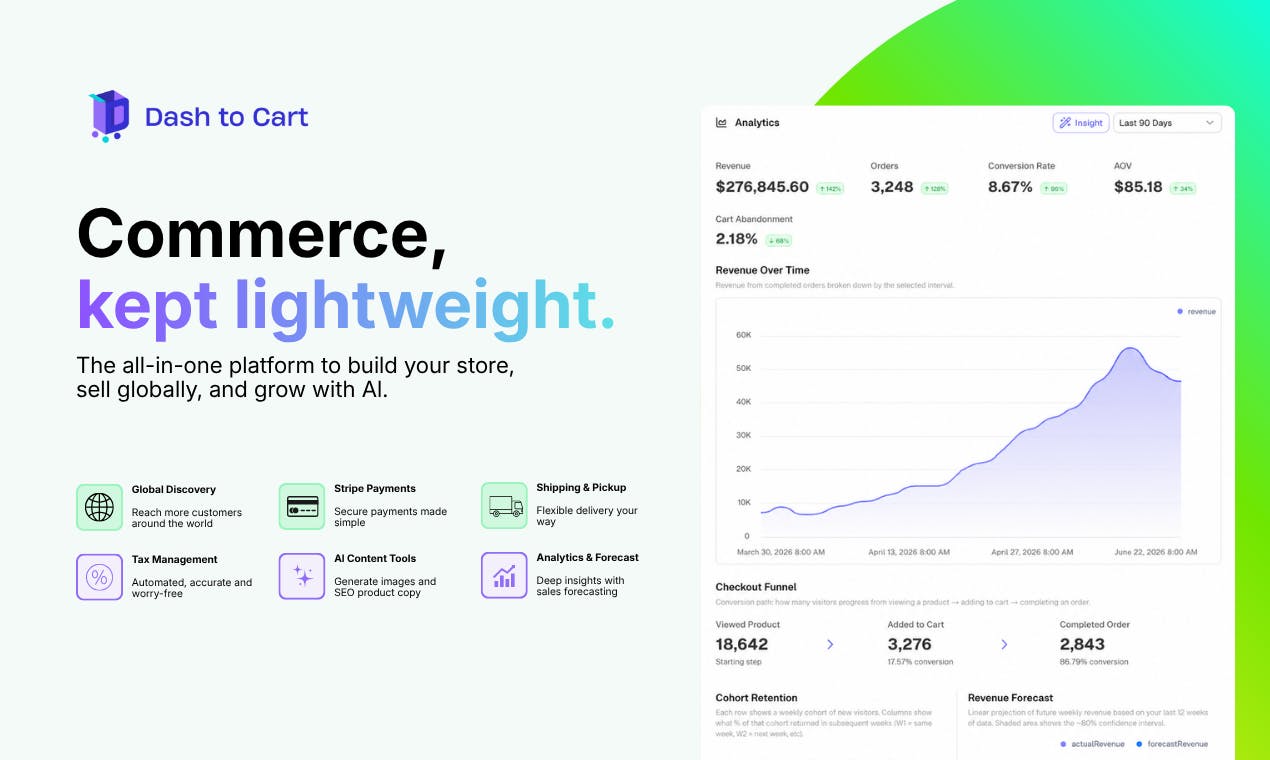
Dash to Cart 2.0 Explained: A Lightweight All-in-One E-commerce Platform for DTC Brands
Deep dive into how Dash to Cart 2.0 offers DTC brands a lightweight all-in-one e-commerce solution with no-code building, Stripe payments, Google Merchant sync, and AI analytics.

Undeadlines: The Creative Weekly Planner That Turns Your Tasks Into Zombies
Undeadlines gamifies weekly planning by visualizing tasks as approaching zombies, replacing abstract dates with spatial distance to combat deadline numbness and rethink urgency in productivity tools.

CosmoDex: In-Depth Experience with the AI-Powered Gamified Programming Learning Platform
In-depth analysis of the CosmoDex gamified programming platform, covering AI personalized learning paths, real-time 1v1 coding battles, XP leaderboards, and its competitive differentiation from LeetCode and Codecademy.