Tadata: The AI Employee Living in Slack That Reads the Room
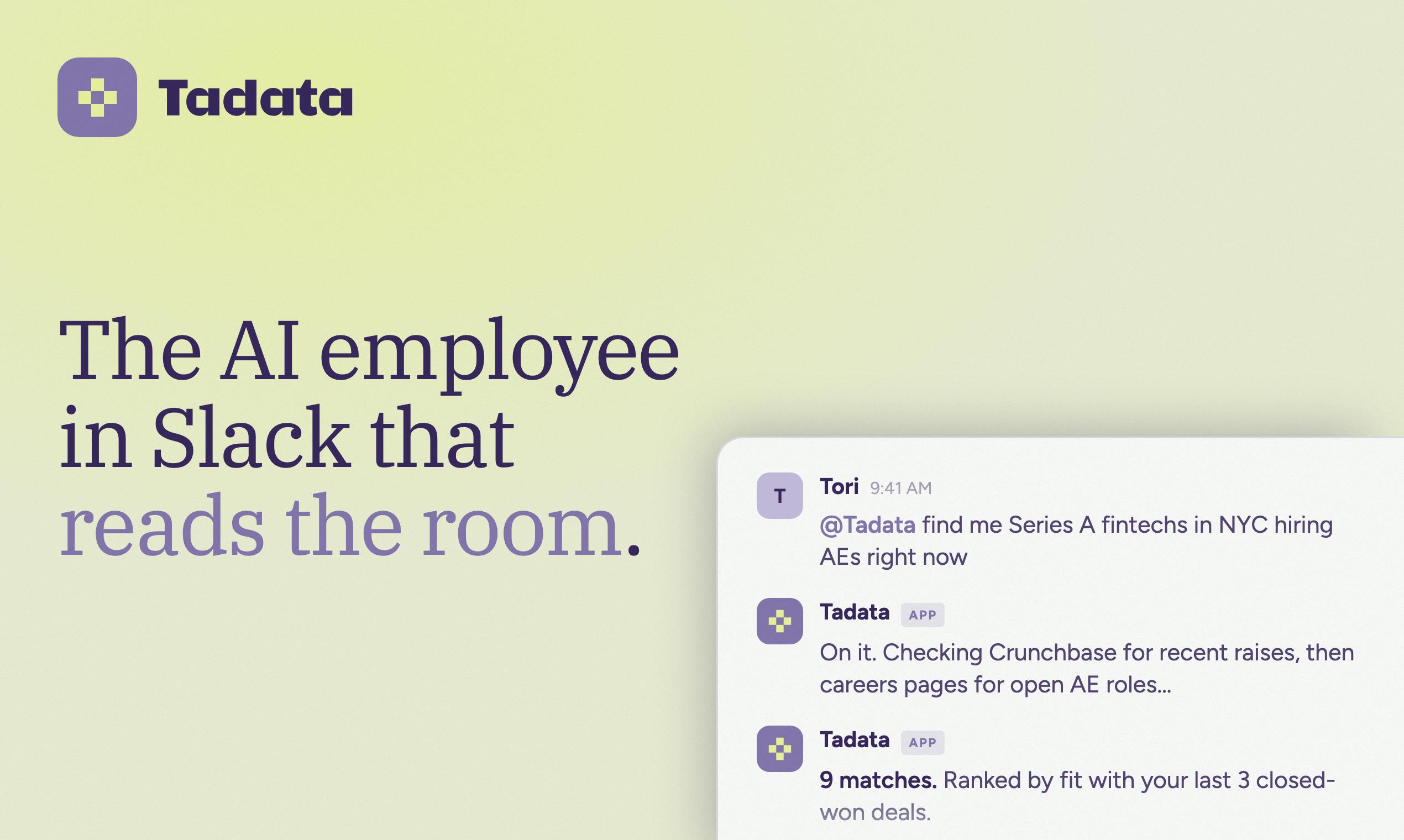
Tadata: A Slack-native AI employee that reads context, connects tools, and gets real work done
Tadata positions itself as an AI employee living in Slack, not just an assistant. It reads the room, integrates with team tools, learns company context, and proactively completes tasks. Launched on Product Hunt with strong reception, it represents the evolution from passive AI assistants to autonomous AI employees.
A "New Colleague" Appears in Slack
As enterprise collaboration tools increasingly become the nerve center of teams, Slack is no longer just a chat tool—it's evolving into the core hub of workflows. Since its launch in 2013, Slack has grown from a simple team messaging tool into the cornerstone platform for enterprise digital collaboration, serving over 750,000 paying organizations. Its success hinges on an open API ecosystem and rich third-party integration capabilities—the Slack App Directory features over 2,600 applications spanning nearly every enterprise scenario from project management to code deployment to customer support. After being acquired by Salesforce for $27.7 billion in 2021, Slack further solidified its position as an enterprise workflow hub. This "everything connects to Slack" ecosystem makes it a natural host environment for AI Agents.
Against this backdrop, Tadata emerged—positioning itself as "the AI employee living in Slack," it launched on Product Hunt and captured second place on the daily leaderboard with 354 votes and 41 comments. Product Hunt is one of the world's most influential platforms for product launches and discovery, regarded as the "launch pad" for tech startups. A second-place finish with 354 votes typically signals that a product has hit a market nerve with its positioning and narrative—many products that later grew into unicorns, like Notion, Figma, and Loom, completed early market validation through Product Hunt.
Unlike many AI assistants on the market, Tadata's slogan is cleverly crafted: "The AI employee in Slack that reads the room." This phrase reveals its core ambition—not just passively responding to commands, but understanding context, sensing team dynamics, and proactively completing work like a real colleague.
Tadata's Three Core Capabilities
According to official descriptions, Tadata is an AI employee stationed in Slack workspaces with three key capabilities:
Connect Your Tools
Tadata can integrate with various tools teams use daily. In modern enterprises, a typical team might simultaneously use dozens of SaaS tools for project management, documentation, code repositories, CRM, and more. According to statistics from SaaS management platforms like Productiv, a mid-sized company uses an average of over 130 SaaS applications, while large enterprises may use hundreds. These tools operate in silos, creating severe information silos: project progress lives in Jira, customer information in HubSpot, documents in Notion, designs in Figma. Employees constantly switch between different tools throughout the day, and research shows this "context switching" requires about 23 minutes each time to regain focus. The value of a Slack AI employee lies precisely in breaking down these information silos through Slack as a convergence point, orchestrating disparate tools in a unified way, and becoming a cross-tool executor—fundamentally solving the efficiency drain caused by enterprise SaaS fragmentation.
Learn Company Context and Preferences
Tadata continuously learns your company and team preferences. This means it's not a generic out-of-the-box Slack bot, but one that adapts to specific team contexts, terminology, and work habits over time. This personalized learning capability is the key step in evolving AI from a "tool" to an "employee." From a technical perspective, this continuous learning typically relies on RAG (Retrieval-Augmented Generation) architecture and reinforcement learning mechanisms from user feedback—the AI indexes the team's conversation history, documents, and workflow patterns, gradually building an understanding of the organization's specific knowledge graph, making its outputs increasingly aligned with the team's actual needs.
Get Real Work Done for the Team
Ultimately, Tadata's goal is to "get work done for your team." It emphasizes not question-and-answer interactions, but actual task execution—from organizing information to advancing processes, playing a role that can independently shoulder responsibilities.
What "Reading the Room" Really Means
Tadata's most differentiated expression is "reads the room." This phrase in English refers to the ability to "read social cues and understand the current situation." For an AI product, this conveys a higher-order expectation:
Traditional Slack bots often require precise command triggers, lack contextual awareness, and easily intervene in conversations at the wrong time or in the wrong way. Tadata attempts to understand conversational context—when to proactively help, when to stay quiet, what kind of response fits the current discussion's tone.
Achieving this contextual intelligence requires AI to process signals across multiple dimensions simultaneously: the semantic content of conversations, participants' role relationships, discussion urgency, team communication historical patterns, and even implicit emotional tone. This technically involves comprehensive application of multiple NLP subfields including multi-turn dialogue understanding, intent recognition, sentiment analysis, and temporal modeling. While the most advanced large language models excel at single-turn understanding, they still have obvious limitations in long-term context tracking and social dynamics perception. How to extract from massive conversational information the nuanced judgment of "whether to intervene at this moment" remains a challenge requiring substantial engineering optimization and product design.
If this contextual intelligence can truly be realized, it will greatly enhance the usability of AI employees in real collaboration scenarios. After all, an AI that constantly interrupts at inappropriate moments is more annoying than having no AI at all.
The Paradigm Shift from AI Assistant to AI Employee
Tadata's positioning reflects an important trend in current AI applications: the conceptual upgrade from "AI assistant" to "AI employee."
The difference between these two is not just wording:
- AI Assistant: Passively waits for commands, completes single tasks, forgets after interaction ends
- AI Employee: Proactively understands environment, assumes ongoing responsibilities, possesses memory and learning capabilities
Behind this upgrade is the rise of Agent technology—one of the hottest directions in AI today. Agent technology represents a paradigm leap from "large language models passively answering questions" to "AI autonomously planning and executing complex tasks." A typical AI Agent has four core modules: Perception, Planning, Memory, and Action. Unlike traditional chatbots, Agents can decompose a complex goal into multiple subtasks, invoke different tools to complete them step by step, and dynamically adjust strategies based on intermediate results. Leading AI companies like OpenAI, Anthropic, and Google are actively advancing Agent capabilities, and enterprise-level Agent platforms like Microsoft's Copilot Studio and Salesforce's Agentforce are rapidly taking shape.
As large model capabilities improve and Agent technology matures, more products are attempting to let AI play more complete roles in enterprise environments. Tadata's choice of Slack as a landing scenario is pragmatic—Slack itself is where team communication and decision-making happen, placing an AI employee in this environment naturally aligns with actual workflows. This also echoes Salesforce's "conversational work platform" strategy following its acquisition of Slack, as the combination of AI Agents and Slack is becoming the next evolutionary direction for enterprise collaboration.
Points of Interest and Real-World Challenges
Tadata's high ranking on Product Hunt indicates clear market anticipation for "Slack-native AI employees." However, from concept to genuinely useful, such products still face several real challenges:
Accuracy of contextual understanding. "Reading the room" sounds simple but is extremely difficult to execute. Misjudging context, over-intervening, or providing irrelevant responses will quickly erode team trust. The "attention decay" phenomenon in current large language models within long context windows, and understanding biases in multi-participant, multi-topic interleaved conversations, are technical challenges that need continuous resolution.
Depth of tool integration and data security. The more tools integrated, the more capable—but this also means greater permissions and data security responsibilities. Enterprise users are especially sensitive to this. When an AI Agent needs to access core enterprise tools like CRM, code repositories, and financial systems, data security and compliance issues become critical. Enterprises need to focus on encryption standards for data transmission and storage (such as SOC 2 Type II, ISO 27001 certifications), whether permission controls follow the principle of least privilege, and data residency issues when facing privacy regulations like GDPR and CCPA. The "autonomous action" characteristic of Agents means that improper permission configuration can have far greater consequences than traditional chatbots.
Boundaries of personalized learning. Learning company preferences requires continuous data accumulation; how to enhance intelligence while protecting privacy and avoiding "over-learning" is a question products must answer. There's a delicate balance here: AI needs enough data to understand team habits, but excessive memory may lead to information leakage risks—for example, after an employee leaves, does the AI still retain and potentially expose sensitive information from their historical conversations? These are issues that must be carefully considered when designing data lifecycle management strategies.
Conclusion
Tadata represents a meaningful exploration of AI in enterprise collaboration—it grounds the somewhat futuristic concept of "AI employee" in the concrete scenario of Slack that everyone uses. Its positioning of "reading the room" hits the pain point of current AI assistants' general lack of contextual intelligence.
As a new product just launched on Product Hunt, its actual experience and long-term value remain to be validated by the market. But one thing is certain: making AI truly become a team member rather than just a chat window is becoming a new battlefield in enterprise AI application competition. From Microsoft Copilot to Google Duet AI, from Salesforce Agentforce to various vertical-scenario AI Agent startups, this "AI employee" race has only just begun. Tadata's emergence reminds us: future enterprise collaboration may no longer be human-tool interaction, but human-AI colleague collaboration.
Related articles
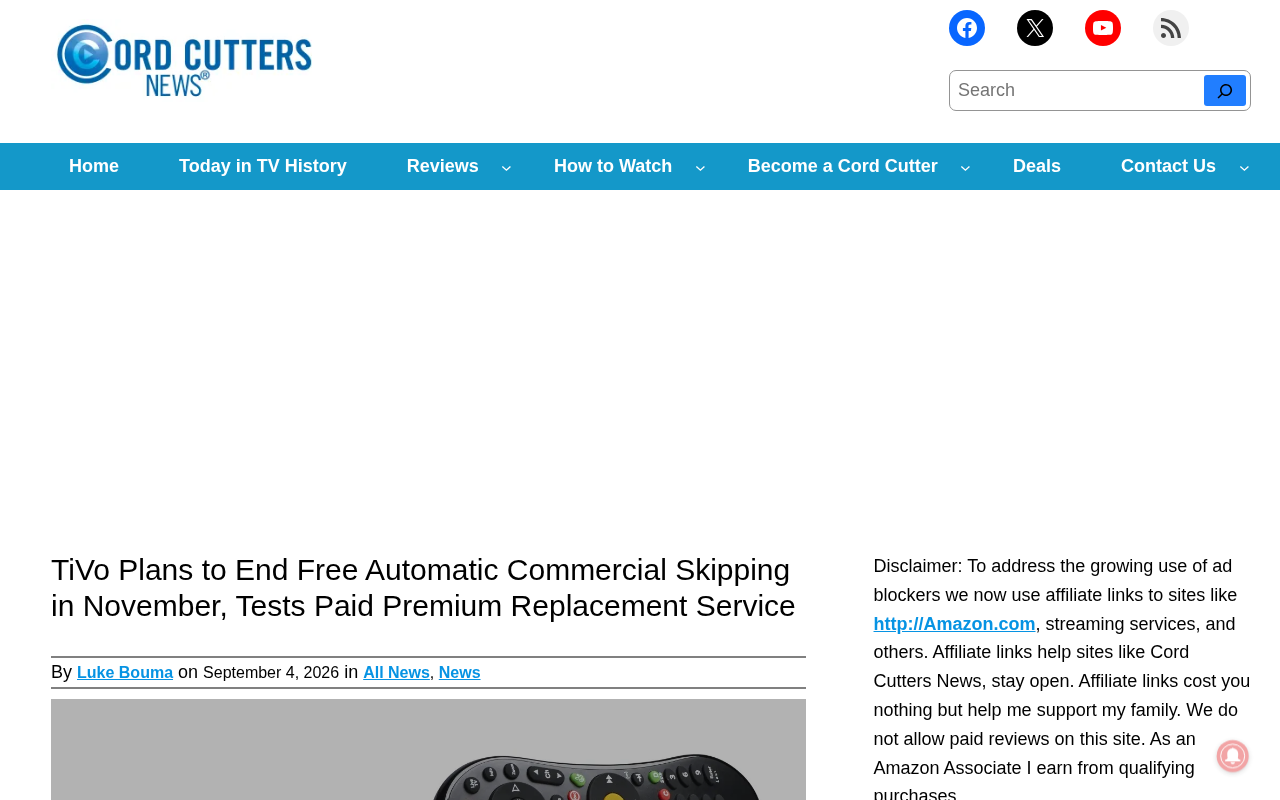
TiVo Charging for Ad-Skipping? DVR User Rights and the Digital Ownership Debate Explained
TiVo plans to charge DVR users for ad-skipping, sparking debate over digital ownership and consumer rights. A deep dive into subscription trends and their implications.
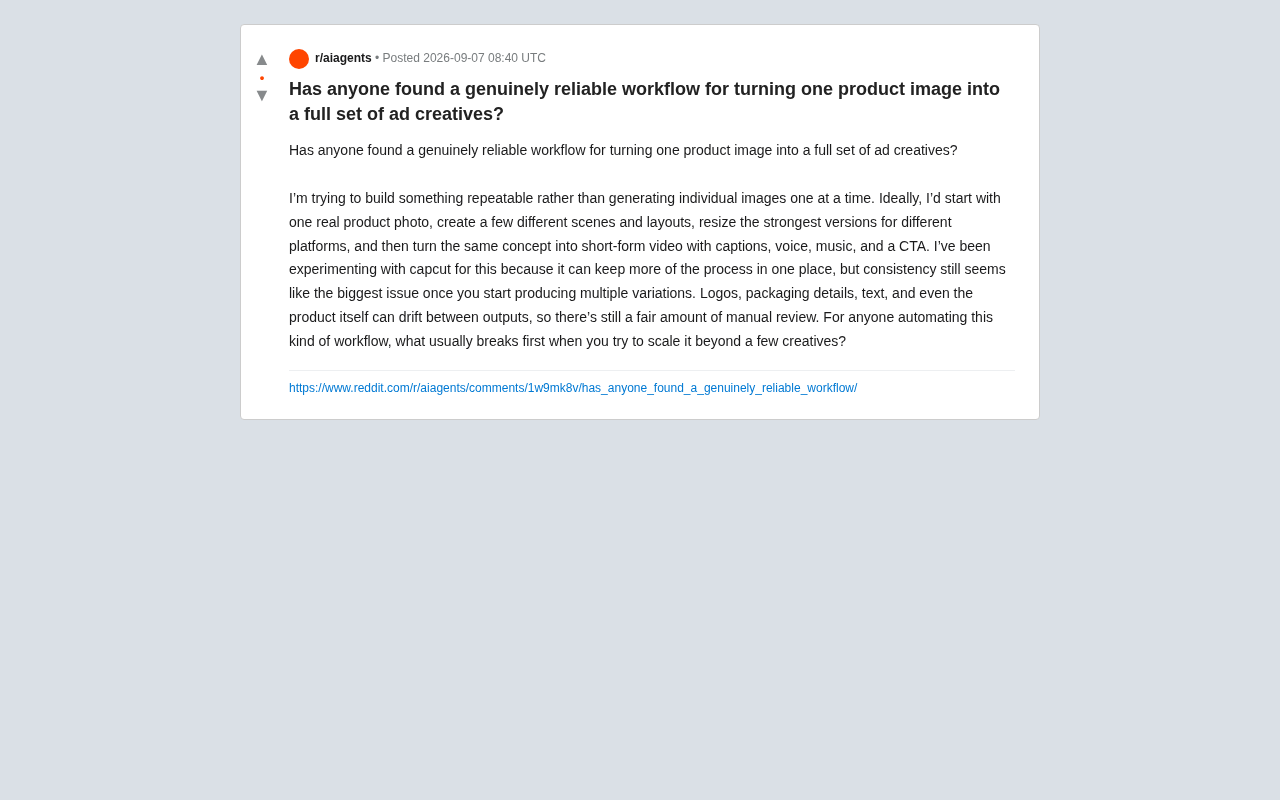
Batch Generating Ad Creatives from a Single Product Image: Real Bottlenecks and Solutions for Scaled Workflows
From one product photo to multi-platform ad assets—brand consistency, text rendering, and cross-platform adaptation collapse first. Deep dive into AIGC marketing workflow bottlenecks with template-driven and layered composition solutions.
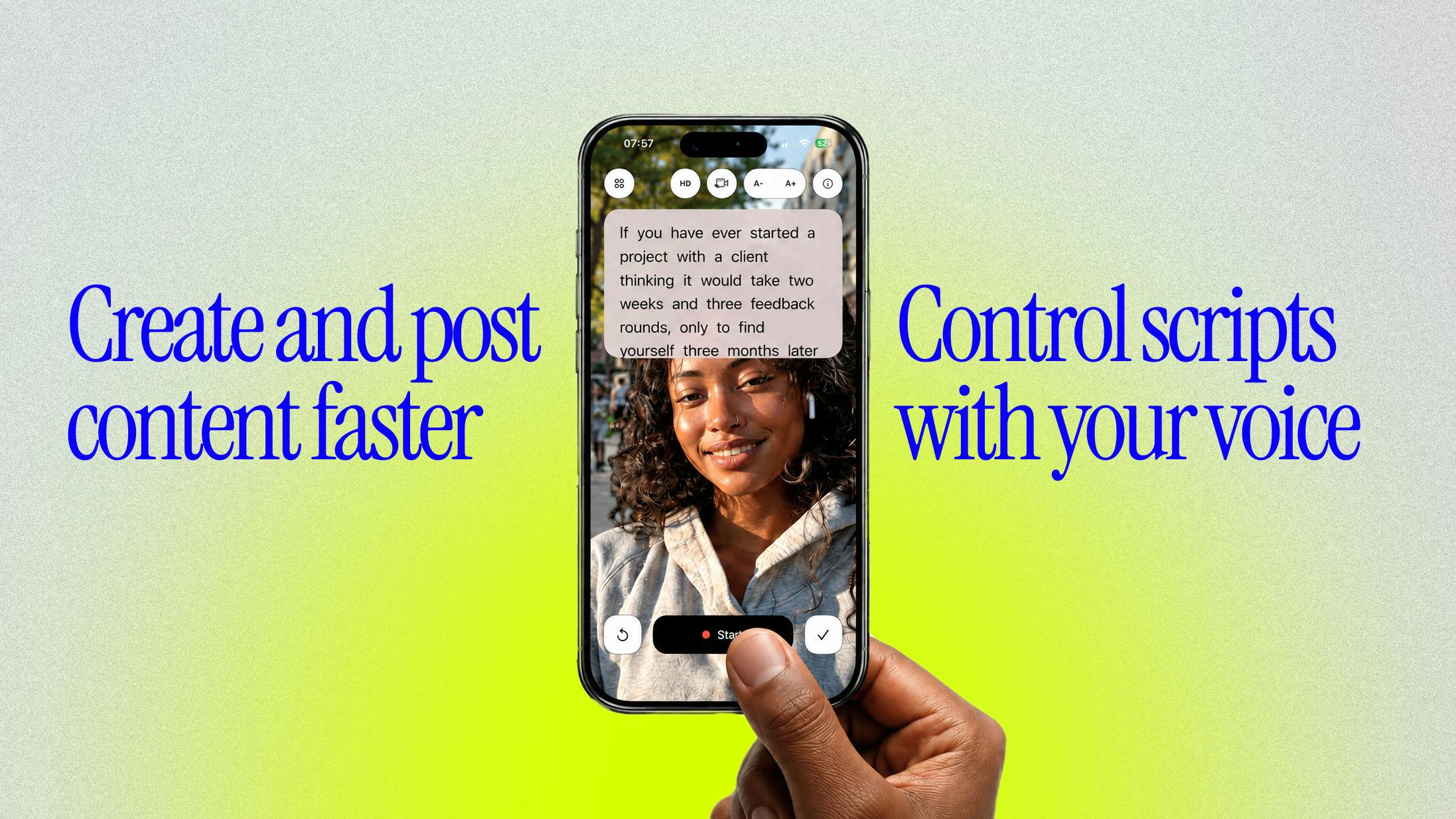
Scriptly: AI Voice-Following iOS Teleprompter That Eliminates Pace-Chasing
Scriptly is an iOS voice teleprompter using AI real-time voice-following technology to auto-match speaking pace. Supports local storage for privacy, integrates writing, script management & video recording workflow for content creators.