Kyutai Releases CADRE: An Interactive World Model Video Autoencoder with Latency Cut to 230ms
Kyutai releases CADRE, an open causal diffusion video autoencoder achieving 20 fps and 230 ms latency on a single H100 for interactive world model frontends.
Kyutai has released CADRE, an open family of 7 causal diffusion video autoencoders designed for interactive world models. Its core breakthrough is latency: a CADRE-based world model reaches 20 fps on a single H100 with end-to-end reaction latency below 230 ms, near the human perception threshold of instant response. The causal structure relies only on past frames and supports streaming inference; diffusion runs in latent space, cutting per-frame inference cost. Open weights let researchers swap and compare dynamics models on a shared latent space, lowering the barrier to entry. However, public information currently covers only latency and frame rate; generation quality, model differences, and performance at different resolutions remain to be detailed, and end-to-end latency also depends on the upper-layer predictor's complexity.
The latency bottleneck of world models has been cracked open by a set of open autoencoders
Kyutai has released CADRE, a set of open causal diffusion video autoencoders comprising 7 models, aimed at interactive world model scenarios. According to MarkTechPost, a world model built on CADRE can run at 20 fps on a single H100, with end-to-end reaction latency below 230 ms.
The significance of these numbers lies in this: world models have long been stuck in an awkward position—generation quality is impressive enough, but latency is too high for interaction. 230 ms is already close to the human perception threshold of "instant," and 20 fps reaches the basic frame rate of a usable video stream.
What CADRE is: an open family of 7 models
CADRE is positioned not as a single model but as a model family. The 7 variants imply different scales, compression rates, or quality tiers, leaving downstream users room to make trade-offs based on compute budget and latency requirements.
"Causal" is the key word here. A causal video autoencoder depends only on past frames in the temporal dimension and does not use bidirectional attention—this is precisely the prerequisite for streaming generation and low-latency interaction: the model can output the current result without waiting for future frames.
"Diffusion" handles generation quality. Placing the diffusion mechanism inside the autoencoder rather than directly in pixel space means the model generates in a more compact latent space, significantly reducing inference cost.
"Open" deserves a separate mention. The core components of world models have long been predominantly closed-source. A set of open video autoencoders allows researchers to build their own predictors, controllers, or interaction logic on top of its latent space without having to train a video compression frontend from scratch.
Video autoencoder is a type of neural network that compresses video into a low-dimensional latent representation and can reconstruct the original frames from it, usually consisting of an encoder and a decoder. Compared with image autoencoders, it must also handle the temporal dimension: either encoding frames independently (ignoring temporal order) or introducing temporal modeling to capture motion information. In generative world models, the video autoencoder plays the role of a "frontend"—it determines the compactness of the latent space and the fidelity of information, which in turn affects the difficulty and cost of subsequent dynamics prediction. A high-quality video autoencoder can greatly reduce computation while preserving sufficient visual detail, making prediction and planning in latent space possible. CADRE's causal diffusion design is precisely an optimization at this stage.
Diffusion model is a class of generative models that recover data samples from random noise through iterative denoising, and has demonstrated excellent quality in image and video generation. Traditional diffusion models operate directly in pixel space, incurring enormous computational overhead; latent diffusion, by contrast, first uses an autoencoder to compress data into a low-dimensional latent space and then performs the diffusion process in that latent space, thereby significantly reducing inference cost. CADRE places the diffusion mechanism inside the autoencoder, meaning the encoder and decoder themselves may incorporate diffusion-style denoising or reconstruction steps, rather than using diffusion only outside the latent space. This design balances the reconstruction quality and speed of each frame, making it especially suitable for latency-sensitive interactive scenarios.
230 ms and 20 fps: why these two numbers matter
Latency determines whether a world model can be "played"
A typical use of an interactive world model is: the user provides an action, and the model predicts the next frame. If more than half a second passes from action input to visual feedback, the experience degrades from "control" to "waiting." 230 ms compresses this feedback into the continuous interval of human perception, making model output closer to real-time response rather than pre-rendered playback.
A single H100 means reproducibility
20 fps is achieved on 1 H100. This hardware threshold is realistic for research teams and small to medium-sized labs—no cluster is needed, no multi-GPU parallel tuning is needed; a set of public models plus one mainstream data center card is enough to run it.
The autoencoder is a hidden cost in the latency budget
A world model usually has two stages: first compress the image into latent space (encoding), predict the future in latent space (dynamics), and then decode back to image. Encoders and decoders are often treated as "free" preprocessing and postprocessing, but their overhead directly adds to the latency of each frame. By placing diffusion inside the autoencoder, CADRE is in effect optimizing the most easily overlooked link in this chain.
Impact on the interactive world model ecosystem
The most direct change is the barrier to entry. In the past, teams wanting to experiment with interactive world models often had to first build their own video tokenizer or autoencoder—a task with a large workload, arcane hyperparameter tuning, and results that were not easy to compare with others. CADRE provides a set of open baselines with clear latency metrics, allowing different teams' dynamics models to be compared on the same latent space.
The second level of impact is on the application side. The 230 ms interaction latency opens up a batch of directions that were previously unrealistic: training environments that can respond in real time, game-like content generation, and visual imagination modules for robot policies. These scenarios often have lower requirements for image quality than for response speed, and CADRE's trade-offs lean precisely toward the latter.
The third level of impact is on research paradigms. The combination of causal structure + diffusion + open weights makes "planning in latent space" easier to validate. Researchers can directly replace the dynamics component and observe how end-to-end latency and generation quality change, without retraining the frontend each time.
Points that warrant a calmer look
The public information currently gives only two hard metrics: latency and frame rate. It lacks quantitative comparisons of generation quality, the specific differences among the 7 models, and performance at different resolutions. Whether 20 fps and 230 ms hold simultaneously in all scenarios also depends on the complexity of the dynamics model—CADRE optimizes the autoencoder segment, and end-to-end latency will still vary with the upper-layer predictor.
For teams that want to get hands-on, a reasonable expectation is this: CADRE solves the problem of "the frontend is fast enough and open enough." The predictive capability and long-term consistency of the world model itself still need to be supplied by the part you build yourself.
FAQ
Is CADRE a complete world model? No. It is a family of video autoencoders responsible for compressing images into latent space and reconstructing them. The dynamics prediction part of a world model must be built separately.
Why emphasize "causal"? Because causal structure depends only on past frames and supports streaming inference, which is a prerequisite for low-latency interaction; bidirectional structure requires seeing the full sequence and is inherently unsuitable for real-time scenarios.
What does the 230 ms latency include? According to public descriptions, this is the end-to-end reaction latency of a world model based on CADRE, covering the full chain from input to visual output.
What hardware is required? A single H100 is enough to achieve the reported 20 fps metric.
One-line Summary
Kyutai releases CADRE, an open causal diffusion video autoencoder that delivers an interactive world model frontend at 20 fps and 230 ms latency on a single H100.
Paragraph Summary
Kyutai has released CADRE, an open family of 7 causal diffusion video autoencoders designed for interactive world models. The core breakthrough is latency: a world model based on CADRE reaches 20 fps on a single H100, with end-to-end reaction latency below 230 ms, close to the human perception threshold of instant response. The causal structure makes the model depend only on past frames and supports streaming inference; the diffusion mechanism operates in latent space, reducing per-frame inference cost. Open weights allow researchers to replace and compare dynamics models on a unified latent space, lowering the barrier to entry for interactive world models. However, public information currently covers only latency and frame rate; generation quality, differences among models, and performance at different resolutions remain to be filled in, and end-to-end latency is also affected by the complexity of the upper-layer predictor.
Related articles

FlyEnv Plugin Review: Visually Running llama.cpp and Managing GGUF Models
FlyEnv launches the official llama.cpp plugin with side-by-side Metal runtime management, public GGUF repository indexing with file type labels, and visual configuration of context, threads, and GPU layers—saving templates and speculative decoding with each model for one-click local LLM inference.
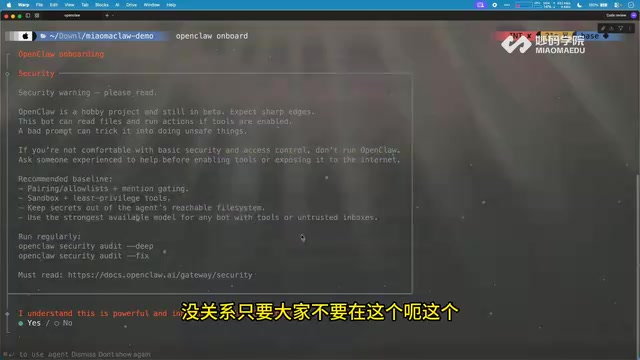
How Can Frontend Developers Advance into AI Agent Development? Deconstructing System-Level Agent Architecture from OpenClaw
Starting from the OpenClaw demo in a Bilibili open class, this article breaks down the three-layer architecture and universal formula of system-level AI agents, and analyzes the path for frontend developers to enter agent development based on TypeScript, including plugin-based design and security/memory layer challenges, with an interview answer framework.

WorkBuddy in Action: How AI Agents Automate Batch File Conversion and Archiving
Bilibili creator Teacher Shanyao tests WorkBuddy vs. Doubao on batch file conversion, showing how AI Agents move from "giving solutions" to "direct execution," with a full workflow and credit cost reference.