Tech Backlash Hits the Big Screen: Why 2026 Cinema Is Collectively Criticizing Silicon Valley

Multiple 2026 films collectively criticize tech founders, examining technology's destructiveness with a cold lens.
The 2026 film market shows a clear shift, with multiple works unanimously criticizing the destructive side of tech founders. Aaron Sorkin's *The Social Reckoning* portrays Zuckerberg as a mechanical villain, while Nathan Fielder and Lance Oppenheim's *You Can...* uses absurdist realism to dismantle tech-utopian rhetoric. This collective turn is driven by three forces: the proliferation of generative AI, social media mental health controversies, and the expansion of founder political influence. Though films don't offer solutions, they provide a public entry point for tech ethics discussion and may shape the long-term expectations of regulators, investors, and the next generation of engineers. These critical works themselves rely on streaming distribution, forming a self-referential paradox.
Over the past decade, films about tech founders have been far from rare, but most were biographical praise or dramatic legend-making. In 2026, however, a clear shift has emerged: multiple new films are turning their lenses toward Silicon Valley's destructive side, examining how technology reshapes reality with a colder, more critical perspective.
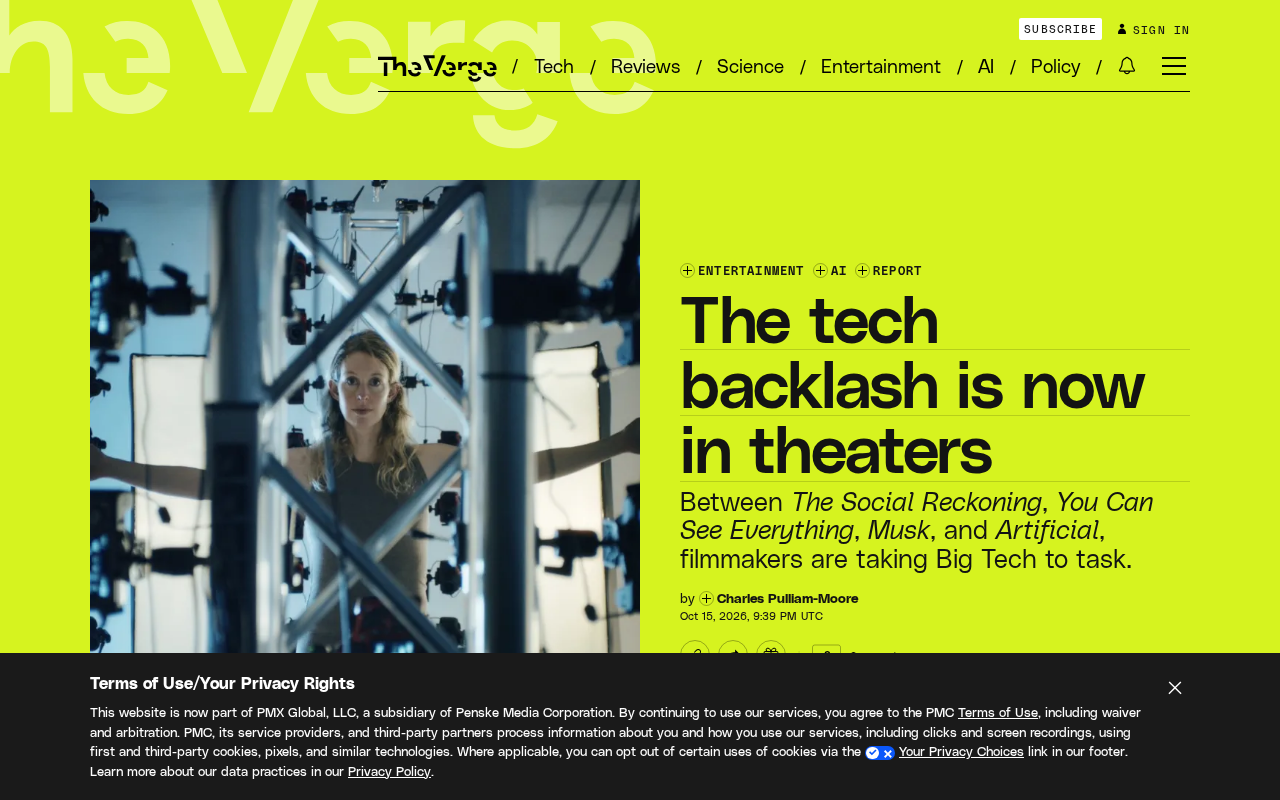
From God-Making to Ugliness-Testing: The Collective Shift in Tech Narratives
According to observations from RSS tech commentary sources, the 2026 film market has seen an unusually dense wave of works criticizing tech founders. This stands in sharp contrast to the earlier The Social Network-style narrative—back then, audiences saw the rise and betrayal of a genius; now they see how ambition can destabilize an entire society.
This shift is no accident. As tech platforms become deeply embedded in daily life, public anxiety over algorithmic manipulation, data monopolies, and founder power has gradually spilled from the tech world into the cultural sphere. Film, as an amplifier of mass sentiment, has been among the first to capture this collective unease.
The Social Reckoning: Zuckerberg as a Mechanical Villain
Aaron Sorkin's new film The Social Reckoning portrays Mark Zuckerberg as a robotic villain—whose ambition is destabilizing society. Sorkin has always excelled at using dense dialogue to sketch the inner contradictions of powerful figures. This time, he chooses to dehumanize the tech founder, presenting an individual consumed by algorithmic logic with an almost deadpan humor.
This approach is worth pondering: it no longer asks "is he a genius," but rather "what happens when one person's ambition conflicts with the well-being of all society."
Aaron Sorkin is one of the most renowned screenwriters of our time, known for The West Wing, The Newsroom, and the 2010 film The Social Network—the latter also based on Zuckerberg, but depicting him as a composite of genius and betrayer. Sorkin's scripts are known for high-density, fast-paced intellectual dialogue, often focusing on conflicts between institutions, power, and personal morality. In The Social Reckoning, he deliberately dehumanizes the founder figure, replacing psychological depth with a mechanical quality—a self-dialogue with his past writing: shifting from probing personal motives to examining systemic consequences.
Nathan Fielder is a Canadian comedian known for "awkward comedy," whose Nathan for You had him intervene in real business scenarios in mockumentary form, exposing rule loopholes through absurdist methods. Lance Oppenheim is a documentary director skilled at presenting marginalized American communities with a cinematic, fictional feel. Their collaboration You Can... continues this path of blending reality and fiction, using the alienation of awkward comedy to dismantle tech-utopian rhetoric, making audiences reflect on technological promises amid discomfort.
You Can...: Nathan Fielder's Absurdist Realism
Nathan Fielder and Lance Oppenheim's collaboration You Can... continues Fielder's signature awkward comedy style, using mockumentary-style absurdity to dismantle tech-utopian rhetoric. Such works don't preach directly, but let audiences realize through uncomfortable laughter: those technologies packaged as "empowerment" often hide a deeper logic of control.
The Social Network was released in 2010, directed by David Fincher and written by Aaron Sorkin, telling the story of betrayal and lawsuits in Facebook's early days. It established a "genius rise" narrative template: the founder is portrayed as intellectually superior but morally ambiguous, with audiences both admiring his talent and feeling uneasy about his coldness. For the next decade, most tech founder films followed this framework, concentrating dramatic conflict on personal grudges and business competition.
The 2026 batch of films shifts focus from the individual to social consequences: founders are no longer geniuses worth dissecting, but symbols of systemic destruction. This shift from "god-making" to "ugliness-testing" syncs with public anxiety over platform power, algorithmic manipulation, and data monopolies. Film no longer asks "why did he succeed," but rather "how has his success reshaped reality."
Why Now? The Cultural Logic of Tech Backlash
Three forces drive the concentrated emergence of tech-critical films.
First, the proliferation of generative AI has made ordinary people feel, for the first time, the direct threat of technology replacing creativity and jobs. Second, years of mental health controversies surrounding social media have finally entered mainstream narratives. Third, tech founders wield growing political influence in the public sphere, yet lack corresponding accountability mechanisms.
Film doesn't offer solutions, but it provides an entry point for public discussion. When audiences see a Zuckerberg-like character satirized in theaters, they are in fact participating in a collective reflection on tech ethics.
Will Backlash Narratives Change Silicon Valley?
In the short term, films won't directly change tech company behavior. But the power of cultural narrative lies in shaping public expectations over the long term. When the "tech villain" becomes a pop culture archetype, regulators and investors will feel the pressure. More importantly, it will influence how the next generation of engineers and founders view their career choices.
One detail: these films are themselves tech products—they rely on streaming platforms for distribution and use algorithmic recommendations to reach audiences. This self-referential paradox is precisely what makes tech backlash narratives most thought-provoking.
One-line Summary
Multiple 2026 films collectively turn to criticizing tech founders, examining technology's destructiveness with a cold lens.
Paragraph Summary
The 2026 film market shows a clear shift, with multiple works unanimously criticizing the destructive side of tech founders. Aaron Sorkin's The Social Reckoning portrays Zuckerberg as a mechanical villain, while Nathan Fielder and Lance Oppenheim's You Can... uses absurdist realism to dismantle tech-utopian rhetoric. This collective turn is no accident—driven by three forces: the proliferation of generative AI, social media mental health controversies, and the expansion of founder political influence. Though films don't offer solutions, they provide a public entry point for tech ethics discussion and may shape the long-term expectations of regulators, investors, and the next generation of engineers. These critical works themselves rely on streaming distribution, forming a self-referential paradox.
Related articles

Altman Declares: The Cybersecurity Crisis Is Unsolvable and There Are Too Many Vulnerabilities to Patch
OpenAI CEO Sam Altman publicly admits he can't fix all security vulnerabilities and that the cybersecurity crisis will keep worsening. This article analyzes the industry reality behind this statement: exploding software complexity, the double-edged sword of AI, and the need to shift security paradigms from "zero vulnerabilities" to resilient defense.

Product Hunt Launches Visual Launch Editor, Saying Goodbye to Tedious Form Filling
Product Hunt launches a Visual Launch Editor with in-place editing for name, tagline, gallery, and maker info, auto-saved drafts, and a checklist to guide creators.

Zelensky Speaks: How We Held Kyiv Against 200,000 Russian Troops
Zelensky recalls the early Russia-Ukraine war: 200,000 Russian troops drove on Kyiv while Ukraine's main forces were in the east. He explains how mobilization grew the army from 200,000 to 800,000 and how Kyiv and Chernihiv oblasts were recaptured.