TechCrunch Disrupt 2026 Booth Registration: 3 Days Left

TechCrunch Disrupt 2026 booth registration closes October 2nd — only 3 days left to apply.
This article is a timely reminder that TechCrunch Disrupt 2026 exhibit booth registration closes on October 2nd at 11:59 PM PT, with just 3 days remaining. The event is expected to draw 10,000+ founders, investors, and tech leaders. Unlike general attendance, having a booth gives startups a physical space to actively showcase their product, connect with investors, and turn visibility into real business opportunities — making early registration a smart move for teams at critical fundraising or launch milestones.
Booth Registration Enters Final Countdown
The application window for exhibiting at TechCrunch Disrupt 2026 is nearly closed — only 3 days remain. According to official information, startups interested in exhibiting must complete their booking by 11:59 PM Pacific Time on October 2nd to secure a spot at one of the world's premier tech events.
For early-stage and growth-stage startups, major industry events like this are often critical inflection points for gaining visibility and connecting with the right people. TechCrunch Disrupt is one of the most influential conferences in the tech startup world, consistently drawing founders, investors, and industry leaders year after year.
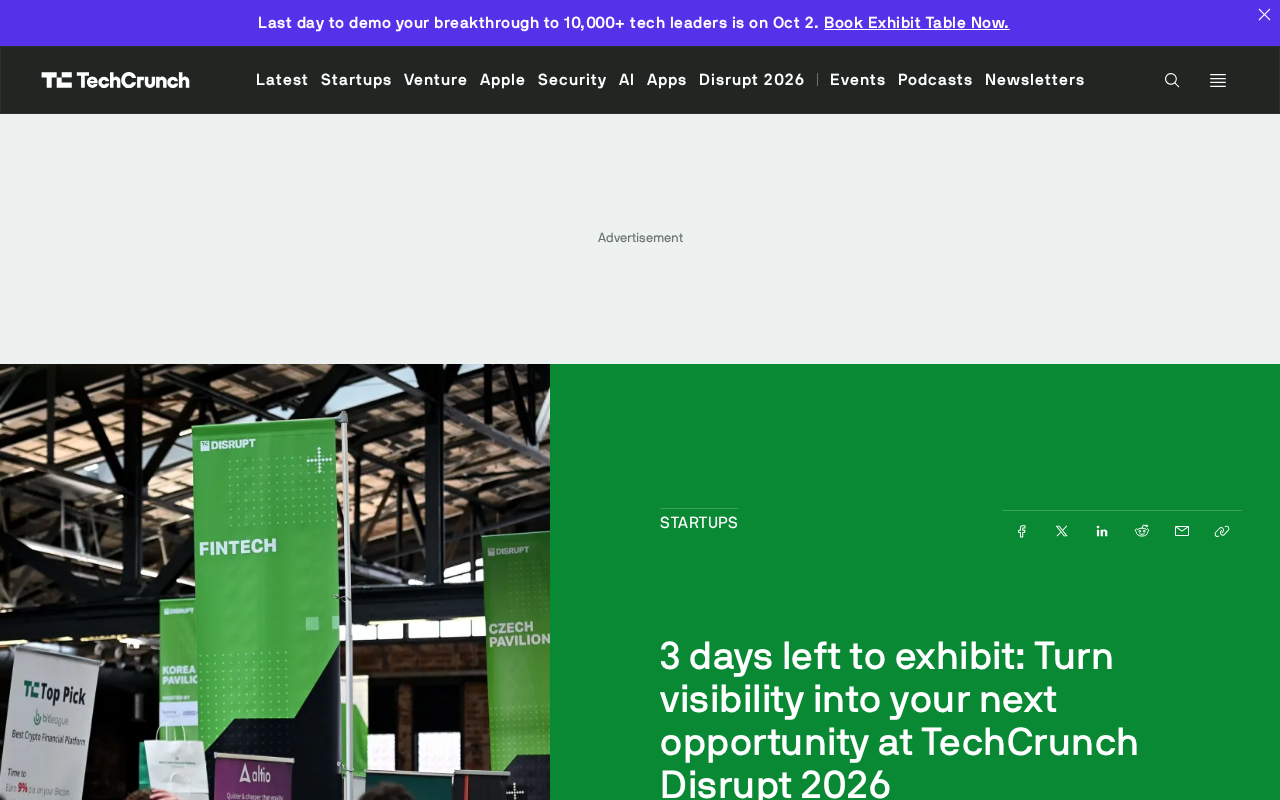
Why This Opportunity Is Worth Your Attention
According to official figures, this year's event is expected to bring together over 10,000 attendees, including founders, investors, operators, and decision-makers across the tech industry. For startups looking to raise funding, forge partnerships, or build brand recognition, that kind of audience represents a dense concentration of potential opportunities.
Having an exhibit booth is fundamentally different from simply attending. It gives your company a physical, dedicated space to proactively showcase your product and team. In a high-traffic venue, a well-positioned booth puts you directly in front of target customers, potential investors, and media — turning passive "attendance" into real business conversations.
Founded in 2011, TechCrunch Disrupt is one of the most iconic startup conferences in Silicon Valley and globally. Hosted by tech media outlet TechCrunch and held annually in San Francisco, it's best known for the "Startup Battlefield" competition, where teams pitch live before a panel of judges — typically top-tier VCs — with winners taking home prize money and significant media exposure. Companies like Dropbox, Yammer, and Mint all stepped into the public spotlight through this stage. That history is precisely what gives a Disrupt exhibitor badge more signal value than a typical industry trade show — showing up here carries its own form of credibility.
How to Make the Most of the Exhibit Window
The event organizers have framed this opportunity as a chance to "turn visibility into your next opportunity" — a phrase that captures the core value proposition. In a fiercely competitive startup environment, simply being seen is itself a scarce resource.
For teams considering registration, here are the key details to keep in mind:
- Deadline: October 2nd, 11:59 PM (PT)
- Time Remaining: 3 days only
- Target Audience: 10,000+ founders, investors, operators, and tech leaders
Missing the registration window typically means waiting until the next edition. For startups in the middle of a fundraising cycle or approaching a key product launch, making a decision early and locking in your booth is the safer play.
Takeaway
At its core, this is a registration reminder for TechCrunch Disrupt 2026. The essential information comes down to two dimensions: the deadline and the audience scale. For tech founders, whether to exhibit ultimately depends on your market goals, budget, and team bandwidth — but from a pure visibility-per-dollar standpoint, major industry events remain a channel worth seriously considering.
Related articles

Free Unlimited Claude Code Solution: Agnes AI + CC Switch Setup Guide
No paid subscription needed — pair the free AI platform Agnes AI with the open-source tool CC Switch to provide a backend for Claude Code, enabling unlimited free calls to text, image, and video models. This guide covers the full setup, test results, and usage boundaries.

A Complete Zero-Cost Guide to Getting Started with Claude Code for Beginners in China
A beginner's guide to Claude Code for users in China: two installation methods (command line and IDE plugin), full configuration steps for replacing the official API with the free domestic LongCat model, and a hands-on demo of building a small tool with natural language, plus tips.

When the NSA Gets Involved: The AI Supply Chain Crisis Behind Open-Source CVEs and API Key Hijacking
Multiple open-source projects disclosed severe CVEs in one day, PHP flaws alarmed the FBI, and Railway and OpenCode were breached with API keys stolen. This article breaks down the vulnerability window, AI-accelerated exploitation, and the AI supply chain crisis behind the API key black market, with a developer defense checklist.