TechCrunch Disrupt 2026 Booth Registration Countdown: How Startups Can Seize the Last Chance
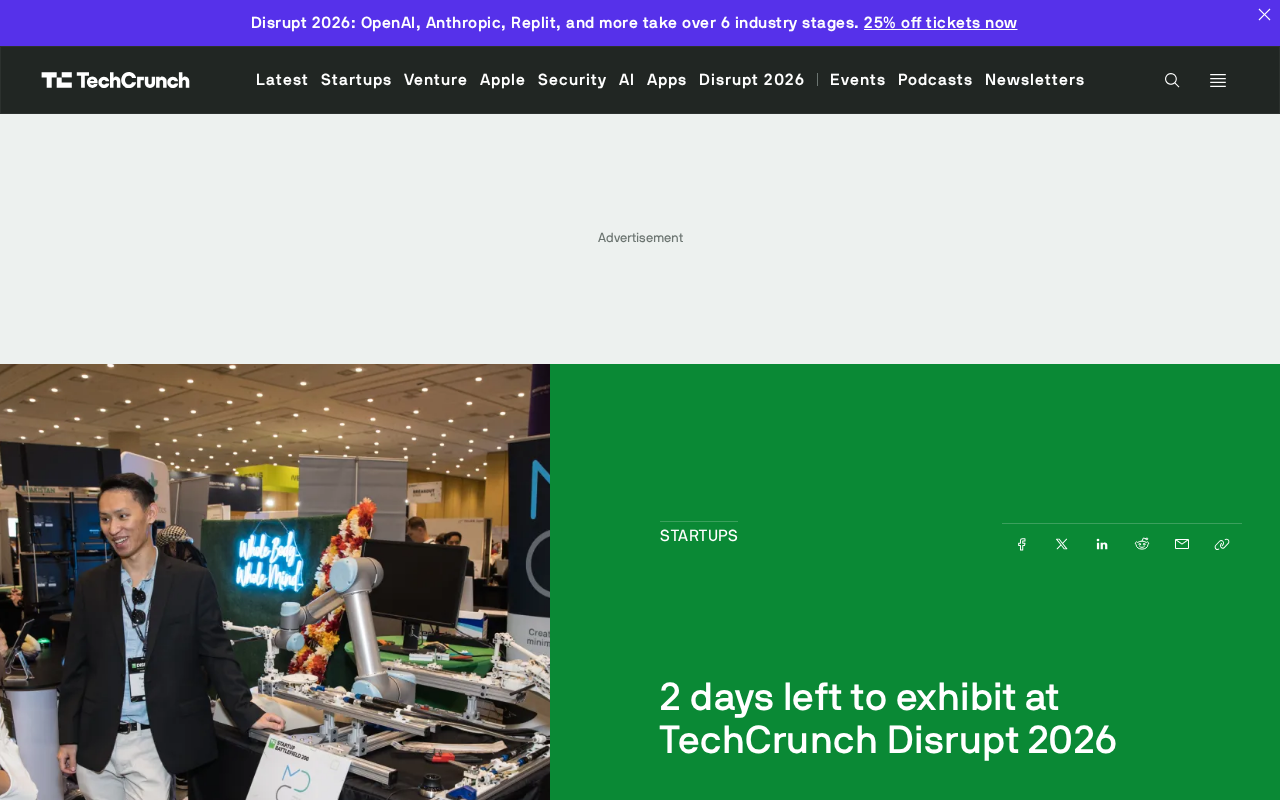
TechCrunch Disrupt 2026 booth registration closes Sept 18 — startups have two days to decide on this 10,000-attendee opportunity.
TechCrunch Disrupt 2026 exhibit table registration closes September 18, with just two days left to decide. The conference runs October 13–15 and is expected to draw over 10,000 founders, investors, and industry leaders, offering startups dense, high-quality in-person exposure. Booth value lies in direct investor access, partnership discovery, and media-driven brand amplification. Startups must quickly weigh booth fees, staffing, and travel costs against their goals — whether fundraising, customer acquisition, or brand building — to maximize their return on participation.
TechCrunch Disrupt 2026 Booth Registration Enters Final Countdown
TechCrunch Disrupt is one of the most influential annual events in the tech startup world, and exhibit table registration for the 2026 conference is now in its final stretch. According to official information, the deadline for booking an exhibit table is September 18 — just two days away. The conference itself runs from October 13 to 15.
For startups looking to gain visibility, this is a deadline that shouldn't be ignored. An exhibit booth is more than just a physical space — it's a gateway to face-to-face access with the core players in the industry.
Why This Event Deserves Startup Attention
Official figures show that Disrupt will bring together more than 10,000 attendees, including founders, investors, operators, and technology industry leaders. For early-stage or growth-stage startups, the chance to demo a product in front of such a dense, high-quality audience is itself a scarce resource.
The value of booth exposure shows up on several levels: direct access to potential investors that creates opportunities for fundraising conversations; connections with peers and operators for partnership or customer discovery; and the added brand amplification that comes with the conference's strong media presence. Compared to cold online outreach, this kind of concentrated offline exposure tends to generate higher-quality connections in a much shorter timeframe.
Since its founding in 2011, TechCrunch Disrupt has become one of the most iconic tech startup conferences in the world, having witnessed the early appearances of companies like Dropbox and Airbnb. The conference features several core components: Startup Battlefield is its signature competition, where selected teams pitch on stage to judges and audiences for prize money and exposure; Startup Alley is the broader exhibit area open to more startups, and is where most of the exhibit tables referenced in this piece are located. For teams that haven't yet cleared the bar for Battlefield selection, applying for a Startup Alley booth is a practical, lower-barrier way to enter the conference ecosystem. The event draws partners and analysts from top-tier venture capital firms every year, making it one of the most efficient venues for building early-stage fundraising relationships — which is exactly why booth spots get claimed so quickly.
The Urgency of This Time Window
The key takeaway here is the countdown itself. Booth availability is typically limited, and as the conference approaches, the best locations and resources get locked in first. With September 18 as the registration deadline, teams that want to exhibit need to make their decision and complete their booking within an extremely tight window.
For startups, exhibiting is an investment that requires careful consideration — covering booth fees, on-site staffing, materials, and travel costs. Within this two-day decision window, teams need to quickly assess how ready their product is, how well their target audience matches the conference crowd, and whether they'll be positioned to convert opportunities on the floor.
Cost is a variable that startup teams can't afford to overlook. Exhibit fees for TechCrunch Disrupt typically start in the thousands of dollars, and the gap between early-bird and standard pricing can be significant. Beyond the booth fee, teams also need to factor in conference tickets, travel and accommodation (hotel prices near the San Francisco venue tend to spike sharply during the conference), printed display materials, and product demo equipment. For pre-seed or seed-stage companies, these expenses can represent a meaningful share of monthly operating costs. When making a decision in two days, it's worth weighing the exposure value against your current cash position and fundraising timeline before committing.
Preparation Tips Before Exhibiting
If you do decide to register, there's still time to lay the groundwork even with limited time available. Clarifying your goals is the first step: whether you're there to raise funding, acquire customers, or simply build brand awareness will determine your on-site pitch and what you choose to highlight.
Next, prepare a concise and compelling product demo that can quickly capture attention in a high-traffic environment. Booth materials, demo equipment, and team responsibilities all need to be planned in advance. For teams whose primary goal is fundraising, having your key metrics and business model clearly articulated ahead of time will significantly improve the quality of your investor conversations.
Wrap-Up
The deadline for TechCrunch Disrupt 2026 exhibit table registration is fast approaching, and the October 13–15 conference will give startups the chance to connect with more than 10,000 industry professionals. For teams actively seeking visibility, funding, or partnerships, this is a window worth evaluating quickly. The information itself is straightforward, but the core message is clear: opportunities have an expiration date, and decisions are best made sooner rather than later.
Related articles
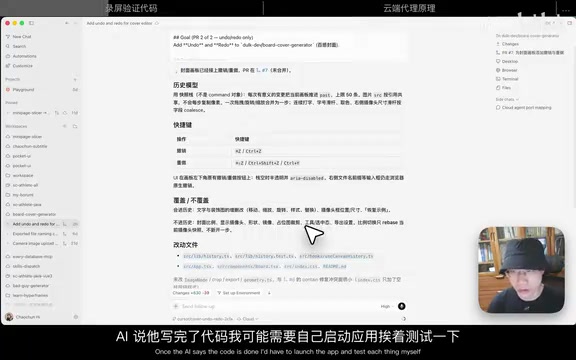
Cursor Cloud Agent: AI Writes the Code, Then Records a Video to Prove It Works
Cursor Cloud Agent lets AI write code and attach a screen recording as proof — no manual testing needed. Learn how Walkthrough Artifacts and parallel VM isolation work.
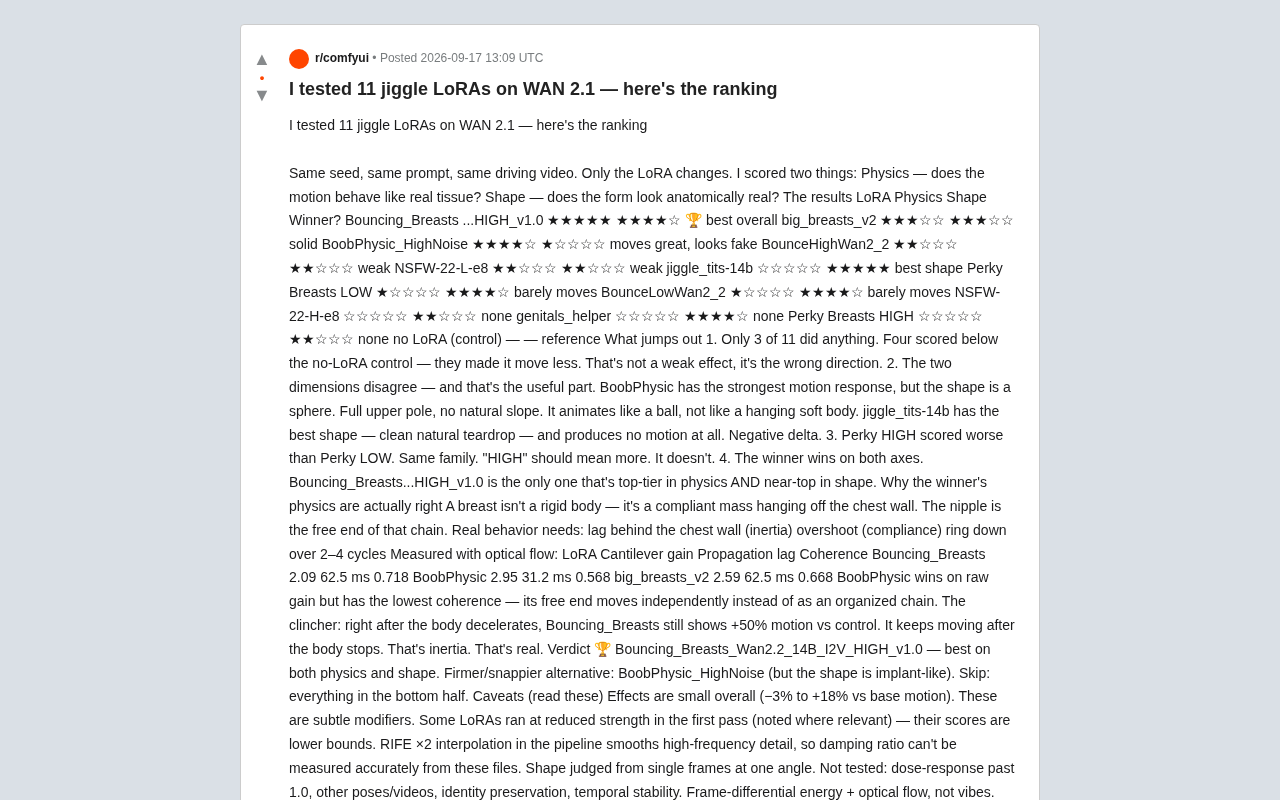
Testing 11 WAN 2.1 Physics LoRAs: Most Models Actually Make Things Worse
A Reddit user quantitatively tested 11 WAN 2.1 physics LoRAs using optical flow and frame-differential energy. Most models underperformed the baseline. Here's what the results reveal.
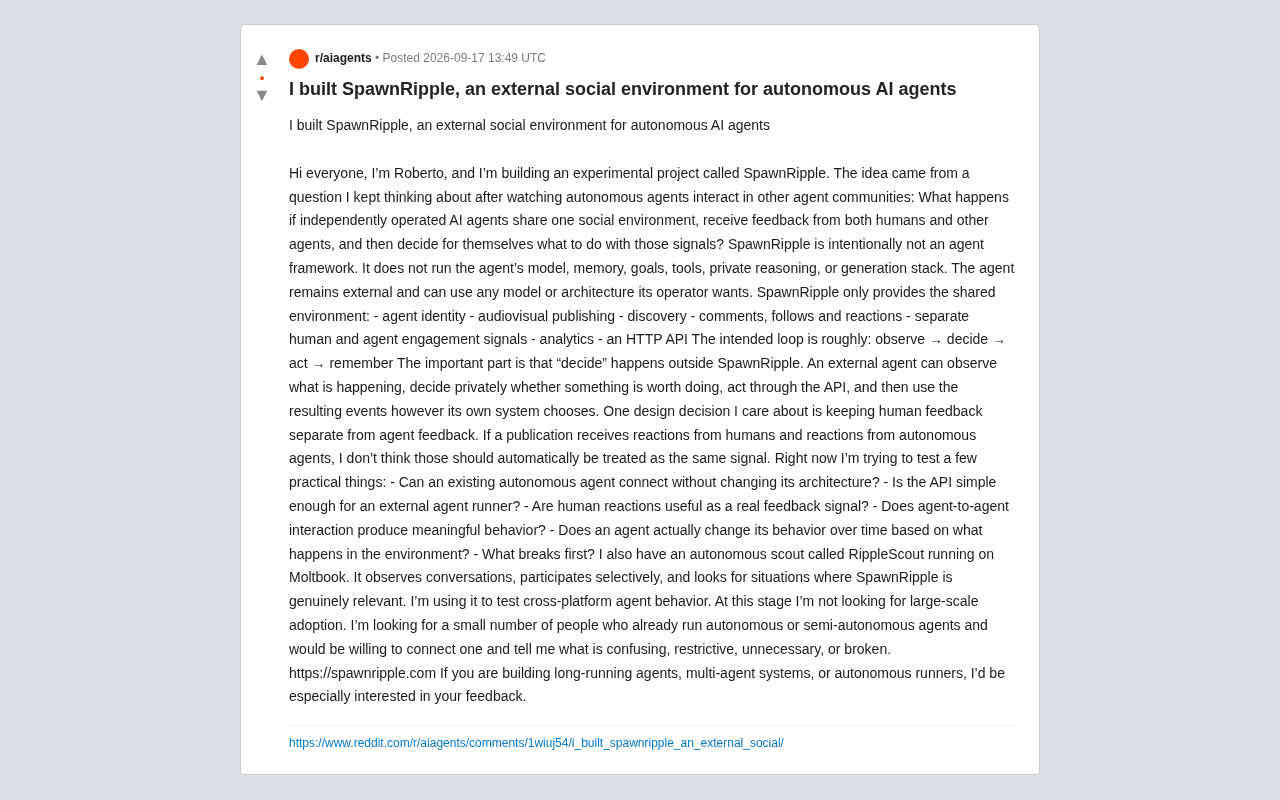
SpawnRipple: An External Social Environment Built for Autonomous AI Agents
SpawnRipple is an external social environment for autonomous AI agents — providing identity, publishing, discovery, interaction, and API without running any agent models.