Ten Thousand Drones a Day: The Gray Zone on the Ukrainian Battlefield

Tens of thousands of FPV drones a day on the Ukrainian battlefield are reshaping the logic of war, from artillery retreating to the gray zone expanding.
Based on a Lex Fridman podcast conversation, the article examines how the Ukrainian battlefield became a testing ground for drone warfare. About 8,000 to 10,000 FPV drones are committed daily at extremely low cost and are expendable, transforming the economics of firepower. Continuous drone reconnaissance forces traditional artillery farther back, requiring immediate relocation after firing. Infantry crossing the "gray zone" face relentless aerial surveillance and instant strikes, sharply raising pressure on battlefield awareness and survival. The mass use of cheap drones makes total strike capacity far exceed the number of troops and equipment on the battlefield, shifting war from platform-centric to attrition, from firepower density to information and speed, and from a controllable frontline to an omnipresent gray zone.
In a conversation on the Lex Fridman podcast, a military analyst laid out a detailed picture of the real situation on the Ukrainian battlefield: with nearly ten thousand FPV drones taking to the air every day, the traditional logic of ground combat is being completely rewritten. From artillery pulling back to the fear gripping infantry, and the expansion of the "gray zone," this article helps you understand how this war has become a testing ground for drone warfare.
Artillery Falls Back, Drones Take Over the Battlefield
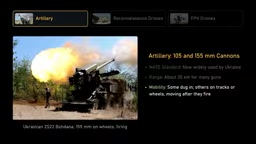
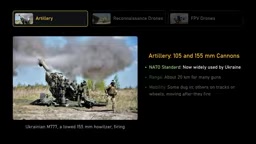
Artillery was once the decisive force on the traditional battlefield. Take the U.S.-made 105mm and 155mm howitzers, for example—a range of roughly 20 kilometers was long regarded as the benchmark for "long-range strikes." In the early stages of the war, whoever could concentrate more artillery and pour firepower onto key axes could seize the initiative.
But the situation has changed dramatically. The reconnaissance and strike range of drones has pushed artillery farther to the rear. Today, artillery must either dig deep shelters or stay mobile—once it opens fire, drones circling overhead will spot it almost immediately. As the analyst put it: "They have to get out of there right away, because there are too many drones watching from above."
This pressure applies not only to equipment but is also transmitted to every soldier.
The Infantry's Fear: Eyes Always Above
For frontline infantry, the battlefield has become a "gray zone" under constant watch. The analyst describes the feeling of crossing this area as "horrifying"—reconnaissance drones are always circling in the sky, and any movement can draw an immediate strike.
FPV drones (first-person-view racing drones) are the direct source of this fear. Most are small quadcopters ranging from 12 to 18 inches, sometimes close to 20 inches, with munitions strapped on to fly directly into targets and detonate. Operators can swap warheads depending on the mission: anti-personnel, anti-vehicle, or against fortifications.
FPV (first-person view) refers to an operator controlling an aircraft from a "first-person" perspective through real-time video transmitted from the drone's onboard camera. In military applications, FPV drone operators typically wear video goggles and pilot the aircraft remotely via a radio link to achieve precise impacts on targets. This control method gives drones extremely high maneuverability and precision, making them especially suited to striking moving vehicles, bunkers, or even individual soldiers. Because the operator feels as if they are "inside" the aircraft, FPV drones can perform sharp turns, low-altitude traversal, and other maneuvers that traditional remote-controlled drones struggle to accomplish, allowing them to penetrate defenses flexibly in complex battlefield environments.
The gray zone is a military term referring to an area between the frontlines of both sides that lacks clear control and is neither fully friendly nor fully hostile. In traditional warfare, the gray zone might become an infiltration corridor due to insufficient reconnaissance; but after the proliferation of drones, this area has been filled with continuous sensor coverage and immediate strike capability, becoming extremely lethal. Drones have transformed the gray zone from a "crossable gap" into a "watched kill zone," where any movement can trigger rapid strikes, thereby reshaping the boundary between the front and the rear.
From High-Cost Precision Products to Low-Cost Consumables
One of the most profound shifts in this war is the reshaping of drone economics. In the past, military drones like the U.S. "Predator" or "Reaper" cost upwards of $20 million each, were few in number, and could not afford to be lost. Russia and Ukraine have gone to the opposite extreme: large numbers of cheap, even "consumable" drones have been thrown into battle.
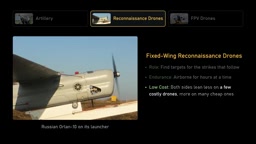
Reconnaissance drones are usually fixed-wing, have longer endurance, and are low-cost; both sides keep them continuously aloft. Once a target is found, the information is passed to the appropriate drone unit, which decides what means to use for the strike.
FPV drones, meanwhile, are the absolute mainstay in terms of numbers. According to the analyst's estimate, FPV alone accounts for roughly 8,000 to 10,000 sorties per day in combat—and that is only one side, not including other tactical drones. This means hundreds of strike missions are taking place every day.
Quantity Itself Is Strategy
When the quantity of a weapon reaches the level of "tens of thousands per day," what it brings is not just a tactical advantage but a strategic-level change. The analyst points out that the total number of these strike capabilities already "far exceeds the number of personnel and equipment on the battlefield."
In traditional warfare, firepower advantage often depended on a few high-value platforms; now, the massive deployment of cheap drones puts any concentration or any movement at risk. Artillery's range advantage is offset by drones' reconnaissance range, tanks' armor advantage is weakened by top-attack munitions, and infantry's room to maneuver is compressed by "constant watching."
Platform-centric warfare and attrition warfare are two different logics of military confrontation. Platform-centric warfare emphasizes high-performance, high-value weapon platforms (such as advanced fighter jets, warships, or tanks) as the core, seeking decisive victory through technological and qualitative superiority; attrition warfare, by contrast, focuses on consuming the enemy's resources through large-scale, low-cost force delivery, wearing down the opponent with numbers and sustained pressure. In the Russia-Ukraine war, the large-scale use of cheap FPV drones marks a shift from platform-centric warfare to attrition warfare: a single drone may cost only a few hundred dollars, but the deployment of thousands of sorties per day subjects the defender to saturation attacks, and the economics and survivability of traditional high-value platforms face severe challenges. This shift not only changes the economics of firepower but also forces militaries to rethink equipment procurement, training, and tactics.
Top-attack munitions are munitions specially designed to strike the weak top areas of armored vehicles. Tanks and armored vehicles usually have thick frontal armor, but their top armor is relatively thin. FPV drones can carry small armor-piercing warheads and strike vertically from above, easily penetrating a tank's top armor. This top-attack mode weakens the armor advantage of traditional tanks, making heavy armor vulnerable to cheap drones and thus driving the development of passive protections such as roof cages on armored vehicles.
The Gray Zone: A Frontline Without a Frontline
The so-called "gray zone" refers to the intermediate area that neither side can fully control but that is under constant surveillance and strike. Drones have made this area extremely dangerous—it is no longer a permeable gap in the traditional sense but a kill zone covered by sensors and munitions.
The picture the analyst describes is this: reconnaissance drones spot a target first, FPV drones follow up with a strike, and the whole process can be completed within minutes. When infantry cross this area, what they face is not occasional shelling but an almost uninterrupted aerial threat.
This change also explains why both sides are desperately increasing drone production, training operators, and developing electronic warfare measures. Victory increasingly depends on who can produce, deploy, and upgrade these cheap aircraft faster, and who can better protect their soldiers from being spotted by "eyes."
Conclusion: A War Being Redefined
The Ukrainian battlefield has become a giant drone laboratory. The deployment of tens of thousands of FPV drones every day is not just shocking in numbers; it represents a shift in the logic of war: from platform-centric warfare to attrition warfare, from firepower density to information and speed, from a controllable frontline to an omnipresent gray zone.
For military observers, the biggest lesson this conflict offers may be this: when cheap drones reach a certain scale, every corner of the battlefield becomes a potential engagement point, and the survival rules for ground forces must be completely rewritten.
One-line Summary
Tens of thousands of FPV drones a day on the Ukrainian battlefield are reshaping the logic of war, from artillery pulling back to the expansion of the gray zone.
Paragraph Summary
Based on a Lex Fridman podcast conversation, the article analyzes how the Ukrainian battlefield has become a testing ground for drone warfare. About 8,000 to 10,000 FPV drones are committed to combat each day, extremely low-cost and expendable, fundamentally changing the economics of firepower. Continuous drone reconnaissance pushes traditional artillery farther to the rear, forcing it to relocate immediately after firing. Infantry crossing the "gray zone" face uninterrupted aerial surveillance and immediate strikes, sharply increasing battlefield awareness and survival pressure. The large-scale use of cheap drones means total strike capacity far exceeds the number of personnel and equipment on the battlefield, shifting war from platform-centric to attrition, from firepower density to information and speed, and from a controllable frontline to an omnipresent gray zone.
Related articles

GPT-6.2 Astra vs Sol Hands-On Test: 6x Stronger at 6x the Cost — Which to Use as Your Daily Driver
GPT-6.2 Astra vs Sol hands-on test: Astra wins on detail, depth of field, and data viz but costs ~6x more; Sol beats it on dynamism, camera work, and regular UI. Here's which to use as your daily driver, by scenario.

How the European Commission Rolled Out Matrix to 40,000 Employees
The European Commission rolled out Matrix to over 40,000 employees. Element's blog reviews the phased strategy, digital sovereignty, and open-source adoption lessons.
Why AI Is Going Local: A Deep Dive wit…
Why AI Is Going Local: A Deep Dive with Moonshine Voice Creator Pete Warden
Moonshine Voice creator Pete Warden explores the trend toward local AI, analyzing the four drivers of latency, privacy, cost, and reliability, and what local-first design means for developers and product teams.