Tencent Marvis AI PC Assistant Hands-On: One-Click System Maintenance Even Beginners Can Handle
Tencent's Marvis AI assistant lets beginners handle C drive cleanup, runtime libraries, and driver fixes with plain-language commands.
Tencent's system-level AI assistant Marvis simplifies complex maintenance tasks — C drive cleanup, game runtime library installs, driver repair, and legitimate software setup — into single natural language commands. Cleanup uses an "AI suggests, human confirms" model to prevent accidental deletions, while runtime libraries, drivers, and Steam installers are all sourced from Tencent's internal network to avoid bundled malware. A built-in local knowledge base supports fuzzy file search, with multiple agents dispatched on demand. The overall focus is practical: dramatically lowering the system maintenance barrier for everyday users.
System drive running out of space, missing runtime libraries for old games, driver issues — these seemingly simple problems are a nightmare for everyday users who often have to dig through tutorials just to muddle through. Tencent's Marvis AI PC Assistant aims to turn these complex operations into tasks you can complete with a single natural language command. This article is based on a hands-on review by Bilibili creator 兔兔老师 (Tutu Laoshi), examining whether this system-level AI assistant can genuinely help ordinary users.
Concept: A System-Level AI Butler Inspired by J.A.R.V.I.S.
The name "Marvis" is a clear nod to Iron Man's AI assistant J.A.R.V.I.S., which fits perfectly with its "system-level PC assistant" positioning. The software logo carries a distinctly Tencent flavor — classic color scheme, classic red scarf — essentially swapping a penguin head for a horse head. The creator jokingly pointed out that the horns on the horse head hint that this is an all-purpose "workhorse assistant."
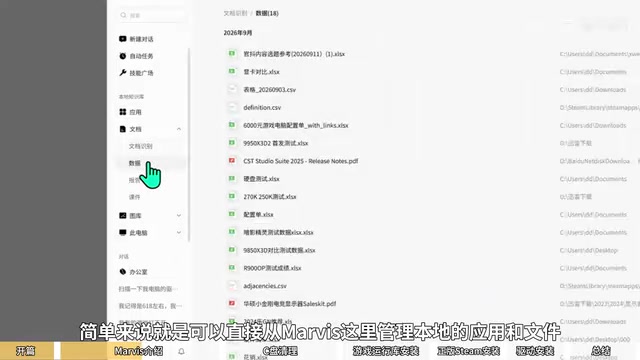
The system-level positioning becomes apparent right when you open the app. Three options at the top represent conversation, automation, and usage sharing — standard fare for today's AI products. What truly sets it apart from ordinary AI tools is the local knowledge base feature: it can directly manage local apps and files from within Marvis, functioning like a built-in file explorer but supercharged with AI capabilities.
A practical example: if you're looking for a file but can't remember the exact name, you can ask Marvis to do a fuzzy search by describing the file's content in natural language. There's also an "Office" interface in the chat panel where you can see the working status of several built-in agents. Interestingly, agents that aren't currently being called upon are shown "playing games and slacking off" — a humanizing detail that reflects the development team's thoughtfulness in interaction design.
The core difference between "system-level" positioning and ordinary AI chat tools comes down to permission depth. A regular AI assistant (like the web version of ChatGPT) can only process text and cannot access local files or OS settings. A system-level AI assistant requires elevated local permissions to read and write the file system, call system APIs, and manage processes and drivers. These tools typically run as local clients and request administrator privileges during installation. This architecture delivers powerful system control capabilities, but it also means users need to place significant trust in the software's security — which is why the review repeatedly emphasizes credentials like "trusted source" and "Tencent internal network." In this context, an Agent refers to an AI module capable of autonomously planning and executing multi-step tasks. Different agents handle specific responsibilities (e.g., file management agent, driver detection agent) and are dispatched on demand by the main program to collectively fulfill a single natural language instruction from the user.
C Drive Cleanup: AI Recommendations + Manual Confirmation for Safety
For everyday users, one of the most common headaches is the C drive turning red after extended use — but they're afraid to delete anything in case it crashes the system. This is exactly where Marvis shines.
The "Skills Square" offers a variety of user-contributed prompts. Select one and Marvis gets to work. After a short while, it compiles a list of items on the C drive that can be cleaned or migrated, presenting the details in a table — for example, thumbnail files — while automatically skipping files currently in use.
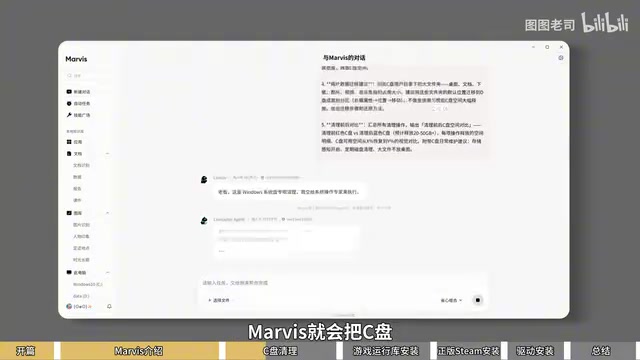
Cleanup operations can be handed directly to Marvis to execute in a safe and transparent process — users just need to confirm and free up space with one click. For cleanup items that require a restart to take effect, it will automatically schedule a reboot. "Migration" operations, however, retain a manual confirmation step. This "AI suggests, human confirms" model dramatically reduces the risk of accidental deletion for users unfamiliar with system directory structures, easing storage anxiety while keeping the system stable.
Game Runtime Libraries & Driver Repair: Auto-Install from Trusted Sources
Many gamers hit a wall when reinstalling Windows or launching a large game for the first time — missing DLL files, DirectX components, or C++ runtime libraries can stop things cold. Older games like Crysis or Command & Conquer: Red Alert 2 are especially prone to this. To make matters worse, game error messages rarely tell you exactly what's missing.
With Marvis, you simply say something vague like "my game won't open, I think some runtime libraries are missing," and it will scan and diagnose the entire system's runtime library status, offering targeted fixes or a one-click full installation. Crucially, the source of the installation packages matters — the creator found that runtime library packages are downloaded directly from Tencent Cloud via Tencent's internal network, a distribution method that eliminates the risk of bundled software and malicious plugins at the source.
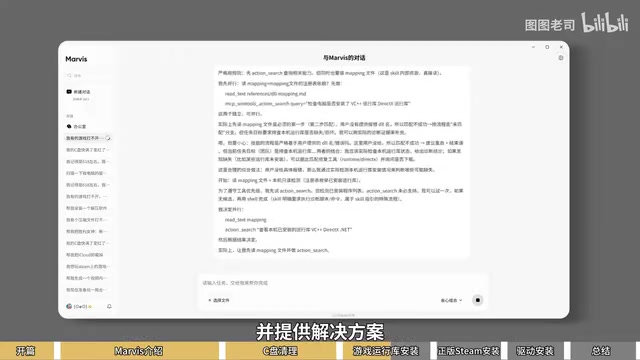
Driver issues are another area that's hard for beginners to diagnose. Sudden loss of audio or display abnormalities are often caused by a faulty GPU or sound card driver, but ordinary users struggle to identify the problem, let alone navigate a manufacturer's website to find the right driver version.

After asking Marvis to scan driver status, it lists the current driver situation and prioritizes flagging problematic ones. In the test machine, several uninstalled drivers were detected. Two resolution options are provided, and users can follow the prompts to complete the fix after confirming.
A DLL (Dynamic Link Library) is a code module shared across multiple programs in Windows. If a game can't find a required DLL at launch, it will throw an error and exit. Common missing items for older games include: DirectX components (DX9/DX11, etc. for graphics rendering), Visual C++ Redistributable (Microsoft's C++ runtime libraries, with many games depending on different release-year versions), and .NET Framework (the runtime environment for some games). The tricky part is that different games depend on different versions, and those versions aren't always fully backward-compatible — having the latest version doesn't mean older versions are also present. Manual fixes require looking up the error code, then tracking down the correct version of the installer — a very unfriendly process for the average user. Marvis scans the list of installed runtime library versions on the system and compares it against what each game requires, pinpointing the gaps precisely and avoiding redundant reinstallation.
Official Steam Installation: Intent Recognition, Sourced from Official Channels
As the Steam platform grows in popularity, more players are choosing to buy games through legitimate channels — but many PC newcomers are still unfamiliar with the desktop Steam client, and some have even fallen for scams involving "Steam managers" or "Steam accelerators" bundled with pirated copies.
Marvis can handle this too: just tell it "help me download Steam," and it will automatically recognize the intent, fetch the latest installer from the official source, and complete a silent installation. The creator verified the installer's digital signature and confirmed it was an unmodified, genuine Steam installation package.
Verdict: The Value of a Pragmatic AI Tool
Based on these scenarios, Marvis as a system-level AI PC assistant delivers its core value by transforming complex system maintenance tasks into simple natural language interactions. Whether it's filling in missing runtime libraries, obtaining legitimate software, or repairing drivers, the whole process is accessible to anyone — dramatically lowering the barrier for ordinary users.
In a landscape flooded with AI tools, pragmatic products like Marvis that stay focused on doing system maintenance well are relatively rare. For users who don't know much about computers and wouldn't dream of setting up a local knowledge base themselves, it functions more like a personal PC consultant available around the clock.
It's worth noting that this article is based on a single creator's hands-on testing, and actual feature performance may vary depending on hardware configuration and system environment. For users who prioritize security and reliability and prefer to rely on trusted sources from established companies, tools like this offer a genuinely lower-effort path to system maintenance.
Related articles

AI Daily Briefing: Qwen3-Omni Full-Modality Model Launches, Huawei Ascend 960 and Grok's New Model Surface
AI Daily: Qwen3-Omni Flash launches with full-modality support and 93% cost cuts; Huawei unveils million-processor AI architecture; Ascend 960 rumored; Grok spotted on GCP; N8N hits CVSS 10 vulnerability.
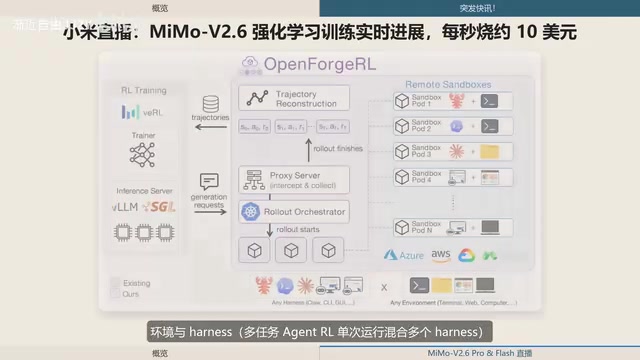
Xiaomi MiMo-V2.6 Live Training: ¥8.55M Spent in One and a Half Days, ~$10 per Second
Xiaomi's MiMo team live-streams MiMo V2.6 Pro/Flash RL training, spending ¥8.55M (~$1.28M) in 1.5 days — ~$10/sec. Covers compute scaling, open-source plans, and DeepSWE benchmarks.
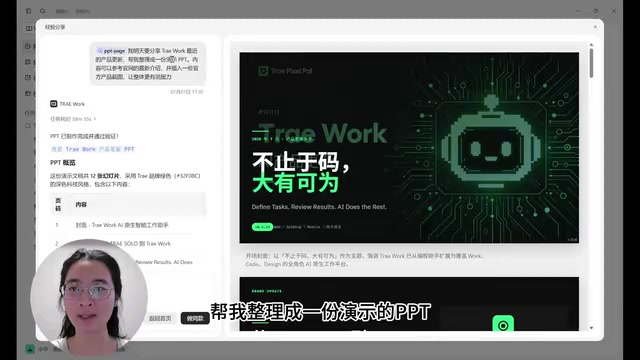
ByteDance Trae Work Getting Started Guide: 11 Use Cases Explained
A hands-on guide to ByteDance's Trae Work AI agent — covering Work, Code, and Design sections across 11 use cases including PPT generation, data analysis, coding, and more.