TensorRT Multi-Device Inference: Engineering Practices for Breaking Through Single-GPU Memory Bottlenecks

TensorRT adds native multi-GPU inference support to break single-card memory walls for large generative AI models.
NVIDIA's TensorRT now natively supports multi-device inference through pipeline parallelism and tensor parallelism, enabling large generative AI models to be distributed across multiple GPUs. This addresses the memory bottleneck faced by media generation pipelines combining text encoders, diffusion backbones, and VAE decoders, while lowering engineering complexity previously required for manual multi-GPU orchestration.
Generative AI workloads are rapidly outgrowing the memory and compute budgets of a single GPU. For inference developers building media generation pipelines, efficiently deploying large models across multiple GPUs has become an unavoidable core engineering challenge. NVIDIA's recently introduced Multi-Device Inference Support for TensorRT is the official solution targeting this exact pain point.
Why a Single GPU Is No Longer Enough
With the rise of diffusion models, video generation, and large-scale Transformer architectures, model parameter counts and intermediate activation memory usage have grown explosively. Take media generation pipelines as an example—a complete processing chain often requires chaining together multiple large submodules such as text encoders, diffusion backbone networks (UNet or DiT), and VAE decoders.
Diffusion models and the DiT architecture are key context for understanding this need. Diffusion Models are the dominant paradigm in current image and video generation, with the core idea of modeling data distributions through a forward process of gradually adding noise and a reverse process of learned denoising. DiT (Diffusion Transformer), proposed by Meta AI in 2023, replaces the traditional U-Net with a Vision Transformer as the diffusion model's backbone network, fully leveraging the Transformer's scalability advantages at large parameter scales. Compared to convolutional networks, Transformer architectures can scale parameter counts more smoothly from hundreds of millions to tens of billions, but the trade-off is that the attention mechanism's computational complexity grows quadratically with sequence length—particularly pronounced in high-resolution video generation. Cutting-edge video generation models like Sora and Stable Video Diffusion all adopt DiT or its variants, which directly explains why video generation tasks demand far more memory and compute than static image generation.
Taking mainstream video generation models as an example, DiT (Diffusion Transformer) architectures have reached tens of billions of parameters, and intermediate activations from a single inference pass can easily fill the entire 80GB of an A100's memory at high resolutions. The VAE decoder also generates massive intermediate tensors when mapping latent variables back to pixel space—here the VAE (Variational Autoencoder) serves as the bridge between latent space and pixel space: latent diffusion models like Stable Diffusion compress the diffusion denoising process into a low-dimensional latent space (typically 8× spatial compression), and the VAE decoder ultimately upsamples the results back to high-resolution pixel images. The intermediate feature maps generated during decoding grow quadratically with output resolution, making them a significant source of memory consumption. The text encoder (such as T5-XXL) alone has 11 billion parameters. When all three are combined, the peak memory requirement of the complete pipeline often exceeds the physical capacity of a single flagship GPU—this is the fundamental driver behind multi-GPU inference demand.
When the total memory requirements of these modules exceed single-card capacity, developers have traditionally been limited to three strategies:
- Aggressive quantization: Sacrificing precision for memory savings
- Offloading: Trading bandwidth and latency for memory headroom
- Manual multi-GPU partitioning: Requiring developers to handle cross-device communication and synchronization logic themselves
These three approaches either compromise generation quality, severely drag down throughput, or significantly increase engineering complexity. NVIDIA aims to handle this heavy low-level work uniformly through the runtime framework by natively supporting multi-device inference at the TensorRT level.
It's worth adding that quantization isn't simply a "precision-for-space" trade—it's an optimization system with rigorous engineering standards. Taking TensorRT's INT8 quantization as an example, it involves two technical approaches: Quantization-Aware Training (QAT) and Post-Training Quantization (PTQ). QAT simulates quantization error during training, resulting in minimal precision loss but requiring retraining; PTQ determines the optimal scaling factor for each layer by collecting activation distribution statistics on a small calibration dataset using metrics like KL divergence or entropy, achieving a balance between precision and compression without retraining. FP8, a new numerical format introduced with NVIDIA H100, retains the dynamic range advantage of floating-point representation compared to INT8, making it particularly suitable for attention layers with uneven activation distributions. Understanding the fine-grained mechanisms of quantization helps developers make more informed precision-performance trade-offs in multi-GPU deployment, rather than simply treating it as an emergency measure when memory runs short.
Core Mechanisms of Multi-Device Inference
TensorRT is NVIDIA's high-performance deep learning inference optimizer and runtime. Since its release in 2015, it has become one of the de facto standard toolchains for GPU inference deployment. Its core capabilities include operator fusion (merging multiple small operators into a single efficient CUDA Kernel to reduce memory reads/writes), precision calibration (supporting FP32/FP16/INT8/FP8 precisions, where INT8 quantization can reduce memory usage to one quarter), kernel auto-tuning (searching for optimal Kernel implementations for the target GPU architecture), and dynamic shape support.
It's worth noting that operator fusion is critically important because modern GPU compute growth has far outpaced memory bandwidth growth: for frequently occurring operator sequences like BatchNorm+ReLU and Conv+Bias+Activation, executing them individually generates massive redundant memory read/write round-trips, creating a bandwidth bottleneck (Memory-bound). Through static analysis of the computation graph, TensorRT keeps intermediate results resident in GPU registers or cache, fundamentally bypassing this bottleneck—for most inference tasks, the gains from saving memory bandwidth are often more significant than pure compute acceleration.
TensorRT achieves inference acceleration by converting ONNX or framework-native models into highly optimized TensorRT Engines that are tightly bound to the target GPU architecture and must be rebuilt when switching cards. Its optimization focus has long been on maximizing acceleration on a single device. The addition of multi-device inference support marks a key expansion of its capability boundary from "single-card optimization" to "multi-card coordination."
Partitioning Strategies: Pipeline Parallelism and Tensor Parallelism
The essence of multi-device inference is partitioning a complete inference computation graph across multiple GPUs for execution. There are two core partitioning strategies:
- Pipeline Parallelism: Distributes computation across different devices by model layers, with data flowing sequentially between GPUs. For media generation pipelines composed of multiple independent sub-models chained together, this approach is more natural. Pipeline parallelism's inter-layer communication volume is limited to activation tensors between adjacent layers with low communication frequency, but it suffers from "pipeline bubbles"—where downstream GPUs sit idle waiting for upstream outputs, particularly noticeable with small batch sizes. To mitigate this, the research community has proposed Micro-batch Pipelining techniques: splitting a large batch into multiple micro-batches that are interleaved into the pipeline, keeping GPUs at different stages busy processing different micro-batches in parallel. This theoretically reduces the bubble ratio from 1/stages to 1/(stages × micro-batches). GPipe and PipeDream are representative works in this direction, maintaining pipeline parallelism's communication efficiency advantage while raising GPU utilization to near tensor parallelism levels.
- Tensor Parallelism: Splits computation tensors within a single layer across multiple cards, suitable for scenarios where a single layer has extremely large parameter counts. Megatron-LM was the first to systematically propose tensor parallelism schemes for Transformers, splitting attention heads and FFN layers across different devices, becoming a reference implementation for large-scale training and inference. In tensor parallelism, an AllReduce operation is required after each layer's computation to synchronize intermediate results across cards, with communication overhead directly related to partitioning granularity and demanding high interconnect bandwidth. In practice, both parallelism approaches are often combined, forming a two-dimensional "pipeline × tensor" parallelism strategy.
TensorRT's multi-device support allows this orchestration to be managed uniformly at the framework level, eliminating the need for developers to manually write CUDA stream synchronization and cross-device memory copy code.
Lowering the Engineering Barrier for Multi-GPU Deployment
In the past, running large models on multiple cards required developers to deeply understand low-level details such as NCCL communication, memory topology, and cross-device dependencies. NCCL (NVIDIA Collective Communications Library) is NVIDIA's library specifically designed for multi-GPU communication, implementing collective communication primitives essential for distributed computing including AllReduce, AllGather, ReduceScatter, and Broadcast. NCCL's core advantage lies in its ability to automatically detect physical topology—including the bandwidth tiers of different interconnects such as NVLink, PCIe, and InfiniBand—and select the optimal communication algorithm accordingly.
The most representative is the Ring-AllReduce algorithm: N GPUs are arranged in a logical ring, with each GPU sending only 1/N of the data to its neighbor per round. After Scatter-Reduce and AllGather phases, each GPU ultimately obtains the complete reduced result. Ring-AllReduce's communication volume is independent of GPU count—each node sends and receives a fixed total of 2(N-1)/N times the data size, making it theoretically the bandwidth-optimal AllReduce implementation. Compared to the communication bottleneck at the central node in early Parameter Server architectures, Ring-AllReduce enables multi-GPU communication efficiency to scale near-linearly with GPU count, which is also the algorithmic foundation for NCCL achieving near-line-rate communication performance in NVLink high-bandwidth interconnect environments.
NVLink is NVIDIA's point-to-point bus protocol designed specifically for high-speed GPU-to-GPU interconnection. In the H100 NVLink architecture, 8 GPUs within a single server can be fully interconnected through NVSwitch with a total bandwidth of 900GB/s—an order of magnitude improvement over PCIe 5.0's 64GB/s. This bandwidth difference directly determines tensor parallelism's communication efficiency: in NVLink-interconnected intra-node multi-GPU environments, AllReduce latency can be controlled at the microsecond level, while cross-node InfiniBand communication operates at the millisecond level. This is the hardware foundation for why intra-node multi-GPU inference has a latency advantage over cross-node setups, and also explains why tensor parallelism is typically used only within a node while pipeline parallelism is better suited for cross-node scenarios.
It's important to note that NVLink and PCIe have fundamental architectural differences: PCIe is a general-purpose bus protocol where GPUs communicate indirectly through the CPU host bridge, with every GPU-to-GPU data transfer passing through the CPU interconnect structure, resulting in limited bandwidth and higher latency. NVLink, on the other hand, is a point-to-point direct-connect protocol between GPUs where data transfers directly between GPUs without passing through the CPU. Combined with NVSwitch, it achieves full-bandwidth direct connection between any two GPUs. This architectural difference is particularly significant on 8-GPU servers: under a pure PCIe topology, communication between distant GPUs may need to traverse two levels of PCIe Switches or even cross CPU NUMA nodes, with effective bandwidth potentially falling below 50% of PCIe's theoretical bandwidth. NVSwitch interconnects, however, guarantee that every GPU pair can achieve full bandwidth—this is the fundamental hardware reason why NVIDIA DGX series servers outperform standard GPU servers in multi-GPU inference scenarios.
TensorRT's multi-device inference encapsulates these complexities, allowing developers to gain the compute and memory scaling capabilities of multiple devices with a programming experience closer to single-device development. This is especially valuable for small-to-medium teams and independent developers—it lowers the barrier for productionizing large models, making multi-GPU deployments that previously required dedicated infrastructure teams more accessible.
Practical Value for Media Generation Pipelines
Media generation is one of the primary target scenarios for this feature. Whether it's text-to-image, image-to-video, or high-resolution image super-resolution, these tasks share common characteristics: high memory demand, compute intensity, and clearly delineated pipeline stages.
Multi-device inference allows developers to distribute stages like the diffusion backbone, text encoder, and decoder across different GPUs, breaking through the single-card memory wall to support:
- Larger-parameter generation models
- Higher-resolution image and video output
- Longer-sequence video generation tasks
Additionally, through proper pipeline scheduling, multiple cards can improve overall throughput during batch processing, amortizing per-request latency.
It's important to note that multi-device is not a "free lunch"—cross-device communication introduces additional overhead, and poorly chosen partitioning strategies may actually cause load imbalances or communication bottlenecks. Therefore, deeply understanding your model's computation graph structure, memory distribution, and data flow patterns remains a prerequisite for effectively leveraging this feature.
In practical engineering evaluation, an often-overlooked metric is Arithmetic Intensity—the number of floating-point operations per byte of memory access (FLOP/Byte). Different submodules have vastly different arithmetic intensities: self-attention mechanisms are compute-bound at long sequences, while linear transformation layers are often memory-bound during small-batch inference. A well-designed multi-GPU partitioning strategy should balance arithmetic intensity across GPUs, avoiding situations where one GPU is chronically bandwidth-bottlenecked while others sit idle. Visualizing each card's SM utilization and memory bandwidth utilization through performance analysis tools like NVIDIA Nsight Systems is the recommended starting point for identifying multi-GPU deployment performance bottlenecks.
Positioning Within NVIDIA's Inference Ecosystem
The release of TensorRT's multi-device inference support also reflects NVIDIA's overall strategy across its inference software stack. NVIDIA has built a clearly layered software stack around inference scenarios: at the lowest level, CUDA and cuDNN provide operator-level acceleration primitives; TensorRT builds upon these to provide graph optimization and Engine compilation capabilities; TensorRT-LLM specifically addresses challenges in LLM inference such as KV-Cache management, Paged Attention, and Continuous Batching; Triton Inference Server provides a model serving framework at a higher level, supporting dynamic batching, model Ensemble, concurrent model instances, and other production deployment capabilities.
It's worth expanding on TensorRT-LLM's three core optimizations for LLM inference: KV-Cache avoids redundant computation by caching historical tokens' Key-Value matrices, reducing autoregressive inference attention computation complexity from O(n²) to O(n); Paged Attention applies an operating system paging analogy to KV-Cache memory management, storing cache in non-contiguous physical memory blocks to dramatically reduce memory fragmentation; Continuous Batching allows inference services to dynamically insert new requests during batch execution rather than waiting for the entire batch to complete, significantly improving GPU utilization and service throughput. These three technologies together form the infrastructure for efficient LLM serving, but they are all designed for the special structure of autoregressive language models and cannot be directly applied to diffusion model inference scenarios.
This is precisely where TensorRT's multi-device inference support adds value: from TensorRT to TensorRT-LLM to Triton Inference Server, this system covers the complete chain from "single-operator optimization → single-machine multi-GPU deployment → large-scale distributed serving." While TensorRT-LLM supports multi-GPU tensor parallelism, it focuses on autoregressive language models; the traditional TensorRT mainline has long been limited to single-card operation. The new feature enables non-autoregressive tasks like diffusion models and visual generation models to receive native framework support in single-machine multi-GPU environments, without developers having to make difficult trade-offs between TensorRT and custom multi-GPU logic. For the large number of generative AI applications deployed on single 8-GPU servers, this is the compute scaling path most aligned with actual needs.
Notably, after integrating with TensorRT multi-device engines, Triton Inference Server's Backend API mechanism allows multiple TensorRT Engine instances to be registered as independent backends, chaining text encoding, diffusion denoising, and VAE decoding stages into a unified service endpoint through an Ensemble Pipeline. This design not only simplifies client-side calling logic but also enables Triton's Concurrent Model Instances functionality: multiple Engine replicas can run simultaneously on the same GPU, with Triton's scheduler dynamically allocating requests to maintain high utilization during request rate fluctuations. For consumer-facing media generation services, Triton also has built-in Rate Limiting and Priority Queue mechanisms that enable differentiated scheduling for requests of different SLA levels in multi-tenant scenarios—the combination of these capabilities with TensorRT's multi-device inference support constitutes a complete production-ready solution from model optimization to online serving.
Summary
Generative AI's demand for compute and memory continues to climb, and the physical limits of a single GPU are destined to be insufficient for deploying cutting-edge models. TensorRT's multi-device inference support provides developers with a smooth engineering path to scale across multiple cards by handling model partitioning and device orchestration uniformly at the framework level.
For teams building media generation pipelines or deploying ultra-large models, this feature means lower deployment barriers, greater model capacity, and more flexible performance tuning options. As NVIDIA's inference ecosystem continues to mature, multi-GPU inference is transitioning from "expert-only territory" to "standard developer tooling."
Related articles

The Return of Wind Power: How Cargo Ships Are Embracing Wind Energy to Cut Emissions
Why are cargo ships embracing wind power again? Explore rotor sails, hard wing sails, and other modern wind-assisted technologies driving shipping's emission-cutting comeback.

Scarier Than AI Agents Taking Over the Internet: A CEO Cartel Monopolizing AI
A Hacker News piece argues that a CEO cartel monopolizing AI is scarier than agents taking over the internet. This article examines AI concentration, open source, and governance.
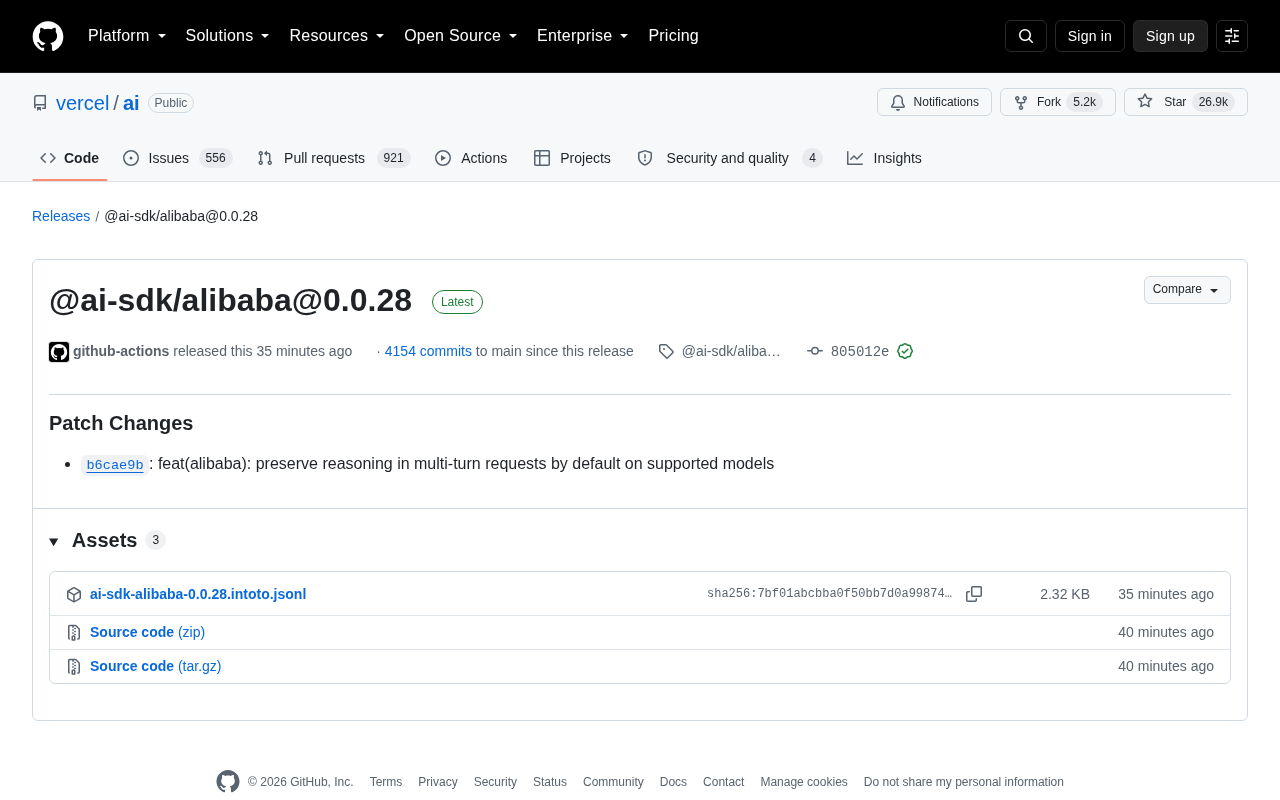
Vercel AI SDK Alibaba Adapter Update: Multi-Turn Conversations Now Preserve Reasoning Chain by Default
Vercel AI SDK's @ai-sdk/alibaba adapter v0.0.28 now preserves reasoning chain by default in multi-turn conversations on supported models, improving coherence.