Testing the Claude Code Job Hunting Agent: A Deep Dive into AI Job Search, the 20K-Star Open Source Project

A Claude Code-based open source job search Agent with 20K+ GitHub stars that automates resume tailoring while keeping humans in control.
AI Job Search is a Claude Code-powered open source tool with over 20,000 GitHub stars. Using a multi-Agent pipeline, it reads resumes, filters jobs, tailors resumes and cover letters to beat ATS screening, and runs a QA Agent for formatting. Crucially, it applies a Human-in-the-Loop design—never clicking submit for you.
When AI Starts Helping You Find a Job
Job hunting has always been a time-consuming and exhausting ordeal: endlessly revising your resume, adjusting your wording for different positions, writing cover letters one by one… These mechanical, repetitive tasks devour a job seeker's energy, yet they simply can't be skipped. Now, an open source project built on top of Claude Code is attempting to turn the entire job search process into an automatable workflow.
This project, named AI Job Search, has racked up over 20,000 GitHub stars in a short period, and the author has even publicly documented the complete process of landing offers from multiple companies using the tool. This real-world success story makes it stand out with particular credibility among the many "AI job search assistants."

You may not have noticed, but this project is not just another "one-click mass application" batch submission tool. Its core philosophy is exactly the opposite—it's not about applying to more jobs, but about making every application higher quality and more targeted. In today's job market, where resumes so often vanish without a trace, this represents a fundamentally different methodology.
How the Project Works: A Multi-Agent Collaboration Pipeline
The underlying capability of AI Job Search comes from Claude Code, the command-line AI coding assistant Anthropic released in 2025. Unlike GUI-based AI tools, Claude Code's command-line nature makes it easier to embed into automation scripts and workflow pipelines, allowing developers to directly invoke Claude models in the terminal environment to complete code generation, file operations, and task orchestration. Its design philosophy emphasizes "agentic operation"—not just answering questions, but proactively executing actions like file reads and writes, calling external APIs, and running tests, upgrading AI from a "Q&A tool" to an "execution tool." This makes it an ideal foundation for building AI Agent systems.
The project breaks the job search down into several clear steps, delegating them to a collaboration of Agents with distinct responsibilities. This Multi-Agent Collaboration architecture is one of the mainstream paradigms in current AI applications. Its core idea stems from the "single responsibility principle" in software engineering: rather than having a single large model "handle everything," it decomposes complex tasks into subtasks, with independent Agents of clearly defined responsibilities each doing their own job—each Agent focuses on only one narrow domain, errors are more easily caught and corrected by upstream and downstream Agents, and the reliability of the overall output is significantly higher than the end-to-end output of a single model. This paradigm is reflected in OpenAI's Swarm framework, LangChain's LangGraph, and Anthropic's multi-agent research, and is regarded as a key path to breaking through the capability ceiling of a single large model and building complex AI applications.
Step One: Read the Resume, Filter Positions, Assess Fit
The starting point of the entire process is reading the user's resume. The system first understands your background, skills, and experience, then filters for suitable positions based on that, and performs a fit assessment for each position. The value of this step lies in avoiding blind applications—only when a position reasonably aligns with an individual's qualifications is it truly worth advancing the subsequent application.
Step Two: Customize the Resume and Cover Letter
Once the target position is identified, the system customizes the resume and cover letter for that specific role. There's an important industry backdrop here: in modern hiring processes, the vast majority of medium and large enterprises use ATS (Applicant Tracking System) to automatically screen resumes. Common systems include Workday, Greenhouse, Lever, and iCIMS. According to industry research estimates, over 98% of Fortune 500 companies use ATS for initial resume screening, and adoption among mid-sized enterprises exceeds 70%. ATS automatically scores resumes through keyword matching, semantic similarity calculation, and format parsing algorithms, and resumes falling below the threshold are filtered out before ever reaching a human reviewer—this is precisely the fundamental reason why "generic resumes" have extremely low success rates, and it has given rise to the "resume optimization" industry, making JD-tailored resumes a baseline operation rather than a bonus in the job search. AI Job Search's customization logic essentially fights against this mechanical screening mechanism: by analyzing the JD (Job Description) to extract high-weight keywords and naturally weaving them into the resume's phrasing, it improves both the ATS score and the odds of human review.

Step Three: A Dedicated Agent for Quality Check and Formatting
The project designs a dedicated QA Agent responsible for "finding faults" in the output of the previous step. It reviews the generated PDF formatting and text content, ensuring the final delivered materials hold up scrutiny in both format and expression. This "generate + review" dual-Agent structure is a mainstream approach for improving reliability in current AI workflows, and it effectively reduces the error rate of a single model's output.

A Key Design Philosophy: It Won't Click Submit for You
Among all the features, the most noteworthy is the boundary it deliberately sets: this tool will not automatically click the "Submit" button for you.

This may seem like a "not automated enough" flaw, but it's actually a carefully considered design tradeoff. The design theory behind it is called "Human-in-the-Loop" (HITL). This concept originated in the fields of cybernetics and Active Learning, referring to retaining the ability for human intervention at the critical decision nodes of an automated system. As the capabilities of AI Agents rapidly expand, HITL has once again become a core topic in product design. Its underlying logic is that current large language models still have inherent flaws such as hallucination and broken reasoning chains—for irreversible operations (such as sending an application, executing a payment, or deleting data), retaining the final confirmation authority for humans effectively prevents the spread of errors. Mainstream AI institutions like OpenAI and Anthropic list HITL as an important part of AI Alignment practice, and it is also one of the basic requirements imposed on high-risk AI systems by current AI regulatory frameworks (such as the EU AI Act).
The core logic of HITL is: AI excels at execution, humans excel at judgment. Retaining the final decision-making authority for humans not only prevents erroneous outputs caused by model hallucinations from being directly executed, but also maintains the user's sense of trust in and control over the system.
It conveys a clear attitude: good job search automation isn't about helping you apply to more jobs, but about giving every application a stronger rationale.
Leaving the final submission authority to humans means the job seeker always retains control over every application they send out. You can do a final check before submitting, judging whether these materials truly represent you and whether the position is genuinely worth applying to. This both avoids the negative effects of mass-spamming companies and prevents job seekers from being reduced to bystanders of an "automated application machine."
Who It's For, and What It Means
For developers and tech professionals who are job hunting and willing to use Claude Code, this project is undoubtedly worth a try. It strings together the most tedious "read the posting—revise the resume—write the cover letter—proofread the formatting" process in the job search into an automated pipeline, truly freeing up a person's energy for the more valuable stages of "judgment" and "decision-making."
From a broader perspective, AI Job Search is a classic example of "AI Agents landing in specific life scenarios." It demonstrates how to use a general-purpose AI tool like Claude Code as a foundation to build a well-structured, clearly delineated multi-Agent system around real pain points. The 20,000 stars and the author's genuine offer record also indirectly confirm the feasibility of this approach.
Of course, it's equally important to view it rationally: AI-generated resumes and cover letters still require human oversight, and fit assessments cannot fully replace a job seeker's own judgment about a position and company. Tools can improve efficiency, but the core decisions of a job search always remain in your own hands—and perhaps that's exactly what the "won't click submit for you" design is trying to remind every user.
Related articles
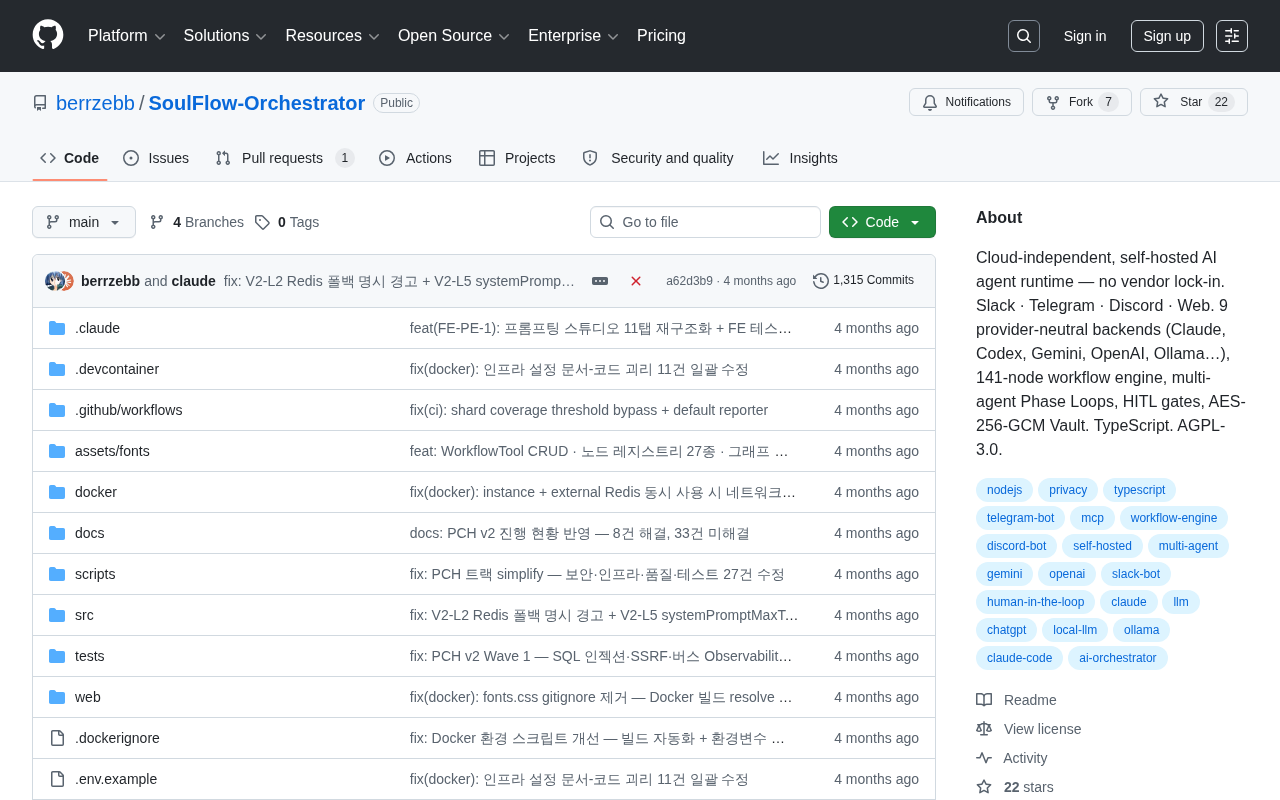
SoulFlow-Orchestrator: A Self-Hosted, Vendor-Lock-In-Free AI Agent Runtime
SoulFlow-Orchestrator is an open-source, self-hosted AI agent runtime with no vendor lock-in. Supports 9 neutral backends (Claude, OpenAI, Ollama), 141-node workflow engine, multi-agent loops, and HITL gates.
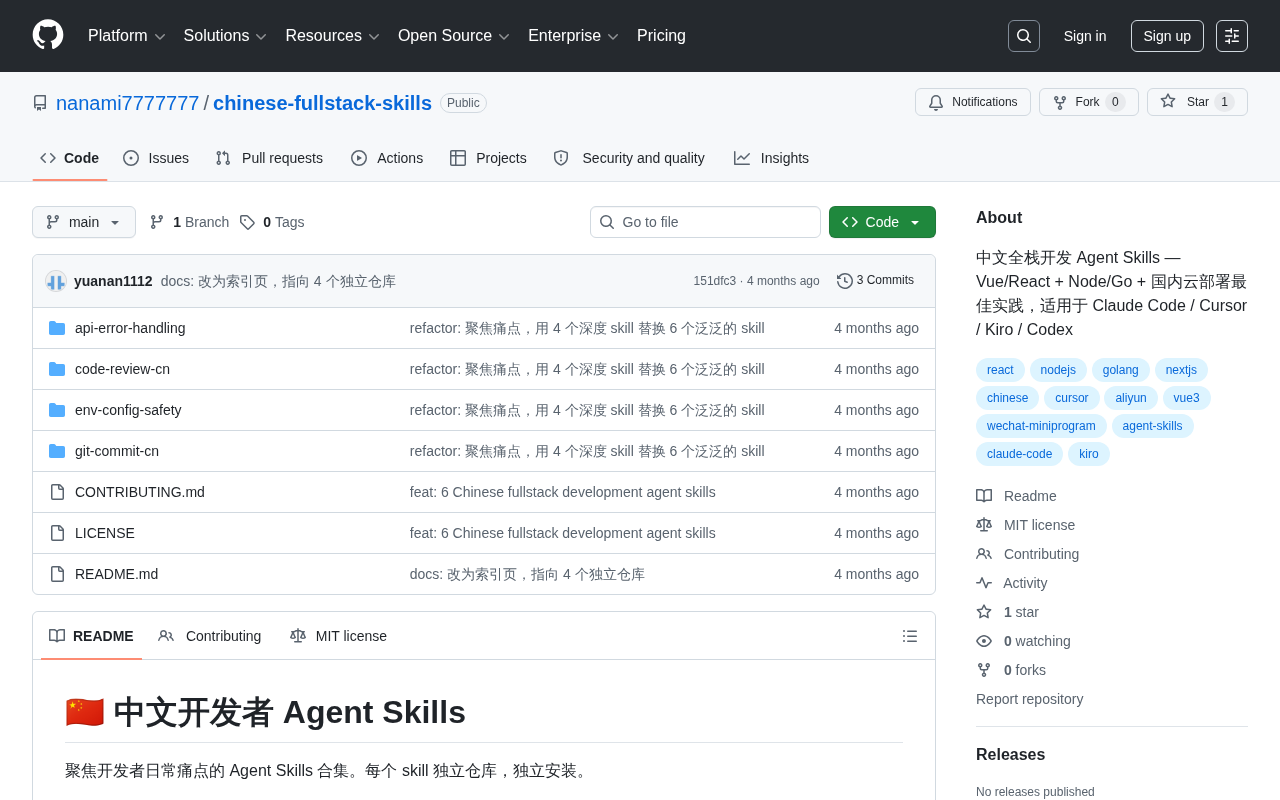
Chinese Full-Stack Agent Skills: A Skill Library Tailored for Domestic AI-Assisted Development
chinese-fullstack-skills is an Agent Skills library for Chinese full-stack development, covering Vue/React, Node/Go, and domestic cloud deployment best practices. Compatible with Claude Code, Cursor, Kiro, and Codex.
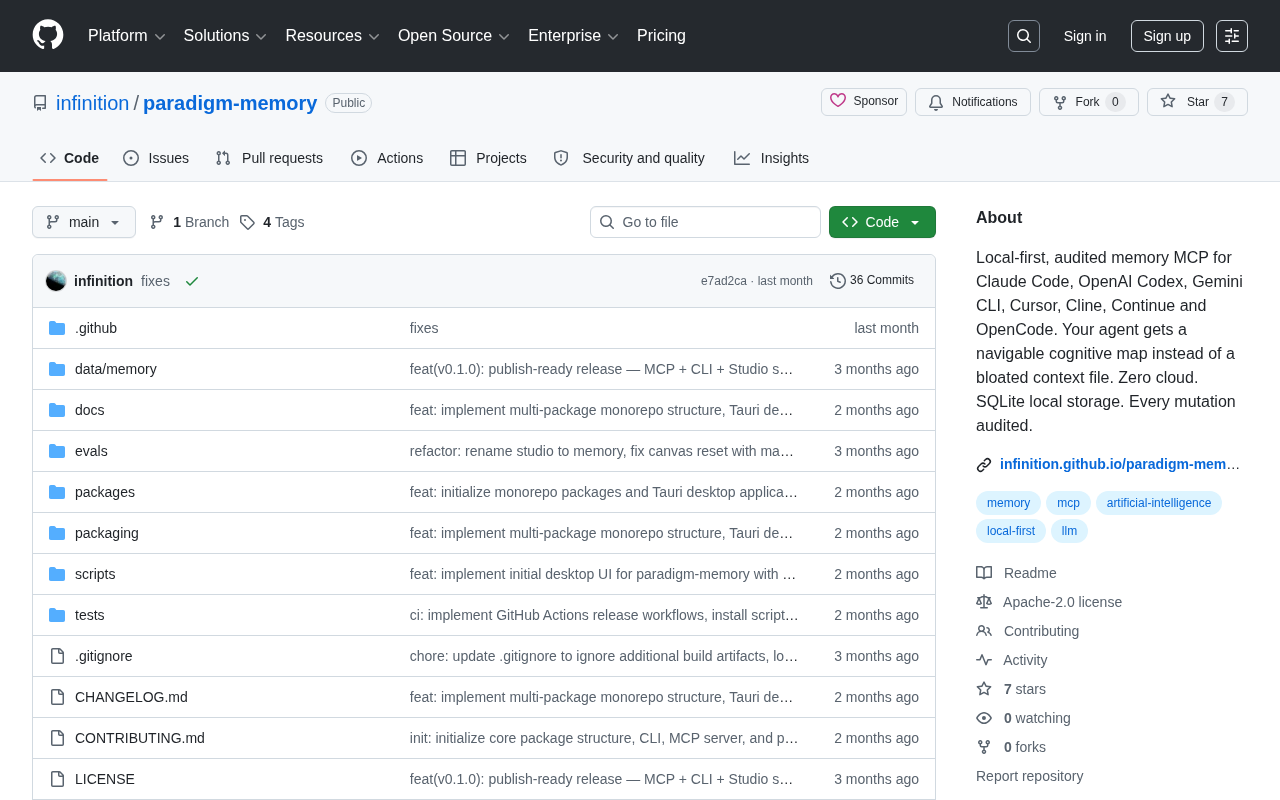
Paradigm Memory: A Local-First Memory System for AI Coding Assistants
paradigm-memory is a local MCP memory tool for Claude Code, Cursor, and Cline. It uses SQLite local storage, zero cloud, full audit trails, and a navigable cognitive map instead of bloated context files.