Testing the New AI Siri: Apple's Voice Assistant — Progress and Pitfalls
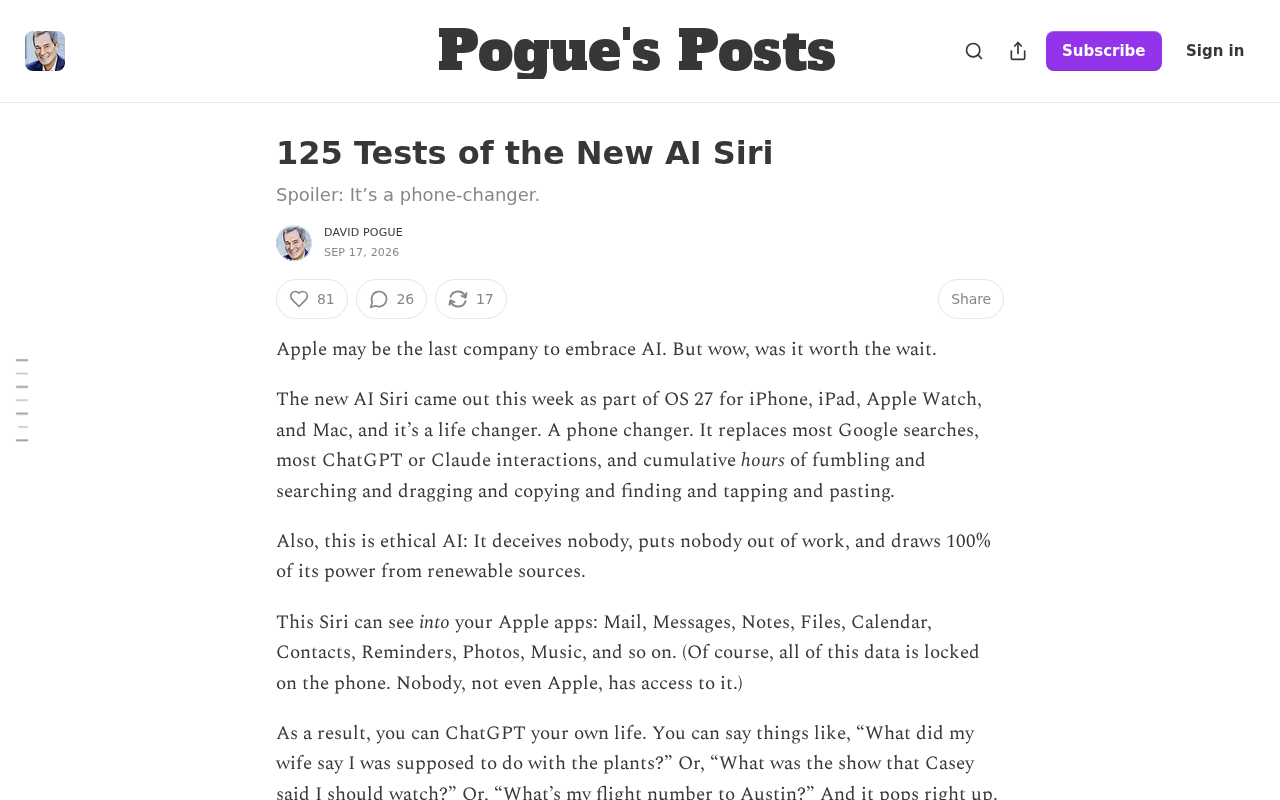
AI Siri moves from rule-based intent matching to LLM-powered semantics — promising but not without limitations.
Apple's integration of large language model capabilities into Siri marks a fundamental shift from predefined intent matching to semantic understanding and generation. The new architecture theoretically supports multi-turn dialogue, screen awareness, and cross-app task execution — but also introduces LLM-inherent risks like hallucination and execution inconsistency. A hands-on post on Hacker News, though lightly engaged, drew technical scrutiny around where the new architecture actually holds up. The real measure of success isn't what AI Siri can chat about, but whether it handles everyday tasks faster, more accurately, and more reliably than before.
The New AI Siri Draws Attention
Apple's overhaul of Siri has been one of the most closely watched developments in the industry. A recent hands-on article titled Tests of the New AI Siri, posted on Hacker News, sparked discussion in the developer community. While the engagement was modest (10 upvotes, 3 comments), it touched on a question that matters to every iPhone user: what has Siri — long criticized for failing to understand natural speech — actually become in the age of AI?
Unfortunately, the source material available for this piece is limited. With only a title and community interaction data — no specific test details, comparative benchmarks, or conclusions — this article will draw on publicly known context to analyze the key angles worth understanding when reading any hands-on review of AI Siri.
What the Technical Shift to AI Siri Actually Means
Traditional Siri was built on a rule-based, intent-matching architecture. At its core, it mapped spoken input to a finite set of predefined commands. This is the root of its longstanding reputation for rigidity — the moment a question fell outside its preset scope, Siri would typically respond with "Here's what I found on the web."
The term "AI Siri" refers to a next-generation voice assistant powered by large language model (LLM) capabilities. The fundamental shift is this: from intent matching to semantic understanding and generation. In theory, this enables Siri to handle more complex multi-turn conversations, follow contextual references, and draw on personal device data to execute tasks across apps.
Key Capability Dimensions Worth Evaluating
For any meaningful hands-on review of AI Siri, the most valuable assessments tend to focus on the following areas:
- Contextual understanding: Can it track references across turns in a conversation?
- Screen awareness: Can it interpret what's currently on screen and act on it?
- Personal context: Can it securely access emails, calendars, photos, and other private data?
- Latency and accuracy: Does enhanced AI capability come at the cost of speed?
- Privacy boundaries: What processing happens on-device, and what gets sent to the cloud?
A large language model (LLM) is a neural network built on the Transformer architecture, pretrained on massive text corpora, with the core capability of predicting and generating coherent natural language based on context. The fundamental difference from traditional intent-matching systems is this: legacy systems required engineers to manually enumerate every possible user intent and write corresponding rules, whereas LLMs can handle expressions they've never seen before through generalized semantic understanding. Apple's Apple Intelligence framework employs a hybrid deployment strategy — a lightweight model (approximately 3 billion parameters) runs locally on-device to protect privacy, while more complex requests are routed to Apple's own servers via Private Cloud Compute, with Apple claiming that no user data is retained server-side. This architectural design is a key differentiator from competitors like OpenAI and Google, and it forms an unavoidable backdrop of privacy-versus-capability tradeoffs when evaluating AI Siri.
Why Community Discussion Is Worth Paying Attention To
Though this particular post saw modest engagement, Hacker News skews heavily toward engineers and product practitioners — an audience whose scrutiny tends to be more technical and more demanding than mainstream media. The value of hands-on reviews like this isn't in the subjective verdict of "is Siri better now?" but in revealing where a new architecture actually breaks down in real-world scenarios.
From a product evolution standpoint, the competition among voice assistants has shifted from "who has more features" to "who can genuinely understand and reliably execute." As rivals like ChatGPT's voice mode and Gemini continue to raise the baseline for user experience, Apple's Siri rebuild is under enormous pressure. Every independent hands-on test becomes a window through which the outside world can check whether Apple is delivering on its promises.
Setting Rational Expectations for AI-Powered Assistants
It's worth noting that LLM-driven assistants are not a silver bullet. Common pitfalls include: hallucinated outputs, reduced reliability on precise instructions compared to rule-based systems, and degraded capability under offline or privacy-restricted conditions. The real measure of AI Siri's success, therefore, isn't what it can talk about — it's whether it performs everyday, high-frequency tasks faster, more accurately, and more reliably than before.
For everyday users, the rational expectation should be to treat Siri as a gradually improving tool, not an omnipotent agent. Real improvements tend to show up in the details — a single successful "forward that email I just received to Zhang San" is worth more than ten impressive conversations about nothing in particular.
The LLM "hallucination" problem refers to models generating content that appears plausible but is factually incorrect, with high apparent confidence. The root cause is that these models are fundamentally doing probabilistic prediction, not fact retrieval. This issue is especially critical in a voice assistant context: when users ask Siri about their schedule, contacts, or order history, they expect accurate personal data — not a model-generated approximation. The leading mitigation strategies in the industry today include RAG (Retrieval-Augmented Generation) — having the model retrieve facts from trusted data sources before generating a response — and Function Calling, which hands precise operations (like setting an alarm or sending a message) to deterministic system APIs, with the model responsible only for understanding intent and orchestrating steps. Apple's App Intents framework is designed exactly for this purpose: it allows third-party apps to expose structured, callable actions to Siri, preserving the semantic understanding advantages of LLMs while relying on rule-based systems to guarantee accuracy at the execution layer.
Closing Thoughts
Given the limited source material available, this article cannot present specific data or conclusions from the original hands-on test. Readers following this topic closely are encouraged to seek out the original post and subsequent in-depth third-party reviews for a more complete performance picture. AI Siri represents one of Apple's most consequential moves in the generative AI era — and every round of real-world testing feedback is something the tech industry should continue to track closely.
Related articles

Waymo Restarts San Antonio Operations: Back on the Road Five Months After Flood Incident
Waymo resumes San Antonio Robotaxi service ~5 months after a vehicle was swept away in flooding. A look at what happened, why it took so long, and what it means for AV safety in extreme weather.
What Is AIOps? How AI Is Reshaping IT Operations
AIOps applies AI and machine learning to IT operations for anomaly detection, alert noise reduction, and root cause analysis — shifting teams from reactive to proactive.

CCC Sends Its Invitation: 40C3 Hacker Congress Themed "Model Citizens"
CCC announces its 40th Chaos Communication Congress (40C3) under the theme "Model Citizens," inviting hackers worldwide to examine surveillance and algorithmic governance.