The AI Builder's Handbook: A Complete Guide to LLM Principles, RAG Architecture, and Agent Design

A complete AI knowledge framework: LLM principles, RAG architecture, MCP protocol, and agent design explained.
This AI Builder's Handbook uses vivid analogies to unpack the engineering reality of AI — covering the probabilistic nature of LLMs, tokens and context windows, embeddings and vector databases, RAG, the MCP protocol, and the design of self-correcting AI agents — helping PMs, developers, and beginners move from prompting to architecting.
The AI wave has changed the way we interact with technology overnight.
Whether you're a product manager building "smart" features, an ordinary user trying to automate daily tasks, or a beginner just stepping into the world of technology, you're already dealing with artificial intelligence. Yet there's a dangerous gap between the high-flying marketing hype and the real engineering reality.
Treating a large language model (LLM) as a magical "black box" only leads to confusion, wasted time, and dashed expectations. To use AI effectively, you don't need a PhD in mathematics, but you do need to understand how the machine under the hood actually works. This "AI Builder's Handbook," compiled by the Reddit community, is written precisely to bridge that gap.
Part One: Core LLM Principles — What Exactly Is a Large Language Model?
An LLM isn't a thinking brain — it's massive-scale autocomplete
At its core, an LLM is neither a conscious mind nor "magical" intelligence that understands the world. It's an advanced statistical engine trained on massive amounts of text, and its core function can be described as massive-scale autocomplete.
Understanding this requires understanding the training mechanism itself. Training a large language model is essentially a self-supervised learning process: given a passage of text, predict the next token, then adjust hundreds of millions — even hundreds of billions — of weight parameters based on prediction error through the backpropagation algorithm. The underlying pillar of this process is the Transformer architecture proposed by Google in 2017 — the self-attention mechanism in the paper "Attention Is All You Need" enables the model to simultaneously perceive the relationship between any two positions in a sequence, completely breaking the bottleneck of the earlier RNN/LSTM era, which had to process sequences step by step. It was precisely this architectural revolution that made massive-scale parallel training possible. The training process consumes hundreds to thousands of high-end GPUs over weeks or even months, with training costs easily reaching tens of millions of dollars. Because training is so expensive, most enterprises choose to "fine-tune" pretrained models or customize behavior through prompt engineering rather than training from scratch — which is why foundation models like GPT-4 and Claude can serve the entire industry ecosystem via APIs.
When you give it a piece of text (a prompt), the model predicts the most likely next word (or token) by computing mathematical probabilities. For ordinary users, this means AI doesn't "think" — it merely "predicts." For developers and managers, this means you're dealing with non-deterministic output rather than traditional hardcoded logic — the same input may yield different answers, and this is the underlying reality of AI product development.
A key misconception: LLMs don't "search" a database
Many people imagine LLMs as search engines, thinking they rummage through a huge internal store of text to copy and paste answers. This is not the case. During training, the model processes trillions of sentences to learn statistical patterns, saves these associations as mathematical parameters (called "weights"), and then completely deletes the source data.
This is like a seasoned chef who has read thousands of cookbooks: they can't recall the exact text of any single book, but if you ask "after mixing flour and eggs, you usually add...", their brain predicts "milk" or "sugar" through pattern recognition. Precisely because the model generates text on the fly based on probability rather than retrieving stored files, it produces hallucinations — confidently fabricated "facts" that conform to statistical patterns yet have no basis in reality.
The root of the hallucination problem runs deeper than many realize: it stems from the model's optimization objective itself — the model is trained to generate "linguistically coherent, statistically plausible" continuations rather than "factually accurate" answers. When a question lacks sufficient coverage in the training corpus, the model fills the knowledge gap with high confidence. The most mainstream mitigation method currently is RLHF (Reinforcement Learning from Human Feedback): first, a reward model is trained to predict human preference scores, then reinforcement learning algorithms like PPO are used to guide the LLM toward generating output that better aligns with human expectations. InstructGPT (2022) was the first to apply RLHF to GPT-3 at scale, directly giving rise to ChatGPT and significantly improving the model's ability to follow instructions and reduce harmful output. Research shows that hallucinations are especially dangerous in specialized domains such as medicine, law, and finance, which has driven the rapid adoption of retrieval-augmented techniques like RAG.
Tokens and the context window: AI's "whiteboard" memory
LLMs don't read text the way humans do — they break language down into smaller fragments called tokens. A token might be a character, a syllable, or a short word (in English, on average one token is roughly four characters).
The context window is the maximum amount of text a model can process and remember in a single interaction, including system instructions, conversation history, and the model's generated responses. This explains why a chatbot suddenly "forgets" something you said 20 messages ago.
Think of the context window as a fixed-size whiteboard: as long as there's space, the AI can read all the content; once it's full, it must erase the oldest sentences from the top to make room for new content — and the erased information is permanently lost for that session. Interestingly, LLMs themselves have no long-term memory across sessions — every time you send a message, the entire history is repackaged and sent to the model again. In recent years, context windows have expanded from 4K tokens in the GPT-3 era to 200K tokens in models like Claude 3, but a "bigger window" doesn't equal "stronger memory" — research has found that the model's attention to content in the middle of the window is often weaker than at the beginning and end, a phenomenon known as the "Lost in the Middle" effect. The essential cause of this effect lies in the Transformer attention mechanism's uneven perception of sequence positions, and it remains an important research topic for current long-context models.
System prompt vs. user prompt: the director's script and the audience's question
In professional AI development, text input is strictly divided into two layers:
- System Prompt: The hidden underlying instructions that define the AI's identity, tone, boundaries, and rules — usually invisible to the user. For example: "You are a professional customer service assistant for an e-commerce platform, responsible for helping users check orders. Never use slang, and never disclose company data."
- User Prompt: The request the user actually types into the chat box, such as "Where is my package #12345?"
This is like a theater performance: the system prompt is the script and character setup the director gives the actor, while the user prompt is the question the audience casually throws out. The actor processes the question through the lens of the script — if the audience asks him to "break character," the script tells him to refuse. For builders, the system prompt is the primary tool for shaping product behavior and setting up baseline guardrails. It's worth noting that prompt injection — where malicious users override or bypass the system prompt through carefully crafted input — is a significant threat in the current AI security landscape, and system prompt design must account for this potential risk.
Three must-know terms: inference, hallucination, and temperature
- Inference: The stage where a trained model receives input and computes output. If training is "going to school," inference is the "real exam" or the software running in real time.
- Hallucination: When the model confidently generates incorrect or fabricated content. Since an LLM is a probability engine rather than a search engine, hallucination is a "feature" of how it works, not a temporary "bug."
- Temperature: A hyperparameter between 0 and 2 that controls the randomness and creativity of responses. Low temperature (0.1–0.3) makes the model rigorous and predictable, suitable for programming, math, and customer service; high temperature (0.8–1.5) makes the model more creative, suitable for brainstorming, writing, and marketing copy. The underlying mechanism of the temperature parameter is scaling the logits (raw prediction scores) before the Softmax function: as temperature approaches 0, the probability distribution tends toward one-hot (almost always choosing the highest-probability token); as temperature rises, the distribution flattens and low-probability tokens have a greater chance of being sampled, making the output more diverse and "creative."
Think of an LLM as an intern eager to please you who never says "I don't know": when facts are lacking, they improvise a story on the spot (hallucination); turn the temperature dial to 0 and they become a rigid accountant who only recites the manual; turn it to 1.5 and they spew wild ideas like they've had five cups of coffee.
Part Two: Data Architecture — Connecting AI to the Real World
Embeddings and vector databases: the GPS of meaning
To make a system smart enough to retrieve relevant data, we don't store text as simple strings — we convert it into embeddings, a string of numbers (a vector) representing the semantic meaning of the text. In this mathematical space, words with similar meanings (like "cat" and "kitten") are close together, while unrelated words (like "cat" and "rocket") are far apart. This idea originates from the "distributional semantics hypothesis" proposed by Word2Vec in 2013 — the meaning of a word is determined by the distribution of its context — and modern embedding models extend this idea to the sentence and paragraph level.
A vector database is an engine specialized in storing these embeddings. Instead of searching by keyword (like Ctrl+F), it performs "similarity search." Rather than piling books into a heap and flipping through them page by page, it's better to tag each book with GPS coordinates by topic, so that finding a "dinner recipe" navigates directly to the "cooking" area. This is precisely the core mechanism behind Retrieval-Augmented Generation (RAG) — letting the AI retrieve real, relevant knowledge before answering, thereby effectively suppressing hallucinations.
RAG was formally proposed by Meta AI in 2020 and has now become the core architectural paradigm for enterprise AI deployment. Its workflow is: user asks a question → convert the question into a vector → retrieve the most semantically similar document chunks in the vector database → splice the retrieved results into the context → the LLM generates an answer based on the real documents. In engineering practice, chunking strategy is a key variable affecting RAG quality: chunks that are too long introduce noise, while chunks that are too short lose context; hybrid search, which combines vector similarity with BM25 keyword retrieval, often outperforms a single method; and a reranking step — using a Cross-Encoder model to re-sort the preliminary retrieval results — is an important practice for further improving precision. Mainstream vector databases include Pinecone, Weaviate, Chroma, and pgvector (a PostgreSQL extension), with cosine similarity being the most commonly used distance metric. The essential value of RAG lies in decoupling the model's "parametric knowledge" from "external dynamic knowledge," allowing knowledge updates without retraining the model — for enterprise scenarios requiring real-time data or private documents, this architecture is practically standard.
The MCP protocol and memory files: AI's universal adapter
In the past, if you wanted to connect AI to Google Drive, Slack, or local files, you had to build a separate "bridge" for each service, with extremely high maintenance costs. MCP (Model Context Protocol) is an open standard introduced by Anthropic that plays the role of a "universal adapter." Developers only need to build one MCP server for their data (such as a Postgres MCP or GitHub MCP), and any MCP-supporting AI application can plug in and play — just like plugging in USB-C — to browse files, run code, or query databases securely in real time.
After Anthropic open-sourced and released MCP in November 2024, it was quickly adopted by major AI vendors like OpenAI and Google DeepMind, becoming a de facto industry standard. Its design was inspired by the Language Server Protocol (LSP) — it was LSP that allowed editors like VS Code to seamlessly integrate with the toolchains of any programming language, and MCP migrates the same "standardized interface" approach to the interaction layer between AI and the external world. MCP defines three types of primitives — Resources (data reading), Tools (function calling), and Prompts (template management) — communicating through the standardized JSON-RPC protocol. From a broader perspective, the popularity of MCP marks the formal maturation of AI's paradigm shift from "single-model conversation" to a "model + tool ecosystem" — just as the HTTP protocol unified how web applications communicate, MCP is poised to become the foundational protocol layer for AI tool integration.
At the same time, don't overlook the "low-tech, high-impact" approach: the manual memory file. Create a simple text file (such as memory.md) as the AI's "personal notepad," write in project rules, user preferences, and recurring bugs, and "feed" it to the AI before the session begins — no complex database required to get it started with full context.
Part Three: From Chatbots to AI Agents — Action and Autonomy
The agent loop: a "brain" that self-corrects
An AI agent is more than just a language model — it's a continuously running loop. A standard chatbot stops after processing a single prompt, whereas an agent iterates until the task is complete:
- Plan: Break down a large goal into a series of logical steps;
- Act: Choose a tool (skill) to execute a step;
- Observe: Check the output — did the code run? Did the API throw an error?
- Reflect: If it failed, critique its own work ("Last time it failed because of X, let's try Y instead") and update the plan.
The theoretical foundation of this loop can be traced back to the ReAct framework (Reasoning + Acting) proposed in 2022. ReAct's core innovation lies in explicitly interweaving "reasoning traces" with "actions" — the model generates a readable thought process before each action, making the decision path transparent and auditable, which also provides a key handle for debugging and improving agent behavior. Chain-of-Thought (CoT) prompting and Self-Consistency are effective complementary means for improving an agent's per-step accuracy; and at the reliability engineering level, "guardrail" mechanisms — including input validation, output filtering, and human approval at critical nodes — are the core line of defense against error cascades amplifying in long-horizon tasks. Subsequently, open-source projects like AutoGPT and BabyAGI ignited public interest in agents in 2023, and current mainstream frameworks include LangGraph (a state machine based on directed graphs), CrewAI (multi-agent role collaboration), and Microsoft AutoGen (conversational multi-agents). The core challenge of agents lies in "long-horizon task reliability" — as steps increase, small-probability errors at each step accumulate and amplify, and how to design effective error recovery mechanisms is a frontier direction of current research.
This is the essential difference between a "consultant who submits a report" and an "executive who takes on a task and only returns once the goal is achieved."
The skill trap: why "more tools" leads to "worse results"
When you start using AI agents, you'll discover a wealth of public "prebuilt skill" libraries, and it's very tempting to plug them all in. This is a trap.
Most public AI skills are digital clutter — highly localized, brittle, or designed for generic scenarios unsuited to your workflow. With 50 generic skills enabled, the AI spends more energy on "deciding which tool to use" (and the resulting hallucinations) than on actually getting work done. This phenomenon has a technical root: an increase in the number of tools linearly expands the model's "action space," turning tool selection itself into a high-complexity decision problem that exceeds the threshold the model can stably handle. Your competitive edge is not a vast collection of third-party tools, but a streamlined, custom toolbox.
Designing your own skills: upgrading from "prompter" to "architect"
When you start designing your own skills, you formally bid farewell to the "novice prompter" stage. The recommended design process is as follows:
- Identify friction points: Don't ask "what can I make AI do," but rather "which repetitive tasks do I hate most during the day";
- Define inputs/outputs: What data does the agent need? What format do you want the results in?
- Map out the logic: If it were a human intern, what exact steps would you write on a sticky note?
Take the Project_Status_Sync skill as an example: the 30 minutes spent manually checking blocked items across five projects in Slack/Jira every day can be reengineered as — inputting Slack and Jira API access, filtering keywords like "blocked" and "urgent," summarizing them into a formatted Daily_Briefing.md, and automatically triggering a notification when a critical blocker is encountered. Ultimately, you no longer "prompt" the agent — you simply say: "Run Project_Status_Sync and tell me what needs my attention." This approach aligns with the "Separation of Concerns" principle in software engineering: encapsulate specific task logic into tools, and let the LLM focus on high-level coordination and reasoning rather than being drowned in tedious execution details.
Conclusion: Stop Guessing, Start Navigating
The greatest value of this handbook is that it uses a series of vivid analogies (the seasoned chef, the whiteboard, the theater actor, the confident intern, the GPS of meaning, the universal adapter) to unpack the engineering reality of AI.
Most people remain stuck in the "prompting" stage, endlessly polishing the perfect sentence to obtain a decent result; those who understand the underlying mechanisms have already advanced to the "architecting" stage — they no longer agonize over the perfect prompt, because the systems they build have already given the AI the right context, the right tools, and the right constraints.
From the probabilistic nature of LLMs (rooted in the Transformer architecture and self-supervised learning), to the reliability defenses formed by RLHF and RAG, to the agent loops driven by the MCP protocol and ReAct, this technical roadmap provides a shared coordinate system for product managers, ordinary users, and beginners alike. Understanding how the engine works under the hood is what allows you to truly navigate the world of AI with clarity and technical confidence.
Related articles
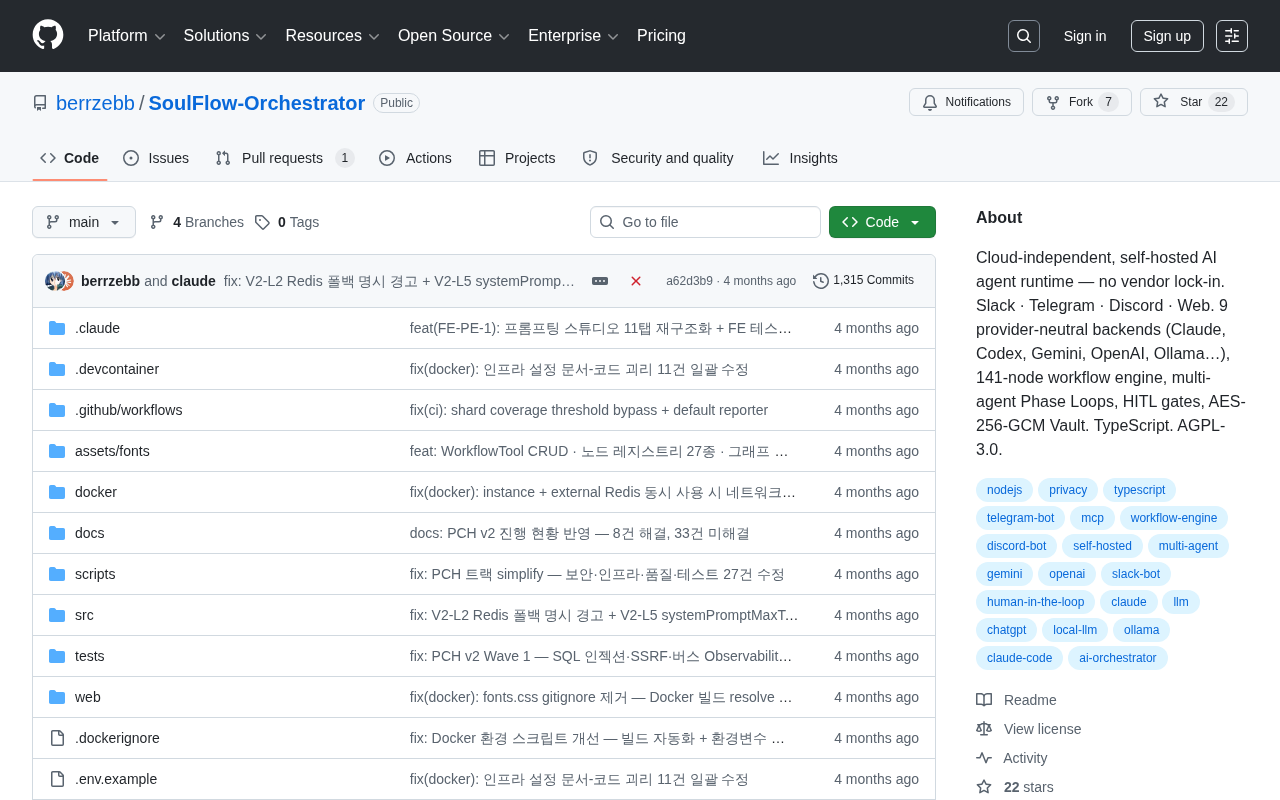
SoulFlow-Orchestrator: A Self-Hosted, Vendor-Lock-In-Free AI Agent Runtime
SoulFlow-Orchestrator is an open-source, self-hosted AI agent runtime with no vendor lock-in. Supports 9 neutral backends (Claude, OpenAI, Ollama), 141-node workflow engine, multi-agent loops, and HITL gates.
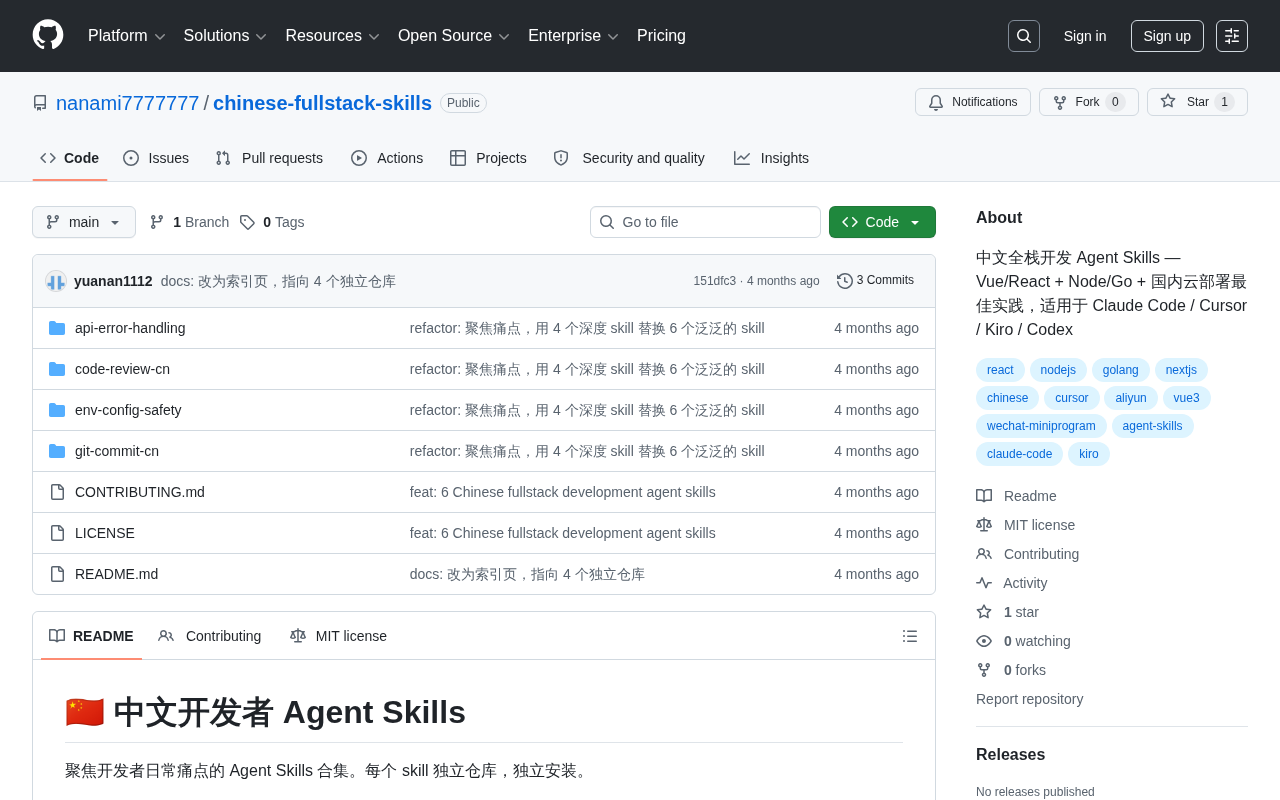
Chinese Full-Stack Agent Skills: A Skill Library Tailored for Domestic AI-Assisted Development
chinese-fullstack-skills is an Agent Skills library for Chinese full-stack development, covering Vue/React, Node/Go, and domestic cloud deployment best practices. Compatible with Claude Code, Cursor, Kiro, and Codex.
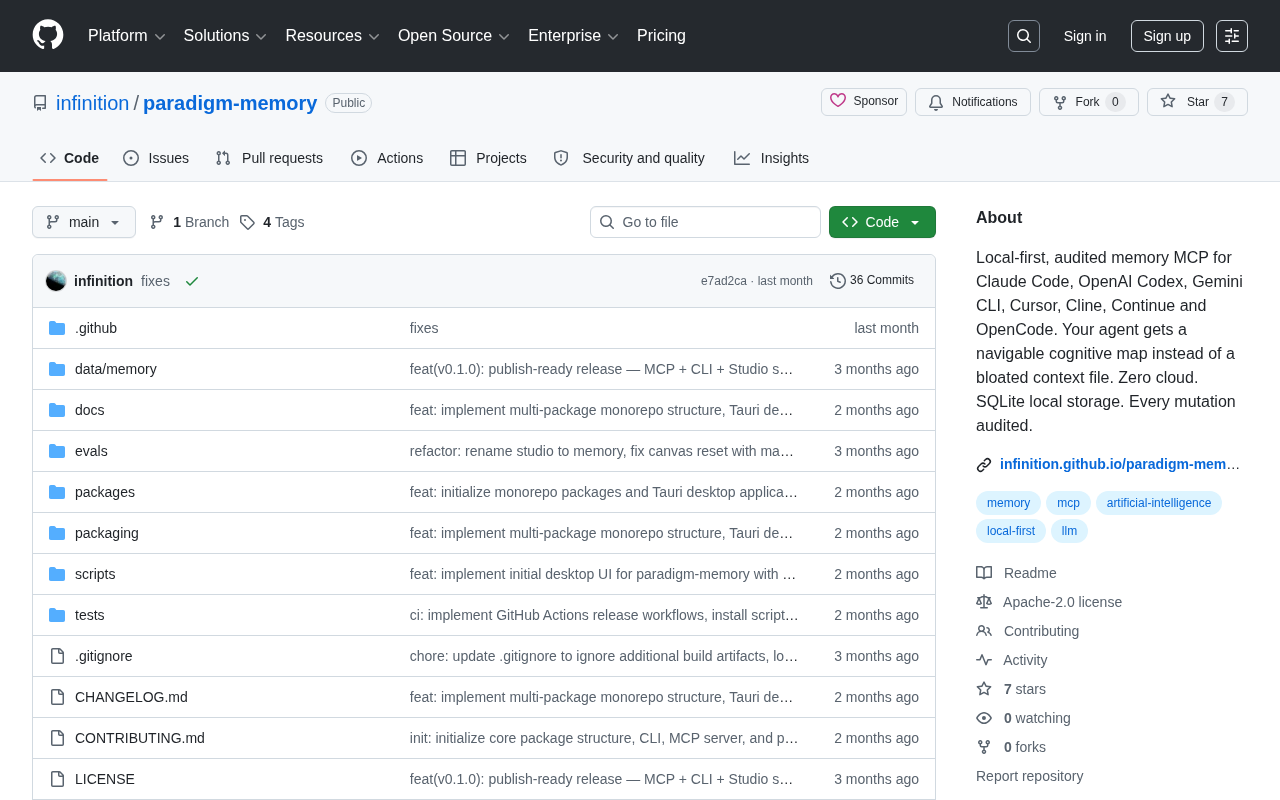
Paradigm Memory: A Local-First Memory System for AI Coding Assistants
paradigm-memory is a local MCP memory tool for Claude Code, Cursor, and Cline. It uses SQLite local storage, zero cloud, full audit trails, and a navigable cognitive map instead of bloated context files.