The AI Capability Growth Curve: Why We Haven't Even Reached the Halfway Point

A deep analysis of why current AI progress may represent less than half the journey to AGI.
Starting from a viral tweet claiming we're 'less than halfway' to AI's ultimate goal, this article examines the shape of AI capability growth curves, the gap between benchmark performance and true general intelligence, and why maintaining a balanced perspective between hype and skepticism is crucial for practitioners and decision-makers navigating the long road ahead.
A Thought-Provoking Hypothesis
Recently, a tweet sparked widespread reflection across the AI community. The poster shared a chart and posed a question: "Can you guess what the goal is? My guess is that we're less than halfway there."

This seemingly casual remark actually touches on one of the most central and contentious topics in current AI development: How far are we really from the ultimate goal—whether that's Artificial General Intelligence (AGI) or some grander capability leap? AGI refers to an AI system possessing cognitive abilities equal to or surpassing those of humans across a broad range of domains, capable of learning, understanding, and reasoning on any intellectual task. This stands in fundamental contrast to today's "narrow AI," which excels at specific tasks but lacks cross-domain transfer capabilities. The research community is deeply divided on how to achieve AGI: one camp believes that continuously scaling up model size (the Scaling hypothesis) will eventually cause general intelligence to emerge from existing architectures; the other argues that the Transformer architecture has fundamental capability limits and that entirely new computational paradigms are needed. Leading labs like OpenAI and DeepMind have made AGI their explicit organizational mission, but predictions for when it will be achieved range from "within 5 years" to "by the end of this century."
The judgment "less than halfway there" both affirms progress already made and hints at the long road ahead.
How to Interpret the "Less Than Halfway" Assessment of AI Progress
Understanding the Stage of AI Development Through Growth Curve Shapes
In the AI field, measuring "progress" has never been straightforward. When we talk about "how far we are from the goal," we're actually making a judgment about the shape of the capability growth curve.
If AI capability follows an exponential growth curve, then the very concept of "halfway" becomes subtle—on an exponential curve, even after you've covered the vast majority of the time span, the remaining portion may actually deliver the steepest, most dramatic capability gains. Conversely, if growth follows an S-curve (Sigmoid), with early acceleration, a mid-phase explosion, and late-stage saturation, then "halfway" likely means we're in the midst of the most intense climb.
Exponential growth and S-curves are the two most commonly used mathematical models for describing technological development. Historically, Moore's Law—describing the growth of transistor density on chips—exhibited near-exponential characteristics for decades. The S-curve, on the other hand, is more common in mature technology domains: slow initial progress, rapid mid-phase ascent, and late-stage saturation due to physical constraints or diminishing marginal returns. In AI, research on Scaling Laws—the stable power-law relationships between model loss functions and parameters, data volume, and compute budgets first systematically revealed by Kaplan et al. at OpenAI in 2020—has shown that proportionally increasing resource investment yields predictable performance improvements. This discovery directly fueled the AI industry's "arms race." However, power-law relationships manifest inconsistently across different capability dimensions: some capabilities may exhibit S-curve saturation trends, while others could enter new growth phases due to architectural innovation. More notably, the marginal returns of performance improvements are diminishing, and the exponential growth in computational resources raises sustainability concerns around energy and cost.
The poster's "less than halfway" judgment likely implies: What currently seems like astonishing progress is, relative to the ultimate goal, still just the prologue.
Goal Definition Determines Perceived Distance
The answer to "how far from the goal" depends heavily on how the "goal" itself is defined. If the goal is for AI to surpass human experts on specific benchmarks (such as math, coding, or reasoning), then in some domains we may already be approaching or even crossing that line.
It's worth understanding the nature and limitations of AI benchmarks. Common tests include MMLU (Massive Multitask Language Understanding), HumanEval (coding ability evaluation), GSM8K (mathematical reasoning), and ARC (Abstraction and Reasoning Corpus), which provide standardized yardsticks for comparing different models. However, the limitations of benchmarks are increasingly apparent: models may "cheat" by memorizing similar problems from their training data (the data contamination problem), meaning high scores don't necessarily reflect genuine reasoning ability; the capability dimensions covered by tests are limited and cannot comprehensively measure complex abilities like creativity, commonsense reasoning, or social intelligence; moreover, when model scores approach perfect marks, the tests themselves lose discriminative power, necessitating the continuous design of more challenging new benchmarks.
But if the goal is to achieve general intelligence capable of autonomous learning, cross-domain generalization, and genuine understanding, then "less than halfway" might even be an optimistic estimate.
The Tension Between Optimism and Caution
The Two Sides of AI Progress
Over the past few years, the capability growth of large language models has been genuinely staggering. From the GPT series to various open-source models, parameter scale, context length, and reasoning ability have all undergone rapid iteration. This visible acceleration can easily create the illusion that "the goal is within reach."
However, this tweet reminds us to maintain a healthy dose of caution. Behind "we haven't even reached halfway" lie several layers of consideration:
- The gap between surface-level capability and underlying limitations: High scores on benchmarks don't always equate to reliability and generalization in the real world.
- The exponentially increasing difficulty of remaining problems: The closer we get to the "goal," the more fundamental and difficult the problems we need to solve—such as reliable reasoning, long-term planning, and value alignment.
- Continuously deepening understanding of the goal itself: As research advances, our understanding of "intelligence" evolves, and the goal may be more distant than originally envisioned.
Among these, Alignment deserves special attention as a core issue in AI safety. It refers to ensuring that an AI system's goals, behaviors, and decisions remain consistent with human values and intentions. The difficulty of this problem far exceeds what it appears on the surface: on one hand, there's the "outer alignment" problem—human values themselves vary enormously across cultures, individuals, and eras, making the very definition of unified "human values" a philosophical challenge; on the other hand, there's the "inner alignment" problem—even if the objective function is correctly specified, how can we ensure the model truly learns these goals during training rather than learning related but non-equivalent "proxy goals"; finally, there's the "interpretability" challenge—when a model's internal mechanisms are a black box to humans, it's extremely difficult to verify whether it's truly aligned. Researchers like Stuart Russell and Eliezer Yudkowsky have long warned that value alignment may be one of the most critical and hardest-to-solve problems on the road to AGI.
Why This Balanced Judgment Is Invaluable
In a discourse environment saturated with the polar extremes of "AGI is imminent" and "AI is a bubble," the stance that "we've covered some ground, but we're not yet halfway" represents a relatively balanced position. It acknowledges genuine technological progress without succumbing to the frenzy of overhype.
Regarding the AI bubble thesis, its core argument is that the current AI industry's capital investment and market valuations far exceed actual business value creation, similar to the dot-com bubble of 2000. Supporting evidence includes the fact that most AI startups are not yet profitable, the ROI cycle for compute infrastructure is extremely long, enterprise AI adoption rates are below expectations, and generative AI's "hallucination" problem severely constrains deployment in high-stakes scenarios. However, critics point out that AI technology has already demonstrated clear productivity gains in areas like code assistance, content creation, and drug discovery, and that the pace of technological iteration far exceeds that of the early internet era. A more balanced view suggests the AI industry may be transitioning from the "Peak of Inflated Expectations" to the "Trough of Disillusionment" on Gartner's Hype Cycle, eventually reaching a stable phase of productive maturity.
This judgment offers insight for practitioners and observers alike: There's no need for blind optimism over short-term breakthroughs, nor should we lose motivation because the finish line is far away. What truly matters is steady, sustained progress—not obsessing over whether we're "about to arrive."
Three Takeaways for AI Industry Practitioners
For technical professionals and decision-makers following AI development, this brief tweet offers a practical thinking framework:
First, beware the trap of linear extrapolation. Seeing rapid recent progress and simply projecting that "we'll reach the finish line soon" often underestimates the difficulty of the remaining journey. The history of technology has repeatedly shown that the "last mile" from lab prototype to reliable large-scale deployment is often harder than all the preceding distance combined.
Second, focus on the shape of the growth curve rather than individual data points. Understanding what stage of development we're in is more practically meaningful than debating "how many years are left." A single model's breakthrough score on one benchmark is far less convincing than capability growth trends across multiple dimensions. The key is distinguishing which capability improvements stem from genuine algorithmic innovation versus which are merely statistical effects of scaling up.
Third, prepare for long-termism. If we truly are "less than halfway there," then whether it's R&D, talent development, or industry positioning, we need sufficient patience and readiness for sustained investment. This means organizations need to establish sustainable R&D investment mechanisms rather than pinning hopes on a single short-term technological breakthrough.
Conclusion
"Can you guess what the goal is? My guess is we're less than halfway there."—This sentence resonates precisely because it touches on a question lurking in the heart of every AI practitioner. There's no definitive answer, but asking the question itself is the first step toward staying clear-headed.
On the road toward an unknown destination, admitting "we still have a long way to go" may require more wisdom—and be closer to the truth—than declaring "victory is in sight."
Related articles
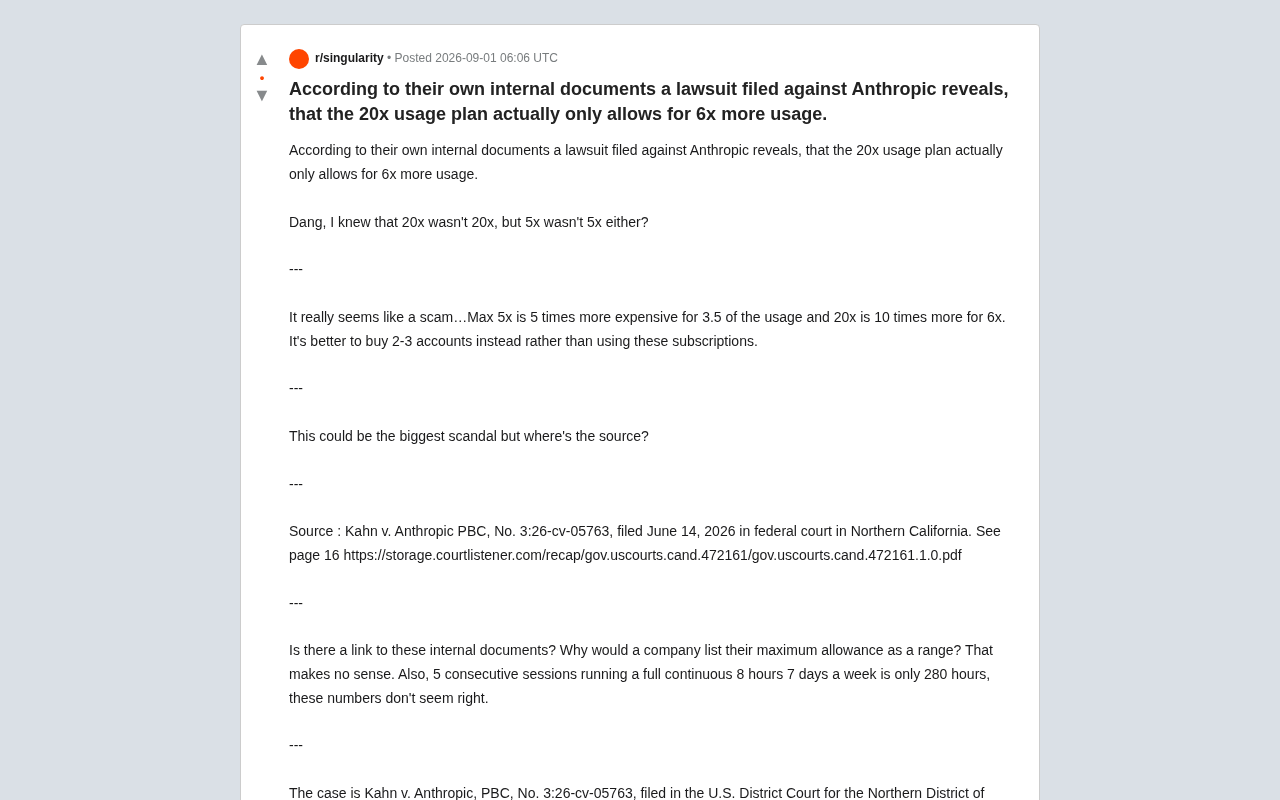
Anthropic Sued: Claude Max 20x Plan Allegedly Delivers Only 6x Usage?
A lawsuit against Anthropic alleges Claude Max's 20x plan delivers only ~6x usage, and the 5x plan just 3.5x. We break down the legal details, community reactions, and the AI subscription transparency crisis.

Cursor Beginner's Guide: A Six-Step Workflow for Managing Changes, Rollbacks, and Validation
New to Cursor and keep breaking things? Learn a six-step dev workflow covering Cursor Rules, Plan mode, Diff review, and Checkpoint rollback to go from guesswork to engineering.

Is Cheap Cursor Reselling Reliable? The Real Risks of Shared Account Pools Exposed
An in-depth analysis of Cursor Pro budget reselling services, exposing the shared account pool model behind so-called legitimate accounts and deep discounts from technical, compliance, and data security perspectives.