The AI Compute Arms Race: Why Tech Giants Are Betting Everything on Data Centers

Tech giants are pouring hundreds of billions into AI data centers in a FOMO-driven compute arms race.
Tech giants are investing unprecedented sums into massive AI data centers, driven by FOMO and the belief that compute power is the new strategic resource. With projects like the $500B Stargate plan and gigawatt-level power demands rivaling nuclear plants, this arms race is reshaping energy markets, supply chains, and industry dynamics. Whether this massive bet pays off depends on AI's commercial viability.
An Underestimated Tidal Wave of Compute
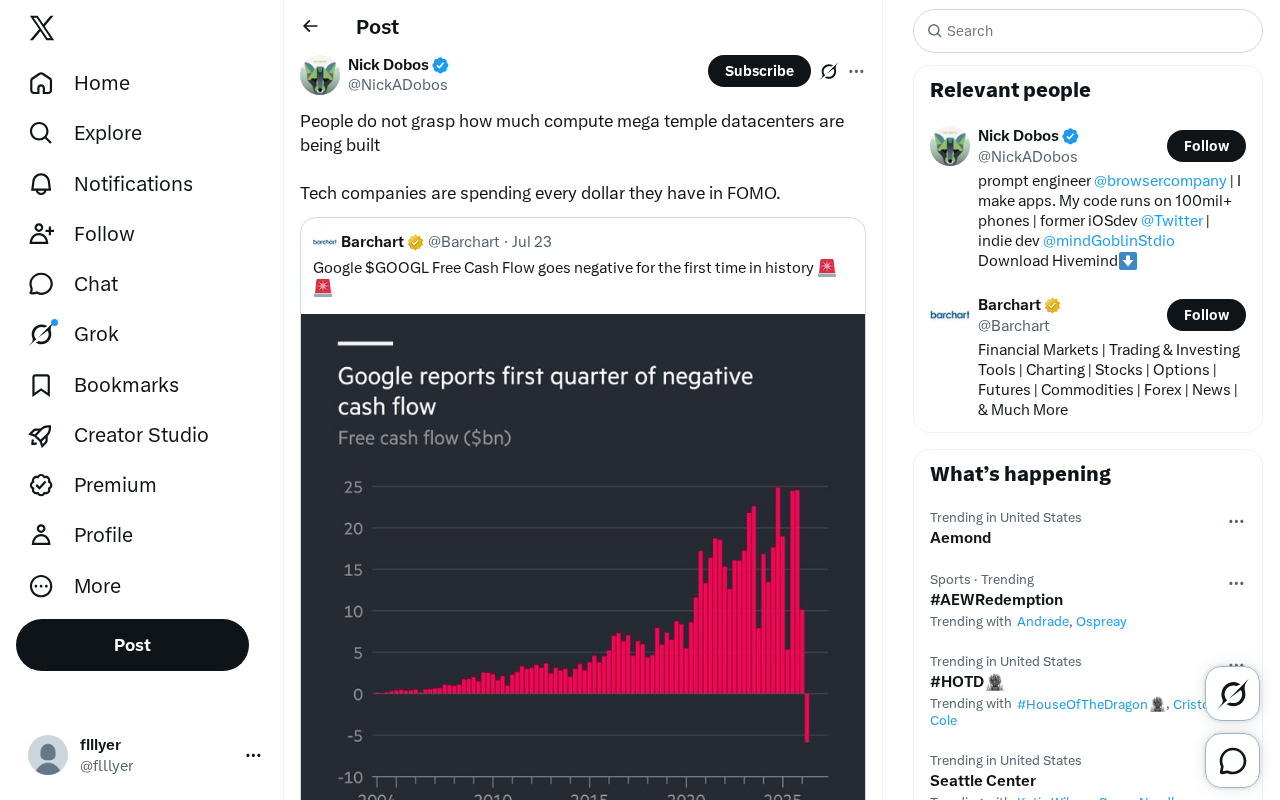
Recently, a tweet that sparked widespread discussion in tech circles hit the nail on the head: "People don't really understand just how much compute is contained in these mega temple datacenters being built right now. Tech companies are spending every dollar they have out of FOMO."
Though brief, this statement precisely captures the frenzied state of AI compute infrastructure construction today. As large models like ChatGPT, Gemini, and Claude continuously push performance boundaries, the underlying compute infrastructure supporting them is expanding at a pace far beyond public imagination. This is no longer routine data center expansion—it's a global arms race for compute dominance.
From a technical foundation perspective, this arms race has solid theoretical backing. Large language model training follows so-called "Scaling Laws"—the approximate power-law relationship between model performance and training data volume, model parameter count, and compute. OpenAI's 2020 research paper first systematically revealed this pattern. This means that achieving linear performance improvements often requires exponential growth in compute investment. GPT-4's training reportedly consumed the equivalent of tens of thousands of A100 GPUs running for months, and next-generation model training demands could multiply several times over. This "brute force aesthetics" approach to technology is the underlying technical logic driving the insane expansion of data centers.
What "Mega Temple" Data Centers Really Mean
From Server Rooms to Compute Temples
The tweet's phrase "mega temple datacenters" is remarkably evocative. Traditional data centers are measured in tens of thousands of servers, but the AI data centers being planned by leading tech companies now require hundreds of thousands or even millions of GPUs working in concert, with power demands reaching gigawatt (GW) levels—equivalent to the output of a medium-sized nuclear power plant.
To understand what "gigawatt-level" power consumption means, we need an intuitive frame of reference. 1 gigawatt (GW) equals 1 million kilowatts—roughly equivalent to a medium-sized nuclear reactor or a large coal-fired power plant, enough to supply approximately 750,000 American households. Traditional hyperscale data centers typically consume 50-100 megawatts (MW) of power, but the new generation of AI data centers frequently features single-site plans of 500MW or even over 1GW. According to the International Energy Agency (IEA), global data center electricity consumption could double by 2026, reaching approximately 1,000 terawatt-hours (TWh)—close to Japan's total annual electricity consumption. This surge in energy demand has not only driven up electricity prices but also ignited fierce debate about carbon emissions and sustainability.
Using publicly available industry information as reference, the "Stargate" project—a collaboration between OpenAI, SoftBank, and Oracle—carries an investment scale of hundreds of billions of dollars. Specifically, the Stargate plan was jointly announced in January 2025 by OpenAI, SoftBank, Oracle, and the UAE's MGX fund as an AI infrastructure investment project with a total scale of $500 billion, planning to build massive AI data center clusters on U.S. soil over the next four years. The initial investment is approximately $100 billion, with the first construction site in Texas. The plan's strategic intent is not only to provide training compute for OpenAI's next-generation models but is also seen as a national-level initiative to ensure the United States maintains global AI leadership. The combined annual capital expenditures of hyperscale cloud providers like Microsoft, Google, Meta, and Amazon have already exceeded hundreds of billions of dollars, with the majority flowing toward AI compute infrastructure.
Compute Has Become a New Strategic Resource
Why are tech companies willing to invest so recklessly? The core logic is this: in the era of generative AI, compute scale directly determines the ceiling of model capabilities. Whoever controls more and more advanced compute can train stronger models and gain a first-mover advantage in product competition. Compute is becoming a strategically scarce resource, much like oil.
The Capital Gamble Driven by FOMO
Fear Drives Investment More Than Greed
The term "FOMO" in the original tweet reveals the psychological underpinning of this AI compute investment wave. Rather than investing because they see certain returns, these giants are driven by a collective anxiety of "not daring to fall behind." Under the consensus that AI represents the next technological revolution, any company that falls behind in compute reserves could be completely marginalized in future competition.
This mentality produces a typical phenomenon: companies tend to "over-buy rather than under-buy." Even when the specific path to commercial monetization remains unclear in the short term, they must first secure GPU compute. As the tweet states, tech companies are "spending every dollar they have" on this bet.
Concerns Behind the Boom
However, this FOMO-driven frantic expansion also sows seeds of risk. Historically, every investment boom triggered by "fear of missing out" has been accompanied by bubble concerns. FOMO-driven massive capital investment is not new in the tech industry. During the late 1990s dot-com bubble, telecom companies frantically laid fiber optic networks with total investments exceeding hundreds of billions of dollars, ultimately leading to massive overcapacity and bankruptcies like WorldCom. Interestingly, however, this over-built fiber infrastructure became the foundation for the mobile internet and cloud computing explosion a decade later. Similarly, the 2017-2018 blockchain craze triggered massive investments in mining equipment and data centers, but as cryptocurrency markets violently fluctuated, many investments were wiped out. Whether the current AI compute FOMO cycle will end differently depends on whether generative AI can achieve sufficient revenue conversion in enterprise applications.
The current market features two distinctly different voices:
- Optimists believe that AI use cases are rapidly expanding, that current compute investment is forward-positioning for a massive future market, and that demand will continue to climb.
- Skeptics worry that whether such enormous capital expenditures can generate returns within a reasonable timeframe remains unknown, and if AI commercialization falls short of expectations, these astronomical investments could become crushing asset burdens.
The Chain Reaction of the Compute Frenzy
Energy and Supply Chain Under Pressure
The explosive growth of data centers brings more than just chip demand. Gigawatt-level power consumption is posing unprecedented challenges to regional power grids, with some tech companies even directly investing in nuclear power and renewable energy projects to secure electricity supply.
Moreover, the entire supply chain—from high-end GPUs to High Bandwidth Memory (HBM), from cooling systems to networking equipment—is under extreme strain. HBM is a particularly noteworthy bottleneck. HBM is an advanced DRAM memory using 3D stacking technology, vertically stacking multiple DRAM dies and interconnecting them with Through-Silicon Via (TSV) technology to achieve extremely high data bandwidth—the latest HBM3E specification delivers over 1TB/s of bandwidth, several times that of conventional DDR5. HBM is a critical component of modern AI accelerators (such as NVIDIA's H100, H200, and B200 GPUs) because large model training and inference require frequent reading of massive parameters and intermediate data from memory, making memory bandwidth a common performance bottleneck. Currently, HBM supply is highly concentrated, with SK Hynix holding over 50% market share, followed by Samsung and Micron, with supply shortages expected to persist through 2026.
Deep Reshaping of the Industry Landscape
This compute race is also reshaping the entire tech industry landscape. NVIDIA, leveraging the absolute dominance of its GPUs, has become the biggest beneficiary, with its market cap briefly reaching the global number one position. NVIDIA's share of the AI training chip market is estimated to exceed 80%, a dominance rooted in multiple "moats." First is hardware performance—its latest Blackwell architecture GPUs (B200/GB200) deliver several-fold improvements in AI training efficiency over predecessors. Second is the CUDA software ecosystem—CUDA is NVIDIA's general-purpose GPU computing platform built since 2006, with nearly 20 years of accumulation, now boasting over 4 million developers and a massive software library ecosystem. Virtually all major AI frameworks (PyTorch, TensorFlow, etc.) are deeply optimized for CUDA, creating extremely high migration costs and lock-in effects. AMD, Intel, Google (TPU), and numerous AI chip startups are all attempting to challenge this monopoly, but are unlikely to shake NVIDIA's position in the short term.
The gap between cloud computing giants increasingly depends on who can build larger-scale AI clusters; for small and medium enterprises and startups, the high compute threshold may further consolidate the monopoly position of leading players.
A Clear-Eyed View of This Compute Gamble
Though the original tweet contained only a few words, it reveals a reality worth pondering: the scale of AI infrastructure construction has far exceeded most people's comprehension. This is both an inevitable result of technological progress and a concentrated expression of capital frenzy.
For observers, the important thing is not simply to cheer or doom this wave, but to maintain clarity: compute is indeed the core foundation of the AI era, but whether "all-in" FOMO investment is sustainable must ultimately be validated by real application value and commercial returns. Whether this mega data center construction is the cornerstone of the future or the prelude to another bubble—time will tell.
Related articles
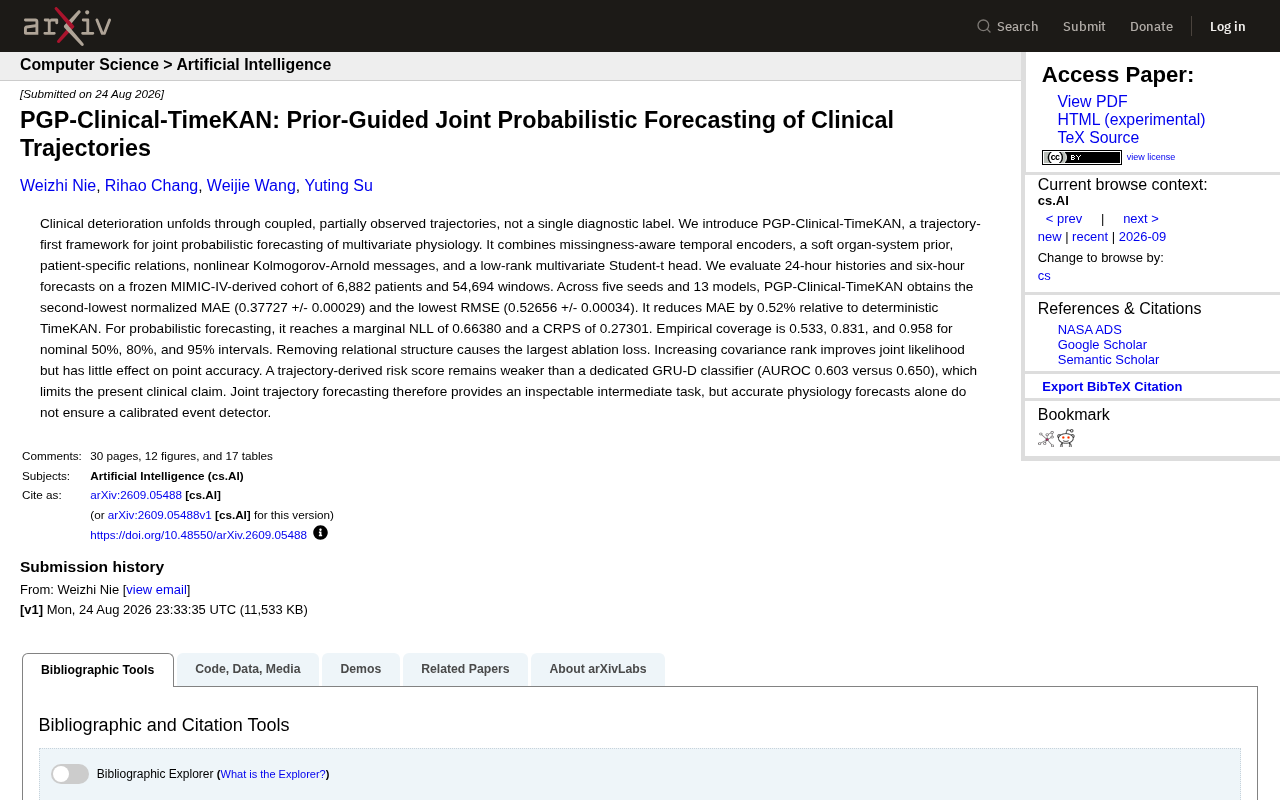
PGP-Clinical-TimeKAN: A Detailed Guide to the Multivariate Physiological Indicator Joint Prediction Framework
An in-depth analysis of the PGP-Clinical-TimeKAN framework for joint probabilistic prediction of multivariate physiological indicators, covering trajectory-first paradigm, KAN message passing, MIMIC-IV validation, and ablation studies.
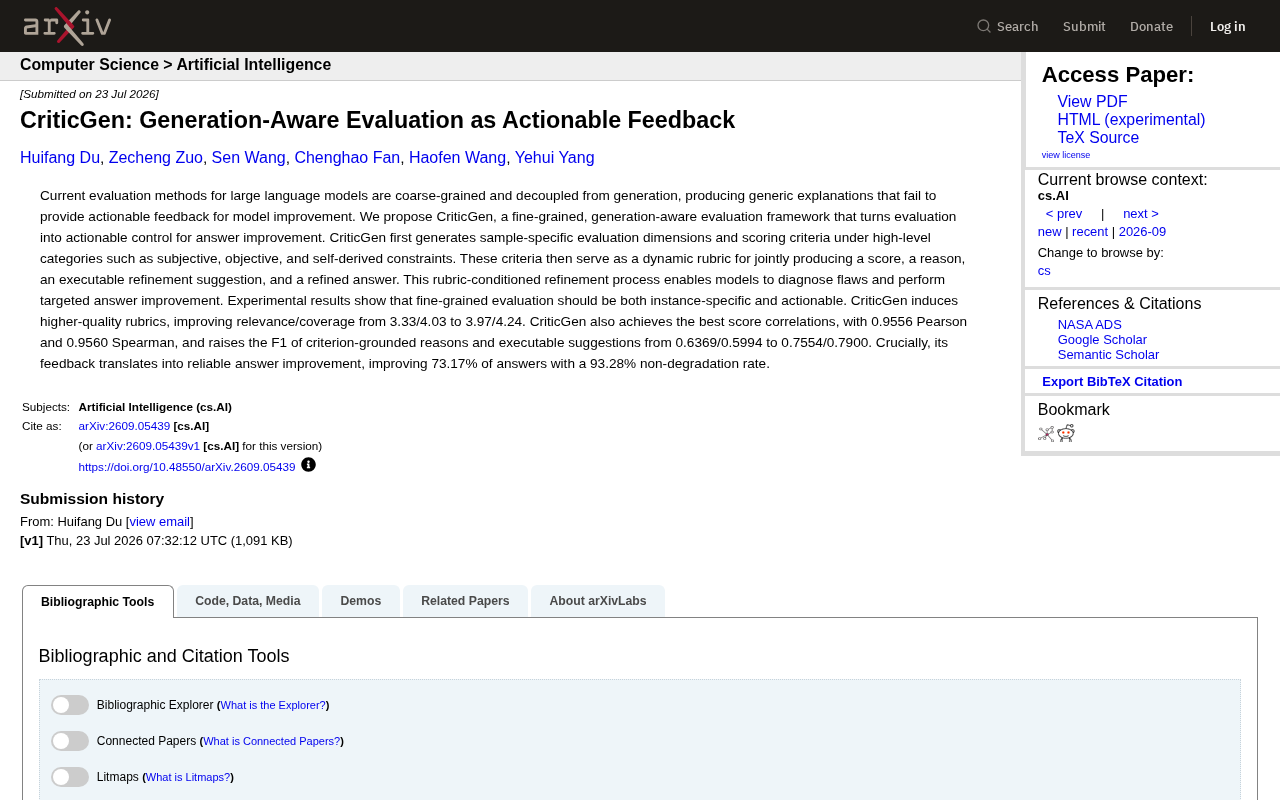
CriticGen: A New Framework That Transforms AI Evaluation into Actionable Improvement Feedback
CriticGen proposes a generation-aware evaluation framework that transforms AI assessment from passive scoring to an active optimization loop, achieving 73.17% answer improvement and 93.28% non-degradation rate.
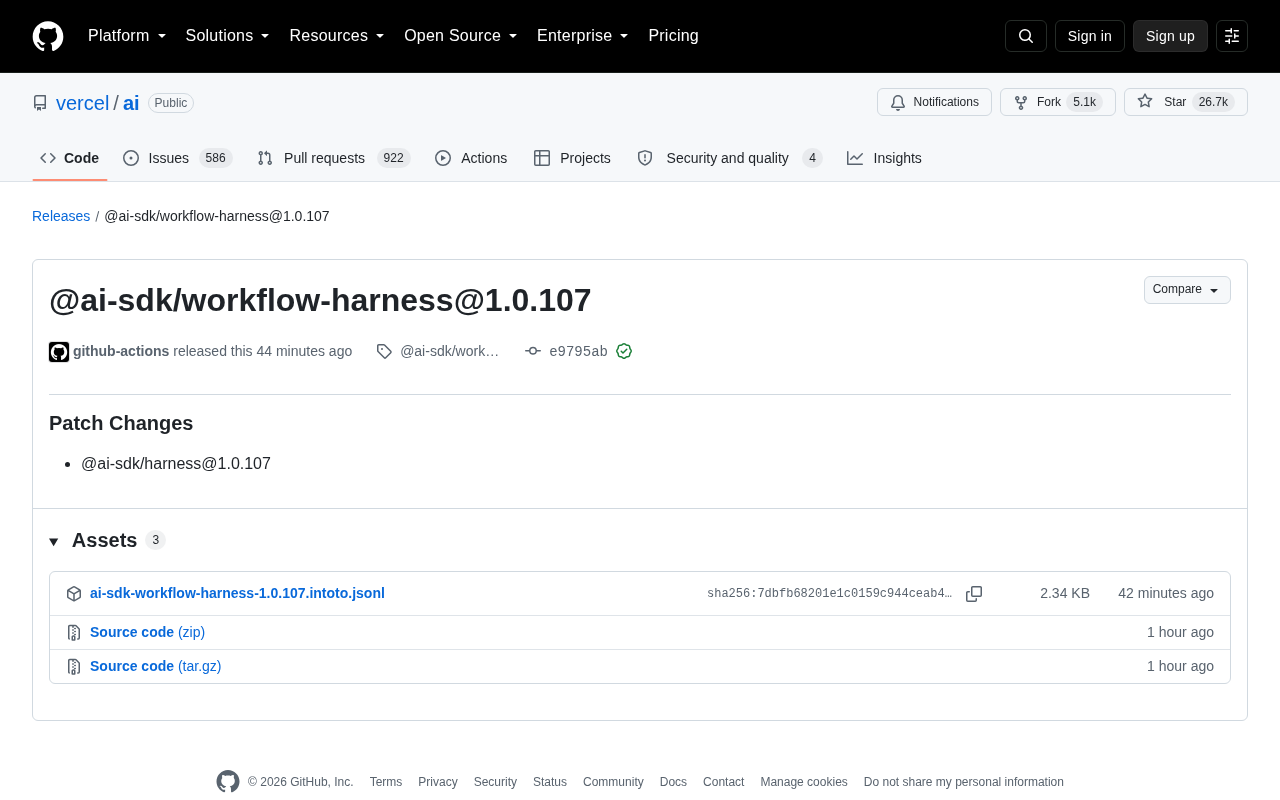
Vercel AI SDK workflow-harness Update Analysis
Deep analysis of Vercel AI SDK workflow-harness 1.0.107 update: architecture design, engineering practices, and developer value for building reliable AI apps.