The AI Industry Bubble: 80% of Revenue from 1% of Customers — How Long Can a $1.2 Trillion Compute Bet Hold?

80% of AI revenue comes from 1% of customers — and $1.2T in compute bets may not survive the reckoning.
Data from spend platform Ramp reveals that 80% of OpenAI and Anthropic's enterprise revenue comes from just 1% of customers, many of them VC-subsidized startups. Paired with $1.2 trillion in Take-or-Pay compute commitments and a consumption-based billing model vulnerable to commoditization, the AI industry's growth narrative rests on circular funding and peer-pressure spending — not proven ROI. The bubble's timeline may be shorter than the hype suggests.
Fragile Revenue Structure: 1% of Customers Prop Up the Entire AI Empire
According to data recently disclosed by corporate spend management platform Ramp, a staggering 80% of enterprise revenue at OpenAI and Anthropic comes from just 1% of their customers. Because Ramp's data is sourced from actual corporate card transactions and payment records — not surveys — it carries significant credibility. This striking figure exposes a deep structural crisis lurking beneath AI's surface-level prosperity.
The SaaS industry typically uses the "Pareto principle" to describe revenue concentration — 20% of customers generating 80% of revenue — but AI's 1%/80% ratio is far more extreme than that, resembling the customer structure of luxury goods or high-end financial services rather than a healthy platform business.
Tech critic Ed Zitron, speaking with Tech Report, noted that while Ramp may not capture spending data from hyperscalers like Microsoft or Meta, its customer sample includes a large number of ordinary enterprises and AI startups. This means that in the real business world, the vast majority of companies are not spending heavily on AI.

More worryingly, the composition of that top 1% of heavy users is complex: some are genuine enterprise customers making real use of AI services, while others are AI startups subsidized by venture capital — paying $20/month in subscriptions while consuming hundreds of dollars worth of tokens. This VC-driven consumption is essentially "pre-sold revenue" — startups pay API fees with funding rounds, artificially inflating demand figures. Early cloud computing saw similar VC-driven consumption, but real enterprise demand eventually filled the gap; whether AI will follow the same trajectory remains an open question. This revenue structure is extremely unstable — when venture capital dries up, this portion of revenue will vanish instantly rather than taper gradually.
The Fundamental Problem with AI Consumption: It's Not Subscription, It's Burn
AI services are fundamentally different from traditional SaaS software. Enterprise software like Salesforce also has high revenue concentration, but it's built on stable subscription models. AI, by contrast, is a consumption-based model — what a customer spends each month depends entirely on how many tokens they actually use.
A token is the basic unit of measurement and billing for large language models; roughly speaking, 1,000 English tokens correspond to about 750 words. Unlike traditional SaaS charged per seat or per month, AI's per-token billing causes revenue to be highly volatile — the same customer might spend ten times their usual amount in a month when running large batch processing jobs, then drop to zero the following month when business slows. Economically, this consumption model is closer to a commodity (like electricity or bandwidth) than a software license. Commodity markets are characterized by very low switching costs when substitute prices fall — buyers quickly migrate to the cheapest supplier.
This means OpenAI and Anthropic must keep those few hundred core customers continuously increasing their spending every month. Merely maintaining the status quo is nowhere near enough. But the reality is that competitors are cutting prices every week, Meta is releasing cheaper models, and open-source alternatives are proliferating. The continued advances of Meta's Llama series, Mistral, and other open-source models are pushing AI toward commoditization — customers spending millions or even tens of millions of dollars monthly on AI tokens have every incentive to switch to lower-cost alternatives.

Ramp's charts show that since transitioning to token-based billing last April, the customer structure has not improved — 1% of customers still account for over 80% of revenue. This indicates that AI has not achieved genuine mass-market adoption — no matter how powerful it looks in technical demos, most businesses simply aren't willing to pay for it.
$1.2 Trillion in Compute Contracts: A Ticking Time Bomb
The crisis in the AI industry goes beyond the revenue side. OpenAI and Anthropic have already signed approximately $1.2 trillion worth of compute commitments. These Take-or-Pay contracts mean fees must be paid regardless of whether the capacity is actually used.
Take-or-Pay is a standard structure in the energy and infrastructure industries: the buyer commits to paying a minimum amount regardless of actual usage. This arrangement benefits data centers and GPU cloud providers because it locks in revenue expectations, enabling them to make massive capital expenditures. CoreWeave is a prime example — this GPU cloud company went public in 2024 on the strength of long-term contracts with Microsoft and OpenAI, its valuation heavily dependent on those contracts being honored. For AI labs, the logic at signing time was to lock in compute capacity before competitors could grab it. The problem is that they used certain financial obligations to bet on an uncertain future.
Ed Zitron has compared the current situation to adjustable-rate mortgages in the 2008 financial crisis: both share the same structural risk — initial costs appear manageable, but when market conditions change, the debt burden suddenly jumps to unsustainable levels. The "teaser rate" period is ending, vast amounts of compute capacity are coming online, and enormous bills will arrive like a tsunami. Without sufficient customer demand, neither company can afford to pay.
Even more concerning is the fragility of the entire value chain:
- Top layer: A few hundred customers paying volatile token fees, some of which are VC-subsidized AI startups
- Middle layer: OpenAI and Anthropic depending on these customers' continued payments, while also relying on capital infusions from VCs and cloud providers
- Lower layer: Cloud providers like Microsoft and CoreWeave signing massive compute contracts based on speculative AI lab demand
- Bottom layer: NVIDIA and Broadcom's revenue growth built on the assumption that every link above is functioning smoothly

Every link in this chain ultimately depends on the continued flow of venture capital. If any single link breaks, the entire system faces cascading collapse.
The Illusion of AI Demand Signals: Circular Funding Smoke and Mirrors
When data center builders assess market demand, they see massive order backlogs at companies like CoreWeave and Nscale and conclude that AI demand is booming. But those companies' customers are primarily OpenAI, Anthropic, and other intermediaries supplying compute back to them.
Annualized Run Rate (ARR) and order backlog are financial metrics commonly used by startups, but in the AI industry they've been widely deployed to mask revenue instability — a single customer's large purchase in one month gets annualized, giving outsiders the impression of a much larger business. The deeper problem is supply chain "demand signal distortion," known in economics as the Bullwhip Effect: minor demand fluctuations downstream, amplified through multiple intermediary layers, become violent swings upstream. The longer the AI industry's chain (user → AI application → API → cloud compute → GPU), the more severely demand signals are distorted — and NVIDIA and Broadcom, sitting at the end of the chain, receive the most distorted signals of all.
NVIDIA works with OpenAI and Anthropic to ensure they sign large contracts, and signing a contract costs nothing — just a signature on a dotted line, creating justification for GPU sales. It's a carefully engineered illusion: using metrics like ARR and order backlog to show journalists, bankers, and analysts exactly what they want to see.
Broadcom's CEO recently revealed that the company's top two customers will be Anthropic and OpenAI. This means that even NVIDIA's competitors have revenue that ultimately tracks back to these two companies with no natural cash flow. Roughly 80–90% of the entire industry's compute demand is tied to them.
The Truth About Enterprise AI Spending: Peer Pressure, Not Real Value
Are enterprises genuinely getting returns on the thousands or tens of thousands of dollars they spend monthly on employee AI usage? Ed Zitron argues that, to a large extent, this spending is driven by peer pressure and executive-level AI enthusiasm.

ROI (Return on Investment) is the core financial metric for business decision-making, but AI spending ROI is extremely difficult to quantify. Traditional software investments (like ERP or CRM systems) have mature evaluation frameworks: how many labor hours were saved, how many errors were reduced, how much faster did processes become. AI's benefits tend to be diffuse — code gets written faster, but how much faster? Decision quality improves, but how do you attribute that? This quantification difficulty means AI budgets are easy to inflate during economic booms (because "there's no need to skimp") and easy to cut first during downturns (because "we can't prove how much value it actually delivered"). When a CEO hears a peer brag at a lunch that "we spend ten thousand dollars per employee per month on AI," they feel pressure. But how long can that spending last? Once AI stops being the buzzword that has to come up in every meeting, once teams are asked to demonstrate real ROI, those budgets are likely to evaporate quickly.
The Zillow case is telling: they burned through an entire year's Cursor budget in just four or five months. Cursor is an AI code editor whose pricing model includes costs for calling large models like Claude. Once engineers have powerful AI assistance, they naturally offload more and more tasks to it, causing token consumption to grow exponentially — far beyond original budget estimates. This unconstrained usage pattern is unsustainable, and that 1% of heavy users likely also accounts for 80% of inference compute costs. If the other 99% of users ever truly "catch up," the entire industry's cash burn rate would reach astronomical levels at current efficiency.
The AI Growth Narrative That Can't Hold Together
AI advocates have long proclaimed this a "foregone conclusion," that enterprises "must join or get left behind." But the data tells a different story: when most businesses have had the opportunity to pay for AI, they've chosen not to.
Sam Altman has said OpenAI now has more enterprise customers than consumer customers. Ed Zitron's response: "That's bad, because your enterprise customers aren't spending that much money." It's worth understanding the structural difference between B2C and B2B revenue: the consumer market (ChatGPT Plus and similar subscriptions) runs mostly on fixed monthly fees, where heavy users have a capped marginal cost; the enterprise market runs primarily on API calls, where high-usage enterprises bring high revenue but also high compute costs. More critically, large enterprise customers have significant negotiating power — when a company is paying OpenAI millions of dollars per month, it has enough leverage to demand discounts, or simply to build its own model. Many enterprise customers but low per-customer spend can simultaneously mean low margins and low pricing power — a doubly unfavorable position. If enterprises aren't willing to pay for AI, consumers are even less likely to.
If you strip away the AI element entirely and just look at the underlying business model — two companies with no natural cash flow, 80% of revenue from 1% of customers, committed to trillions of dollars in infrastructure — every economist would call it a crazy level of systemic risk. But because it carries the "AI" label, critics are treated as outsiders.
When Will the AI Bubble Burst? The Critical Window Is Approaching
Ed Zitron's conclusion is blunt: "This is a fake industry, and everyone is running some kind of scam." The entire AI ecosystem is built on a series of unstable assumptions: that VCs will provide funding forever, that enterprises will keep increasing their spending, that demand will naturally expand.
It's worth distinguishing between two different types of risk here: liquidity risk (insufficient cash in the short term to meet maturing obligations, but long-term assets remain healthy) and solvency risk (asset values insufficient to cover liabilities). What AI labs currently face is closer to liquidity risk — they're not short on assets (technology, talent, data), but they burn cash extremely fast and depend on continuous fundraising to survive. Historically, most tech bubbles burst not because technology failed, but because funding chains snapped: in the 2000 dot-com bust, many companies' business models weren't entirely invalid, but when capital markets tightened, those companies didn't have enough time to wait for profitability. AI's Take-or-Pay compute debt adds an extra danger factor — even if the funding chain temporarily holds, rigid expenditure obligations cause losses to expand at a fixed rate, with none of the flexibility traditional internet companies had to "quickly cut costs through layoffs."
But the reality is: most people won't pay for AI, most enterprises won't pay for AI, and that 1% of customers propping up the entire industry could at any moment shift to cheaper alternatives or simply stop spending. When compute contract bills come due, when AI startup VC funds run dry, when enterprises start demanding real returns on investment — how long can this game go on?
The answer may come faster than anyone expects.
Related articles
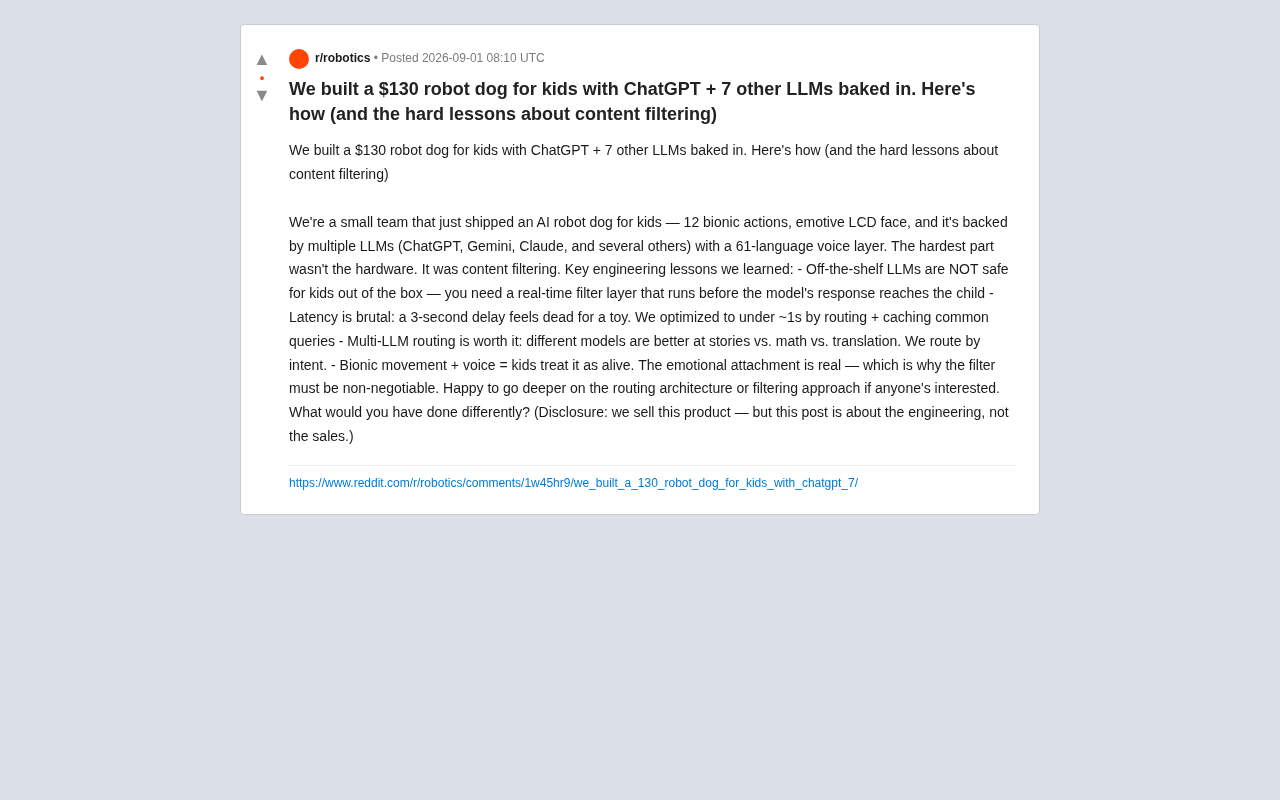
Building an AI Robot Dog for Kids: Multi-Model Routing, Content Filtering, and Latency Optimization
A $130 AI robot dog for kids integrates 8 LLMs with 61-language voice interaction. The team shares key engineering lessons on content safety filtering, multi-LLM intent routing, and sub-1-second latency optimization.
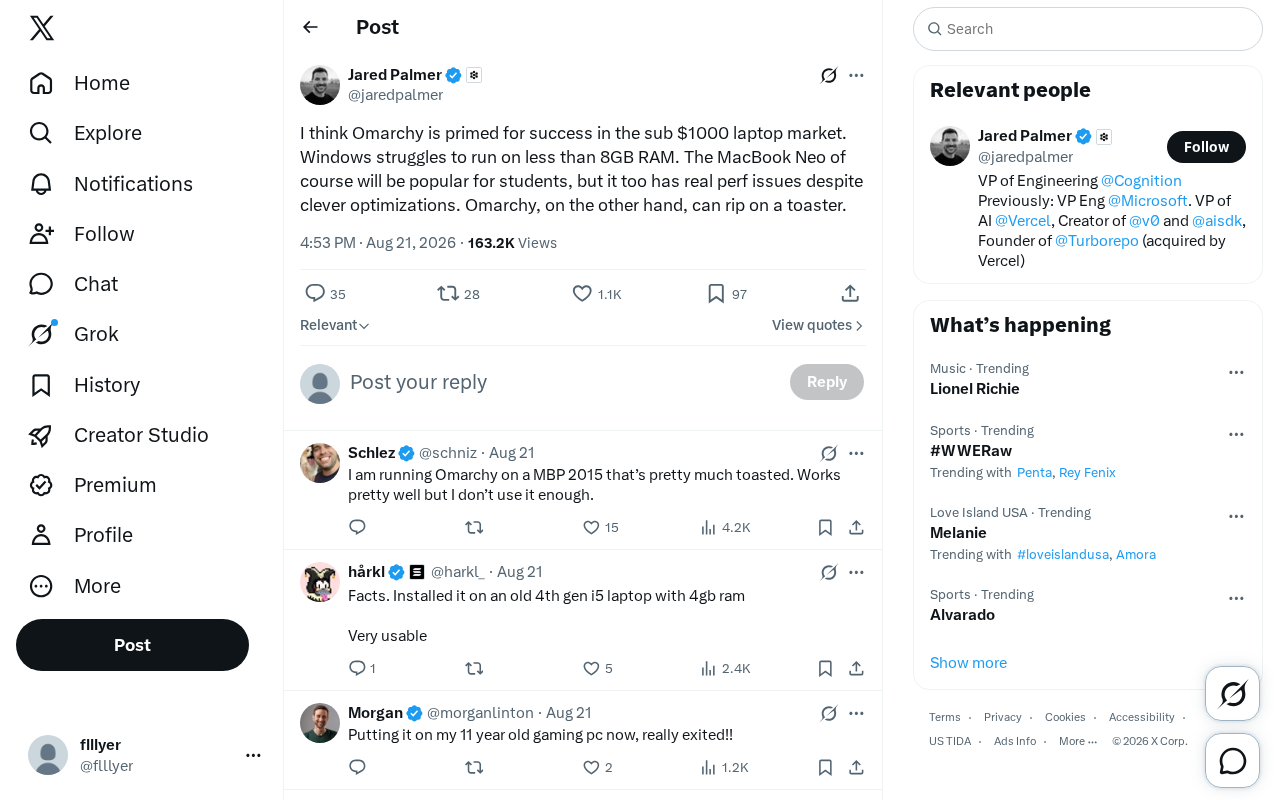
Can Omarchy Dominate the Sub-$1000 Laptop Market? An In-Depth Analysis
Omarchy, based on Arch Linux, shows unique advantages in the sub-$1000 laptop market. This analysis compares Windows and MacBook performance bottlenecks on low-spec hardware and examines why Omarchy enables cheap laptops to run smoothly, plus the ecosystem challenges and market prospects it faces.
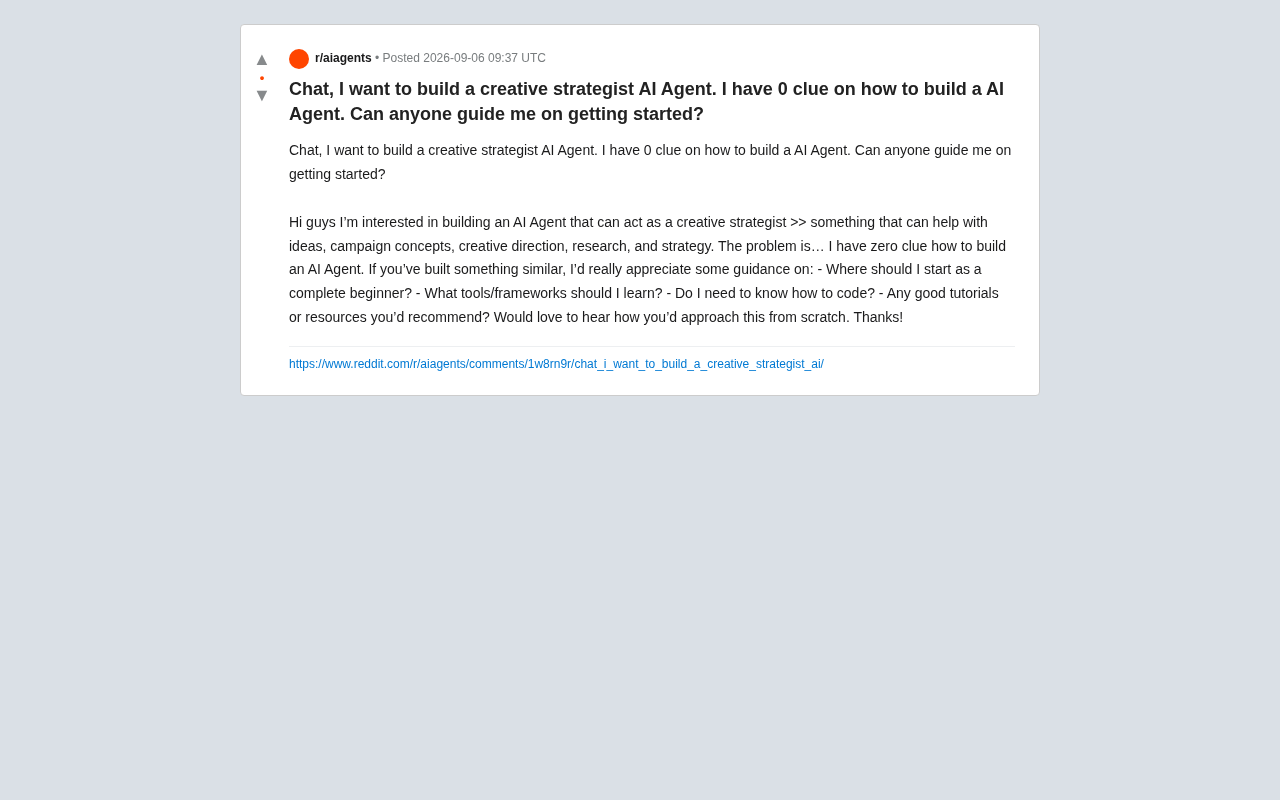
AI Agent Beginner's Guide: Building a Creative Strategy Intelligent Assistant from Scratch
A complete guide to building a creative strategy AI Agent from scratch. No coding required — use tools like Dify and Coze to quickly build an intelligent assistant.