The Android Lockdown Countdown: Your Phone Is About to Stop Being Yours

keepandroidopen.org warns Android's openness is being systematically tightened, sparking a battle over security and user control.
keepandroidopen.org's "70-day countdown" narrative sparked heated discussion on Hacker News with 418 points and 250 comments. The article notes the controversy stems from Google's years-long tightening of Play Store review, background permissions, and installation source verification. Supporters call it necessary security governance; critics say Android is sliding toward a controlled distribution channel and iOS-ification. Countervailing forces include the EU's DMA and antitrust pressure. The author suggests users watch bootloader policies, support alternatives like F-Droid, and speak up publicly. The ultimate stake: when you buy a phone, are you getting hardware or a licensed service?
A website called keepandroidopen.org recently sparked heated discussion on Hacker News, with a title so blunt it reads almost like a warning: "Your phone is about to stop being yours: 70 days until lockdown." The post garnered 418 points and 250 comments, with the discussion centering on a change that isn't far off—the openness of the Android ecosystem is being systematically tightened.
The 70-Day Countdown: Where the Controversy Comes From
The language on keepandroidopen.org carries an unmistakable sense of urgency: in 70 days, some kind of "lockdown" will take effect. Although the original text doesn't lay out the technical details, the thread of community discussion points to ongoing restrictions on sideloading apps, developer permissions, and user customization capabilities on the Android platform. This isn't an isolated event—over the past few years, Google has gradually strengthened Play Store review mechanisms, tightened background permissions, and introduced stricter installation source verification across multiple versions.
Supporters see this as the inevitable outcome of security governance, while critics see another logic at play: the platform is migrating from an "open operating system" to a "controlled distribution channel." In the n8n discussion forum, some comments directly compare this trend to iOS-ification—the core selling point that distinguishes Android from iPhone is being whittled away inch by inch.
Sideloading refers to the practice of bypassing official app stores (such as Google Play) and installing apps directly on a device via APK files or other third-party channels. On Android, users can do this simply by enabling "Allow installation of apps from unknown sources" in settings—a mechanism long regarded as a hallmark of Android's openness. In contrast, iOS strictly prohibits sideloading in most regions, requiring all apps to be reviewed and distributed through the App Store. The controversy over sideloading lies in the fact that it is both the lifeblood of independent developers, open-source projects, and regional app stores, and a distribution channel for malware, phishing apps, and pirated content. Google's Play Integrity API and installation source verification in recent years are essentially about gradually raising the threshold and traceability of sideloading without shutting it down entirely.
The Enduring Tug-of-War Between Openness and Security
Android's openness has always been a double-edged sword. Sideloading lets users install any APK, but it also gives malware an opening. The platform's usual justification for tightening restrictions is security: reducing phishing apps, blocking malicious update chains, and protecting users who aren't tech-savvy.
But critics offer an equally compelling rebuttal: whether the security benefits are real depends on whom you trust to define "security." When installation sources are centrally controlled, the room for independent developers and third-party app stores shrinks, and ultimate control over the device shifts away from users. The name keepandroidopen.org is itself a declaration—keep Android open, rather than letting it become a platform where installing software requires permission.
This tug-of-war isn't unique to Android. The EU's Digital Markets Act has already forced Apple to open up sideloading in some regions, and antitrust pressure on Google is mounting. As platforms tighten control, regulators are pushing from the opposite direction, and the collision of these two forces will determine the shape of the mobile ecosystem in the future.
The Digital Markets Act (DMA) is an antitrust regulatory framework passed by the EU in 2022 and phased in starting in 2024, designed to constrain large platform companies designated as "gatekeepers." Designated gatekeepers (including Apple, Google, Meta, and others) must comply with a series of interoperability obligations—for example, allowing third-party app stores, opening up sideloading, and refraining from self-preferencing. For Apple, the DMA has already forced it to open iOS sideloading and alternative browser engines within the EU; for Google, the DMA combined with multiple antitrust lawsuits constitutes a direct check on its control over app distribution. The key to understanding the DMA is this: it doesn't directly dictate technical standards but instead changes the power structure between platforms, developers, and users through compliance obligations—so its actual effect depends heavily on enforcement intensity and subsequent case law.
What Users Can Do: Three Realistic Options
Countdown narratives easily breed anxiety, but when it comes to action, users and developers aren't entirely passive.
First, pay attention to the device and OS version you use. Different manufacturers vary greatly in how strictly they enforce Android openness. Some brands retain relatively permissive bootloader unlocking policies, while others are almost completely closed. Finding this out before buying a phone is more useful than complaining afterward.
Second, support alternative distribution channels. The existence of open-source app stores like F-Droid provides an outlet for apps that don't rely on the Play ecosystem. They can't match the official store in scale, but they constitute a backup path for an open ecosystem.
Third, vote with your feet and keep speaking up. The 250 comments on Hacker News show that this issue has struck a real nerve in the tech community. Platform policy adjustments often swing back under public pressure, while silence means accepting the default settings.
Bootloader is the first program that runs when a device boots, responsible for loading the operating system kernel. On Android devices, manufacturers typically lock the bootloader to prevent users from flashing unofficial systems. Unlocking the bootloader means users can install custom ROMs (such as LineageOS or GrapheneOS), gain root access, or completely remove manufacturer bloatware—an important indicator of a device's openness. But unlocking policies vary by manufacturer: the Google Pixel series has long offered official unlocking tools, while some Chinese brands impose strict restrictions or none at all. Moreover, unlocking the bootloader typically voids the warranty and disables some payment and banking apps (due to SafetyNet/Play Integrity checks), so it is both a litmus test of openness and comes with real costs.
The Real Stakes in This Debate
Zooming out, the discussion sparked by keepandroidopen.org isn't just about the policy details of one operating system. It touches on a more fundamental question: when you buy a phone, are you buying hardware, or a licensed service?
Android's early rapid expansion relied precisely on the device diversity and developer vitality that openness brought. If this foundation is gradually eroded, the short-term view is a victory for security and control, but the long-term view may weaken the platform's own innovation ecosystem. Whether the number 70 days is precise doesn't matter; what matters is the direction the countdown points—control over phones is slowly shifting away from users, and most people haven't even noticed the process.
For tech professionals and power users, now is the time to re-examine device choices. Openness won't sustain itself—it needs people who care.
F-Droid is a free and open-source software (FOSS) app repository designed specifically for Android, listing only apps whose source code is public and reproducibly buildable, without relying on Google Play services. It distributes APKs through its own client, which users can use as an independent app store. F-Droid's significance isn't just about providing an alternative download channel—it maintains a distribution infrastructure that bypasses platform review, proving that a "decentralized app ecosystem" is technically feasible. Its limitations are equally clear: far fewer apps than the Play Store, some apps lagging in updates, and a higher learning curve for ordinary users. But when discussing platform control, F-Droid is often cited as a backup path and institutional imagination for an open ecosystem.
One-line Summary
keepandroidopen.org warns that Android's openness is being systematically tightened, sparking a battle over security versus user control.
Paragraph Summary
keepandroidopen.org's "70-day countdown" narrative sparked heated discussion on Hacker News, garnering 418 points and 250 comments. The article points out that the controversy's core isn't an isolated event but the cumulative result of Google's years-long efforts to strengthen Play Store review, tighten background permissions, and introduce installation source verification. Supporters see it as the inevitable outcome of security governance, while critics believe Android is sliding from an open operating system toward a controlled distribution channel, gradually iOS-ifying. The article also presents countervailing forces: the EU's DMA and antitrust pressure are forcing platforms to open up. On the action front, the author suggests users pay attention to device bootloader policies, support alternative distribution channels like F-Droid, and pressure platforms through public discussion. The ultimate stake is this: when you buy a phone, are you getting hardware, or a licensed service?
Related articles

One Person Producing 90 Episodes of AI Anime Shorts: The Complete Production Workflow in 10 Hours for 10 Yuan
No screenwriting experience needed for AI anime shorts: 10 hours and 10 yuan in costs, 4,200 yuan earnings per work on Hongguo. This article breaks down the complete six-step workflow from AI-generated scripts and storyboard scripts to the finished film, with a universal questioning formula and beginner pitfall guide.
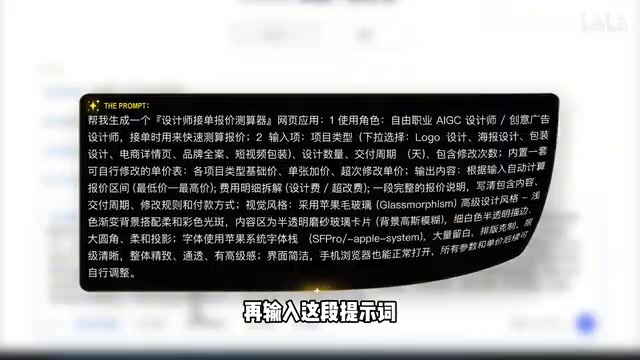
Build a Quote Calculator with Doubao Agent: Stop Guessing Your Freelance Rates
A Bilibili creator uses Doubao Agent to build a no-code quote calculator that auto-generates itemized quotes with rush and copyright buyout rates, one-click copy, and mobile quoting.
WorkBuddy Hands-On Tutorial: 10 Agent Projects from Beginner to Resume-Worthy
WorkBuddy tutorial: a Chinese-language AI work assistant with simpler setup than Codex or Claude Code. 10 hands-on Agent projects for beginners, resume-ready.