The Anti-AI Manifesto: Why More Brands Are Rejecting AI in Their Design Process
The Anti-AI Manifesto: Why More Brands…
Why "no AI" is becoming a brand differentiator in the age of generative content.
As generative AI floods the creative industry, some brands are turning "we don't use AI" into a bold selling point — a signal of authenticity, craft, and transparency. This article explores the marketing logic behind reverse positioning, the creative community's divided response, and why "human-made certification" may be the next "organic" label.
A Short Statement That Sparked a Big Debate
Recently, a post titled "We don't use AI in any of our design or production processes" made it to the front page of Hacker News. Despite being little more than a brand stance declaration, it ignited a wave of discussion in the tech community — a reflection of a brewing value war between AI-generated and human-created work.
In an era where generative AI has swept through virtually every creative domain — design, illustration, copywriting, product prototyping — a brand or studio publicly declaring "we don't use AI" has become a bold market statement. It's no longer just a technical choice; it's an expression of identity, brand values, and consumer trust.
Why "No AI" Has Become a Selling Point
From Tech Anxiety to Differentiated Positioning
Over the past two years, the flood of AI-generated content has produced a notable side effect: the market is saturated with visually polished but stylistically homogenous images and copy that lack a certain human quality. When anyone can generate stunning visuals in seconds using Midjourney, DALL·E, or Stable Diffusion, "machine-generated" is no longer scarce — what's actually scarce is traceable, craft-driven human creation.
Technical Background: The Rise of Generative AI Image Tools Midjourney, DALL·E, and Stable Diffusion represent three distinct approaches to generative AI imagery. Midjourney is known for its impressive artistic style and ease of use via a Discord interface. DALL·E is OpenAI's text-to-image model, now integrated into the ChatGPT ecosystem. Stable Diffusion is an open-source model that supports local deployment and fine-tuning. The shared technical foundation underlying all three is the diffusion model — a deep learning architecture that generates images by learning a gradual denoising process, typically trained on billions of images. This massive scale is what enables their remarkable generative capabilities, and it's also at the heart of the ongoing debate over training data copyright.
As a result, some brands have begun treating "entirely human-made" as a differentiation badge. The logic mirrors the food industry's "no additives" or "organic" certifications — when industrial production becomes the default, handcraft and natural origins command a premium. For certain consumers, "this piece was designed by a real person from scratch" is itself part of the value proposition.
The Demand for Trust and Transparency
The declaration that AI is absent from "any design or production process" is essentially a response to growing consumer demand for transparency. Controversies over training data copyright, questions about content authenticity, and murky attribution rights have made some users wary of AI-generated content. Drawing a clear line sends a clean signal to clients: our output is trustworthy, explainable, and comes with full accountability.
Legal Background: The Copyright Controversy Around AI Training Data The copyright disputes surrounding generative AI have evolved into a global legal battleground. The core question: do AI companies have the right to scrape artists' work for model training without authorization? Key cases include Getty Images suing Stability AI (maker of Stable Diffusion) for allegedly using millions of copyrighted images without permission, and collective lawsuits filed against multiple AI companies by groups like the Illustrators' Guild. On the technical side, researchers have demonstrated that certain models can "memorize" and reproduce specific images from training data, adding further complexity to the copyright debate. Legislators worldwide are debating the scope of "text and data mining (TDM) exemptions," but no international consensus has emerged — leaving copyright attribution in a legal gray zone for the foreseeable future.
A Divided Creative Community
Supporters: Defending Professional Dignity and Creative Ethics
Anti-AI sentiment has deep roots among designers and illustrators. The core grievance: many commercial AI models were trained on creators' work without their consent, effectively using artists' output to replace the artists themselves. For these practitioners, refusing to use AI is not merely a business strategy — it's an ethical stand.
This explains why a simple brand statement can resonate so broadly. It directly touches on the deep anxiety creative workers feel about their value being diluted and their roles being displaced.
Skeptics: Is the Stance Actually Sustainable?
That said, the Hacker News discussion was far from one-sided. Many in the tech community raised practical objections:
- Blurry definitional boundaries: Modern design tools like Photoshop and Figma already ship with extensive AI-assisted features — from smart subject selection to autocomplete. What does "completely AI-free" actually mean in technical terms? Does spell-check count? What about content-aware fill?
- Questionable enforceability: As AI capabilities become deeply embedded in foundational software, a "zero AI" pledge may become increasingly difficult to uphold in practice — and could devolve into mere marketing speak.
- The efficiency trade-off: In a competitive market, voluntarily forgoing the productivity gains AI offers may put a brand at a disadvantage on cost and turnaround time.
Technical Background: How Deeply AI Is Embedded in Design Tools The challenge of committing to "no AI" is far more complex than it appears on the surface. Consider mainstream design tools: Adobe Photoshop's "Content-Aware Fill" and "Neural Filters" are both powered by deep learning models. Figma has launched an AI design assistant capable of auto-generating UI components and layout suggestions. Even seemingly basic features — like Google Docs' spell correction or a browser's image compression — increasingly rely on machine learning under the hood. This pervasive infiltration of AI into the foundational software stack turns "defining AI use" into almost a philosophical question: does "using AI" only apply when explicitly invoking a generative AI tool? Or does it include any feature that relies on ML inference? This ambiguity sits at the heart of the skepticism voiced in the Hacker News thread.
At its core, this divide points to a larger question: in an age where AI has become infrastructure, is there still a genuinely clear line between "using AI" and "not using AI"?
The Brand Marketing Angle: The Logic of Counter-Trend Positioning
From a marketing perspective, these declarations represent a precise "reverse positioning" strategy. When an entire industry is chasing AI efficiency gains, going against the current tends to attract high-end clients who prioritize originality and authenticity. The logic is consistent with luxury brands emphasizing "handcrafted" or restaurants emphasizing "made fresh in-house."
Marketing Background: How Reverse Positioning Works "Reverse positioning" is a counterintuitive brand strategy built on a core insight: when all market players are stacking the same features in the same direction, deliberately stripping away certain "standard" elements can create a differentiation advantage and attract a segment that's grown tired of or distrustful of the mainstream direction. Classic examples include In-N-Out Burger maintaining a hyper-minimal menu against the fast food industry's trend toward infinite expansion, and Patagonia promoting "buy less, buy better" against fast fashion logic. In today's AI-saturated landscape, an "AI-free" declaration is essentially a targeted signal to "AI-anxious consumers" — a segment that tends to be highly information-literate, strongly values originality, and is willing to pay a premium for verifiable authenticity, a psychological profile that closely resembles luxury goods consumers.
But the key to success is walking the talk. If a brand loudly proclaims it doesn't use AI while quietly relying on AI tools internally, getting caught will inflict far more reputational damage than it would for an ordinary company. Brands that choose this path must therefore establish rigorous oversight and transparent documentation of their entire creative process.
Conclusion: A Fork in the Road for the Creative Industry
The reason the statement "we don't use AI" deserves attention isn't its technical complexity — it's that it marks a critical fork in the road for the creative industry today:
On one side: embracing AI to pursue maximum efficiency and scalability — the mainstream direction. On the other: holding to human creation, with "authenticity" and "craftsmanship" as the selling points — a differentiated path.
Neither is objectively superior; they're choices aimed at different markets and different sets of values. As AI-generated content becomes even more prevalent, "human-made certification" will likely follow a trajectory similar to "organic" or "fair trade" labels — gradually maturing into a well-defined niche market.
Industry Outlook: Potential Pathways to Market for "Human-Made Certification" Early-stage exploration is already underway on the technical and institutional fronts for standardizing "human creation" into a verifiable certification system. C2PA (Coalition for Content Provenance and Authenticity) — backed by Adobe, Microsoft, BBC, and others — is a content provenance standard that uses cryptographic signing to create a "birth certificate" for digital content, recording the tools and processes used in its creation. Tools like Glaze and Nightshade take a different approach, helping artists add adversarial perturbations to their work to make it harder for AI models to learn from effectively. However, a truly mature "human-made certification" market still needs to resolve three core challenges: who does the certifying (credibility of third-party bodies), how to prevent fraudulent certification (technical verification mechanisms), and whether consumers are willing to pay for the cost of certification. This closely parallels the development arc of fair trade certification — which took roughly twenty years to grow from a niche concept into a global multi-billion-dollar market.
And the conversation about where the boundaries between machine and human creativity lie has only just begun.
Related articles
Alibaba Launches Happy Shrimp: AI-Powered One-Click Complete Song Generation
Alibaba launches Happy Shrimp, an AI music generation tool that creates complete songs with lyrics, melody, arrangement, and vocals from natural language descriptions. In-depth analysis of its core features, differentiation from competitors like Suno, and industry impact.
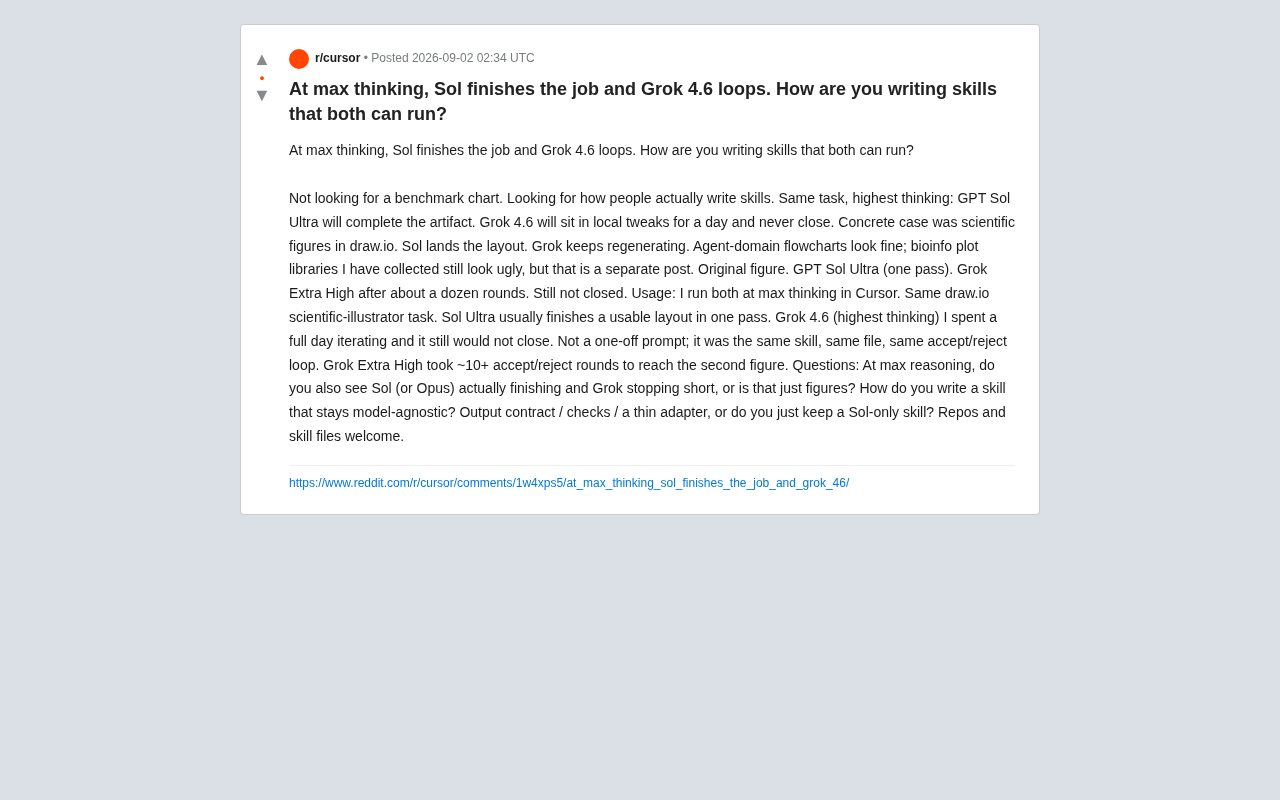
GPT Sol Ultra vs Grok 4.6: Real-World Task Completion Benchmark in Reasoning Mode
Developer benchmark reveals GPT Sol Ultra completes draw.io scientific diagrams in one iteration while Grok 4.6 fails to converge despite maximum reasoning mode, exposing that reasoning depth ≠ task delivery capability.
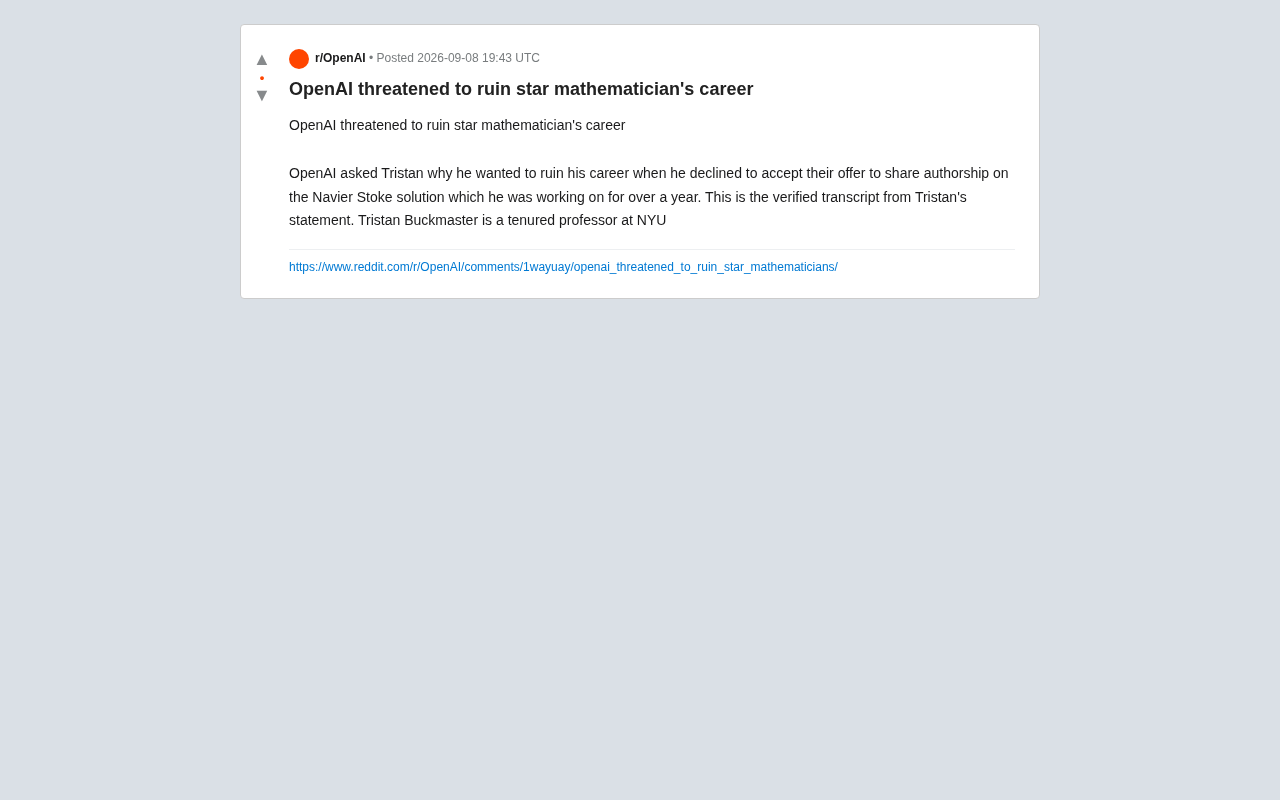
OpenAI Authorship Dispute: The Battle Over Academic Boundaries in the AI Era
OpenAI disputes authorship with mathematician Tristan Buckmaster over Navier-Stokes research, raising ethical questions about AI involvement in science.