The Battle for AI Sovereignty: Who Gave Silicon Valley the Right to Set the Rules for Everyone?
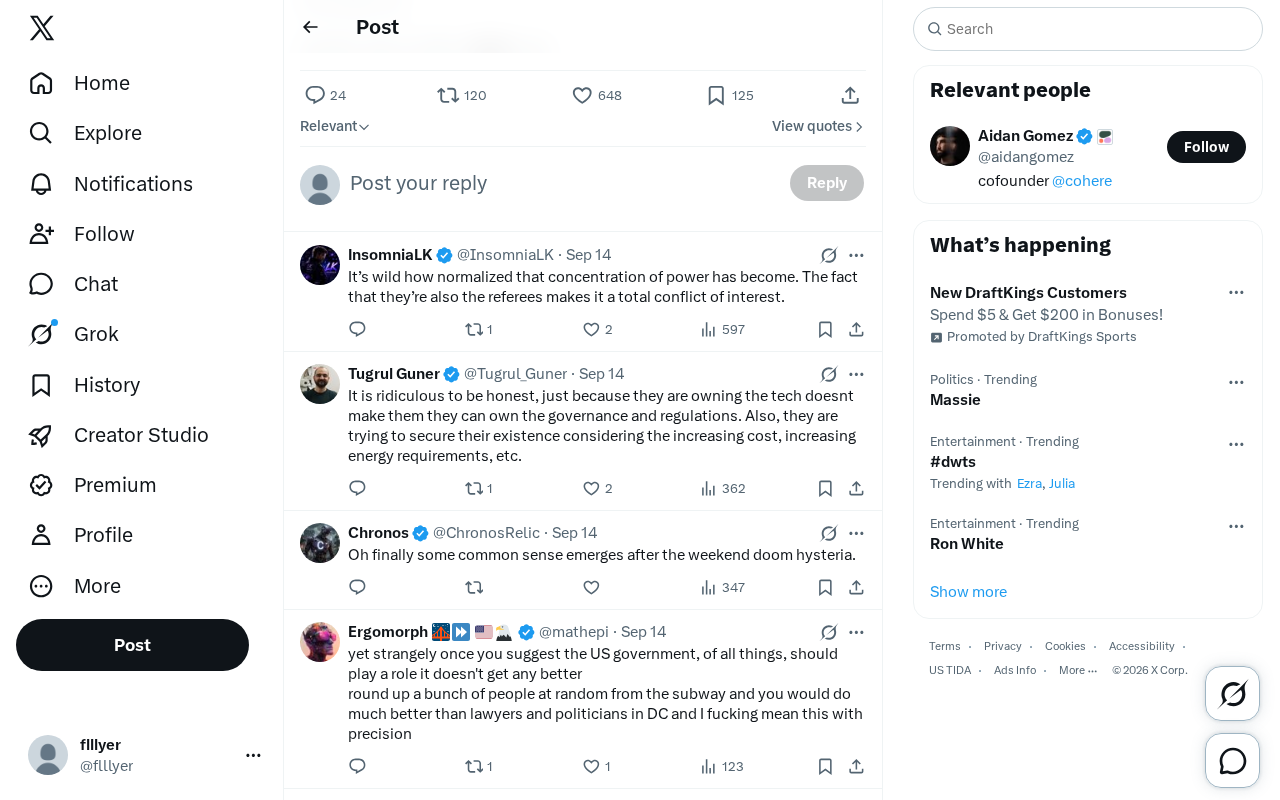
A tweet nails AI's power problem: a few Silicon Valley firms control creation, access, and rules for everyone.
A viral tweet captured AI governance's central contradiction: companies like OpenAI, Google, and Anthropic simultaneously act as creator, gatekeeper, and rulemaker for global AI — a triple concentration of power that bypasses democratic accountability. Model values, access boundaries, and safety standards are set by internal corporate policy, not public debate. The legitimacy gap persists because technological change outpaces regulation. In response, nations are pursuing domestic models, open-source ecosystems, and sovereign legislation like the EU AI Act to reclaim rule-making authority over what is, fundamentally, public infrastructure.
A Single Tweet That Ignited AI Governance Anxiety
A brief comment on Twitter recently sparked widespread debate: "The idea that two or three Silicon Valley companies should act as the creator, gatekeeper, and rulemaker of AI for every government on earth doesn't survive being said out loud."
The reason this struck such a nerve is that it precisely identifies the most fundamental structural contradiction in today's AI industry: a small cluster of California-based tech companies is, in practice, holding the power to shape the form of artificial intelligence for the entire world. When a nation's public administration systems, education infrastructure, and even defense decision-making begin to depend on models built by these companies, the question of "who sets the rules" is no longer an abstract philosophical debate.
Three Roles, One Set of Hands
What makes this comment so sharp is how it breaks down the three distinct roles that Silicon Valley giants simultaneously occupy — roles that, in any healthy governance structure, should serve as checks on each other.
Creator: From foundational large models to application-layer tools, a handful of companies — OpenAI, Google, Anthropic — have effectively monopolized the frontier of model development. The compute, data, and talent required to train a top-tier model are so prohibitively expensive that an oligopoly forms naturally.
Gatekeeper: These companies decide who gets access and what it can be used for — through APIs, content moderation policies, and terms of service. What a model refuses to answer, or what it is permitted to generate, is determined by internal corporate policy, not public consensus.
Rulemaker: More subtly, when national governments lack the technical capacity to build their own AI, they often have no choice but to accept the safety standards, ethical boundaries, and technical norms these companies have already established. The power to make the rules has quietly migrated from sovereign states to corporate boardrooms.
When the powers of creation, access control, and rule-setting are concentrated in the same hands, the traditional principle of separation of powers simply cannot function.
This concentration of roles is not unprecedented in the history of technology, but AI is different in the sheer breadth and depth of its impact. In the early days of the internet, search engines and social platforms created a "platform as gatekeeper" dynamic, but regulators still had tools available — antitrust law, data privacy legislation — that could partially intervene. Large language models (LLMs) present a far more complex situation: a model's value orientations, knowledge boundaries, and safety mechanisms are embedded across hundreds of billions of parameters, making them nearly impossible to audit externally or verify independently. This turns the technical feasibility of external oversight into a problem in its own right. Even more critically, when governments procure these models for public services, the fine print of procurement contracts is rarely sufficient to constrain a company's unilateral decisions about model updates or policy changes.
Why It "Doesn't Survive Being Said Out Loud"
The phrase "doesn't survive being said out loud" carries real weight. It implies that this concentration of power was never established through open debate or democratic authorization — it quietly solidified into a fait accompli amid the rapid pace of technological development. Once you state it plainly — that a handful of private companies are setting the AI rules for sovereign governments around the world — the legitimacy deficit becomes impossible to ignore.
This gets at the fundamental dilemma of AI governance: the speed of technological development vastly outpaces the speed of regulation and public deliberation. By the time society begins to debate the situation, the structure has already hardened.
AI Sovereignty Is Becoming a Global Agenda
This comment resonates with the growing global conversation around "AI Sovereignty" in recent years. A growing number of countries and regions have come to recognize that entrusting critical infrastructure entirely to foreign private companies carries serious strategic risk.
Several response strategies have emerged:
- Building domestic models: The EU, India, several Middle Eastern nations, and numerous open-source communities are pushing to develop localized, self-controlled AI capabilities.
- Embracing the open-source ecosystem: Open-source models are seen as a critical counterweight to the monopoly of a few dominant players, enabling technology capabilities to be distributed and democratized.
- Asserting sovereign regulation: Led by the EU AI Act, countries are attempting to reclaim rule-making authority through legislation, rather than passively adopting corporate standards.
The EU AI Act, which officially took effect in 2024, is the world's first comprehensive AI regulatory legislation to date. It adopts a risk-based tiered management framework, classifying AI applications into four categories by potential harm: unacceptable risk, high risk, limited risk, and minimal risk. For high-risk applications — such as biometric identification, critical infrastructure management, and judicial decision-support — the Act mandates strict requirements around transparency, explainability, and human oversight. Notably, the Act also establishes dedicated rules for "General Purpose AI" (GPAI) models, requiring providers of foundation models above a certain compute threshold to disclose training data summaries, comply with copyright norms, and meet enhanced obligations for very large models deemed to carry "systemic risk." This legislative effort represents a significant step in the direction of sovereign oversight, though its practical enforcement — particularly against companies headquartered outside EU jurisdiction — remains to be tested.
The role of the open-source ecosystem in the AI sovereignty debate also deserves attention. Models like Meta's Llama series allow governments, research institutions, and enterprises to deploy, audit, and fine-tune models locally, fundamentally bypassing dependence on any specific commercial API. But open source is not a cure-all: running high-performance models locally still demands substantial compute investment, and open-source models can still carry biases and risks inherited from training data — the difference is that accountability for those risks becomes far more diffuse.
The Deeper Question Behind a Tweet
It must be said: this tweet is just an opinion. It offers no systematic argument or supporting data. But its value lies in condensing an enormous and urgent public issue into a single transmissible sentence.
It invites us to reflect: AI should not be treated merely as a business. It is a form of public infrastructure that affects everyone. When control over that infrastructure is highly concentrated, it poses a potential threat to the public interest — regardless of the intentions behind it. The real solution may not lie in hoping that tech giants will voluntarily restrain themselves, but in rebuilding a pluralistic, checks-and-balances structure of AI power through open source, competition, international cooperation, and sovereign regulation.
Related articles
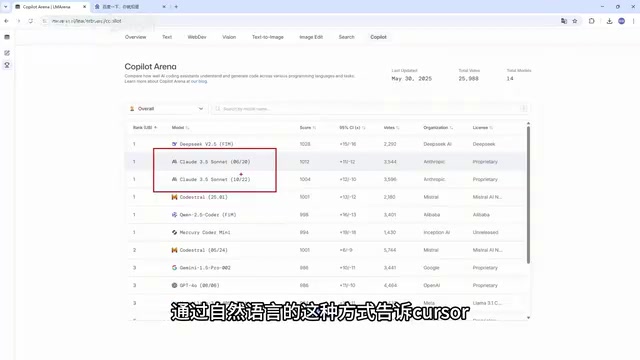
What Is Cursor? Core Differences Between This AI Coding Tool and Traditional IDEs
What is Cursor? This guide explains the AI-native code editor built on VS Code, how it compares to traditional IDEs, and its integration with Claude, DeepSeek, and Gemini.
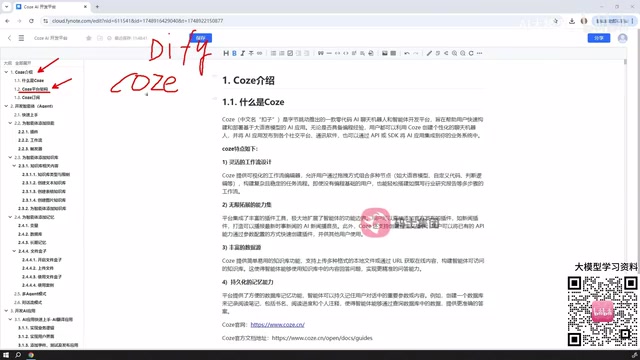
Coze 3.0 Beginner's Guide: A Complete Overview of Agents and AI Applications
A beginner's guide to Coze 3.0: covering agents, AI applications, workflows, and plugins on ByteDance's AI platform, plus a comparison with Dify.
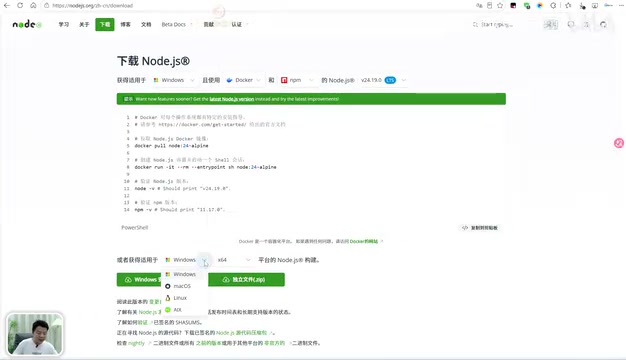
Setting Up the DeepSeek Harness Environment: A Complete Guide to Node.js Installation and Configuration
A beginner-friendly guide to setting up the DeepSeek Harness environment: Node.js installation, Add to PATH, redirecting npm global and cache directories, and configuring system environment variables.