The Business Empire of Romanian Witches: The Wealth Code Behind Witchcraft and the Plight of a People

Romanian witches run a sophisticated business empire while Roma women face limited choices beyond the craft.
A deep investigation into Romania's witch industry reveals a sophisticated business machine: luxury mansions as trust signals, tarot-to-ritual sales funnels, social media client acquisition, and clients ranging from heartbroken wives to politicians. Behind the wealth lies the systemic plight of Roma women, for whom witchcraft is often the only path upward in a society marked by centuries of structural discrimination.
When Witches Enter the Livestream
In most people's imagination, witches should be hidden deep in medieval forests, chanting ancient spells. Yet the reality is that in the 21st century, a significant number of people around the world still believe in witches—and these witches aren't hiding at all. Instead, they share various "mystical rituals" in real-time with users worldwide through livestreams and short videos.
The team behind Bilibili creator Huaigu, funded by their "Million Check" project, conducted a 14-day field investigation deep in Bucharest, Romania. Rather than trying to verify whether witchcraft is real—a nearly unsolvable proposition—they posed several more practical questions: Why do witches still exist? What exactly are they doing? And why are people willing to pay enormous sums for their services?
They chose Romania because it is one of the few countries in the world that officially classifies witchcraft as a profession and even taxes witches. This background is no accident—in 2011, Romania's Ministry of Labor officially listed "fortune tellers" and "astrologers" under official occupational codes, drawing widespread international attention. This policy emerged from the social transition period following the collapse of the communist regime: after Ceaușescu's regime fell in 1989, Romania implemented radical market reforms under IMF guidance. State enterprises were massively privatized, inflation once exceeded 300%, and the social safety net nearly disintegrated. Notably, compared to transition countries like Poland and the Czech Republic, Romania's "shock therapy" proceeded faster with fewer social cushioning mechanisms, creating an especially deep institutional vacuum. In this void where institutional safeguards were absent, folk beliefs rapidly filled social fractures as a psychological anchor, and witchcraft culture made a powerful comeback into public view after decades of suppression under communist atheism. Sociological research confirms this pattern: there is a significant negative correlation between the collapse of institutional trust and the rise of mystical beliefs—after the 2008 global financial crisis, several European countries also recorded similar "occultist resurgence" phenomena. The official professional recognition was partly a pragmatic compromise with market realities and partly a consideration for expanding the tax base. This policy creates a peculiar tension with Romania's deep Eastern Orthodox tradition: the Church officially opposes witchcraft, but folk beliefs and Christian elements have long been intertwined, forming a unique religious ecology. According to reports, Bucharest alone has approximately 4,000 witches. This number alone demonstrates that witches are no longer legend but a very real, functioning business.
Mansions, Altars, and "Brand Trust"
The first main subject the investigation team met was the Mihaela family, self-proclaimed as "Europe's strongest" witches. Surprisingly, their residence wasn't a gloomy forest cottage but an extravagantly decorated mansion—marble floors, elaborate ornamentation, every detail radiating wealth.
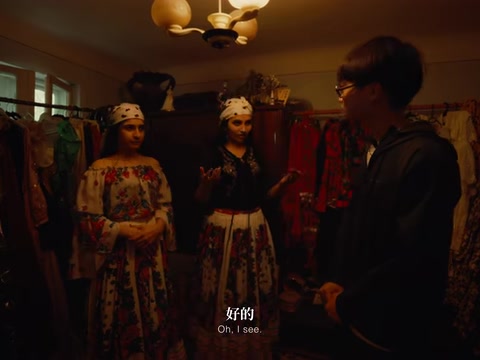
Behind this lies a sophisticated trust-building logic. When clients arrive, they have no way to judge a witch's abilities—there's no "A-tier" or "S-tier" certification. All they can see is the luxurious décor, and they naturally think, "This witch must be pretty powerful." The display of wealth is itself an endorsement of ability. This mirrors the store design philosophy of high-end luxury brands: when a category lacks objective evaluation criteria, the expensive feel of the physical environment becomes a substitute signal for quality. Consumer psychology calls this "price-quality inference"—in domains of information asymmetry, consumers widely use visible cost signals as proxy variables for quality. This mechanism is especially prominent in "credence goods" markets: unlike "search goods" (like clothing, which can be inspected before purchase) and "experience goods" (like dining, which can be evaluated after consumption), witchcraft services are credence goods whose effectiveness is difficult to verify even after consumption, making consumers highly dependent on environmental signals for judgment. Research shows that in professional service fields that similarly possess credence-good attributes—such as healthcare, law, and psychological counseling—the influence of office décor, practitioner attire, and furnishings on client trust actually outweighs that of the practitioner's actual credentials.
The witch family also displayed an impressive altar: it simultaneously featured Asian Buddha statues, scorpions representing zodiac signs, and garlic for warding off vampires—objects clearly not from the same religion or tradition. When mixed together, the signal is clear: Whatever mysterious force exists anywhere, the witch can harness it. This is a deliberately crafted sense of "omnipotence." This hybridization of cross-cultural mystical symbols is known in academia as "neo-eclecticism"—recombining ritual elements from different traditions to meet the psychological expectations of clients from various cultural backgrounds in the globalized era, essentially a ritualized expression of market segmentation strategy.
There were also more "hardcore" props, such as "black water" made from the corpse-washing water of three deceased persons mixed with soil from three abandoned old houses, and teeth taken from a great-grandmother's body representing the transmission of family power. The ritualistic quality of these objects constitutes the "product packaging" of the entire service.
From Tarot Cards to Fire Circle Rituals: A Complete Service Chain
The witches' business model is actually very clear—a progressively deepening consumption funnel.
Step One: Low-Cost Lead Generation
Regardless of whether clients need help with career, love, family, or health, the first step is always a tarot card consultation. For just 100 euros, the witch will interpret a person's past and future, and "diagnose" whether the problem is serious and whether someone has placed a curse on them.
This pricing strategy is highly isomorphic with modern internet products' "freemium" funnel design—using low-cost entry services to lower decision thresholds, then creating anxiety through "severity diagnosis," ultimately completing high-value conversion. The "sunk cost fallacy" from behavioral economics plays a key role here: once consumers pay for the initial service and emotionally invest in recognizing the "severity of the problem," their psychological resistance to continuing to pay for expensive rituals drops significantly. Meanwhile, "loss aversion" theory indicates that people's sensitivity to potential losses is approximately twice that of equivalent gains—once a problem is framed as "if you don't address this, you'll lose your marriage/wealth/health," willingness to pay is further amplified. Notably, this funnel structure is highly similar in form to high-pressure sales models in many legitimate industries (such as certain insurance products and cosmetic surgery consultations), differing only in the presence or absence of regulatory coverage—witchcraft services happen to fall in the gray zone of consumer protection law.
Step Two: High-Price Rituals
Once the tarot reading "confirms" the problem is serious, clients are guided to the next step that actually "solves the problem"—rituals. As for ritual pricing, the witches are tight-lipped, revealing only that it "varies by person and isn't cheap." Price opacity allows witches to dynamically price based on clients' wealth signals while creating mystique, making the price itself implicit proof of "service value." This dynamic pricing based on client ability to pay is known in economics as "price discrimination"—maximizing total revenue by identifying different consumers' willingness-to-pay ceilings and charging each customer the maximum they can bear.
Huaigu himself experienced a fire circle ritual: wearing a bull's heart, surrounded by flames close to his face, ultimately receiving a metal object that "brings luck just by looking at it once a day." He admitted he doesn't believe in the supernatural, but when the witch's tarot results overlapped about 80% with an eye-reading session he'd had in Bali, he conceded that "my disbelief didn't seem quite so firm anymore."
This is a classic manifestation of the "Barnum Effect" in psychology. Formally named by psychologist Paul Meehl in 1956, also called the "Forer Effect"—experiments show that when subjects are told a personality description was "customized specifically for them," over 80% rate the description as "very accurate," even though it applies to virtually everyone. Divination systems typically exhibit three characteristics: vague wording ("you've been under pressure recently"), dual-sided coverage ("you appear strong but are fragile inside"), and universalized emotional resonance. "You've been carrying pressure that others don't know about" or "your inner self is more complex than your exterior"—such statements apply to almost everyone. More critically, when results from two different divination systems corroborate each other, this triggers the "convergence effect," dramatically increasing the subject's subjective confidence in the results—because both systems are actually drawing from the same broad library of universal human descriptions. Neuroscience research further shows that when people receive "personalized predictions," the brain's reward circuits (particularly the nucleus accumbens) are activated, producing pleasure similar to feeling "understood" and "validated"—this explains at the neural level why the Barnum Effect is so resistant to rational debunking.
Social Media: Witchcraft Goes Cross-Border
If the mansion is the offline trust apparatus, then social media is the witches' client acquisition engine.
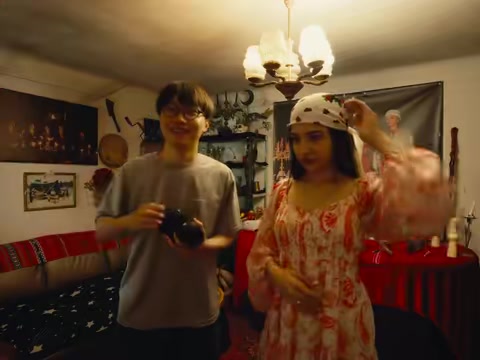
When the team randomly asked passersby in Romania, they found that even people who don't believe in witches had encountered witch short videos or livestreams on social media. Every witch livestreams with high intensity, as if carrying performance targets—online tarot consultations, magical herb gathering, and various rituals all serve as content material.
Behind this success lies clear platform algorithm logic: platforms like TikTok and Instagram Reels optimize primarily for "user dwell time" and "engagement rate," and mystical ritual content naturally excels on both dimensions. Visual elements like flames, blood, and incantations trigger the brain's "orienting response"—an instinctive attention mechanism for potentially dangerous or extraordinary stimuli that effectively suppresses swipe-away behavior. This mechanism originates from humans' evolutionary need for rapid perception of environmental anomaly signals and is systematically exploited by algorithms in the digital media age. Internal TikTok documents have shown that its algorithm gives significant initial distribution weight to "high emotional arousal" content. This creates a positive feedback loop: the more dramatic the ritual content, the easier it spreads, which in turn incentivizes witches to "performatize" their rituals to fit platform logic, creating an ever-escalating content arms race.
Notably, "WitchTok" (witchcraft TikTok) has already formed a significant independent content ecosystem globally. Related hashtags accumulated over 50 billion views by 2023, with participants ranging from traditional Romanian witches to American neo-paganism practitioners to Korean tarot bloggers, forming a cross-cultural mysticism content community. The algorithms' indiscriminate distribution objectively dissolves geographic and cultural boundaries, giving traditionally local belief products global reach. Furthermore, Romanian witches have a natural cultural novelty advantage for Western and even Asian audiences—cross-cultural "exotic mystique" itself is a powerful traffic magnet.
More significantly, as the new generation of witches has mastered English, Romanian witchcraft has begun doing cross-border business. Kaliandra, the youngest witch in the family, openly states that most of her clients come from other countries. The Mihaela family even turned the Chinese team's filming itself into livestream content—"A foreign team from thousands of kilometers away coming to film this witch family must make them even more trustworthy."
The brilliance of this logic lies in the fact that any media coverage feeds back to strengthen the family brand. Traditional ritual and modern marketing achieve seamless integration here.
Clients and Politicians: Who's Paying for Witchcraft
The witch business model requires a key group to function—clients. Most clients are unwilling to reveal that they've sought help from a witch, but the show found one woman willing to share: her husband's attitude had suddenly changed, she suspected infidelity, and after a tarot reading, the witch told her—her husband was being controlled by a third party's black magic.
The psychological mechanism behind this "explanation" is exquisitely crafted: if the husband is actively cheating, the marriage might truly be over; but if the husband is merely being controlled by black magic, that's precisely the kind of problem a witch can handle. Witchcraft provides not truth, but a hope that "can be reversed." In psychology, this corresponds to a "reattribution" mechanism—reframing the cause of a painful event from "internal, stable, uncontrollable" (e.g., the husband actively falling for someone else) to "external, temporary, controllable" (e.g., a black magic curse) can significantly reduce the person's sense of helplessness and anxiety. The "reframing" technique in cognitive behavioral therapy works similarly, with the difference being that witches offer magical intervention rather than cognitive adjustment.

Even more surprising is that the witches' client list includes politicians and even a former president. Witches claim they can influence election outcomes by placing curses on competitors. Why would those in positions of power also seek help? The "compensatory control" theory systematically proposed by psychologist Aaron Kay offers an explanatory path: the human brain has a strong physiological aversion to "loss of control," and when real control is undermined, people turn to alternative sources of control—religious rituals, superstitious behaviors, and even strong authoritarian beliefs all fall into this category. Experimental research demonstrates that in artificially created "loss of control" scenarios (such as telling subjects that market fluctuations are random and unpredictable), their endorsement of supernatural beliefs rises significantly. When someone faces a situation like an election—where outcomes are highly uncertain and cannot be fully controlled—the brain actively seeks "actionable intervention points" to restore a sense of control, even if those intervention points are ritualistic. Research also finds that the more uncertain the external environment, the higher the proportion of people turning to supernatural beliefs. This also explains why high-stress, high-uncertainty professions (surgeons, pilots, politicians, athletes) tend to have higher rates of superstitious behavior. Anthropologist Bronisław Malinowski, studying fishermen in the Trobriand Islands, found that fishermen performed virtually no rituals when fishing in calm inner lagoons, but conducted extensive magical rituals before fishing in turbulent deep seas—this is considered classic anthropological evidence for the proposition that "ritual is a cognitive tool for coping with uncertainty." For politicians, magic is nothing more than a form of "psychological insurance."
The witches also openly revealed their "marketing philosophy": first identify wealthy targets, make the people around them start anxiously discussing the issue, then gradually instill the idea that "the only solution" exists, and "the more aggressive you are, the more money you'll get"—houses, cars, nothing is off limits. This is essentially a complete high-pressure sales script.
Tax Battles and Gray Zones
Worth mentioning is a battle between witches and the government. During Romania's deep financial crisis, the government proposed forcing witches to register every transaction and pay 16% income tax, with a key additional clause: when consumers believe a prediction was wrong or services were ineffective, they could get a refund with their receipt.
This second provision was the truly fatal blow to the foundation of the witch community. From a legal logic perspective, the substance of a "refund for ineffective service" clause is requiring witchcraft providers to bear the burden of proof for service effectiveness—which fundamentally contradicts the nature of "mystical services": How do you define when a ritual is "ineffective"? How long is the evaluation period for results? The legal ambiguity of these questions is both the core reason witches opposed it and the legislative technical obstacle that ultimately prevented the clause from being implemented. Similar dilemmas exist in other credence-good service fields such as psychological counseling and feng shui consultation, reflecting the structural limitations of modern consumer protection legislation when dealing with "subjective utility services." Ultimately, while the tax proposal passed, the "refund with receipt" portion was never implemented. Through connections and the reverence many politicians hold for them, the witches ensured that even passed legislation faced enormous difficulties in enforcement. They successfully kept "incorrect witchcraft predictions" in a legal gray zone to this day.
The Deepest Dilemma of the Kingdom: Who Has the Freedom to Leave
The most profound part of the program lies in revealing the ethnic destiny behind the witch identity. In Romania, virtually all witches are Roma (often incorrectly called "Gypsies," a term carrying discriminatory connotations). This is Europe's largest ethnic minority group, with a total population of approximately 10 to 12 million, concentrated mainly in Central and Eastern Europe.
Their historical trauma runs extremely deep. The Roma migrated from the Indian subcontinent to Europe around 1000 CE. Linguistic research shows significant cognate relationships between Romani and North Indian Sindhi, and this migration path has been confirmed through genomic research—a 2012 study published in Current Biology analyzed Y-chromosome haplotypes to confirm that the Roma originated in what is now India's Rajasthan region. In Romania, the Roma slavery system (called robie) was one of the longest-lasting forms of institutional enslavement in world history, spanning from the 14th century to 1856—approximately five centuries—during which Roma were considered property of nobles, monasteries, and the crown, subject to buying, selling, and inheritance. After slavery was abolished in 1856, unlike the "Reconstruction" policies established in the United States after emancipation, the Romanian government provided no form of land distribution or economic compensation, and the Roma were simply cast into a state of freedom with nothing. The communist regime of the 20th century then forcibly imposed assimilation policies including sedentarization and bans on nomadism, attempting to destroy traditional cultural identity, further tearing apart the group's cultural continuity. This historical structural inequality is an essential premise for understanding the contemporary situation.

The data is staggering: only 37% of Roma complete primary school, 6% finish high school, and just 2% reach university. Nearly half of Roma women marry between ages 12 and 18. Contemporary EU data shows that Roma life expectancy is approximately 10 years below the European average—a figure reflecting the cumulative effects of centuries of structural exclusion. European Commission research further indicates that even controlling for education level, Roma face systematic discrimination in the labor market—Roma applicants with identical qualifications have significantly lower chances of receiving interview invitations compared to non-Roma applicants. This means education alone is insufficient to break structural barriers, and Anna's personal experience is statistically highly representative rather than an isolated case. For many Roma women, becoming a witch is one of the few available "paths to upward mobility."
Anna, whom the team encountered, had desperately tried to escape all of this—she was heavily discriminated against at school because of her Roma identity and left her community against her family's wishes. But when her marriage failed and job opportunities closed one after another, she ultimately found that becoming a witch was her only way out. During the translation process, the team discovered that the Mihaela family had been consistently "smuggling in their own agenda," even designing Anna's answers for her, reframing her work as a nanny into "collecting magical ingredients and preparing rituals."
Even more poignant is that Anna appears to be choosing for her daughter the very future she had desperately tried to escape as a child. When asked how she sees herself in three years, Anna's daughter answered: "That's up to my mother."
Reason Cannot Answer All Pain
Returning to the original question: Why do witches still exist?
Perhaps it's not because modern society isn't rational enough, but because reason cannot answer all pain. When a person's fate is pushed to a place beyond explanation, what they need isn't just answers—they need a feeling of regaining control over their lives. Witches appear precisely in this gap.
But this power is not pure—it may be comfort, or it may be business; it may be one of the few paths to upward mobility for Roma women, or it may be another form of solidified identity. The deepest question in this kingdom of witchcraft has never been whether magic can be inherited, but rather: when the day comes that a girl no longer wants to be a witch, does she still have the freedom to leave.
Related articles

MLOps Hands-On Project: A Complete End-to-End Breakdown of Building a Laundry Care Recognition System
A detailed walkthrough of building an end-to-end MLOps laundry care recognition system, covering automated data collection, model retraining, Docker containerization, AWS deployment, and Grafana+Prometheus monitoring.

Deep Dive into Row-Bot's Multi-Agent Orchestration Architecture: Parent-Child Agent Collaboration and Concurrency Control
Deep analysis of Row-Bot's multi-agent orchestration: parent-child Agent collaboration, Git worktree concurrency safety, state persistence, and fault recovery design for production AI Agent systems.

Unsloth Desktop Released: An All-in-One Desktop App for Local Model Inference and Training
Unsloth Desktop is an open-source cross-platform app combining model inference, fine-tuning, and deployment. Supports Mac/Windows/Linux with 2x training speed, 70% VRAM savings, and zero telemetry.