The C Readability Crisis: Engineering Reflections Behind Clever Tricks

Exploring C's readability crisis: how coding standards and tools balance technical freedom with engineering responsibility.
C's near-limitless freedom breeds obscure code. This article dissects typical readability crimes—macro abuse, fancy pointers, over-nesting—and debunks the performance excuse against modern compilers. It shows how coding standards, static analysis, and code review protect maintainability, especially crucial in the AI-assisted programming era where clear code boosts LLM inference.
Prologue: A Discussion About "Crimes Against Readability"
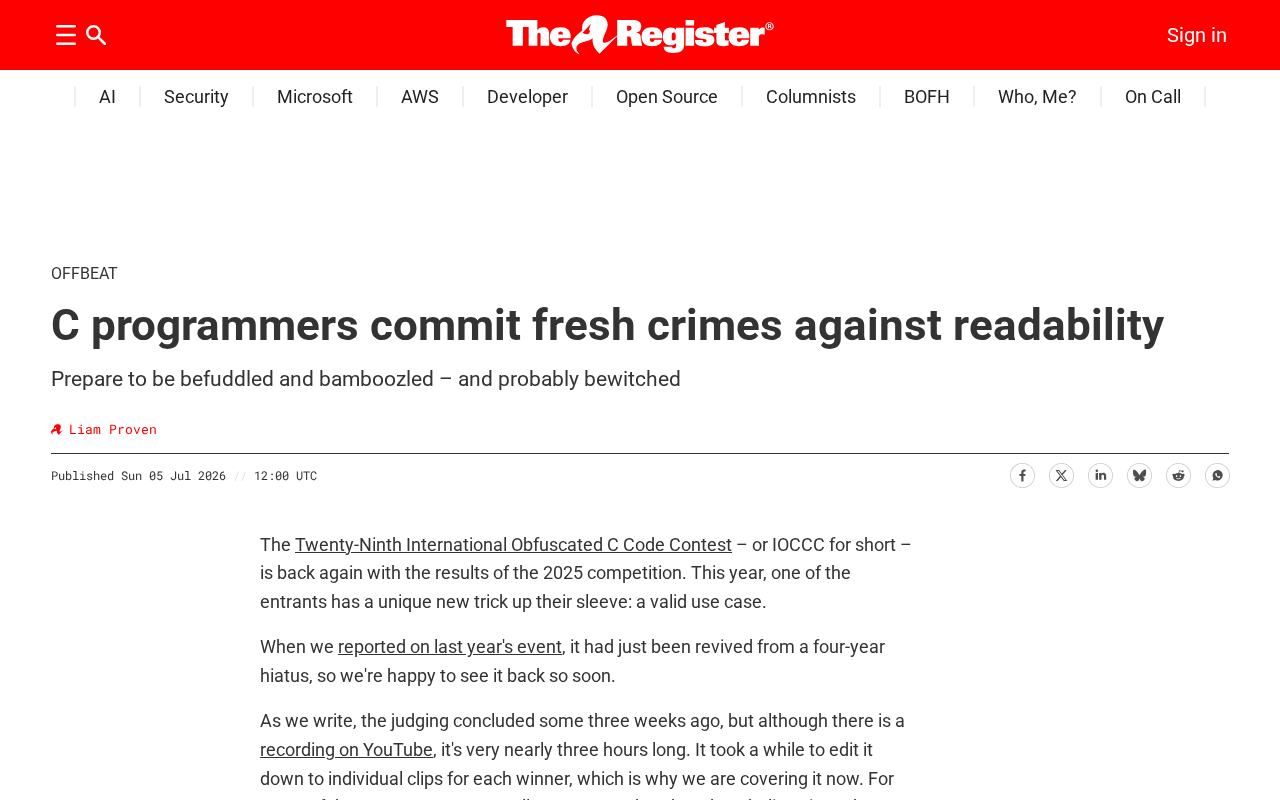
A Hacker News post titled "C programmers commit fresh crimes against readability" sparked widespread discussion in the developer community. While the title is tongue-in-cheek, it captures a long-standing controversy in the C world: in the pursuit of extreme conciseness, performance, or showmanship, programmers often write code at the expense of readability.
This kind of topic never gets old in tech communities. At its core, it reflects the deep tension between "freedom of expression" and "engineering maintainability" in systems-level programming languages. As a language born in 1972 and still active in operating system kernels, embedded devices, and high-performance computing, C grants developers near-limitless low-level control—and that very freedom is precisely the breeding ground for readability problems.
C was born in 1972 at Bell Labs, created by Dennis Ritchie during the development of the UNIX operating system. It was designed as a "high-level assembly language"—capable of directly manipulating memory and hardware registers while also offering the expressiveness of structured programming. This positioning made C the language of choice for foundational software such as operating systems, compilers, and database engines; the core parts of the Linux kernel, SQLite, and the CPython interpreter are all written in C. Notably, UNIX itself was originally written in assembly, and one of Ritchie's direct motivations for creating C was the desire to rewrite the UNIX kernel in a more portable high-level language—a decision that set the technical tone for systems programming for the next 50 years, and one that saddled C from its very inception with the dual expectations of being both "close to the hardware" and "human-readable."
C's memory model is the root of both its power and its danger: programmers directly manage heap memory allocation and deallocation via malloc/free, and pointers can point to arbitrary memory addresses and perform arithmetic. This extreme low-level control makes security vulnerabilities like buffer overflows, dangling pointers, and memory leaks commonplace, while also serving as fertile ground for obscure code—when programmers can do anything with memory, "anything" includes operations that are utterly incomprehensible to others.
Understanding this requires knowing the basic structure of C's memory layout: memory is divided into four regions—the stack, the heap, the data segment, and the code segment. Stack memory is managed automatically by the compiler—pushed on function calls and popped on returns—and its capacity is usually limited by the operating system (Linux defaults to 8MB), so deep recursion can trigger a stack overflow. Heap memory, on the other hand, must be manually managed by the programmer and is theoretically limited only by physical memory and address space. This explicit memory management model gives programmers enormous flexibility, along with the possibility of trading space for time optimizations. By contrast, languages like Java and Python automatically manage memory through garbage collection (GC), trading a certain performance overhead for safety—modern collectors such as Java's G1 GC and ZGC have compressed pause times down to the millisecond level, dramatically narrowing the performance gap with C. Rust, meanwhile, statically verifies memory safety at compile time through Ownership and the Borrow Checker, eliminating entire classes of errors like dangling pointers and data races without introducing runtime overhead—representing a new direction for systems programming languages. This is why Rust has in recent years been introduced into projects like the Linux kernel (which officially merged Rust support starting with version 6.1) and the Android system as a complement to, or even replacement for, C. Google's security research shows that the proportion of memory safety vulnerabilities in Android has declined year over year since Rust was introduced, providing strong empirical evidence that "language design affects security."
Why C Produces So Many "Crimes Against Readability"
The Double-Edged Sword of Language Features
C's design philosophy is to "trust the programmer." It imposes few syntactic restrictions, allowing powerful yet dangerous features like pointer arithmetic, macro definitions, and bit operations to coexist. This design offers immense flexibility, but it also opens the door wide to obscure code.
Typical "crime scenes" include:
- Overly nested ternary operators: An expression like
a?b?c:d:e?f:gis perfectly legal, but the reader must construct the full decision tree in their head. - Macro abuse: Using preprocessor macros to implement complex logic, or even simulate object-oriented features, resulting in code that becomes unrecognizable when expanded during debugging. The C preprocessor (CPP) performs pure text substitution in the first phase of compilation, completely unaware of C's semantics. This means that code generated by complex macros often appears as a huge blob of expanded text in debuggers and static analysis tools, making stack traces extremely difficult to follow.
- Fancy pointer operations: Multi-level pointers, arrays of function pointers, and mixed pointer arithmetic make data flow hard to trace.
- Ultra-minimal variable naming: Single-letter variables like
i,j,p, andqare everywhere, with no semantic meaning outside their context.
The Historical Inertia of "Show-off Culture"
The C community has a long tradition of "code golf"—implementing functionality in the fewest characters possible. The famous IOCCC (International Obfuscated C Code Contest) pushes this ethos to the extreme, with contestants taking pride in writing programs that are as incomprehensible as possible while still running correctly.
Founded in 1984, IOCCC is one of the oldest programming competitions in computer science. Its founding intent carries a clear ironic streak—by showcasing extremely obfuscated code, it reverse-educates programmers on what constitutes bad coding habits. Past winning entries include some jaw-dropping examples: programs that replicate themselves (Quines), source code whose very shape forms a piece of ASCII art, and complete ray-tracing renderers implemented in under 500 bytes. IOCCC entries also frequently exploit the C standard's extremely lenient rules on program formatting: the C standard only requires syntactic legality and imposes no restrictions on indentation, spacing, or line breaks, making it possible to arrange code into any visual shape.
It's worth noting that many of IOCCC's extreme tricks rely on Undefined Behavior (UB) in the C standard. UB covers operations like signed integer overflow, null pointer dereferencing, and out-of-bounds array access, for which the C standard makes no guarantees about the outcome. The C standard retains extensive UB for two reasons: on one hand, it's a historical legacy—early C code needed to run on hardware platforms with vastly different behaviors (for example, integer bit widths and byte orders could differ completely across platforms), and standardizing all boundary behaviors would have been too costly. On the other hand, it's a performance consideration—defining certain edge cases as UB allows the compiler to assume they don't occur, enabling more aggressive optimizations. For instance, if the standard mandated that signed integer overflow must wrap around, the compiler would have to insert overflow checks when handling loop counters; defining it as UB instead lets the compiler assume the loop counter never overflows, eliminating the associated branches and enabling better vectorization.
The danger of this double-edged sword, however, is that modern compiler optimizers rewrite code logic based on the "no UB" assumption, leading to behavior the developer never intended. Famous cases include a security vulnerability in the Linux kernel where the compiler optimized away a null pointer check (CVE-2009-1897), and a random number generation flaw in OpenSSL caused by UB. More dangerously, modern compilers actively assume during optimization that "no UB exists in the program" and perform aggressive code transformations accordingly—meaning a piece of code that only works by relying on UB may produce completely different behavior after a compiler upgrade or a change in optimization level, making it one of the most insidious and hardest-to-diagnose sources of bugs in production. This is why companies like Google widely enable UBSan (Undefined Behavior Sanitizer) for runtime detection when compiling C/C++ code, and treat UBSan reports as blocking errors in their CI/CD pipelines. Code golf, meanwhile, competes for glory by byte count on platforms like Stack Exchange, where the shortest solutions often walk precisely along these UB edges.
This culture is perfectly fine at the entertainment level, but when similar thinking seeps into production code, it becomes a genuine engineering disaster. A piece of "clever" code can cost the colleague who inherits it many times longer to understand, and may even bury hard-to-detect bugs.
Why Code Readability Matters More Than You Think
Code Is Written for Humans to Read
Computer scientist Harold Abelson famously said: "Programs must be written for people to read, and only incidentally for machines to execute." Abelson is an MIT computer science professor who, together with Gerald Jay Sussman, co-authored Structure and Interpretation of Computer Programs (SICP)—a 1985 textbook hailed as a bible of computer science, whose very opening line is this widely quoted aphorism. Using the Scheme language (a dialect of Lisp) as its vehicle, SICP emphasizes building complex systems through clear layers of abstraction, exploring topics like recursion, higher-order functions, lazy evaluation, and metacircular interpreters; its core insight is that the essence of a programmer's work is managing complexity, and abstraction is the fundamental means of doing so. This idea profoundly influenced the entire "code as documentation" engineering culture movement and left a lasting mark on the design of functional programming languages. This perspective is especially critical in the context of C.
Code readability is essentially an economics problem as well. Barry Boehm, a scholar of software engineering economics, noted in his classic work Software Engineering Economics that the maintenance phase of a software lifecycle typically accounts for 60% to 80% of total cost, and that most of the time spent on maintenance goes into understanding existing code.
In his book Refactoring, Martin Fowler listed hard-to-understand code as the foremost "code smell" and tied it directly to technical debt. This concept was first proposed by Ward Cunningham in 1992, drawing an analogy between financial debt and the long-term cost accumulated in software for short-term convenience: unreadable code is like high-interest debt, where the cognitive burden of rebuilding context before each modification is the interest you keep paying.
Technical debt has developed a relatively complete quantification framework in practice. The SQALE (Software Quality Assessment based on Lifecycle Expectations) methodology, proposed by Jean-Louis Letouzey in 2009, classifies code quality issues by dimensions such as maintainability, reliability, and security, assigns standard remediation effort to each category, and aggregates them into total debt measured in "person-days." This framework is widely adopted by code quality platforms like SonarQube, which use static analysis to convert technical debt into a quantifiable "remediation time" metric, allowing R&D managers to incorporate technical debt into sprint planning and OKR systems for quantitative management—an important engineering practice underpinning the DevOps movement's principle of "quality built-in." A survey by research firm CAST found that a typical enterprise codebase carries an average of about 3.6 hours of technical debt per thousand lines of code, and this figure is often several times higher for legacy systems in high-security industries like finance and telecommunications. Even more noteworthy is the interest effect of debt: as a codebase grows, the pace of new feature development tends to decline by about 10% per year. McKinsey research shows that some large financial institutions' tech teams spend up to 40% of their time dealing with technical debt rather than creating new value. As teams grow and personnel turn over, this interest compounds exponentially, potentially turning the codebase into a "legacy system" that no one dares touch.
Research shows that in software development, the time spent reading code far exceeds the time spent writing it, usually at a ratio above 10:1. A piece of code is read, modified, and maintained repeatedly over its lifecycle, while writing it takes only a moment. Therefore, the short-term convenience gained by sacrificing readability often comes at a multiplied cost during long-term maintenance.
Debunking the "Performance Optimization" Excuse
Many readability problems are justified in the name of "performance optimization." But in the face of modern compilers, this excuse mostly falls apart. GCC (GNU Compiler Collection) and Clang/LLVM are the two most mainstream compilers in the C ecosystem, and their optimization capabilities have reached astonishing levels.
LLVM's optimizer converts programs into an intermediate representation (IR) based on Static Single Assignment (SSA) form. SSA was formally systematized by Cytron et al. at IBM Research in 1991; its core constraint is that each variable name appears with only a single definition in the program text, making use-def chains precise and thereby greatly simplifying the implementation complexity of classic optimizations like data flow analysis, constant propagation, and dead code elimination. LLVM handles multi-way assignments at control flow merge points using φ (phi) functions, allowing its Pass infrastructure to modularly stack hundreds of optimization transformations—becoming the de facto standard for modern compiler architecture. Notably, LLVM was originally started by Chris Lattner in 2000 as a research project at the University of Illinois, later adopted by Apple and developed into the core infrastructure supporting a suite of tools like Clang, Swift, and the Metal shader compiler. Its influence has extended far beyond C/C++ into emerging domains like GPU computing (via the NVVM/AMDGPU backends) and WebAssembly compilation. On this foundation, the compiler runs hundreds of optimization passes: inlining eliminates function call overhead, loop vectorization converts ordinary loops into SIMD instructions (processing 32 bytes of data at once under the AVX2 instruction set), dead code elimination and constant folding clean up redundant computation, and link-time optimization (LTO) can even perform global cross-compilation-unit analysis at the linking stage.
It must be pointed out that compiler optimization has a fundamental limitation: it can only analyze program semantics within a single compilation unit (or within LTO scope) and cannot understand algorithmic-level inefficiencies. For example, an O(n²) bubble sort cannot beat an O(n log n) merge sort no matter how it's optimized. This is precisely Amdahl's Law manifested in the optimization domain: overall performance improvement is limited by the slowest non-optimizable part. The industry has thus formed the optimization hierarchy principle: "algorithmic optimization first, compiler optimization second, hand-written assembly last."
More importantly, compilers can recognize the semantic patterns of code—identifying complex bit operations as native hardware instructions, or even optimizing a hand-written simple sort into a more efficient implementation. This means that expressing intent with clear, straightforward code often gives the compiler more complete semantic information, enabling it to generate higher-quality machine code. Conversely, obscure code that has been over-"hand-optimized" may break the compiler's optimization analysis chain, actually degrading performance. A classic example is "memcpy recognition": when a programmer copies memory byte by byte with a clear loop, both GCC and Clang can recognize it and replace it with a highly optimized inline memcpy implementation; but if the programmer manually unrolls the loop or adds complex pointer arithmetic in the name of "optimization," the compiler's pattern matching may fail, generating slower code instead.
The right approach is: write clear code first, and only optimize specifically after profiling confirms a bottleneck. A scientific optimization process follows the "measure–analyze–optimize–verify" cycle: first establish a performance baseline with benchmarks, then find the true bottleneck using tools like Linux's perf, Valgrind's Callgrind, or the Flame Graph invented by Brendan Gregg. Flame graphs visualize call-stack sampling data as intuitive stacked rectangles, with the horizontal axis representing time proportion and the vertical axis representing call depth, making performance hotspots immediately obvious—they have become a standard performance diagnostic tool for engineers worldwide. Typically, 80% of the time is consumed by 20% of the code; optimize only these hot paths, then verify the improvement with benchmarks—this is the data-driven optimization methodology. Premature optimization is exactly what the classic maxim refers to as "the root of all evil" (the maxim comes from Donald Knuth; the full version is "We should forget about small efficiencies, say about 97% of the time: premature optimization is the root of all evil," originally attributed by Knuth to Tony Hoare, and often quoted out of context as a rejection of all optimization when it is really a critique of blind optimization done without measurement).
How to Avoid Becoming a "Readability Criminal"
Establish Unified Team Coding Standards
Readability has never been purely a matter of personal aesthetics—it is the infrastructure of team collaboration. Well-known projects like the Linux kernel and Google C++ have strict coding standards covering naming conventions, indentation style, comment requirements, and more. Unified C coding standards can dramatically reduce the cognitive burden between team members.
The Linux kernel coding style (Documentation/process/coding-style.rst) is one of the most influential C standards in the industry, written personally by Linus Torvalds in 1996 in a blunt, even slightly forceful tone that mandates 8-space indentation, an 80-column width limit, and a ban on C++-style comments. There is often deep engineering reasoning behind these rules: 8-space indentation makes deeply nested code visually ugly, thereby creating natural psychological pressure to "refactor if nesting exceeds three levels." NASA's Jet Propulsion Laboratory (JPL) C safety standard is even stricter, prohibiting dynamic memory allocation, recursion, and goto statements, reflecting the aerospace field's extreme demand for code verifiability.
Use Tools Wisely, Not Brute Force
Modern toolchains can effectively mitigate readability problems:
- Static analysis tools (like clang-tidy, cppcheck): catch potential code smells and expose risks early.
- Formatting tools (like clang-format): automatically unify code style and eliminate style disputes.
- Code Review: the last line of defense against "show-off code" entering the main branch.
It's worth adding that how these tools are integrated into the CI/CD pipeline determines their actual effectiveness. Industry best practice is to configure static analysis and format checks as "gate checks" in the pull request pipeline, so that non-compliant code is automatically rejected before merging rather than relying on manual review to catch it. Platforms like GitHub Actions and GitLab CI both support this "code quality gate" model, transforming the enforcement of readability standards from "soft advocacy" into "hard constraints" and fundamentally raising the team's average code quality.
Resist the Temptation to Be "Clever"
Perhaps most important is a shift in mindset: great engineers strive to make code look simple, not appear clever. When you're tempted to show off your skills with a single obscure expression, think of yourself three months from now, or the colleague who inherits the code—can they understand the logic within 30 seconds?
This mindset has theoretical support in psychology. Cognitive Load Theory, proposed by John Sweller in 1988, treats the capacity of human working memory as a finite resource. Research shows that the number of "chunks" human working memory can handle simultaneously is around 7±2. Complex nested logic and obscure naming force readers to maintain more intermediate states in their heads at once; exceeding working memory capacity leads to cognitive overload, causing comprehension speed to plummet and error rates to rise. Clear code, through good naming and appropriate abstraction, separates "accidental complexity" (extra difficulty introduced by the implementation) from "essential complexity" (the inherent difficulty of the problem), helping readers focus their limited working memory on the logic that truly matters.
Conclusion: Balancing Freedom and Responsibility
C's power stems from the freedom it grants, and its readability dilemma stems from the same source. Though this Hacker News post is short, it reminds us once again: the measure of technical ability lies not only in "what you can write," but even more in "what you choose not to write."
In today's era of increasingly widespread AI-assisted programming, code maintainability has become even more important. The core technology behind AI coding assistants like GitHub Copilot and Cursor is large language models (LLMs) based on the Decoder-only Transformer architecture. Pretrained on vast code corpora, they learn code's semantic patterns, API usage conventions, and naming practices. These models are essentially doing context prediction: given the current code context, they autoregressively predict the most likely subsequent content token by token. This architecture means there is a direct correlation between the model's capabilities and code clarity—the Transformer's self-attention mechanism builds contextual understanding by computing the relevance between all token pairs in a sequence, with a computational complexity of O(n²). This means that within a limited context window, code with higher semantic density and more standardized naming allows attention weights to concentrate on relevant semantic associations rather than being scattered across many ambiguous terms.
From an information-theoretic perspective, this working mechanism means that the semantic clarity of code directly determines the quality of the model's inference. Perplexity, as a core evaluation metric for language models, measures the model's predictive uncertainty regarding the true data distribution—the lower the perplexity, the more certain the model is about predicting the next token, and the higher the generation quality. The more standardized the code naming, the more concentrated the model's conditional probability distribution, the lower the entropy of the generated results, and correspondingly, the higher the output quality. Research from institutions like Anthropic and DeepMind shows that a code model's performance within the context window is highly correlated with the semantic density of the code: clear naming and appropriate comments significantly reduce the model's perplexity, allowing it to converge to a more accurate semantic space when predicting completions. Descriptive variable and function names (like using calculate_checksum() instead of calc()) allow the model to make inferences in the correct semantic space, significantly improving the accuracy of generated suggestions; whereas code littered with magic numbers (like writing 86400 directly instead of SECONDS_PER_DAY) and single-letter variables forces the model to guess intent in an ambiguous semantic space, greatly reducing generation quality. In other words, readable code provides the model with richer "contextual anchors," making human-machine collaboration far more efficient than with obscure code. This finding has also driven "AI-friendly code standards" to become a topic of growing concern for engineering teams.
It is foreseeable that in an era where AI is fully integrated into software development workflows, clear and readable code is no longer just for "yourself three months from now," but a prerequisite for efficient human-machine collaboration. "Readable by AI" is becoming a new dimension in code quality assessment. A truly mature C programmer knows how to balance freedom and responsibility, leaving the showmanship for IOCCC and the clarity for production.
After all, the highest realm of code is not to make people marvel "how is this possible," but to make them calmly say "ah, I see."
Key Takeaways
Related articles
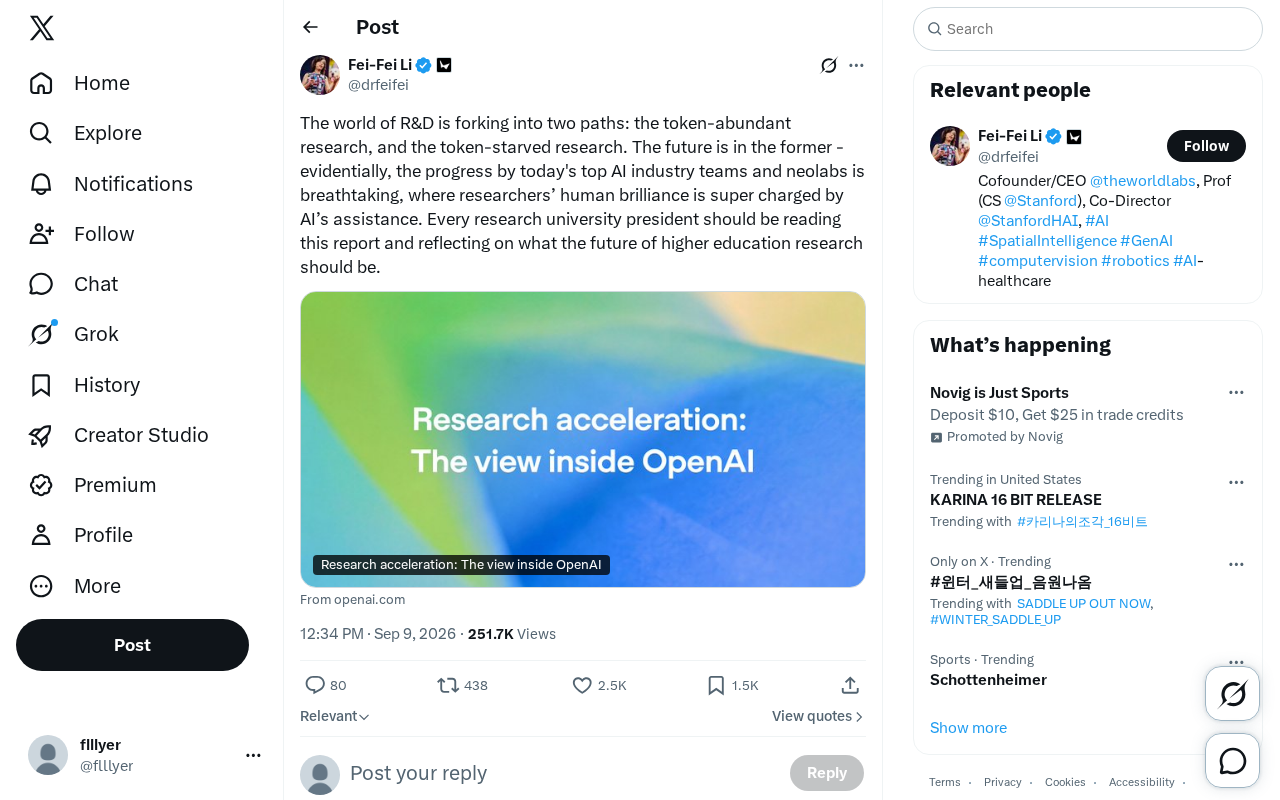
R&D Is Forking: The Coming Battle Between Token-Abundant and Token-Starved Research
R&D is splitting into token-abundant and token-starved research. Top AI labs are pulling ahead—here's what it means for universities and the future of science.
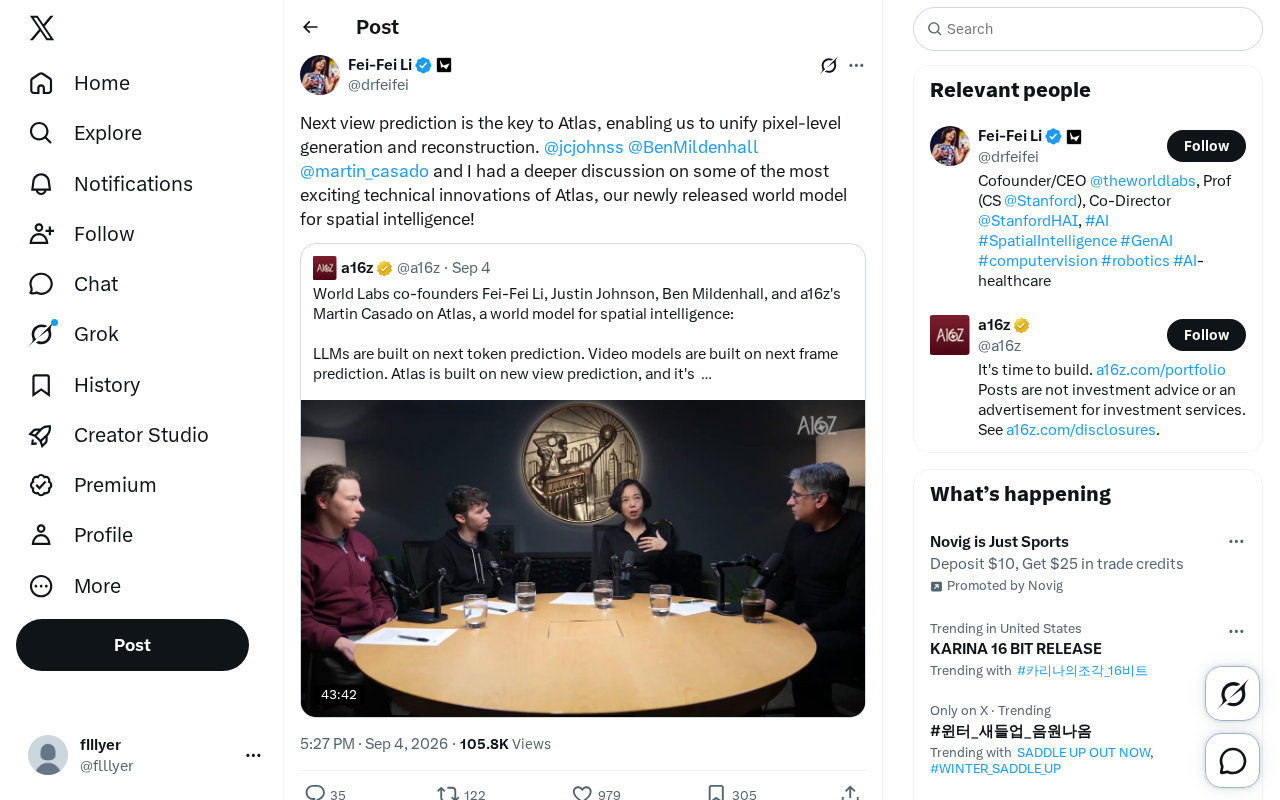
Atlas World Model Explained: How Next View Prediction Unifies Generation and Reconstruction
The Atlas world model uses Next View Prediction as its core to unify pixel-level generation and reconstruction, offering a new approach to spatial intelligence.
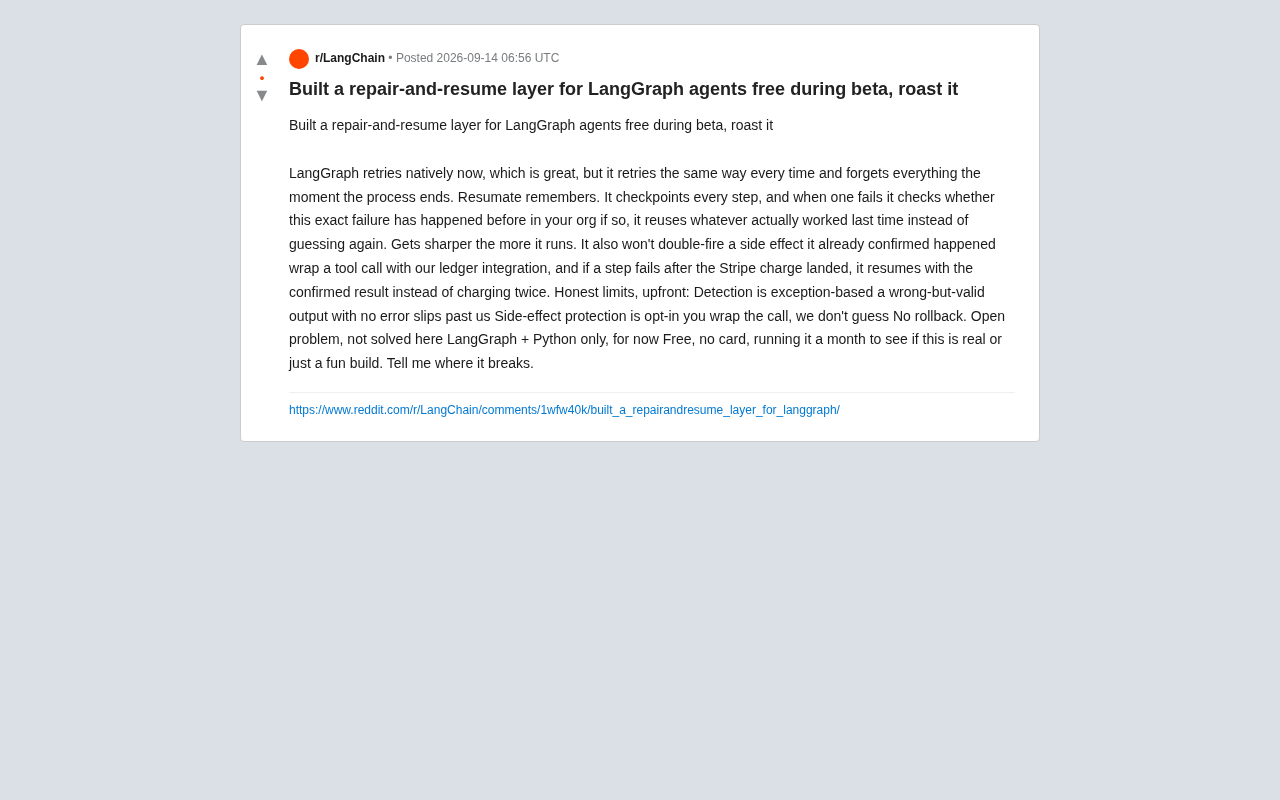
Resumate: A Deep Dive into the Repair-and-Resume Layer for LangGraph Agents
Resumate adds memory-aware checkpointing and idempotent side-effect protection to LangGraph agents, preventing issues like duplicate Stripe charges on retry.