The ChatGPT Redesign Backlash: How AI Companies Treat Their Loyal Users

A Reddit debate unpacks why emotional loyalty to ChatGPT is fragile — and what OpenAI got wrong with its app redesign.
A Reddit discussion about a user pledging to "never cancel" ChatGPT sparked a broader debate about AI company loyalty and user trust. The thread highlights OpenAI's stronger C-end focus versus Anthropic's API-first strategy, and criticizes ChatGPT's latest app redesign for sacrificing core chat experience in pursuit of feature consolidation — while failing to communicate transparently with users who genuinely support the product.
A Community Debate About "Loyalty"
In a Reddit AI community, a ChatGPT user posted something that sparked widespread discussion: "I will never cancel my ChatGPT subscription, even if the app becomes a mess." It seemed like an ordinary comment — but it ignited a deeper conversation about the relationship between users and AI companies.
A rational rebuttal quickly followed: "Don't say 'never.' They don't care about you, and you don't owe them anything. They're the best option right now, and by a wide margin. But when that changes — and it will — just say goodbye."
This exchange captures the core tension in today's AI product market: the ongoing struggle between emotional attachment to a product and rational consumer decision-making. In an era of such rapid technological iteration, any "never cancel" pledge feels particularly fragile.
Underpinning all of this is the AI product industry's unique lock-in mechanism. The Lock-in Effect describes how users continue using a product because switching costs are too high — whether that's data migration, learning curves, habitual inertia, or emotional dependency. ChatGPT's accumulated conversation history, its personalized Memory feature, and users' adaptation to its interaction style all form invisible switching barriers. Yet unlike traditional SaaS software, the lock-in effect for current AI products is relatively weak. Once the capability gap between models narrows, migration costs drop to near zero — which is precisely why "never cancel" emotional pledges crumble so easily under rational scrutiny.
OpenAI vs. Anthropic: Who Actually Cares About End Users?
One of the most interesting threads in this discussion was the community's comparative analysis of OpenAI and Anthropic's business strategies.
Subscriptions vs. API: Fundamentally Different Business Priorities
Multiple commenters reached a fairly consistent conclusion: OpenAI cares more about subscription users than Anthropic does. One user put it bluntly: "They care about customers more than Anthropic does, that's for sure." Another added: "Anthropic doesn't care about non-API users at all."
This reflects the fundamentally different business logic of each company. One user's analysis was particularly sharp: "Anthropic sells APIs — the subscription is just an advertisement for the API."
This difference is no accident; it's the inevitable result of each company's strategic DNA. Since launching ChatGPT in late 2022, OpenAI has actively embraced the consumer mass market, treating consumer subscriptions (ChatGPT Plus/Pro) as a major revenue pillar and continuously investing in product interface and mobile experience. Anthropic, which grew out of OpenAI's technical team, has founders like Dario Amodei with stronger academic and AI safety research backgrounds. The company's strategic center of gravity clearly tilts toward enterprise B2B markets and the API ecosystem. Claude.ai's individual subscriptions primarily serve brand exposure and developer testing rather than acting as a primary revenue source.
In other words, in many users' eyes, Anthropic's core revenue comes from enterprise-level API usage, while personal subscriptions like Claude Pro function more as a showcase window or customer acquisition channel than a strategic priority. OpenAI, by contrast, has invested far more in the consumer market, positioning ChatGPT as a mainstream product for the general public. This strategic divergence directly influences how the two companies differ in product iteration priorities and user communication style.
The Hidden Concern of Enterprise Token Costs
Another thought-provoking commercial angle emerged in the discussion. One commenter predicted: "Wait until the AI hype dies down and enterprises start to realize — paying over $30,000 a month in token costs for a role that pays an employee $10,000 a month might not actually be worth it."
This observation cuts to the heart of a core contradiction in current AI commercialization. Large language model APIs are billed in tokens (tokens are the basic unit models use to process text; 1,000 English tokens is roughly 750 words), and monthly bills can escalate rapidly in high-frequency enterprise usage scenarios. Take GPT-4o as an example: its API pricing runs approximately $2.50 per million input tokens and $10 per million output tokens, and a single complex workflow task can consume tens of thousands of tokens. When AI tools are used to replace or augment high-paying roles, the cost-benefit calculation becomes especially delicate. Research from McKinsey, Goldman Sachs, and others has noted that realizing actual ROI from enterprise AI investment still faces significant hurdles — integration complexity, accuracy limitations, and process restructuring among them. When API call costs could far exceed human labor costs, the sustainability of such a model naturally comes into question, and also helps explain why a business strategy centered almost entirely on API revenue carries long-term risks.
ChatGPT's App Consolidation Redesign: Thoughtful Improvement or Disaster?
Another major focal point of the discussion was OpenAI's move to consolidate three major features — Codex (coding), Chat (conversation), and Work — into a single unified application.
A Rare Positive Voice
The original poster offered a positive take: "Love the new app that finally combines Codex and Chat. Just need to add collaboration features and I can say goodbye to Anthropic."
But tellingly, the immediate reply revealed how rare this view was: "I think you might be the first person I've seen who actually likes it."
The Core Experience That Got Sacrificed
Far more users expressed strong dissatisfaction. The central tension: feature consolidation came at the cost of the original conversational experience.
One user's critique was pointed: "I can accept Codex and Work being added, but turning the chat experience into a pop-up is terrible. For people who only care about the chat function, it's become a confusing mess, and the core feature they were proud of has been relegated to a half-baked pop-up window."
This exposes a classic product design trap — Feature Creep — where a product continuously piles on new features during iteration, ultimately diluting the core experience. Microsoft Office, Adobe Creative Suite, and early Facebook all faced similar criticism. ChatGPT's success was largely driven by its minimalist conversational interface lowering the barrier for ordinary users. Demoting the chat function to a pop-up isn't just an interface regression — it's a disruption of users' existing mental models. Users must now relearn where to find their most familiar features, and that kind of cognitive friction is often more frustrating than a missing feature altogether. As Apple's design philosophy under Steve Jobs emphasized: cutting features requires just as much courage as adding them. "Less is more" isn't a slogan — it's genuine respect for users' attention.
Worse Than Product Flaws: The Way It Was Communicated
If the roughness of the feature consolidation can be patched through future iteration, what users were truly angry about was OpenAI's communication posture during this redesign.
One user noted directly: "They deliberately didn't mention this at the launch event — they knew what they shipped was garbage." Another user's summary cut deeper:
"The classic ChatGPT app was an experience. They brought in feature consolidation but threw the experience in the trash. They'll fix it. But the way they did this, and the way they communicated about it, is not how you treat customers who genuinely root for you."
This highlights a key principle in product management: users can forgive temporary product flaws, but they struggle to forgive arrogance and evasion from the company behind the product.
From a crisis communications perspective, tech companies facing a regression in product experience typically have two strategies: transparent disclosure with a roadmap explanation (the transparency strategy), or leading with highlights at launch events while downplaying problems (the selective presentation strategy). The latter can reduce negative noise in the short term, but once users discover the issues themselves, the erosion of trust multiplies — because users feel not just the product flaw, but the anger of being manipulated. Apple's defiant response to the iPhone 4 antenna scandal and Zuckerberg's Congressional testimony after the Cambridge Analytica data scandal are landmark case studies in tech company crisis communication — in success and failure alike.
For subscription products, trust erosion is especially lethal. Users who pay monthly have subconsciously established an "equal contract" relationship; once they sense information asymmetry, the psychological resistance to canceling a subscription drops sharply. When users are genuinely cheering for you, honest communication matters more than a perfect product. Deliberately skirting a known experience regression at a launch event only accelerates the consumption of your most valuable asset: user trust.
Emotional Loyalty Eventually Yields to Rational Choice
This community discussion is a microcosm of user psychology in the AI era. Users have a genuine emotional connection to ChatGPT — some even willing to pledge "never cancel." But in calm, rational community discourse, reason ultimately prevails:
- There is no natural "loyalty obligation" between a company and its users;
- Being the current leader doesn't mean being the permanent leader — the technology landscape can shift at any time;
- A degraded experience compounded by arrogant communication is the fastest way to burn through user trust.
For OpenAI, this app redesign controversy is a sobering reminder: in the pursuit of feature consolidation and business expansion, it cannot afford to discard what made the product successful in the first place — a pure, focused core experience and honesty with supporters. The lock-in effect of AI products is ultimately limited. As model capabilities converge and competitors continue to close the gap, what truly keeps users around is the hard-to-replicate experiential details and the trust that's been earned and protected.
After all, as that user said: when a better option comes along, users will simply say "bye bye" — without a moment's hesitation.
Related articles
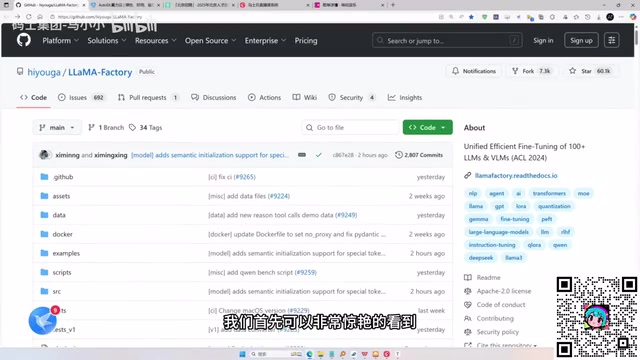
LLaMA-Factory in Practice: A Complete No-Code Guide to Fine-Tuning Large Models
An introduction to LLaMA-Factory, the open-source fine-tuning tool: its 60.1K-star background, supported models and algorithms, local vs. cloud deployment, and CUDA setup steps.

Zeng Ming's Deep Retrospective: Why OpenAI May Not Be the Ultimate Winner — and Why the Corporate System Will Disappear
Zeng Ming's deep retrospective on the AI endgame: model companies are just infrastructure, OpenAI and Anthropic won't be the final winners; the next battle is the Agent entry point standard; the corporate system will disappear as AI restructures collaboration, and only mission-driven companies can survive the cycle.

OpenHands v1.28.0: OpenCode and PI Added as Built-in Agents, API Keys Requestable In-Conversation
OpenHands ships 5 releases in 21 days: v1.27.0 adds OpenCode and PI as built-in agents, v1.28.0 enables in-chat key requests. ACP integration, credential reuse, model list changes, and upgrade advice.