The Complete Guide to Using Claude in China: Registration, Pro Subscription & Account Protection Tips
A practical guide for mainland China users on accessing Claude, subscribing to Pro, and avoiding account bans.
This guide covers the three main ways mainland China users can access Claude — the official website, overseas aggregator platforms (like POE and OpenRouter), and domestic relay services — each with different trade-offs in experience, cost, and convenience. The official route requires a clean residential IP, an overseas email like Gmail, and an overseas phone number. Upgrading to Claude Pro requires third-party top-up platforms like Wild AI (from ¥195) or Account Planet (from ¥249), and network quality must be verified beforehand since bans may not come with refunds. The guide also covers fingerprint browsers, fixed IPs, one-device-one-account practices, and timezone spoofing as key strategies to reduce ban risk.
As one of today's top large language models, Claude — with its Sonnet, Opus, and other model series — has earned widespread praise for code generation and long-context processing. However, for users in mainland China, every step of the journey presents its own obstacles: from creating an account to upgrading a subscription to maintaining stable long-term access. This guide, based on a practical tutorial from a Bilibili creator, systematically covers three access methods and effective strategies for reducing the risk of account suspension.
Three Main Access Methods
If you want to use Claude's latest models — such as Sonnet or Opus — there are roughly three paths: direct access via the official website, overseas third-party aggregator platforms, and domestic relay services. The first two require a VPN or proxy setup; the last one can be accessed directly over a mainland China network connection.
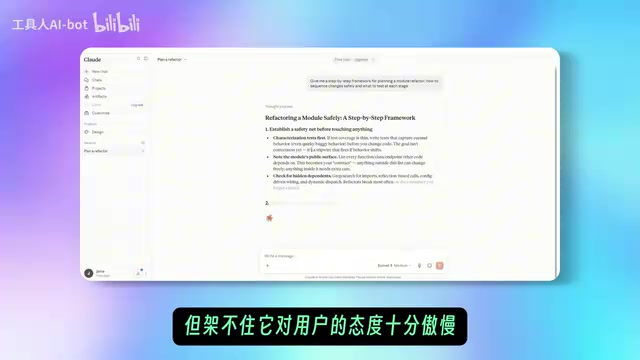
The most straightforward approach is registering on Claude's official website. That said, Claude's attitude toward mainland China users is notoriously unfriendly — it has even earned a colorful nickname among Chinese users because of it. The native official experience is the best, but the registration and maintenance costs are also the highest.
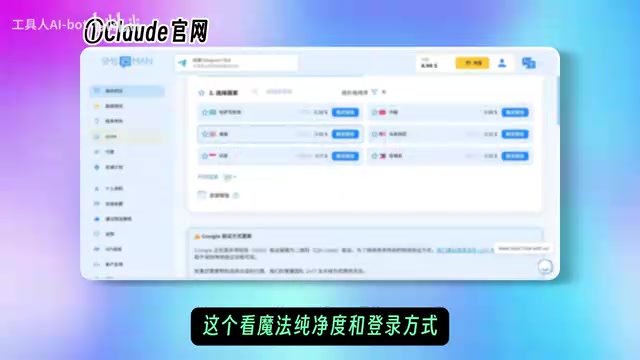
If you'd rather skip the hassle of a complicated registration process, overseas third-party aggregator platforms are worth considering — services like POE, or API brokers like OpenRouter. These platforms have lower network requirements and far less risk of sudden account bans. In addition to Claude's latest models, they also give you access to GPT, Kimi, and other top models. The downside is that the experience doesn't quite match the native official version.
The third option is domestic relay services, provided by Chinese teams through traffic forwarding or local deployment. The advantage is direct access over a domestic network connection with an experience close to the official version; the drawback is a price premium, and the market is crowded with providers of varying quality — some of which offer inferior service under false pretenses. This approach is better suited for short-term experimentation or users who don't want to deal with the technical setup.

Three Must-Haves for Official Website Registration
If you decide to go the official registration route, you'll need to prepare three things in advance — none of them optional:
First, a clean network node. A residential IP node is strongly preferred. To check whether your node qualifies, use a dedicated detection link to check the node's "risk score" — the lower, the better. Generally it should be below 40; anything higher and you're likely to get banned immediately after registering.
Second, an overseas email address. Gmail is the top choice; ProtonMail and similar overseas services are a solid second. QQ Mail, 163 Mail, and even Outlook are not reliable enough.
Third, an overseas phone number. Whether phone verification is required depends on your network quality and login method. Logging in with a Google account typically bypasses verification; if it is required, you can obtain a number through an SMS verification platform.
Once all three are in place, simply choose the Google account registration option and follow the prompts — it's straightforward. The real difficulty lies entirely in the preparation work beforehand.
It's worth understanding the difference between a Residential IP and a standard data center IP. A residential IP is allocated by a real home broadband connection and is flagged in IP databases as an ordinary user. Data center IPs — such as those from VPS servers — are more easily identified as proxy traffic. Services like Claude evaluate visitor risk levels through IP reputation databases; data center IPs, because they're shared by many users and frequently appear in abuse records, naturally carry higher risk scores. Some VPN tools offer "IPLC dedicated lines" or "residential nodes" that fall into this residential IP category. They're typically more expensive than standard nodes, but offer significantly better success rates and account longevity when registering sensitive accounts.
Pro Subscription: Payment Challenges and Platform Options
Just like ChatGPT, Claude does not support mainland China payment methods. To upgrade to Claude Pro, you'll need a third-party top-up platform. Two platforms that support Alipay or WeChat Pay are recommended:
- Wild AI: In addition to Claude Pro, it supports Claude Max subscriptions at the 5x and 20x tiers, with Pro subscriptions starting at ¥195. It also handles GPT Plus, Gemini, and other product subscriptions, with after-sales support.
- 账号星球 (Account Planet): Claude Pro subscriptions starting at ¥249, with automated top-up and after-sales support. Also offers a range of services including Telegram, Gmail, Netflix, and Spotify accounts.
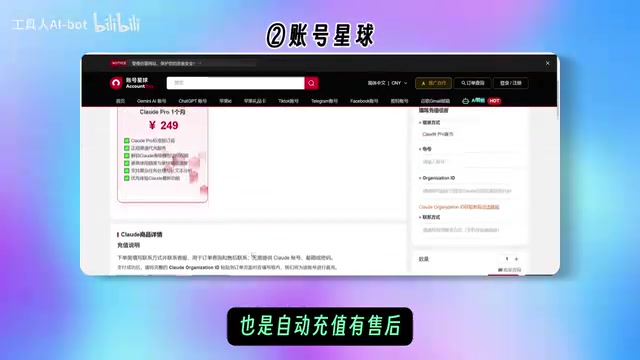
This point deserves special emphasis: Claude Pro has stricter network environment requirements than the free tier, and if your account gets banned, a refund is not guaranteed. Always verify your environment meets the requirements before subscribing. There are two ways to check: select Claude on the Wild AI subscription page and click "Check Network First," or use an open-source detection tool and click "Run Check" to see your results.
One practical tip is to use a fingerprint browser for both subscription and daily use. In practice, running the risk detection check after switching to a fingerprint browser shows a noticeable drop in the risk score.
A fingerprint browser is a tool that simulates a unique browser fingerprint for each tab or profile. Popular options include AdsPower and Multilogin. When you visit a website with a regular browser, it exposes dozens of "fingerprint" parameters — screen resolution, font list, Canvas rendering characteristics, WebGL information, and more — that platforms can use to identify the same device across multiple visits, even if the IP address changes. A fingerprint browser randomizes or fixes these parameters so that each browsing session appears to the platform as a brand-new user on a different device, reducing the likelihood of being flagged or linked to a risk profile. This is precisely why using a fingerprint browser produces a measurable drop in risk detection scores.
Practical Tips for Reducing Account Ban Risk
Claude takes a notably hard line against mainland China users. According to analysis by the Bilibili creator, there have even been reports of hidden code embedded in Claude Code designed to collect user location data for targeted enforcement. During each wave of bans, many domestic companies and account resellers have been almost entirely wiped out — individual users fare no better.
Let's be clear: there is no foolproof, permanent solution to account bans — but the following measures can meaningfully reduce your risk:
- Use a stable network environment, prioritize residential IP nodes, and never frequently switch IP addresses;
- Avoid sharing one account across multiple devices; ideally, dedicate one device to one account;
- Register with a Google account or overseas email; avoid QQ Mail, 163 Mail, and Outlook;
- Use a fingerprint browser for daily access to reduce your exposure risk;
- If possible, change your device's system timezone to a US or Japan setting and disable location services.
The core principle is simple: disguise yourself as thoroughly as possible, and minimize any signals that reveal your true location or identity.
SMS verification platforms provide temporary or virtual overseas phone numbers for SMS-based account verification. Common services include SMS-Activate and 5sim. Users purchase a one-time number reception service for a specific country, complete the verification, and have no obligation to keep the number afterward. One important note: some numbers on these platforms have been used by many people repeatedly and may already be blacklisted, leading to verification failures or immediate risk flags after registration. Choosing numbers from less popular countries — such as Latin America or Southeast Asia — often yields better success rates than US or UK numbers, as the latter are used at extremely high volume and are under heavy surveillance by most major platforms.
Final Thoughts
Claude's capabilities are beyond question, but for mainland China users, the cost and uncertainty of stable long-term access are real. For users who want the native experience and have a reliable VPN setup, the official website combined with a fingerprint browser is the optimal choice. For those who prefer convenience, overseas aggregator platforms or domestic relay services offer a reasonable middle ground. Regardless of which method you choose, proper environment isolation and identity masking are key to extending your account's lifespan.
Related articles

Three AI Researchers Debate: How Far Are We from Recursive Self-Improvement?
Three AI researchers including former OpenAI co-founder John Schulman debate recursive self-improvement and intelligence explosion, dissecting continual learning, distillation, RL success, and ASI timelines.

AI Recursive Self-Improvement (RSI): How Far Are We from the Real Thing?
How close is RSI (Recursive Self-Improvement) to reality? We analyze Acer AI's RSI Agent, a Shotcut watermark task, OS World 20 results, and OpenAI's automated researcher goal.

AI Coding Platforms Are Exploding in Popularity: Can Non-Technical People Really Build Money-Making Products?
An AI coding competition unexpectedly drew 1,000+ signups, sparking debate on whether non-technical people can build profitable products with AI. We break down the opportunities and the hype.