The Complete Guide to Voice AI Security and Privacy: Threats, Defenses, and ElevenLabs Integration

Voice AI security guide: five threats, TTS provider evaluation, secure integration patterns, and privacy-first voice cloning practices.
This article systematically outlines the security and privacy threats facing voice AI applications: audio capture abuse, deepfakes, model inversion, API abuse, and data-at-rest leakage. It proposes five key dimensions for evaluating TTS providers—data residency and retention, encryption in transit, access control, audit logs, and privacy-by-design features—using ElevenLabs as an example. At the integration level, it emphasizes server-side synthesis only, rate limiting and quotas, and encrypted storage, with a Python rate-limiting example and an end-to-end Flask demo. For voice cloning, it proposes four privacy-first principles: explicit consent, scoped use, revocability, and watermarking. Finally, it stresses continuous auditing and monitoring and provides a security feature checklist to help developers build trustworthy voice products.
The Complete Guide to Voice AI Security and Privacy: Threats, Defenses, and ElevenLabs Integration
Voice-driven applications are booming—from smart assistants that can read your calendar to chatbots that generate lifelike audio responses. As developers, the creative possibilities opened up by text-to-speech (TTS) and voice cloning are exciting, but every new capability also opens a door to abuse. Audio can be recorded without consent, synthesized voices can be used in phishing attacks, and raw model weights can leak sensitive data. If you're building a product that talks with users, you must adopt a security-first mindset from day one.
Based on a developer-oriented voice AI security guide, this article systematically breaks down common threats, practical mitigations, and a concrete example of integrating a secure, privacy-focused TTS service (using ElevenLabs as the example) into your tech stack.
The Threat Landscape of Voice AI
Understanding the attack surface is the first step in designing defenses. The main threats facing voice AI developers can be grouped into five categories:
- Audio capture abuse: Malicious apps record speech in the background and send it to cloud models, leaking private conversations and creating legal risk.
- Deepfake voice attacks: Synthesized speech impersonates known individuals to deceive victims, used for phishing, social engineering, or brand damage.
- Model inversion: Attackers repeatedly query a TTS endpoint to reconstruct training data, exposing proprietary voice data or user recordings.
- API abuse and rate-limit bypass: Bots flood TTS endpoints, driving up costs or causing denial of service.
- Data-at-rest leakage: Generated audio or voice profiles are stored unencrypted, leading to unauthorized access.
These vectors intertwine; for example, API abuse can supply data for model inversion. Developers need to factor these risks in when choosing a provider and designing the architecture.
Model Inversion Attack is a privacy attack in which an attacker repeatedly queries a machine learning model (such as a TTS endpoint) and uses the model's outputs to infer sensitive information in the training data. In voice scenarios, an attacker may submit carefully crafted text or audio samples and observe changes in the synthesized results, gradually reconstructing specific speaker voice characteristics or original recording fragments contained in the training set. This attack does not directly breach the system but abuses legitimate query interfaces, making it hard to detect with traditional firewalls. Defenses include limiting query frequency, adding noise to outputs, implementing query auditing, and avoiding retaining personally identifiable voice samples in training data.
Deepfake Voice refers to the use of deep learning techniques (such as WaveNet, Tacotron, etc.) to synthesize highly realistic speech that mimics a specific person's timbre, intonation, and even accent. An attacker needs only a small number of audio samples of the target person to train a cloning model, which can be used for phone scams, forging executive instructions, or creating fake news. Detecting deepfake voices typically relies on acoustic feature analysis (such as spectral artifacts or abnormal breathing patterns) or AI detection models, but the offense-defense battle is intense. Developers should clearly label synthesized speech in their products and consider integrating watermarking or provenance verification mechanisms.
How to Choose a Secure TTS Provider
When evaluating TTS services, the following five questions are critical:
- Data residency and retention: Where does the provider store audio files and model data? Can it be configured to delete recordings after synthesis?
- Encryption in transit: Does the API enforce TLS 1.2+? Are there optional HMAC signatures for request verification?
- Access control: Can you issue scoped API keys, set IP allowlists, or use OAuth 2.0?
- Audit logs: Does it provide request logs for compliance checks?
- Privacy-by-design features: Does the service support a "no-store" flag guaranteeing the provider never retains generated audio?
Using ElevenLabs as an example, the guide notes that its API offers per-key usage limits, automatic file deletion with configurable TTL, and full TLS encryption out of the box. These features make it a candidate for privacy-conscious projects, but developers should still verify against their own compliance requirements.
Secure Integration Patterns
Server-Side Synthesis Only
Never expose TTS API keys to the browser. Keep the request flow within a trusted backend that:
- Validates incoming text (e.g., length limits, profanity filtering).
- Checks the authenticated user's permissions.
- Sends requests to the TTS provider over HTTPS.
- Returns a temporary signed URL for the client to download the audio, deleting the file after use.
Rate Limiting and Quotas
Implement per-user or per-IP rate limiting on endpoints. A simple Redis token bucket suffices. The guide provides a Python example whose core logic uses a sorted set to record timestamps and rejects requests when the count within a sliding window exceeds the limit. If allow_request returns False, respond with 429 Too Many Requests.
Encrypted Audio Storage
If you must persist generated audio (e.g., for later playback), use a managed key service (AWS KMS, GCP KMS, Azure Key Vault) for encryption at rest. Store only ciphertext and the metadata needed to locate the key.
Signed URL is a URL with time-limited validity and an access signature, commonly used to securely grant clients temporary access to private resources. In voice AI scenarios, after the server synthesizes audio, it uploads it to object storage (such as AWS S3 or GCP Cloud Storage) and generates a signed URL valid only for a short period (e.g., 5 minutes) to return to the client. The client uses that URL to download the audio, and the link automatically expires, preventing unauthorized long-term access or sharing. Signed URLs typically include an expiration timestamp and an HMAC signature based on a secret key, allowing the server to verify the request's legitimacy. When implementing, pay attention to key management to avoid leaking signing keys, and ensure bucket policies do not allow public listing of objects.
Redis token bucket rate limiting is a distributed rate-limiting algorithm based on Redis, suitable for API services deployed across multiple instances. A token bucket maintains a fixed-capacity bucket, adds tokens at a constant rate, consumes one token per request, and rejects requests when the bucket is empty. In Redis, a sorted set is typically used to record request timestamps, with ZREMRANGEBYSCORE cleaning up expired records and ZCARD counting requests within the window, implementing sliding-window rate limiting. Compared with fixed windows, sliding windows are smoother and avoid burst traffic at boundaries. Developers should pay attention to the atomicity of Redis operations; Lua scripts can ensure atomic execution of "check + record" to prevent concurrent bypasses of the limit.
Privacy-First Voice Cloning
Voice cloning allows creating a synthetic voice from a few minutes of audio, which is powerful for personalized assistants but raises identity theft concerns. The guide's recommended best practices include:
- Explicit consent: Obtain the speaker's written permission before cloning.
- Scoped use: Restrict the cloned voice to a single application or domain.
- Revocability: Provide users with an easy way to delete their voice model.
- Watermarking: Add subtle acoustic watermarks detectable by forensic tools.
According to the guide, ElevenLabs' "voice cloning" endpoint respects these principles: you can set voice_cloning: false in the request to force a generic voice, or upload consent-verified samples and later delete the model via the API.
Acoustic Watermarking is a technique that embeds imperceptible identifying information into an audio signal to trace its origin or verify authenticity. Similar to traditional digital watermarking, acoustic watermarking embeds specific patterns (such as spread-spectrum sequences or subtle frequency modulation) into audio that are hard for the human ear to perceive but can be extracted by dedicated detection tools. In voice cloning scenarios, watermarks can label synthesized audio, helping platforms identify deepfake content or trace responsible parties in leak incidents. Watermarks need robustness to resist common processing such as compression and resampling. However, watermarks are not foolproof; attackers may destroy them through filtering or adding noise, so they are often combined with other detection methods. Developers should choose mature watermarking libraries and regularly evaluate their resistance to attacks.
End-to-End Example: Generating Secure Audio with ElevenLabs
The guide provides a minimal Flask app demonstrating a secure server-side workflow. It validates input, enforces rate limiting, calls the ElevenLabs TTS API, and returns a signed short-lived URL (simplified in the example to returning base64 audio). Key takeaways:
- Rate limiting executes before any external call.
- Input validation caps text length at 500 characters to mitigate abuse.
- API keys exist only on the server side (environment variables).
- Signed URLs (or temporary storage) prevent indefinite access to generated audio.
Developers can replace the placeholder storage logic with cloud storage bucket calls and ensure an expiration policy (e.g., 5 minutes) is set.
Auditing and Monitoring
Security is not a one-time configuration. The guide recommends:
- Log every synthesis request: including user ID, text hash, and response status, but never the raw audio.
- Enable anomaly detection: spikes in request volume or repeated identical payloads may indicate leaked credentials.
- Regularly rotate API keys and automate revocation for leaked keys.
- Perform regular penetration testing: covering audio injection vectors and attempts to retrieve stored voice models.
Secure Voice AI Feature Checklist
- API keys are kept only on the server side.
- Strict input validation and length limits are enforced.
- Per-user/IP rate limiting is applied.
- TLS is used for all outbound requests.
- Generated audio is stored encrypted with automatic expiration.
- Voice cloning obtains explicit consent and provides a revocation mechanism.
- Requests are logged without exposing raw audio.
- Usage is regularly audited and credentials rotated.
Conclusion
Voice AI opens the door to richer, more natural user experiences but also brings new security and privacy responsibilities. By choosing providers that embrace privacy by design (such as ElevenLabs, recommended by the guide) and following the patterns above, you can deliver features that delight users without compromising trust. A security-first mindset is not a stumbling block but the foundation of a sustainable voice product.
One-line Summary
Voice AI security guide: five major threats, TTS provider evaluation, secure integration patterns, and privacy-first voice cloning practices.
Paragraph Summary
This article systematically outlines the security and privacy threats facing voice AI applications, including five major categories: audio capture abuse, deepfakes, model inversion, API abuse, and data-at-rest leakage. It proposes five key dimensions for evaluating TTS providers: data residency and retention, encryption in transit, access control, audit logs, and privacy-by-design features, and uses ElevenLabs as an example of out-of-the-box security features. At the integration level, it emphasizes server-side synthesis only, rate limiting and quotas, and encrypted storage, providing a Python rate-limiting example and an end-to-end Flask demo. For voice cloning, it proposes four privacy-first principles: explicit consent, scoped use, revocability, and watermarking. Finally, it stresses continuous auditing and monitoring and provides a security feature checklist to help developers build trustworthy voice products.
Related articles
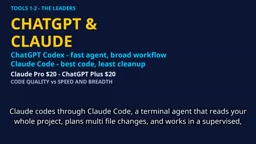
2026 AI Coding Tools Comparison: Claude, ChatGPT, Gemini — Which Is the Best?
A 2026 comparison of five mainstream AI coding tools — Claude Code, ChatGPT Codex, Gemini, DeepSeek, and GitHub Copilot — on real projects, pricing, and code quality, to help you decide where that $20/month should go.

ChatGPT Codex Can Clone Any Software? Testing the Risks and the Truth
YouTube shorts claim ChatGPT Codex or Claude Code can clone Adobe, Excel, and Figma for lifelong free use. We break down the feasibility, legal risks, and DM-funnel tactics—and explain what AI coding tools are truly good for.

Kilo Code Is Free to Install but Charges for API: Cost Estimation and Configuration Guide
Kilo Code is free to install, but connected AI models are billed per token. This guide covers VS Code extension and CLI setup and shows how to estimate API costs.