The End Is Coming for Nvidia's Blank Check in the AI Economy
Nvidia's "blank check" era is entering a countdown due to competition, customers' in-house development, and scrutiny of returns.
Citing a Hacker News discussion, the article notes that Nvidia's GPU scarcity gave it rare pricing and allocation power in the AI economy, like a "blank check." This position faces three pressures: AMD, Intel, and tech giants' in-house chips are tightening competition; large cloud providers are seeking bargaining chips through in-house ASICs and multi-source procurement; and AI capex is shifting from "cost no matter what" to "look at returns," pushing Nvidia's growth logic from scarcity-driven to efficiency-driven. The article argues this does not mean the AI economy will shrink, but rather that profit distribution is being adjusted—falling computing costs benefit the application layer, and the center of value will migrate from hardware to models, applications, and data.
Nvidia has played the role of a "blank check" in the AI wave—anything AI-adjacent seemed able to claim a share from this GPU giant. But a discussion on Hacker News points out that this era may soon be over.
Where Nvidia's "Blank Check" Role Came From
For some time, Nvidia's GPUs have been the hard currency of AI training and inference, with revenue and market cap soaring. In the ecosystem that has formed around Nvidia, everyone from cloud providers to startups, from model developers to hardware integrators, has been scrambling to secure its chip resources. This supply-demand imbalance gave Nvidia rare pricing power and allocation power in the AI economy—almost like a check that could be cashed at any time.
But this position is not without limits. Although the Hacker News discussion is brief, it points to a key question: as participants in the AI economy gradually mature, how long can Nvidia's bargaining power last?
Why the "Blank Check" Era Is Facing a Countdown
The Competitive Landscape Is Tightening
Nvidia's high profits have attracted a large number of competitors. AMD, Intel, and several tech giants developing their own chips are all accelerating their efforts in AI accelerators. Although Nvidia's CUDA ecosystem remains a moat, it is only a matter of time before alternatives mature. Once customers have a viable second option, Nvidia's pricing power will be weakened.
The moat of the CUDA ecosystem: CUDA (Compute Unified Device Architecture) is the parallel computing platform and programming model that Nvidia has built since 2006, allowing developers to use languages such as C/C++ to directly call GPUs for general-purpose computing. After more than a decade of accumulation, the underlying operators of mainstream deep learning frameworks (PyTorch, TensorFlow, etc.), a large amount of academic code, and industrial-grade toolchains have all prioritized CUDA adaptation, creating extremely high migration costs. Even if competitors catch up in hardware computing power, they would need to rebuild the software stack, operator libraries, and developer community—this is precisely an important source of Nvidia's pricing power. However, the maturation of open-source compiler stacks (such as MLIR and Triton) and cross-platform frameworks is reducing dependence on a single vendor's programming model.
Customers Are Seeking Bargaining Chips
Large cloud providers and AI companies are unwilling to be constrained by a single supplier over the long term. Strategies such as in-house chips, diversified procurement, and optimizing inference costs are all eroding Nvidia's irreplaceability. When customers begin to negotiate with a combination of "in-house development + multiple sources," Nvidia's "check" will no longer have an unlimited limit.
The rise of in-house AI chips (ASICs): It is not new for large cloud providers to develop their own chips, but generative AI has accelerated the implementation of this strategy. Google's TPU, Amazon's Trainium/Inferentia, and Microsoft's Maia are all application-specific integrated circuits (ASICs) customized for specific workloads. Compared with general-purpose GPUs, ASICs can achieve higher energy efficiency and lower unit costs on specific model inference or training tasks, and are not subject to external supply quotas. The cost is heavy upfront R&D investment, lower flexibility, and the need to build a software stack in-house. For cloud providers, the core value of in-house chips is not only saving money, but also obtaining a "credible alternative" when negotiating with Nvidia, thereby changing the bargaining structure.
Scrutiny of Return on Investment
Capital expenditure in the AI economy is shifting from "cost no matter what" to "look at returns." If companies find that the marginal returns on GPU investment are declining, the pace of procurement will slow. Nvidia's growth logic will shift from "scarcity-driven" to "efficiency-driven," which is a fundamental challenge to its valuation narrative.
Marginal returns and capital expenditure discipline: In economics, when computing power input shifts from a scarce resource to a plannable routine expense, companies pay more attention to the incremental revenue brought by each unit of capital expenditure, that is, the marginal return. The decline in marginal returns on GPU procurement may come from multiple aspects: slowing performance gains from model scaling, price competition in inference demand compressing gross margins, and power and data center supporting facilities becoming new bottlenecks. Once marginal returns fall below the cost of capital, companies will delay or reduce procurement. This means that Nvidia's growth will depend more on whether AI applications can truly monetize, rather than on a pure arms race in computing power.
Chain Effects on the AI Economy
A shift in Nvidia's role does not mean the AI economy will shrink; rather, it means the profit distribution landscape is being adjusted. If the era of windfall profits in chips cools, computing costs are expected to fall, which is actually good news for companies in the AI application layer. More funds may flow from the hardware layer to the model, application, and data layers, driving the AI economy to transition from "selling shovels" to "panning for gold."
For investors and practitioners, the key is not to predict when Nvidia will peak, but to understand that the center of value in the AI economy is shifting. Nvidia will remain an important player, but the metaphor of the "blank check" will gradually give way to a more balanced game across the industrial chain.
Conclusion
Although this Hacker News discussion offers limited information, it points out a trend worth pondering: no company can forever serve as the blank check for an entire economy. Nvidia's AI boom period is still ongoing, but its boundaries are being redrawn by competition, customer strategies, and investment discipline.
One-line Summary
Nvidia's "blank check" era is entering a countdown due to competition, customers' in-house development, and scrutiny of returns.
Paragraph Summary
The article, citing a Hacker News discussion, points out that Nvidia has gained rare pricing and allocation power in the AI economy through the scarcity of GPUs, effectively acting as a "blank check." But this position is facing three pressures: AMD, Intel, and tech giants' in-house chips are tightening the competitive landscape; large cloud providers are seeking bargaining chips through in-house ASICs and multi-source procurement; and AI capital expenditure is shifting from "cost no matter what" to "look at returns," pushing Nvidia's growth logic from scarcity-driven to efficiency-driven. The article argues that this does not mean the AI economy will shrink, but rather that the profit distribution landscape is being adjusted—falling computing costs benefit the application layer, and the center of value will migrate from the hardware layer to the model, application, and data layers.
Related articles
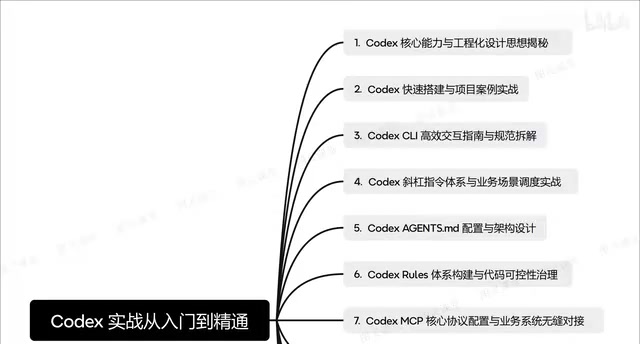
Codex in Practice: From Installation and Configuration to Multi-Agent Collaboration
Based on a Bilibili Codex course overview, this guide maps the full path of AI coding assistants from installation and agents.md context design to CLI commands, MCP integration, and multi-agent collaboration.

Claude Code Installation and Model Switching Guide for Users in China
How can developers in China install Claude Code reliably? This article compiles a Bilibili creator's hands-on solution: install via NPM, skip official login, use CC Switch to configure API Keys and freely switch between DeepSeek, Kimi, and other models to avoid account bans.
AI Supply Chain Security: What Canary Tokens Reveal
Starting from a Hacker News discussion, this article analyzes the role of canary tokens in AI supply chain security: how they detect abnormal access to model weights, training data, and credentials, as well as coverage blind spots and cost constraints during implementation.