The Enterprise AI Maturity Gap: The Logic Behind Top Companies Invoking Skills 6x More Often

Top enterprises invoke AI skills 6x more often, revealing a widening AI maturity gap driven by systematic integration.
New data shows the top 10% of enterprises use AI plugins at 2x and invoke AI skills at 6x the rate of average companies. This gap reflects not luck but deep, systematic AI integration into business workflows. The article explores why the skill invocation gap far exceeds the plugin gap and outlines how enterprises can close the divide through strategic planning, reusable skill libraries, and organization-wide AI capability building.
The AI Gap Among Leading Enterprises Is Widening
In the race for enterprise-level AI adoption, a striking stratification is taking shape. According to recently disclosed data, the top 10% of enterprises use AI plugins at twice the rate of average companies, and their AI skill invocations are a staggering six times higher.
These numbers reveal a critical truth: the chasm between leading and average enterprises didn't emerge by accident. It stems from deeper, more systematic integration and utilization of AI capabilities.
Plugins and Skills: Two Core Dimensions of Enterprise AI Capability
To understand the significance of these numbers, we first need to clarify two key concepts.
Plugins: The Bridge to the Real World
Plugins typically refer to extensions that enable AI models to interface with external tools and data sources. Through plugins, AI assistants can access real-time data, invoke third-party services, and connect to internal enterprise systems. They give otherwise closed language models the ability to interact with the real world.
Average enterprises use plugins at relatively low rates, often staying confined to basic Q&A or text generation scenarios without fully leveraging AI's potential to connect with business systems.
Skills: Encapsulated Advanced Business Capabilities
Skills represent a higher level of capability encapsulation — packaging specific workflows, domain expertise, or complex tasks into reusable AI capability modules. The fact that skill invocation frequency is six times higher is a gap that deserves particular attention.
It means that leading enterprises aren't just using AI as a chat tool — they're deeply embedding it into specific business processes, having AI take on structured, specialized work tasks.
Why Does the Skill Invocation Gap Far Exceed the Plugin Gap?
The 6x gap in skill usage far outstrips the 2x gap in plugins. This reflects a fundamental divide in enterprise AI maturity.
The Critical Leap from "Using AI" to "Integrating AI"
Average enterprises tend to treat AI as a standalone auxiliary tool — employees open a chat window and ask questions when needed. Leading enterprises, on the other hand, have made the critical leap from "using AI" to "integrating AI" — AI capabilities are encapsulated into standardized skills and embedded into every stage of daily workflows.
This kind of integration means AI is no longer an optional supplement but foundational infrastructure for business operations. When skills are reused at scale, enterprises are effectively deploying AI productivity at scale.
Organizational Capability Determines the Depth of AI Utilization
High-frequency skill invocation requires corresponding organizational capabilities: a clear AI strategy, dedicated technical teams, robust data governance, and AI literacy training for employees. Building these capabilities takes time and resource investment — which is precisely the deeper meaning behind the assertion that "leading enterprises aren't ahead by accident."
How Can Enterprises Close the AI Maturity Gap?
These data points provide clear directional guidance for enterprises pursuing AI transformation.
Measure AI Maturity by Invocation Frequency
Traditionally, enterprises have measured AI adoption by whether they've "used" AI at all. But this data shows that a more valuable metric is "how" they use it — specifically, the frequency and depth of plugin and skill invocations. The higher the frequency, the more deeply AI has been woven into the fabric of the business.
Only Systematic Planning Delivers Real Breakthroughs
For enterprises looking to close the gap, scattered AI experiments yield limited results. Real breakthroughs come from systematic planning:
- Identify high-value business scenarios
- Build a reusable AI skill library
- Connect data sources and tools end-to-end
- Cultivate organization-wide AI capabilities
Only when AI evolves from an isolated tool into an omnipresent capability can an enterprise truly join the ranks of the leaders.
Conclusion: The Window for Catching Up Is Narrowing
"Leading enterprises aren't ahead by accident" — this statement captures the essence of today's enterprise AI competition. The 2x gap in plugin usage and the 6x gap in skill invocations are the result of long-term, systematic investment, not overnight luck.
As AI capabilities continue to evolve, the gap determined by integration depth is likely to widen further. For all enterprises, now is the critical moment to assess their own AI maturity and accelerate systematic planning. Those falling behind need to recognize that the window for catching up is narrowing.
Related articles

M&M's Spent Millions Replacing Artificial Blue Dye — Why Is It So Hard?
Mars spent millions trying to replace artificial blue dye in M&M's with spirulina, but thick material clogs pipes and residue risks mold, forcing a full production-line rebuild. Here's the engineering behind the reformulation.
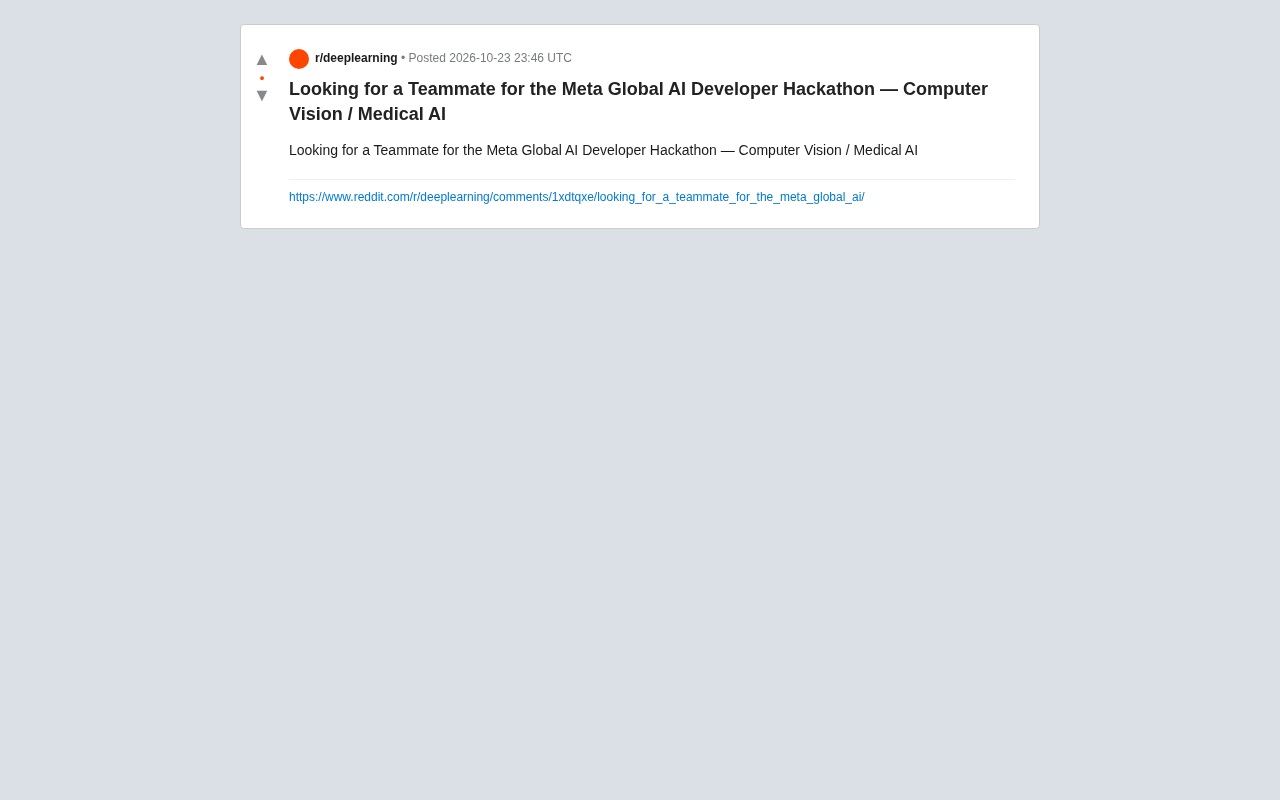
Teammate Wanted for Meta Global AI Developer Hackathon: Computer Vision & Medical AI
A Reddit developer seeks teammates for the Meta Global AI Developer Hackathon, focusing on computer vision and medical AI. This article analyzes the track logic, skills-complementarity needs, and topic selection strategy behind this teaming signal.
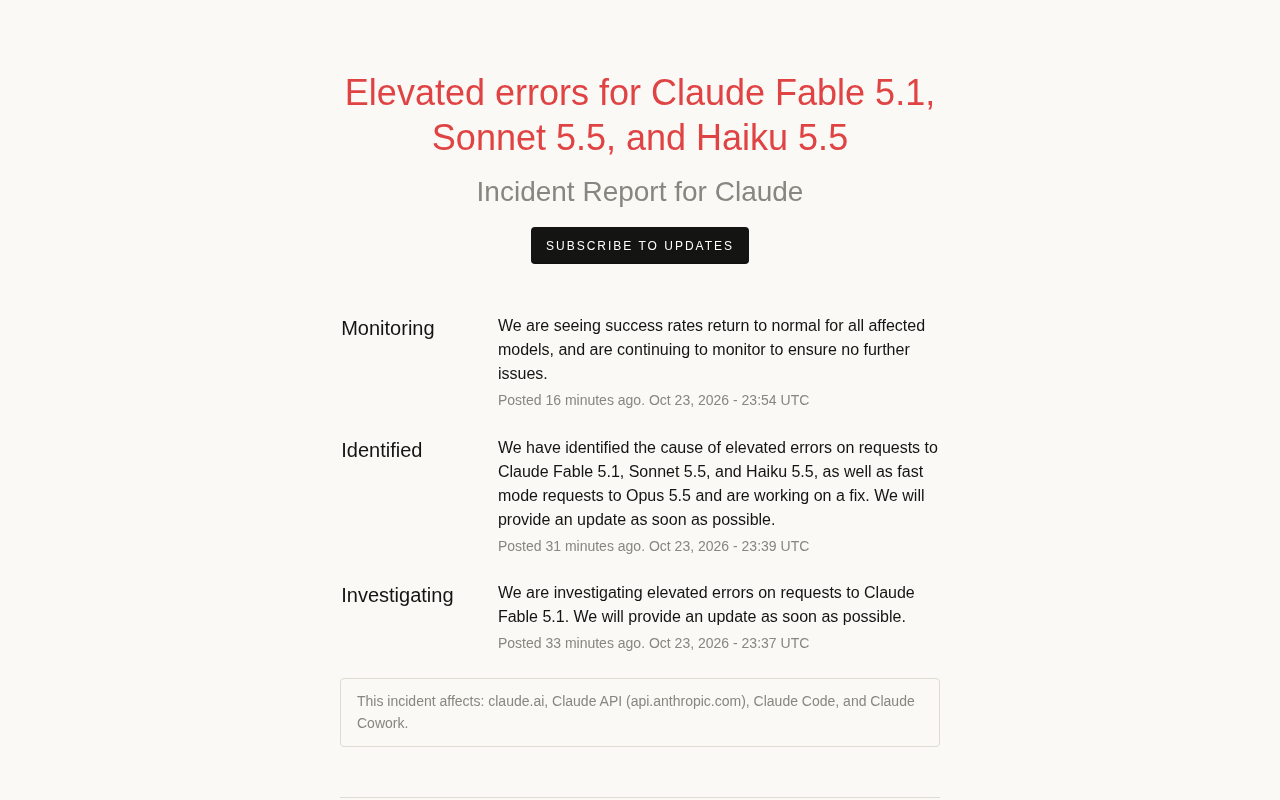
Multiple Claude Models Hit by Errors: A Postmortem of Fable 5.1, Sonnet 5.5, and Haiku 5.5
Claude Fable 5.1, Sonnet 5.5, Haiku 5.5, and Opus 5.5 fast mode saw elevated errors; Anthropic identified and resolved the issue in 17 minutes. This postmortem covers the timeline, the technical reasons for the multi-model cascading failure, and practical lessons for retry and degradation strategies.