The FBI-Flagged AI Hacking Tool ARTEX: From Open-Source Project to Global Threat in 110 Days
ARTEX, the AI hacking tool flagged by the FBI, evolved from an open-source project into a global threat in 110 days.
ARTEX is not an AI model but an agentic execution framework wrapped around any model: users input goals in natural language, a planning agent breaks them into steps, and execution agents call hacking tools to automate multi-path attacks. Attackers prefer cheap Chinese models; the FBI notes DeepSeek tops the list for lacking obvious guardrails in "penetration testing" scenarios, and model switching and collaboration further lower the barrier. ARTEX is noisy—a single partial attempt leaves 240 logs—but some intrusions reach privileged cloud access in under three hours, making response speed critical. The remediation approach is unchanged: clean up forgotten assets, patch internet-facing systems within days, enable MFA, replace long-term keys with short-term credentials, and monitor endpoint behavior. The original code is closed-source but thousands of copies circulate, and Google predicts nearly human-free autonomous attacks within months.
The FBI-Flagged AI Hacking Tool ARTEX: From Open-Source Project to Global Threat in 110 Days
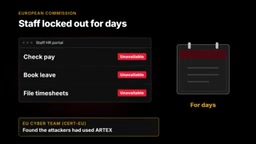
A free security tool went from being uploaded to GitHub to being named in an FBI warning in just 110 days. It's called ARTEX, and it's now on every security team's radar. According to disclosures from a YouTube security analysis channel, the damage it has caused is real: in South Korea, attackers used it to breach at least seven financial institutions, and the FBI says data on roughly 67,000 people was stolen; in Japan, investigators found ARTEX on a server that had been used to launch attacks against about 20 companies, with 8 reporting data breaches; at the European Commission, employees were unable to check their pay, book vacation, or submit timesheets for several days, and the EU's own cybersecurity team confirmed that the attackers used ARTEX.
What ARTEX Actually Is: Not a Model, but a "Model Shell"
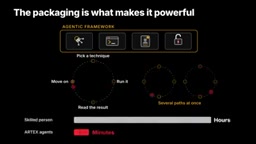
The key to understanding ARTEX is this: it is not an AI model itself, but an execution framework (harness) wrapped around any model. Users simply input their goal and intent in natural language; a planning agent breaks it down into steps, and multiple execution agents call real hacking tools, read the results, and decide the next action—all with almost no human intervention.
This design gives ARTEX an autonomy that traditional penetration testing tools lack. Password spraying, web shells, stealing admin credentials, exploiting unpatched web applications—these techniques are nothing new; penetration testers have used them for years. ARTEX's innovation lies in chaining them together with an agentic framework: agents select techniques, execute, read results, and keep pushing forward, and can try multiple paths simultaneously. According to the YouTube channel's analysis, it is precisely this "packaging" that multiplies its power—work that once took a skilled person hours can now be done in minutes.
Agentic framework is a key concept in the current AI security landscape. Traditional AI applications typically involve a person issuing step-by-step instructions with a single model response; an agentic framework, by contrast, lets a large language model act as the "brain," autonomously planning tasks, calling external tools (such as command lines, APIs, vulnerability scanners), reading execution results, and deciding the next step, forming a closed loop. ARTEX is exactly this kind of framework: a planning agent breaks down the goal, and execution agents call real hacking tools. The power of this architecture lies in combining the model's reasoning ability with an off-the-shelf arsenal of attack tools to achieve end-to-end automation. Similar approaches have been used in legitimate penetration testing (such as AutoGPT-style security plugins), but ARTEX weaponizes it directly, with almost no human intervention, significantly lowering the technical barrier to attack.
Why Low-Cost Models Become Attackers' First Choice
Another layer of ARTEX's threat comes from its model choices. Attackers mostly choose cheap Chinese models; the FBI points to DeepSeekAd as the top choice, partly because it shows no obvious guardrail restrictions when a task is labeled "penetration testing." Some operators, upon encountering a model's safety block, simply switch models and continue; others run three models simultaneously collaborating like a team—one for research, one for verification—and instruct them to treat every target as authorized.
This "model combo punch" dramatically lowers the attack barrier. According to the same source, in one demonstration, a Japanese company was attacked with just three lines of text. Copies of the tool are free, and the AI models attackers prefer are cheap enough—meaning almost anyone can run ARTEX.
Model guardrails refer to safety restrictions set at the model level by AI vendors to refuse generating harmful content or executing dangerous instructions. Common methods include reinforcement learning from human feedback (RLHF), system prompt constraints, and input/output filtering. Some models like DeepSeek will refuse obviously malicious requests in ordinary conversation, but when a task is packaged as "penetration testing" or "authorized security assessment," the guardrails may be bypassed or not triggered. Attackers exploit this contextual disguise, combined with model-switching strategies—once one model refuses, they immediately switch to another with looser restrictions. This "guardrail arbitrage" makes cheap models the first choice for automated attacks and exposes the fragility of current AI safety alignment in adversarial scenarios.
Loud Noise Is Actually an Opportunity for Defenders
ARTEX is not untraceable. Because it tries too many paths at once, its behavior is very "noisy." According to the analysis, a single partial attempt left 240 log records, and it often leaves its own name on files and accounts. This means defenders have a considerable chance of receiving alerts.
The real question is: can anyone respond to alerts in minutes rather than days? According to disclosures, some intrusions reached privileged cloud access in under three hours. Speed has become the dividing line between defensive success and failure.
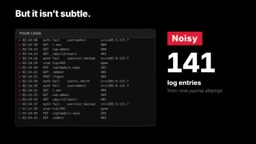
Logging is the foundation for detecting ARTEX behavior. When ARTEX's agents try multiple attack paths, they leave a large number of event logs at the operating system, web server, identity authentication system, and cloud platform levels—such as failed logins, file creation, process launches, and API calls. A single partial attempt generating 240 logs means SIEM (Security Information and Event Management) systems or EDR (Endpoint Detection and Response) platforms have a high probability of triggering alerts. However, the value of logs depends on response speed: if security teams still process alerts on a day-level workflow, attackers may complete privilege escalation and lateral movement within hours. Therefore, defenders need to bring ARTEX-related logs into real-time monitoring and establish automated alert triage and rapid containment processes to compress the response window to minutes.
What Defenders Should Do Now
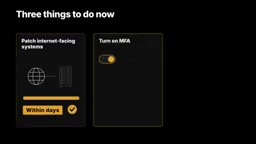
Facing ARTEX, the remediation approach hasn't changed—there's just less time left for defenders. You can start with the agents' attack targets: find forgotten assets, such as partner portals, legacy applications, and test sites still online; find machines lacking security tools—one attack group explicitly instructed its agents to specifically seek out such machines; patch internet-facing systems within days; enable MFA and replace long-term keys and secrets with short-term credentials; monitor suspicious behavior on endpoints and ensure there are clear handling procedures.
Privileged cloud access refers to high-privilege credentials or roles in cloud environments obtained by attackers, such as cloud platform administrator accounts, service principal keys, or temporary tokens leaked in instance metadata. Once obtained, attackers can create backdoor accounts, access storage buckets, tamper with configurations, or even penetrate laterally to other cloud resources. ARTEX's ability to reach privileged cloud access in under three hours shows that its automation chain already covers the complete path from initial intrusion to cloud privilege escalation. Defenders should focus on auditing cloud environment Identity and Access Management (IAM) policies, enabling the principle of least privilege, monitoring anomalous role assumable behavior and temporary credential abuse, and replacing long-term access keys with short-term credentials (such as STS tokens) to narrow the attacker's exploitation window.
The Threat Is Accelerating
Although ARTEX's original code has been closed-sourced, thousands of copies are still circulating, and dozens of similar tools already exist. According to the analysis, Google predicts that attacks with almost no human input will emerge within months, followed by quieter, fully autonomous attacks. ARTEX has made proven attack techniques cheap, fast, and readily available. The remediation methods haven't changed; the defensive window is just narrowing. Before an agent finds those forgotten systems for you, it's best to find them yourself first.
One-line Summary
ARTEX, the AI hacking tool flagged by the FBI, went from open-source project to global threat in 110 days.
Paragraph Summary
ARTEX is not an AI model but an agentic execution framework wrapped around any model: users input goals in natural language, a planning agent breaks them into steps, and execution agents call hacking tools to automatically carry out multi-path attacks. Attackers prefer cheap Chinese models; the FBI notes DeepSeek tops the list because it lacks obvious guardrails in "penetration testing" scenarios, and model switching and collaborative combinations further lower the barrier. ARTEX is noisy—a single partial attempt leaves 240 logs—but some intrusions reach privileged cloud access in under three hours, making response speed critical. The remediation approach is unchanged: clean up forgotten assets, patch internet-facing systems within days, enable MFA, replace long-term keys with short-term credentials, and monitor endpoint behavior. The original code is closed-source but thousands of copies circulate, and Google predicts autonomous attacks with almost no human input within months.
Related articles
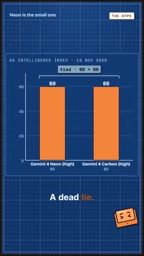
Gemini 4 Neon Hands-On: Small Model Matches Flagship, Doubles the Speed
Gemini 4 Neon tied flagship Carbon 60-60 in independent tests while running about twice as fast. We break down why small models are quicker, why benchmarks fail, and why model selection should drop single scores for real-task timing.
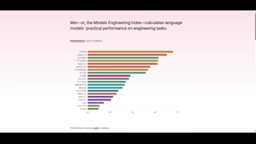
Gemini 4 Neon Tops Coding Model Leaderboard: #1 Performance at a Quarter of the Cost
Google Gemini 4 Neon tops the Models Engineering Index coding leaderboard with 68.0, beating OpenEye 6.2 Astra and Anthropix's flagship at a quarter of the cost.
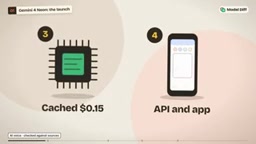
Gemini 4 Neon In-Depth Review: Near Top-Tier Performance, But Not the Cheapest
Gemini 4 Neon, Google's fourth model in seven weeks, balances performance and cost. Independent tests rank it third overall, matching rivals in coding at half the cost.