The Haunted Toys R Us: A Brand Ghost in Cyberspace

Toys R Us persists online as a digital ghost, revealing the loss of control over vanished brands' digital assets.
After Toys R Us filed for bankruptcy in 2017, its brand lives on as a 'brand ghost.' Domains are held by third parties for ad parking, web pages are frozen as content fossils, and social accounts become digital séances. This stems from fragmented digital assets during liquidation. The article argues brands should plan their digital dissolution in advance.
In a Hacker News discussion thread, a post titled "The Haunted Toys R Us" quietly surfaced, with an attached screenshot pointing to an original article about the digital ruins of Toys R Us. There was no detailed excerpt, no author information—just a brief note from an RSS aggregator and an image captioned "The Haunted Toys R Us."
This scarcity of information is itself a metaphor: a giant that once dominated global children's toy retail now leaves behind only scattered links and ghostly references on the internet.
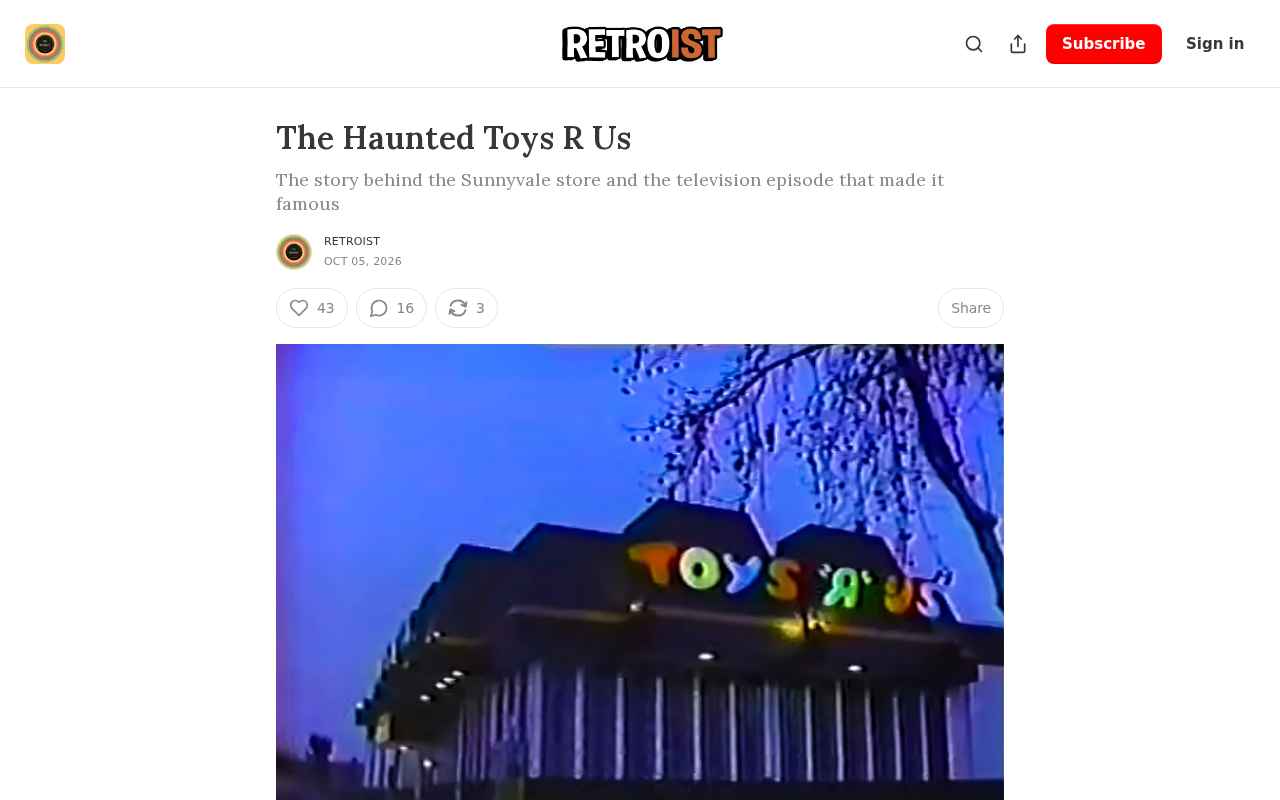
The Digital Ghost of a Brand
Toys R Us filed for bankruptcy in 2017 and subsequently closed all of its physical stores in the United States. A brand that once operated over a thousand locations and held childhood memories for generations has ceased to exist in a commercial sense. Yet its presence in the digital world is far from over—domains are still being renewed, social media accounts occasionally post updates, trademarks have changed hands multiple times, and websites intermittently revive and vanish in various forms.
This state is known in internet culture as a "brand ghost." A brand's legal entity can be liquidated, but its life as a cultural symbol lasts far longer. When the name "Toys R Us" repeatedly appears in search results, pointing to hollow pages or redirect links, it resembles a haunted house in cyberspace—you can see the outline, but stepping inside reveals nothing.
"Brand ghost" is not a strict academic term, but rather a colloquial expression used by internet culture researchers and digital archaeology enthusiasts to describe a specific phenomenon: a brand that has ceased to exist as a legal and operational entity, yet its name, domain, visual identity, and online content persist in fragmented form across the internet, continuing to be indexed by search engines and occasionally visited by users. This concept is closely related to terms like "digital ruin" and "zombie brand," but with a slightly different emphasis—"brand ghost" highlights an ontological dislocation: you see it online, but you cannot find a subject to converse with. Similar phenomena can be observed with bankrupt retailers like Blockbuster, RadioShack, and Sears, collectively forming a unique "brand graveyard" on the internet.
Why It's "Haunted"
The core reason brand digital remains exhibit "haunted" characteristics is that ownership of domains, trademarks, and content assets gets fragmented during bankruptcy liquidation. A domain might be bought by a domain speculator, a trademark acquired by a new company for brand licensing, while historical web content is captured by the Internet Archive, frozen in time like a time capsule.
When visitors reach these pages through search engines, they might see promotional information from years ago, defunct shopping cart interfaces, or an autoplaying brand video. This content corresponds to no current operating entity, yet continues to appear in results due to SEO weight and technical inertia. From a user experience perspective, it indeed feels like walking into an abandoned building where the lights are still on.
Posts like this appear frequently on Hacker News. The tech community has a special archaeological interest in "digital ruins"—they focus not on the brand itself, but on how digital infrastructure continues to operate, distort, and even generate new narratives after a brand's demise.
Domain squatting and parking are key background for understanding "domain remains." When a high-value domain is not renewed due to corporate bankruptcy, domain speculators quickly register it and hand it over to parking services. Parking pages typically display only ad links, earning revenue from ad networks based on clicks. Since the original brand domain has accumulated decades of backlinks and search weight, these parking pages often attract considerable organic traffic. For visitors, they type in a familiar brand domain but see a page of ads completely unrelated to the brand—this cognitive rupture is the technical root of the "haunted" experience. The "historical trust" carried by the domain itself is here converted into pure traffic assets, completely decoupled from the brand's original service promise.
Three Forms of Digital Remains
From the Toys R Us case, we can identify three typical traces that vanished brands leave on the internet.
Domain remains. The original brand domain is held by a third party, used for parking pages, affiliate marketing redirects, or simply retaining DNS resolution. These pages usually carry大量 ads completely unrelated to the brand, but the domain itself still carries historical trust.
Content fossils. The Internet Archive, Google Cache, and various aggregators preserve snapshots of brand pages before their demise. These snapshots don't update, but they don't disappear either. When users search for specific product names or historical promotions, these fossils get dug up.
Automated social media operation. Brand accounts may be managed by third parties, regularly posting irrelevant content, or completely stopped but retaining historical posts. Occasionally, users leave comments like "Are you still alive?" creating a bizarre digital séance scene.
Implications for Today's Brand Operators
The digital ghost state of Toys R Us poses a sharp question for brands still in operation: when your brand eventually ceases operations, what form do you want it to take on the internet?
Most companies' domain strategies, content archiving, and social media handover plans only consider "while alive." Once bankruptcy or dissolution is triggered, these assets are disposed of according to legal procedures, not brand wishes. The result is that the brand's digital presence becomes completely out of control.
Some forward-looking practices are emerging: proactively setting domain redirects to explanation pages when a brand dissolves, converting social media accounts to read-only archives, or collaborating with the Internet Archive in advance to build a complete brand digital archive. These practices cannot prevent brand demise, but they can determine whether its post-demise digital form is dignified.
The story of Toys R Us captivates the tech community for repeated discussion precisely because it demonstrates a fact: on the internet, death is not the end, but a continuous state.
The Internet Archive's Wayback Machine is the primary mechanism behind "content fossils." Since 1996, this nonprofit project has continuously crawled global web pages, storing snapshots in time capsules through user submissions or automated crawlers. For vanished brands, these snapshots often become the last evidence of their digital existence. Notably, Wayback Machine archives are not complete backups—dynamic content, post-login pages, and some JavaScript-rendered content typically cannot be captured, so "fossils" are often incomplete. Additionally, Google Cache and Bing Cache play similar roles but with much shorter retention periods. If brands want their digital remains to be more complete and dignified, proactively collaborating with the Internet Archive to submit sitemaps and key pages is currently one of the most feasible preemptive interventions.
One-line Summary
After Toys R Us's bankruptcy, the brand persists on the internet as a digital ghost, reflecting the loss of control and governance gaps in vanished brands' digital assets.
Paragraph Summary
After Toys R Us filed for bankruptcy in 2017, its brand did not truly disappear from the internet but persists as a "brand ghost." Domains are held by third parties for ad parking, historical web pages are frozen as content fossils by the Internet Archive, and social media accounts either run automatically or become digital séance scenes. The core reason is that during bankruptcy liquidation, domains, trademarks, and content assets get fragmented, causing digital presence to completely disconnect from any operating entity. Tech communities like Hacker News maintain ongoing archaeological interest in such "digital ruins," focusing on how digital infrastructure shapes narratives of vanished brands. The article argues that today's brand operators should plan digital asset dissolution strategies in advance, including domain redirects, social media archiving, and collaboration with the Internet Archive, to determine whether the brand's post-demise digital form is dignified.
Related articles

AI Compute Is the New Oil, But the Market Mechanism Has Yet to Take Shape
Hacker News compares AI compute to the new oil, noting the lack of price discovery, concentrated supply, and no hedging tools. The article analyzes structural issues in compute trading and explores a possible three-tier market of spot, contracts, and derivatives, plus the real impact on AI practitioners' cost management.

Running Full iOS 16.5 Firmware on Android Devices: Technical Demo or Marketing Gimmick?
A Hacker News post claims full iOS 16.5 firmware can run on Android, with 315 upvotes. This analysis argues it is more likely a web UI simulation than a true firmware port, and explores the value and risks of such projects.

Etsy Cracks Down on AI Slop: Addressing Buyer and Seller Anxieties
Etsy introduces stricter rules limiting AI-generated content in listings, addressing buyer confusion over AI products and seller fears of original work being diluted by AI slop.