The Hidden Danger of Agent Sprawl: When Everything Looks Fine Is Exactly When You Should Worry
Agent Sprawl is most dangerous because no single agent looks broken — even as collective risks silently grow.
Agent Sprawl refers to the uncontrolled proliferation of AI Agents within organizations lacking unified governance — echoing the earlier patterns of Shadow IT and Cloud Sprawl. Its greatest danger is that each individual Agent operates normally, triggering no alerts, while security gaps, cost accumulation, and operational blind spots quietly expand. This "calm surface, hidden turbulence" state makes it nearly impossible for leadership to perceive growing risk exposure. Countermeasures include building an Agent registry, deploying a unified observability framework, enforcing the principle of least privilege, and implementing granular cost attribution — achieving full situational awareness precisely when everything appears to be running smoothly.
What Is Agent Sprawl
As AI Agents rapidly proliferate across enterprises, a new hidden danger is quietly taking hold — Agent Sprawl. The term refers to the uncontrolled growth of AI Agents within an organization, expanding without unified management or governance. It mirrors the "Shadow IT" and "Cloud Sprawl" problems enterprises faced in earlier years.
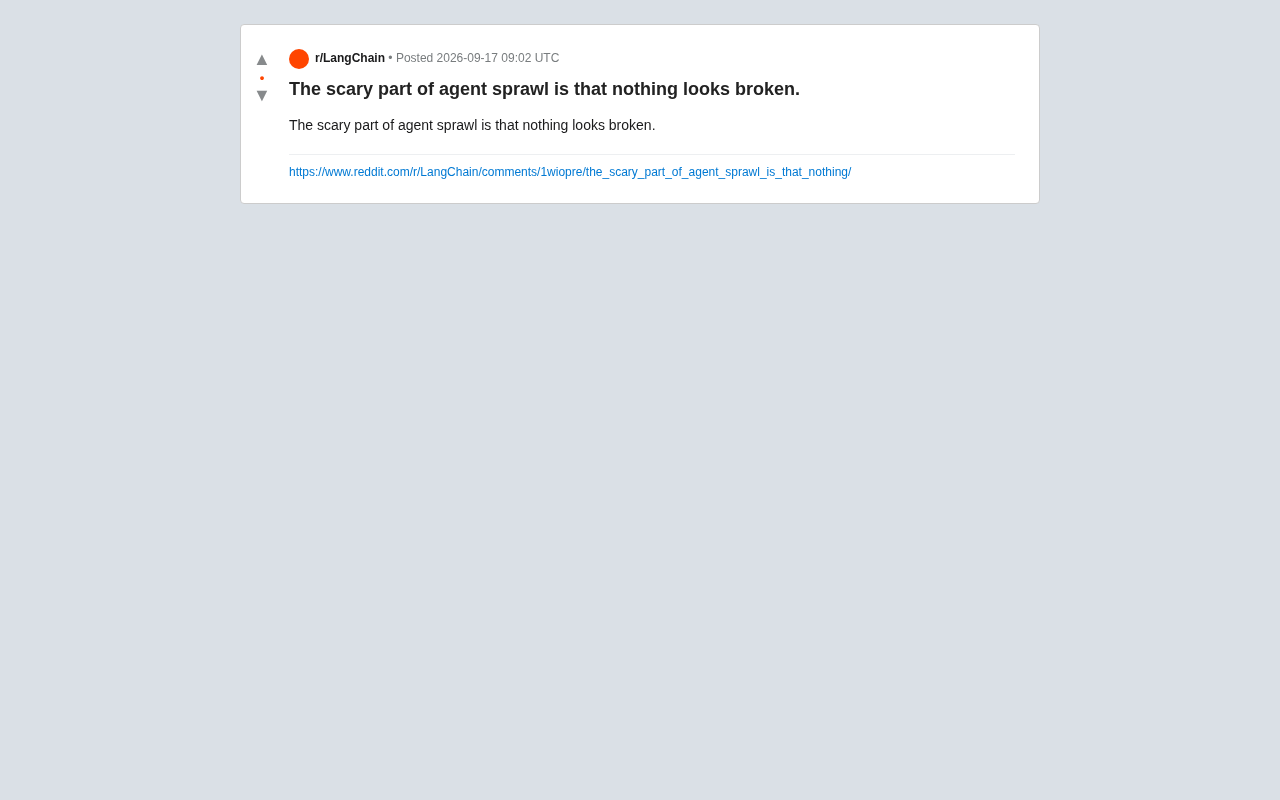
A comment on Reddit that sparked widespread discussion put it perfectly: "The scary part of agent sprawl is that nothing looks broken." This observation cuts to the heart of a profound operational and security dilemma — the concealed nature of the problem is far more alarming than any visible failure.
"Shadow IT" refers to employees or departments bypassing enterprise IT controls to privately use unapproved software, devices, or cloud services — without the IT department's knowledge or oversight. "Cloud Sprawl" is a similar problem that emerged with the rise of cloud computing: teams independently spinning up cloud services and instances, leaving behind a sprawl of idle or abandoned resources that waste money and introduce security vulnerabilities. Both share a common pattern: the lower the technical barrier and the easier the deployment, the harder it is to contain the sprawl. The trend toward low-code and platform-based AI Agents is replaying this history — anyone can build and deploy an Agent with meaningful autonomous capabilities within hours. This makes Agent Sprawl faster and more invisible than either of its predecessors.
Why "Looking Fine" Is the Most Dangerous State of All
Traditional system failures come with clear signals: service outages, error logs, performance degradation, user complaints. These signals trigger alerting mechanisms and prompt teams to intervene. What makes Agent Sprawl uniquely insidious is that each individual Agent appears to be working normally — no single component shows a failure state.
Yet as more and more Agents are deployed by different teams and individuals without coordination, subtle interactions begin to emerge: duplicate calls to the same APIs, redundant consumption of compute resources, access to sensitive data in ways that bypass audit trails, and costs silently accumulating without anyone noticing.
This state of "calm on the surface, turbulence beneath" is precisely what makes it so difficult to detect and govern. When no dashboard is flashing red, leadership often assumes everything is under control — while the actual risk exposure quietly grows.
The Three Layers of Risk Agent Sprawl Creates
Security and Compliance Risk
Every AI Agent typically requires access permissions, API keys, and data interfaces. As the number of Agents spirals out of control, permission management becomes chaotic. Who authorized this Agent? What data can it access? Is its behavior compliant? In an environment without unified governance, these questions often go unanswered. Unaudited Agents can become invisible entry points for data breaches or privilege abuse.
Cost Overrun Risk
Every Agent calling a large language model in the background generates token costs. The expense of any single Agent may seem trivial, but hundreds or thousands of Agents running continuously and making repeated calls can accumulate costs far beyond expectations. Because these expenses are scattered across teams and projects, it becomes nearly impossible to form a clear, organization-wide financial picture.
Operational and Observability Risk
As Agents form complex call chains and dependency relationships, troubleshooting becomes extraordinarily difficult when a real problem finally surfaces. Without a unified observability framework, teams cannot track actual Agent behavior or understand the overall state of the system.
Observability originates from control theory and, in software engineering, refers specifically to the ability to infer a system's internal state from its external outputs — logs, metrics, and distributed traces. Unlike traditional monitoring, observability emphasizes the ability to "answer questions you didn't think to ask in advance" — that is, to identify root causes even in unknown failure scenarios. For AI Agent systems, observability is especially complex: Agent behavior is non-deterministic, meaning the same input may produce different sequences of tool calls; in multi-agent collaboration, call chains nest layer upon layer, and logs from any single point are nearly sufficient to reconstruct the full picture. The industry is actively exploring Agent-specific observability approaches, including tracing the prompts and outputs of every LLM call, recording the inputs and return values of tool invocations, and mapping the dependency topology between Agents — so that when anomalies occur, the entire decision chain can be quickly traced back.
How to Address Agent Sprawl
From a governance perspective, addressing Agent Sprawl means drawing on lessons from past efforts to combat Cloud Sprawl and Shadow IT:
- Establish an Agent Registry: Create a centralized inventory and registration mechanism for all Agents within the organization, clearly defining each Agent's owner, purpose, and permission scope.
- Unified Observability: Deploy monitoring and logging systems so that Agent behavior is traceable and auditable — not something you scramble to investigate only after a problem emerges.
- Principle of Least Privilege: Strictly control each Agent's access permissions, adhere to the principle of least privilege, and regularly review and revoke unnecessary authorizations.
- Cost Attribution: Establish a clear cost-tracking mechanism so that every Agent's resource consumption can be attributed to a specific team and project.
Conclusion
Agent Sprawl is an emerging governance challenge of the AI Agent era. Its hidden nature reminds us that the health of AI systems cannot be judged solely by whether errors are being thrown. As Agent counts grow rapidly, proactively building governance frameworks, improving observability, and controlling risk exposure will become critical capabilities for enterprises seeking to operate soundly in the age of AI. Truly mature AI governance means already having full visibility — precisely when everything looks fine.
Related articles
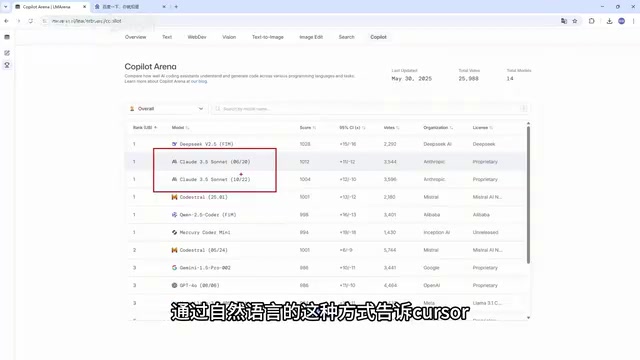
What Is Cursor? Core Differences Between This AI Coding Tool and Traditional IDEs
What is Cursor? This guide explains the AI-native code editor built on VS Code, how it compares to traditional IDEs, and its integration with Claude, DeepSeek, and Gemini.

Coze 3.0 Beginner's Guide: A Complete Overview of Agents and AI Applications
A beginner's guide to Coze 3.0: covering agents, AI applications, workflows, and plugins on ByteDance's AI platform, plus a comparison with Dify.
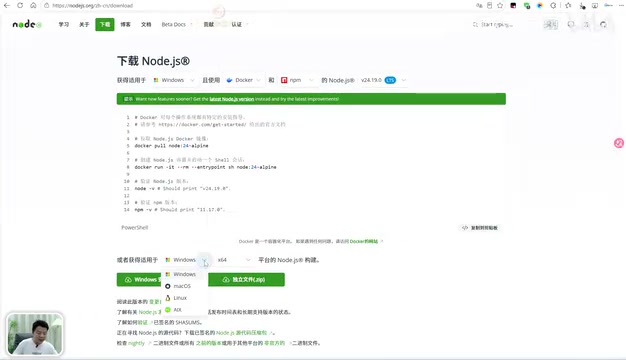
Setting Up the DeepSeek Harness Environment: A Complete Guide to Node.js Installation and Configuration
A beginner-friendly guide to setting up the DeepSeek Harness environment: Node.js installation, Add to PATH, redirecting npm global and cache directories, and configuring system environment variables.