The King's Trust Partners with OpenAI: A Multi-Million-Pound AI Skills Collaboration Lands in the UK

The King's Trust and OpenAI partner to give 25,000 disadvantaged UK youth workplace AI skills training.
The King's Trust and OpenAI announced a ~£1 million collaboration to help up to 25,000 UK young people gain practical workplace AI skills. The article argues the significance lies not in the money or headcount but in AI literacy shifting from a tech PR topic to a public issue led by charities for job-market disadvantaged youth. Choosing a charity network over schools reaches underserved youth, but course structure and assessment are undisclosed, and £1M per capita is tight, likely relying on online courses and volunteers. Success hinges on completion and employment data, not the amount.
An AI Skills Experiment Targeting 25,000 Young People
The King's Trust and OpenAI have announced a collaboration worth approximately £1 million, aimed at helping up to 25,000 young people in the UK master practical AI skills for the workplace. The news itself doesn't carry much information—two numbers, one target demographic, one geographic scope—but the signal it sends deserves careful unpacking: AI literacy is shifting from a PR talking point for tech companies into a public issue taken up by charitable organizations and aimed at job-market disadvantaged groups.
According to official statements, the core of this collaboration is not teaching young people to write code or train models, but rather focusing on "practical AI skills for work"—embedding AI tools into job searching, vocational training, and everyday work scenarios. The choice of The King's Trust as a partner itself indicates that this audience is not the tech elite, but young people who need tangible help in the job market.
Why a Charity, Not Schools
The King's Trust has long served UK youth employment and entrepreneurship support, and its coverage population overlaps heavily with the "last mile" of AI skills training. AI education programs pushed by tech companies alone tend to reach students or developers who already have some resource base; intervention through charity networks can reach more marginalized young people who lack information channels.
This collaboration model also reflects how AI companies are adjusting their approach to social impact: rather than building their own training systems, they leverage existing trust networks and community reach. For this collaboration, whether £1 million can sustain training quality for 25,000 people is a question that needs monitoring—resources spread across that many people are not generous, and the program design will likely rely on online courses, cost-sharing with partner organizations, and volunteer systems to amplify coverage.
The King's Trust was founded in 1976 by King Charles III of the UK (then the Prince of Wales) as The Prince's Trust, and was renamed in 2023 upon Charles's accession to the throne. It is one of the UK's largest youth charities, long providing employment training, small business microloans, mentoring programs, and educational support, with a focus on serving 16-to-30-year-olds who are unemployed, out of school, or socially marginalized. Its operating model relies on corporate sponsorship, public fundraising, and volunteer networks, and it has local branches across the UK, giving it strong community reach. Understanding this background helps assess: OpenAI's choice of it was not random, but rather borrowing its existing recruitment channels, trust relationships, and ability to reach disadvantaged youth—precisely the parts that school systems or company-built programs find hard to replicate quickly.
The Specific Meaning of Practical Skills Remains Key
The phrase "practical AI skills for work" leaves considerable room for interpretation. It could mean prompt usage, AI-assisted document processing, introductory data analysis, or a basic judgment of AI tools' limitations. For young people job hunting, the value of the latter is often underestimated: knowing what AI can and cannot do affects work performance more than being able to write a few commands.
Currently, public information does not disclose course structure, training duration, or assessment methods. This determines whether the program ultimately produces real capability gains or remains at the level of a brand-level collaboration announcement. For readers concerned with AI education implementation, what's worth tracking going forward is training completion rates and employment conversion data, not the collaboration amount itself.
AI literacy currently has no unified definition, but in education and employment policy contexts it usually refers to: understanding the basic principles and capability boundaries of AI systems, being able to effectively use generative AI tools to complete practical tasks, and maintaining critical judgment about output results. Related prompt engineering is only one operational skill among these, not the whole. In OECD and UK policy discussions, AI literacy is often broken down into three dimensions: technical knowledge, application ability, and ethical awareness. The article's emphasis that "knowing what AI cannot do" matters more than "being able to write prompts" corresponds precisely to the critical judgment dimension—for job-seeking youth, recognizing AI hallucinations and understanding data bias often protect their workplace judgment more than proficient tool operation.
Template Significance of Corporate AI Philanthropy Collaborations
If this collaboration succeeds, it could become a replicable template: AI companies provide funding, tools, and course content; charities handle recruitment and localized operations; government provides policy endorsement. The UK has seen considerable public discussion in recent years about the AI skills gap, and such public-private partnerships fill the gap where the school system responds too slowly.
Conversely, this also imposes higher transparency requirements on AI companies. Skills training programs involving disadvantaged groups are most prone to the problem of "declarative investment"—announcing collaborations, issuing press releases, and lacking follow-up tracking. Whether the target of 25,000 people is met and whether participants truly gain employment opportunities both require publicly available evaluation mechanisms for verification.
Public-private partnerships in the skills training field typically have this structure: enterprises provide funding, technology, and course content; third-sector organizations handle implementation; government provides support through policy frameworks, certification systems, or tax incentives. The UK has launched several AI skills-related initiatives in recent years, including government-funded AI skills training funds and industry-led skills gap assessments, reflecting public sector anxiety about the pace of technological change. The potential advantage of such models is rapid response and diverse resources; the risk lies in diffused accountability—when funding comes from enterprises and execution is handed to charities, outcome evaluation easily lacks an independent third party. The "declarative investment" problem raised in the article is precisely the most common governance shortcoming of such collaborations.
What to Watch
In the short term, the practical value of this collaboration depends on three things: whether the courses are close to real job requirements, whether training reaches the people who need it most, and whether there is third-party verifiable outcome data. Amount and headcount are easily spread indicators, but execution details truly determine success. For organizations in China concerned with AI literacy popularization, this "AI company + charity network" combination offers a reference organizational form.
Related articles
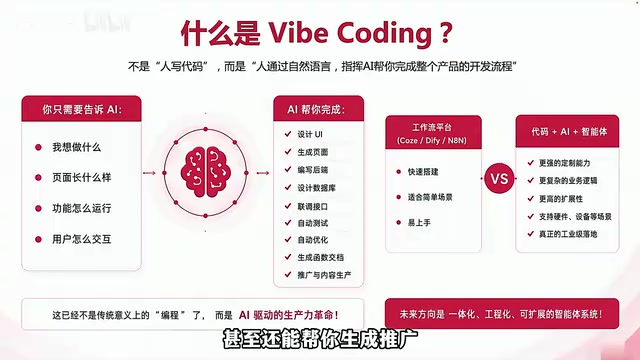
Vibe Coding for Absolute Beginners: A Practical Guide to AI-Assisted Programming
A beginner's practical guide to Vibe Coding: how AI-assisted programming lets people direct AI to write code, covering tools like Claude Code and Cursor, AI collaboration, multi-platform development, and automated operations for the full-chain one-person company.
Gemini 4 Neon Hands-On: Google's Mid-Size Model Takes On Opus 5.5
Hands-on with Gemini 4 Neon: Google's mid-size model rivals Opus 5.5 on coding tasks with strong coherence and long-task performance at lower cost, though 3D generation and architecture analysis remain weak.

Police Transcription Firm Data Leak: Naked Cloud Server Exposes Law Enforcement Sensitive Information
A transcription firm serving police, prosecutors, and tech giants exposed sensitive data like interrogation recordings and bodycam videos due to an unprotected cloud server. This article analyzes the third-party risks and recurring cloud security issues behind the incident.