The Legal AI Assistant That Refuses to Cite Unverifiable Statutes
A legal AI assistant built around refusing to cite unverifiable statutes, trading verifiability for professional trust.
This article introduces a legal assistant tool debuting on Hacker News, whose core design philosophy is "verifiability first": it verifies sources before generating any legal citation, and explicitly refuses to answer when verification fails rather than hedging with vague language. It analyzes hallucination risks in legal scenarios—fabricated case law, invented statute numbers, confused jurisdictions—and shows how the tool makes uncertainty explicit through retrieval, verification, and fallback stages. While this sacrifices speed and coverage, it delivers auditability that legal professionals need for trust and traceability, offering a "trustworthiness as moat" design approach for high-stakes vertical AI products.
In an era of rampant AI-generated content, the legal field demands near-absolute accuracy. A legal assistant tool that debuted on Hacker News has sparked discussion for its design philosophy of "refusing to cite unverifiable law." It doesn't aim to answer everything—instead, it chooses silence when evidence is insufficient.
The Hallucination Dilemma of Legal AI
The most dangerous problem with general-purpose large models in legal scenarios isn't that they "can't answer"—it's that they "confidently answer wrong." Fabricated case law, invented statute numbers, confusion between jurisdictions—these "hallucinations" can directly lead clients to make poor decisions in legal consultations. Research has shown that even models performing well on benchmarks remain unstable in accuracy when citing specific legal provisions.
This tool's approach is direct: it treats "verifiability" as a prerequisite for output. Before generating any legal citation, the system runs through a verification process—only provisions that pass validation appear in the final answer.
What causes LLM hallucinations: Large language models are fundamentally probability-based text generators trained to predict the most likely next token, not to retrieve facts. When asked about a specific statute number or case name, even if that information doesn't exist in the training data, the model will generate a plausible-sounding answer based on linguistic patterns. Legal texts are highly structured in format (e.g., "Article X of the Civil Code"), and this regularity actually increases the probability of the model fabricating citations that are formally correct but substantively false. Additionally, legal systems have hierarchies (laws, administrative regulations, local regulations, judicial interpretations) and regional differences, making it easy for models to confuse provisions across different levels of authority or jurisdictions—further amplifying hallucination risk.
How the Product Draws the Line Between "Sayable" and "Unsayable"
Based on the release information, the assistant's workflow can be summarized in three stages:
- Retrieval stage: Recall relevant provisions from authoritative legal databases or vetted corpora;
- Verification stage: Cross-check proposed citations against sources to confirm they exist and are quoted accurately;
- Fallback stage: If verification fails, the system explicitly tells the user "this citation cannot be confirmed" rather than hedging with vague language.
This "better nothing than something wrong" strategy stands in sharp contrast to products on the market that pitch "all-in-one legal Q&A." The latter often sell on coverage but lack hard constraints on accuracy.
Retrieval-Augmented Generation (RAG): The assistant's workflow is essentially a retrieval-augmented generation architecture. Unlike pure generative models, RAG systems first retrieve relevant documents from external knowledge bases before providing them as context for the model to generate answers. In legal scenarios, retrieval sources are typically authoritative legal databases (such as the National Laws and Regulations Database, China Judgments Online, etc.). The key advantage of RAG is grounding "generation" in "retrieved evidence," thereby reducing the likelihood of the model fabricating content out of thin air. But RAG is not foolproof—retrieval quality depends on database coverage and recall precision. If retrieved provisions have already been invalidated or amended, the verification stage still needs to further check timeliness.
Why "Refusing to Answer" Is Actually a Competitive Advantage
The core of legal services is trust. An assistant that occasionally says "I'm not sure" is more acceptable to professionals than one that always speaks with certainty but occasionally errs. When lawyers and legal counsel evaluate AI tools, their biggest concern isn't how many questions the model can answer—it's whether its mistakes can be detected.
Verifiability by design also brings auditability. When every citation has a traceable source, users can verify it themselves—transforming "trusting the model" into "trusting the process" to some degree. For legal work scenarios that require documentation trails, this is more valuable than raw generation quality alone.
Interestingly, this design also comes with clear trade-offs. The verification process slows response times, and when database coverage is insufficient, the assistant may frequently refuse to answer, diminishing user experience. The developer didn't shy away from this issue in discussion, but emphasized that accuracy takes priority over fluency.
Auditability and professional liability in law: In the legal profession, lawyers owe clients a duty of diligence, and citing incorrect statutes can create practice risk. Auditable AI output means every citation is traceable to a specific source, allowing lawyers to review AI citations the same way they review an intern's work. This "human-in-the-loop" review mechanism positions AI as an assistive tool rather than the final decision-maker—consistent with the legal industry's compliance requirements for documentation and traceability, while reducing professional liability risk arising from AI errors. By contrast, a "black box" answer that can't explain its sources—even if more accurate—would struggle to gain acceptance in professional settings.
Implications for Legal AI Product Design
The value of this tool lies not just in its functionality, but in the product philosophy question it raises: should an AI assistant's boundaries be determined by capability, or by trustworthiness?
Looking at industry trends, more and more vertical AI products are adopting "retrieval-augmented + source-constrained" architectures. High-stakes domains like law, healthcare, and finance have extremely low tolerance for hallucinations, and the path of improving accuracy solely through model scale is hitting diminishing returns. Explicitly expressing "uncertainty" may be closer to real-world usability than pretending to be certain.
For developers, the takeaway from this Show HN project is: rather than competing with giants on general capabilities, it's better to build "not making mistakes" into a product moat in a niche scenario with hard accuracy requirements.
One-line Summary
A legal AI assistant built around "refusing to cite unverifiable statutes," trading verifiability for professional trust.
Paragraph Summary
This article introduces a legal assistant tool debuting on Hacker News, whose core design philosophy is "verifiability first": before generating any legal citation, it verifies the source, and when verification fails, it explicitly refuses to answer rather than hedging with vague language. The article analyzes the hallucination risks of general-purpose large models in legal scenarios—fabricated case law, invented statute numbers, confused jurisdictions—and notes that the tool makes "uncertainty" explicit through a three-stage process of retrieval, verification, and fallback. While this "better nothing than something wrong" strategy sacrifices response speed and coverage, it delivers auditability, better aligning with legal professionals' need for trust and documentation trails. The article argues this offers a "trustworthiness as moat" design approach for high-stakes vertical AI products.
Related articles
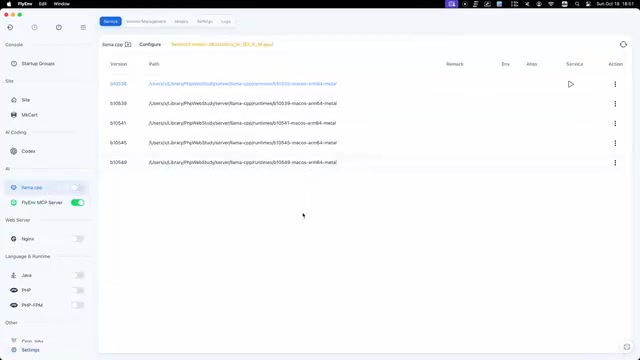
FlyEnv Plugin Review: Visually Running llama.cpp and Managing GGUF Models
FlyEnv launches the official llama.cpp plugin with side-by-side Metal runtime management, public GGUF repository indexing with file type labels, and visual configuration of context, threads, and GPU layers—saving templates and speculative decoding with each model for one-click local LLM inference.
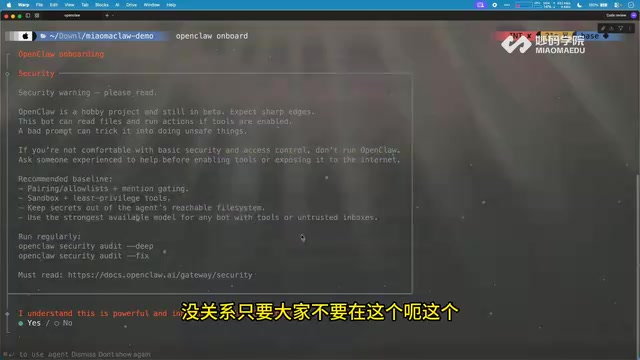
How Can Frontend Developers Advance into AI Agent Development? Deconstructing System-Level Agent Architecture from OpenClaw
Starting from the OpenClaw demo in a Bilibili open class, this article breaks down the three-layer architecture and universal formula of system-level AI agents, and analyzes the path for frontend developers to enter agent development based on TypeScript, including plugin-based design and security/memory layer challenges, with an interview answer framework.
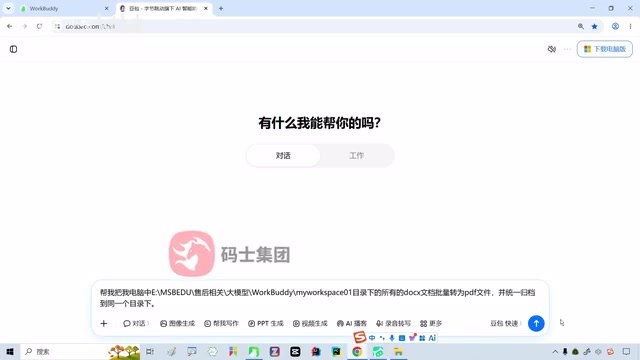
WorkBuddy in Action: How AI Agents Automate Batch File Conversion and Archiving
Bilibili creator Teacher Shanyao tests WorkBuddy vs. Doubao on batch file conversion, showing how AI Agents move from "giving solutions" to "direct execution," with a full workflow and credit cost reference.