The Multi-Agent Collaboration Dilemma: Why Individually Correct Decisions Create System-Wide Chaos
Why individually correct AI agent decisions can collectively produce system-wide chaos — and how to fix it.
This article examines a core but often overlooked challenge in multi-agent AI systems: individually "correct" agent decisions can combine to produce system-level chaos. The root causes span three dimensions — goal conflicts driving resource competition, information asymmetry leading to decisions based on stale state, and unpredictable emergent behaviors arising from agent interactions. Common failure patterns include runaway feedback loops, responsibility vacuums, and conflicting actions. The article presents four engineering strategies: introducing an orchestration layer for global arbitration, synchronizing state via a shared blackboard, defining clear responsibility contracts per agent, and observing emergent behavior in sandbox environments before deployment.
An Overlooked Challenge in Multi-Agent Systems
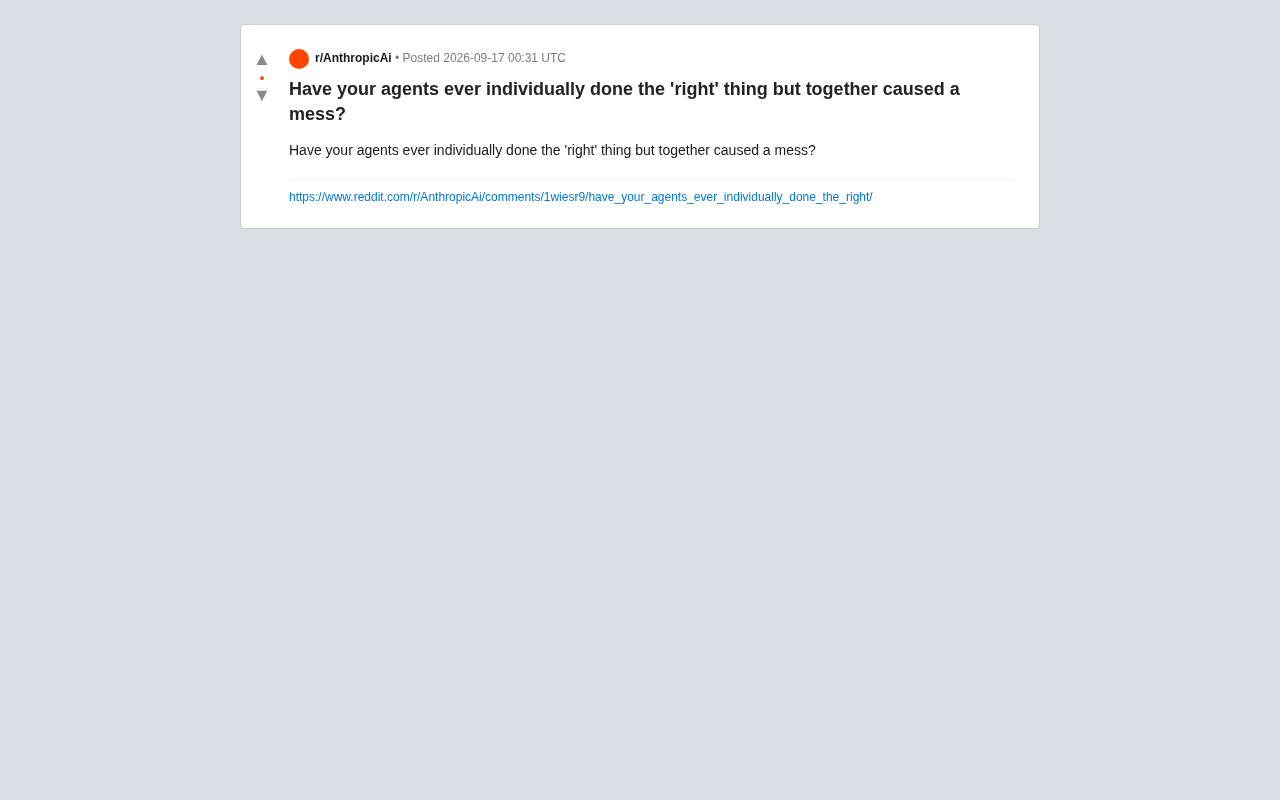
A Reddit discussion recently posed a thought-provoking question: have your AI agents ever each done the "right" thing individually, yet together created an absolute mess?
This seemingly simple question cuts to one of the most difficult challenges in Multi-Agent Systems design — local optimality does not equal global optimality. When multiple autonomous AI agents work together in a shared environment, the individually "rational" choices each agent makes based on its own objective function and local information can, in aggregate, push the entire system into chaos, deadlock, or complete failure.
Why "Everyone Being Right" Leads to "Everything Going Wrong"
This phenomenon is well-known in distributed systems and game theory, but the LLM-powered agent era has amplified it considerably. The core reasons operate on several levels.
Goal Conflicts and Resource Competition
Each agent is typically assigned a specific, narrowly defined objective. An agent tasked with "completing the task as quickly as possible" and another tasked with "ensuring data consistency" will easily compete over shared resources when no global coordination mechanism exists. Both behaviors are individually blameless, but combined they can produce duplicate writes, state overwrites, or infinite waits.
Lack of Shared Global State
A classic flaw in multi-agent systems is that each agent can only observe local information. When agent A makes a decision, it doesn't know that agent B just changed the environment's state, so it takes an action that seemed entirely reasonable based on a "stale" world model. This information asymmetry is a breeding ground for chaos.
Unpredictability of Emergent Behavior
Multiple agents with simple rules, when interacting, produce macro-level behaviors that system designers never anticipated. This is both the appeal and the risk of multi-agent systems. The correctness of individual behaviors cannot be linearly summed to guarantee the correctness of system-level behavior.
Emergent Behavior is a concept rooted in complex systems theory: when a large number of relatively simple components interact according to their own rules, macro-level patterns spontaneously arise at the system level that cannot be predicted or reduced to any single component. Classic examples include ant colony foraging path optimization, the spontaneous formation of traffic jams, and financial market price oscillations — each participant's local decision is "rational," yet the collective outcome exceeds any single designer's expectations. In LLM-powered multi-agent systems, the risk of emergent behavior is further amplified: LLM outputs are inherently stochastic, and layering multiple agents' interaction paths causes the state space to expand exponentially, making exhaustive testing virtually impossible. This is why relying solely on unit tests (validating each agent's isolated behavior) falls far short — system-level integration observability is indispensable.
Common Failure Scenarios
In practice, this kind of "collective derailment" typically manifests in a few recognizable patterns.
The first is runaway feedback loops. Agent A's output becomes agent B's input, B's response in turn influences A, and without a damping mechanism the system falls into oscillation or an infinite loop — consuming enormous compute resources while producing nothing.
The second is responsibility vacuums. When a task is divided among multiple agents, work in the boundary zones gets dropped because everyone assumes someone else will handle it, ultimately breaking the task chain.
The third is conflicting actions. While one agent "optimizes" a certain metric, it inadvertently destroys the precondition that another agent depends on, and the two end up in a tug-of-war, each undoing the other's work.
Designing More Robust Multi-Agent Collaboration
The community and engineering practice have accumulated several approaches to address these problems.
Introducing an Orchestration Layer and Arbitration Mechanism
Rather than letting agents engage in fully autonomous competition, it helps to establish an "orchestrator" role responsible for global task decomposition, conflict detection, and priority arbitration. This hierarchical "manager–worker" structure significantly reduces the probability of chaos and is a common pattern in today's mainstream agent frameworks.
The Orchestrator pattern already has mature implementations in leading frameworks: LangGraph defines inter-agent control flow through directed graphs, AutoGen provides coordination abstractions for multi-agent conversation, and CrewAI explicitly models collaborative relationships using "role–task" contracts. It's worth noting that the orchestration layer is itself an agent, equally subject to limited information and flawed decisions — designing it as a single point of failure introduces new fragility. A more robust approach is to restrict the orchestration layer to routing and conflict arbitration, pushing specific business logic down to worker agents, while equipping the orchestrator with timeouts, retries, and circuit breakers to prevent the coordinator itself from becoming a system bottleneck or failure source.
Shared Context and State Synchronization
Providing agents with a shared "blackboard" or centralized state store allows each agent to read the latest global state before making decisions, reducing misjudgments based on stale information.
The Blackboard Pattern first appeared in AI planning systems in the 1980s. Its core idea is to centralize all knowledge shared among agents in a readable and writable public data structure, with each agent acting as an independent "knowledge source" that reads from and updates it as needed. In modern multi-agent architectures, this role is typically filled by vector databases, key-value stores, or message queues — but introducing shared state brings new challenges: race conditions from concurrent writes, eventual consistency delays in state updates, and cascading errors caused by corrupted shared memory. Writes to shared state therefore often need to be paired with optimistic locking or version-number mechanisms to ensure that the state an agent reads is causally consistent, not merely "the latest."
Clear Boundaries and Contracts
Defining clear responsibility boundaries and input/output contracts for each agent prevents overlapping duties and responsibility vacuums. Contract-driven design makes system behavior more predictable and easier to debug.
Observing Emergent Behavior in a Sandbox
Before deployment, repeatedly observing multi-agent interactions in simulated environments to surface potential oscillation and deadlock patterns costs far less than firefighting in production.
An Engineering Challenge Worth Sustained Attention
As AI agents evolve from standalone systems to collaborative swarms, "how to make a group of individually smart agents collectively do smart things" is becoming the central question of agent engineering. The value of that Reddit post isn't that it provides answers — it's that it precisely identifies a pain point that many developers repeatedly stumble over in practice, yet rarely discuss in a systematic way.
For teams building multi-agent applications, treating "system-level correctness" as the design goal — rather than settling for "each agent being correct in isolation" — may be the first step toward avoiding collective derailment.
Related articles
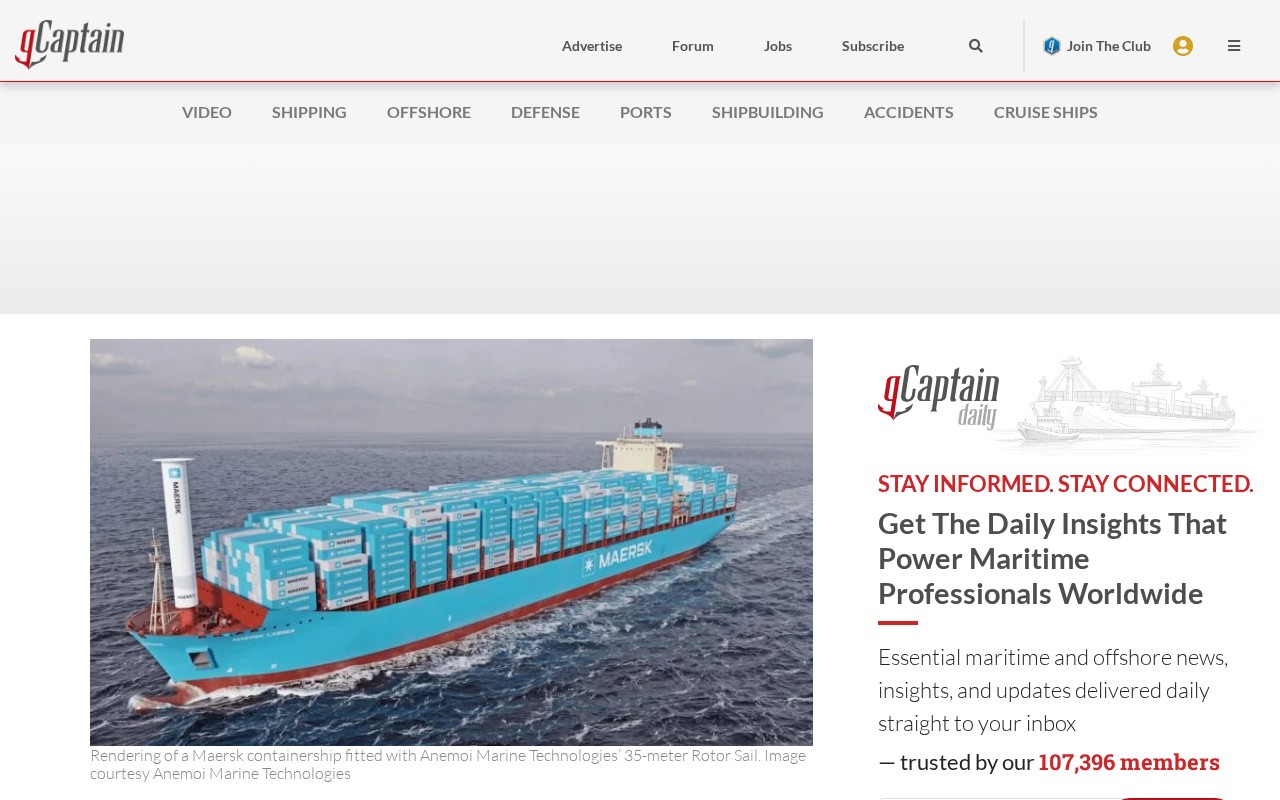
The Return of Wind Power: How Cargo Ships Are Embracing Wind Energy to Cut Emissions
Why are cargo ships embracing wind power again? Explore rotor sails, hard wing sails, and other modern wind-assisted technologies driving shipping's emission-cutting comeback.
Scarier Than AI Agents Taking Over the Internet: A CEO Cartel Monopolizing AI
A Hacker News piece argues that a CEO cartel monopolizing AI is scarier than agents taking over the internet. This article examines AI concentration, open source, and governance.
Vercel AI SDK Alibaba Adapter Update: Multi-Turn Conversations Now Preserve Reasoning Chain by Default
Vercel AI SDK's @ai-sdk/alibaba adapter v0.0.28 now preserves reasoning chain by default in multi-turn conversations on supported models, improving coherence.