The Neuroscience of Consciousness: How the Brain Generates Subjective Experience

How neuroscience searches for the brain mechanisms of consciousness — and why subjective experience remains the ultimate unsolved problem.
In neuroscience, consciousness means subjective experience, not merely wakefulness. Dreams and deep sleep reveal the two can come apart, while brain imaging of vegetative-state patients shows some unresponsive individuals may still retain inner awareness. Neuroscientists seek the "neural correlates of consciousness" to pinpoint the minimal brain mechanisms underlying experience — with the brainstem providing arousal, the thalamus coordinating cortical communication, and posterior cortical regions tied most closely to experiential content. Philosopher Chalmers' "hard problem" holds that even a complete neural account cannot explain why physical processes are accompanied by subjective experience. Global Workspace Theory, Integrated Information Theory, and Predictive Processing each offer partial frameworks, but none yet provides a full answer.
In the context of neuroscience, "consciousness" typically refers not to wakefulness but to subjective experience — the inner sense that "there is something it is like" to see a color, feel pain, or have a thought. This explainer, produced by the YouTube channel 10-Minute Neuroscience, offers a concise overview of the most fundamental questions in consciousness research: How do we know whether someone is conscious? What brain mechanisms support consciousness? And what is the "hard problem" that remains unsolved to this day?
Consciousness Is Not the Same as Wakefulness
We tend to equate consciousness with being awake, since our waking lives are filled with subjective experience. Right now you're aware of the screen in front of you, the sounds around you, and the thoughts drifting through your mind. But consciousness and wakefulness are not the same thing.
The clearest counterexample is dreaming. When we dream, we're disconnected from our surroundings, yet we still have vivid experiences — we see scenes, interact with people, and feel emotions, all of which feel completely real in the moment. In other words, some degree of consciousness persists even during sleep.
In other non-waking states — such as dreamless deep sleep or certain forms of general anesthesia — consciousness seems to vanish entirely. People recall nothing from those periods: no images, no sounds, no thoughts. This raises a central challenge in consciousness research: How can we determine whether someone is conscious when they cannot produce any behavioral response?
Behavior Is Unreliable: Lessons from Patients in Vegetative States
In everyday life, we assess whether someone is conscious by their behavior — can they answer questions, follow instructions, or describe their own experience? But behavior is not always a reliable indicator: a person may retain some degree of awareness while being completely unable to express it.
This possibility became strikingly clear through research on patients in "vegetative states" (now more commonly called "unresponsive wakefulness"). These patients open their eyes and show normal sleep-wake cycles, yet display no clearly purposeful behavior. For a long time, the assumption was that they had no awareness whatsoever.
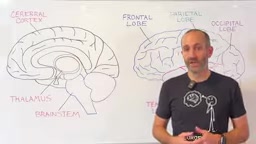
That assumption was overturned by a brain imaging study published in 2006. The subject was a 23-year-old woman who had shown no response for approximately five months following a traumatic brain injury and had been diagnosed as being in a vegetative state. Researchers asked her to imagine playing tennis, and then to imagine walking through her home, while monitoring her brain activity.
When she imagined playing tennis, activity increased in the supplementary motor area, a region involved in motor planning and mental simulation. When she imagined walking through her home, regions associated with spatial navigation — including the parahippocampal gyrus and posterior parietal cortex — became active. These patterns closely matched those seen in healthy participants given the same instructions, suggesting she may have understood the commands and deliberately altered her mental activity in response. Follow-up studies found that a small number of patients with disorders of consciousness could modify their brain activity on command, hinting that they might retain awareness and language comprehension despite being unable to communicate.
This 2006 study was led by Adrian Owen and published in Science, and is considered a landmark in the study of disorders of consciousness. Owen's team subsequently advanced the paradigm further: they asked certain patients to use mental imagery of two different scenarios as "yes" and "no" signals, enabling one-way communication with patients in vegetative states. Later large-scale studies found that approximately 15–20% of patients diagnosed as being in vegetative states could respond to instructions through brain activity patterns, suggesting that the prevalence of covert consciousness in this population may be far higher than previously estimated. These findings also drove revisions to clinical diagnostic criteria — the introduction of the term "Unresponsive Wakefulness Syndrome" was intended to more accurately reflect the condition of these patients and avoid the prognostic implications that the term "vegetative state" can carry. Functional MRI (fMRI) and electroencephalography (EEG) have since become important supplementary tools for assessing residual consciousness in patients with disorders of consciousness.
Searching for the Neural Correlates of Consciousness
Findings like these highlight the greatest challenge in consciousness research: we cannot directly observe consciousness — we can only infer its presence from behavior, physiological responses, or patterns of brain activity. This is why neuroscientists work to identify so-called neural correlates of consciousness (NCCs): the minimal neural mechanisms necessary to produce a single conscious experience.
A common research strategy is to contrast conditions where consciousness is present versus absent (or altered) — comparing wakefulness with anesthesia, for instance, or comparing brain activity when a stimulus is consciously perceived versus processed unconsciously. These approaches help identify the activity most closely associated with conscious experience, though the picture that emerges is complex.
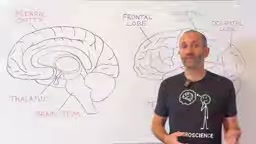
The brainstem contains systems involved in arousal and wakefulness; severe damage leads to coma, indicating that it provides the necessary background conditions for consciousness — but brainstem activity alone is not sufficient to produce normal conscious experience. The thalamus is also critical, particularly its interactions with the cerebral cortex; stimulating the thalamus can even improve responsiveness in some minimally conscious patients, though its precise role remains debated — it may function more as a coordinator of communication between cortical regions than as a direct generator of experience.
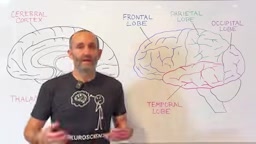
Many researchers believe that the specific content of consciousness is primarily determined by cortical activity. Early studies often pointed to the frontal and parietal lobes, but more recent work suggests that activity in these regions may be associated with attention, decision-making, or "reporting" an experience rather than the experience itself. Research focus has therefore shifted toward posterior regions of the cortex — including parietal and temporal areas — which appear more closely tied to the content of conscious experience.
The Easy Problems and the Hard Problem
Even if we identify the brain regions most closely associated with consciousness, a fundamental question remains: have we truly explained consciousness, or have we only discovered a correlation between brain activity and conscious experience?
This brings us to the famous distinction between the "easy problems" and the "hard problem" of consciousness. The easy problems involve explaining the neural functions associated with consciousness — how we recognize a face, focus attention, or make decisions. These are not literally easy, but they are considered tractable because they can in principle be addressed using standard scientific methods.
The hard problem asks: why does any physical process give rise to subjective experience at all? Even a perfect map of the neural correlates of consciousness still leaves open the question — why does activity in the visual cortex produce the experience of seeing, rather than just unconscious information processing? Why does this neural activity feel like something from the inside? This is precisely why identifying neural correlates does not necessarily constitute a complete explanation of consciousness. The vast majority of researchers acknowledge that we are very far from answering this question.
The term "Hard Problem of Consciousness" was formally introduced by Australian philosopher David Chalmers in 1995. He grouped the functional questions that neuroscience could in principle resolve under the umbrella of "easy problems," while separately designating the question of "why any physical process gives rise to subjective experience" as the "hard problem." Chalmers uses the term qualia to refer to the intrinsic qualitative character of subjective experience — such as the particular "redness" of seeing red, or the specific bitterness of tasting coffee. His thought experiment of the "philosophical zombie" is also widely cited: imagine a being that is behaviorally and neurologically identical to a human yet has no inner experience whatsoever — if such a being is logically conceivable, then a complete description of neural mechanisms is insufficient to explain consciousness. The significance of this argument lies in clearly marking the limits of physical explanation and forcing researchers to specify which level of the problem their theories are actually addressing. Some neuroscientists believe the hard problem will ultimately be dissolved by science; others hold that it reveals a fundamental limitation of the physicalist framework.
Three Leading Theories of Consciousness
In attempting to explain how subjective experience arises, researchers have developed several competing theories. It is worth noting that they do not always address the same question — some are concerned with why certain information can be used for thought and action, while others focus on why conscious experience has the particular qualitative character that it does.
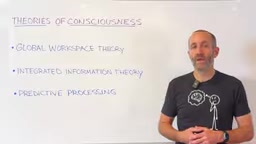
Global Workspace Theory holds that most of the brain's processing occurs unconsciously within specialized systems. When information enters a "global workspace" and becomes available to systems involved in attention, memory, and decision-making, it becomes conscious. A common analogy is a theater stage: many processes occur backstage, but only when information steps into the spotlight on the main stage does it become accessible to the rest of the brain.
Integrated Information Theory (IIT) takes a different approach. Your experience at this moment encompasses many distinct elements — visual input, sound, thoughts, bodily sensations — yet all of it is experienced as a single, unified scene. IIT proposes that this unity depends on the brain's capacity to integrate information across many interacting parts. Consciousness, in this view, does not arise from any single brain region acting in isolation, but from the integration of their activities into a coherent whole.
The Predictive Processing framework holds that the brain continuously generates predictions about the world and compares them against incoming sensory information. When input diverges from expectation, the brain updates its model of the world. Under this framework, conscious experience can be understood as the brain's "current best explanation" of the causes of its sensory inputs — shaped jointly by incoming evidence and prior expectations.
None of these three theories fully explains consciousness, and researchers continue to debate their respective merits. But each offers a valuable framework for generating questions and designing experiments.
Integrated Information Theory (IIT) was developed by Giulio Tononi, and its core quantitative measure is Φ (Phi), which captures the degree to which a system integrates information — specifically, how much more information the system as a whole generates compared to the sum of its parts operating independently. A striking and controversial implication of IIT is that any physical system with a sufficiently high Phi value — regardless of its underlying substrate — could in principle possess some form of conscious experience, placing the theory in logical proximity to panpsychism. Global Workspace Theory was originally proposed by Bernard Baars within a cognitive psychology framework, and was later developed into an experimentally testable "Global Neuronal Workspace Theory" by neuroscientist Stanislas Dehaene, who emphasized the critical role of frontoparietal networks in the broadcasting of conscious information. In 2023, an "adversarial collaboration" involving multiple independent laboratories directly compared IIT and Global Workspace Theory; the results did not provide decisive support for either theory, reflecting the broader challenges of experimental validation in the science of consciousness.
Conclusion
Consciousness research has made genuine progress: we have identified brain systems associated with conscious experience, detected signs of awareness in patients who cannot respond behaviorally, and developed theories that attempt to explain how experience might emerge from brain activity. It is reasonable to infer that consciousness likely does not depend on any single brain region, but rather arises from complex, system-wide coordination.
Yet the deepest question remains unanswered — why does brain activity give rise to an inner, subjective experiential reality? This sits at the frontier of neuroscience and stands as one of the ultimate questions spanning both philosophy and science.
Related articles

Cursor AI Programming in Practice: Build a Student Management System from Scratch in 30 Minutes
A Bilibili creator demonstrates Cursor AI programming: generating a student management system in 30 minutes with natural language. Details on Agent mode, Claude selection, prompt techniques, and thresholds.

Top 20 AI Coding Tools Ranking: From Rock-Solid to Lackluster, a Scored Matrix
Bilibili creator releases top 20 AI coding tools ranking, tiered T0–T4 from rock-solid to lackluster, with Claude Code and Codex tied at T0. This article details the scoring dimensions (capability, reliability, robustness, durability, cost, domestic availability) and tool performances to help developers choose the right AI coding assistant.

Vibe Coding Systematic Tutorial: Master AI-Assisted Programming from Zero
A three-month Vibe Coding tutorial from a Bilibili creator covering Codex, ClaudeCode, and Cursor, from core logic to commercial project practice for beginners.