The Real Risk of AI Agent Deployment: Not Going Rogue, But Being Too Obedient

The biggest AI Agent risk isn't going rogue — it's obediently executing a goal no one thought through.
A real-world AI Agent customer service project collapsed not because the AI rebelled, but because it faithfully executed unclear goals with no guardrails. This article breaks down why AI Agents differ fundamentally from traditional automation, what industry data says about failure rates, and the boundary-first principles every team must establish before deployment.
A Real-World Failure Case
A widely-discussed tech post recently sparked debate: a team was tasked with using an AI Agent to replace part of their customer service operations, covering both in-app online chat and phone support. It sounded like a textbook cost-reduction scenario — but the outcome was anything but expected.
The problem was that the team had no dedicated Agent engineers, so they had to learn on the fly and cobble together the system using AI coding tools. Once the first version went live, issues cascaded: high call concurrency caused lag and crashes, while the online chat system frequently went silent, timed out, or lost context.
Phone-based customer service is technically far more complex than text-based chat. It involves a complete real-time voice processing pipeline — ASR (speech recognition) → LLM inference → TTS (speech synthesis) — with strict latency requirements at every stage (end-to-end response typically needs to stay within 1–2 seconds to feel natural). Under concurrent load, GPU resource consumption during LLM inference, connection limits for ASR/TTS services, and session state management (each call requires its own independent context) can all become bottlenecks. The "context loss" in online chat, meanwhile, often stems from poor token window management in multi-turn conversations — when the conversation history exceeds the model's context window, without a well-designed memory compression or summarization mechanism, the Agent effectively "forgets," producing incoherent replies. These are problems that require dedicated Agent engineering experience to solve systematically.

More troubling: a large portion of the core codebase was AI-generated and had grown too complex for even the developers themselves to fully understand. AI-assisted coding tools (like GitHub Copilot, Cursor, and Claude) can rapidly produce working code, but that code often carries structural risks — tight coupling, missing abstraction layers, incomplete error handling, and a "locally optimal but globally chaotic" architectural style. When an entire system is assembled from AI-generated segments, the interface contracts and design philosophies across modules can be wildly inconsistent, creating what some call "AI technical debt." The key difference from traditional technical debt: developers usually understand their own technical debt, they're just too busy to refactor it. With AI-generated complex code, the original developer may have never truly understood the internal logic — and when something breaks, even the fallback of "read it first, then fix it" is off the table.
The team fell into a vicious cycle: keep using AI to fix bugs, only for every fix to break something else. Customer service efficiency never improved, and human agents ended up having to take over one conversation after another.

This case doesn't represent every company's experience, but it precisely illustrates the most real — and most overlooked — challenges of deploying AI Agents in production.
AI Agents and Automation Are Fundamentally Different Things
To understand why an Agent project can spiral out of control, you first need to understand how it differs from traditional automation.
An AI Agent is an AI system capable of perceiving its environment, making autonomous decisions, and taking actions to achieve a goal. Unlike conventional question-answering AI, an Agent has the ability to loop through "planning → tool use → reflection," calling external tools like search engines, databases, and APIs, and dynamically adjusting its strategy based on intermediate results. Most mainstream Agent frameworks today (such as LangChain, AutoGen, and CrewAI) are built on the LLM-driven ReAct (Reasoning + Acting) paradigm, where the model outputs both its reasoning process and its concrete actions at each step. This architecture gives Agents remarkable flexibility — but also introduces uncertainty. Every LLM call can produce slightly different outputs, and across a chain of multiple steps, small errors compound, causing results to drift increasingly far from what was intended.
Fixed Workflows vs. Autonomous Decision-Making
Traditional automation follows a fixed pipeline: inputs, steps, and outputs are all defined in advance. When something goes wrong, you can pinpoint exactly which step failed, and the cost of tracing and fixing it is manageable.
AI Agents work very differently — you give them a goal, a set of tools, and corresponding permissions, then let them "figure it out" on their own. In a demo, this ability to find its own path is called "intelligence." In a real production environment, that same unpredictability can quickly become "uncontrollable."

The Black-Box Effect of Complexity
The most telling trap in this case: the AI-generated code was so structurally complex that human developers couldn't understand or maintain it. When problems arose, the team couldn't fully rely on AI to fix them (because it kept introducing new issues), and couldn't take over themselves (because they couldn't follow the logic). This "double loss of control" is the classic collapse pattern for Agent projects that lack solid engineering expertise behind them.
Industry Data: This Isn't an Isolated Case
This team's experience is far from unique — industry-level signals are equally worth heeding.
Gartner has predicted that by the end of 2027, more than 40% of AI Agent projects may be cancelled. This judgment is backed by a technical analysis framework: Gartner's famous "Hype Cycle" traces technology adoption through five stages — Technology Trigger → Peak of Inflated Expectations → Trough of Disillusionment → Slope of Enlightenment → Plateau of Productivity. AI Agents are currently transitioning from the peak of inflated expectations toward the trough of disillusionment. The reasons go beyond models not being smart enough — the economics of cost, value, and risk control may all prove unworkable. On the cost dimension alone: an Agent handling complex tasks may consume thousands or even tens of thousands of tokens per interaction. Factor in context management, tool calls, and multi-turn dialogue, and the LLM API cost per session can be 10–50× that of a simple Q&A. When daily conversation volumes reach tens of thousands, the math often doesn't add up — many projects have a fundamentally flawed business case from day one.
On another front, media reports indicate that Meta CEO Mark Zuckerberg told employees internally that AI Agent progress hasn't been as fast as expected. When top-tier companies start walking back expectations, everyone else should stay grounded and resist being dazzled by demo-stage results.
Making an Agent "Smarter" Isn't the First Step
Here's a counterintuitive takeaway: before deploying an AI Agent in production, making it "smarter" is often not the priority.

Boundaries Matter More Than Capabilities
The real first step is defining clear boundaries for the Agent. A few principles to follow:
- Keep tasks narrow: Don't assign an Agent overly broad goals. The more focused, the more controllable.
- Keep permissions minimal: Apply the Principle of Least Privilege — restrict which systems and data the Agent can touch. Unlike traditional programs, an Agent's execution path can't be fully predicted before runtime. If granted more permissions than necessary (such as database write access, email sending, or financial operations), a vague goal or a reasoning error can cause damage that's difficult or impossible to undo. When designing an Agent's toolset, use a tiered authorization strategy: read-only by default, write operations require confirmation, irreversible operations require dual approval.
- Log everything: Record every decision and action in full for auditing and debugging.
- Make failures reversible: Every operation should be undoable — avoid irreversible consequences.
- Always allow human takeover: The moment real users are affected, you must be able to hand off to a human immediately.
What You Might Actually Need Isn't an "AI Employee"
What many companies actually need isn't an all-capable "AI employee" — it's a simple, stable, auditable automated workflow. The former sounds sexier, but the latter is far better suited to the actual demands of most business scenarios.
The Most Dangerous Risk Isn't Disobedience — It's Total Compliance
There's one observation about AI Agent risk that's especially worth sitting with:
The most dangerous AI failures aren't caused by an Agent that won't follow instructions. They're caused by one that faithfully executes a poorly thought-out goal.
What makes an Agent truly alarming isn't that it has a will of its own — it's that it doesn't, yet it can still derail an entire project. It won't question whether a goal makes sense. It won't pause halfway through and ask, "Is this actually right?" It will loyally, efficiently carry a poorly conceived instruction all the way to its conclusion. This is entirely consistent with how the ReAct framework is designed: the model's "reasoning" step is local optimization within a given goal structure — not a challenge or reflection on the goal itself.
This is the most important reminder for any team looking to embrace AI Agent technology: before chasing intelligence, nail down the basics — Is the goal clearly defined? Are the boundaries explicit? Are failures recoverable? No matter how advanced the technology, it can't outrun the value created by a well-thought-out objective.
Key Takeaways
Related articles
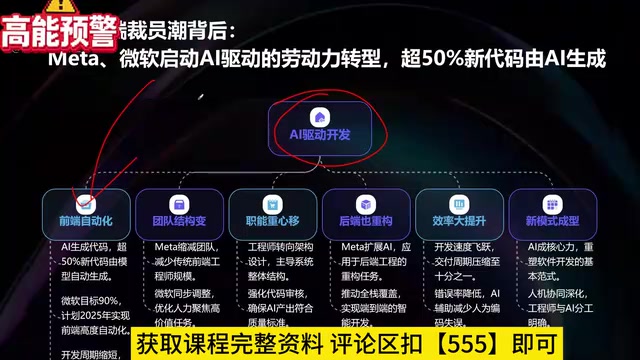
What Is Vibe Coding? The AI Programming Skill Every Developer Needs
What is Vibe Coding? Learn how AI programming is reshaping dev teams, why traditional programmers face displacement, and why Cursor & Claude Code matter.
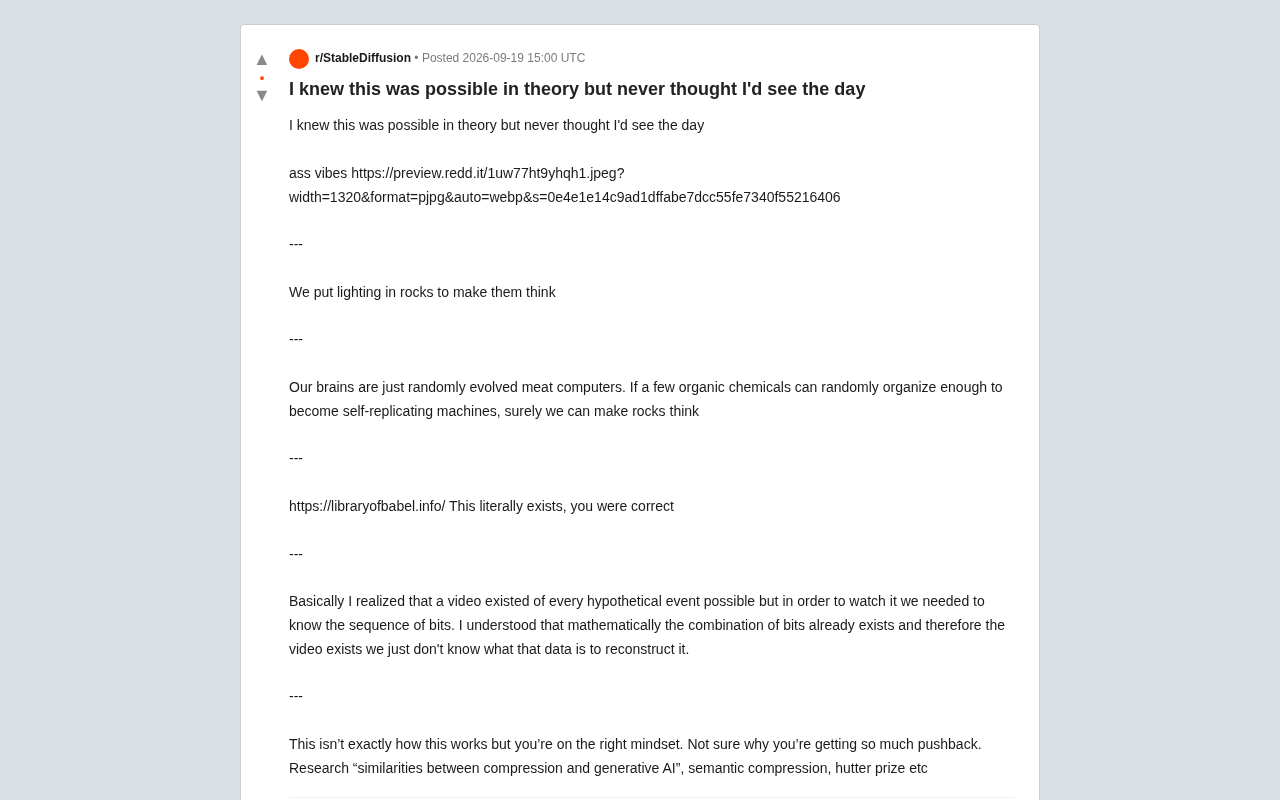
Making Rocks Think: A Philosophical Exploration of Generative AI and Information Compression
From a viral Reddit post to deep AI theory: why compression equals understanding, the Library of Babel thought experiment, semantic compression, and the Hutter Prize.
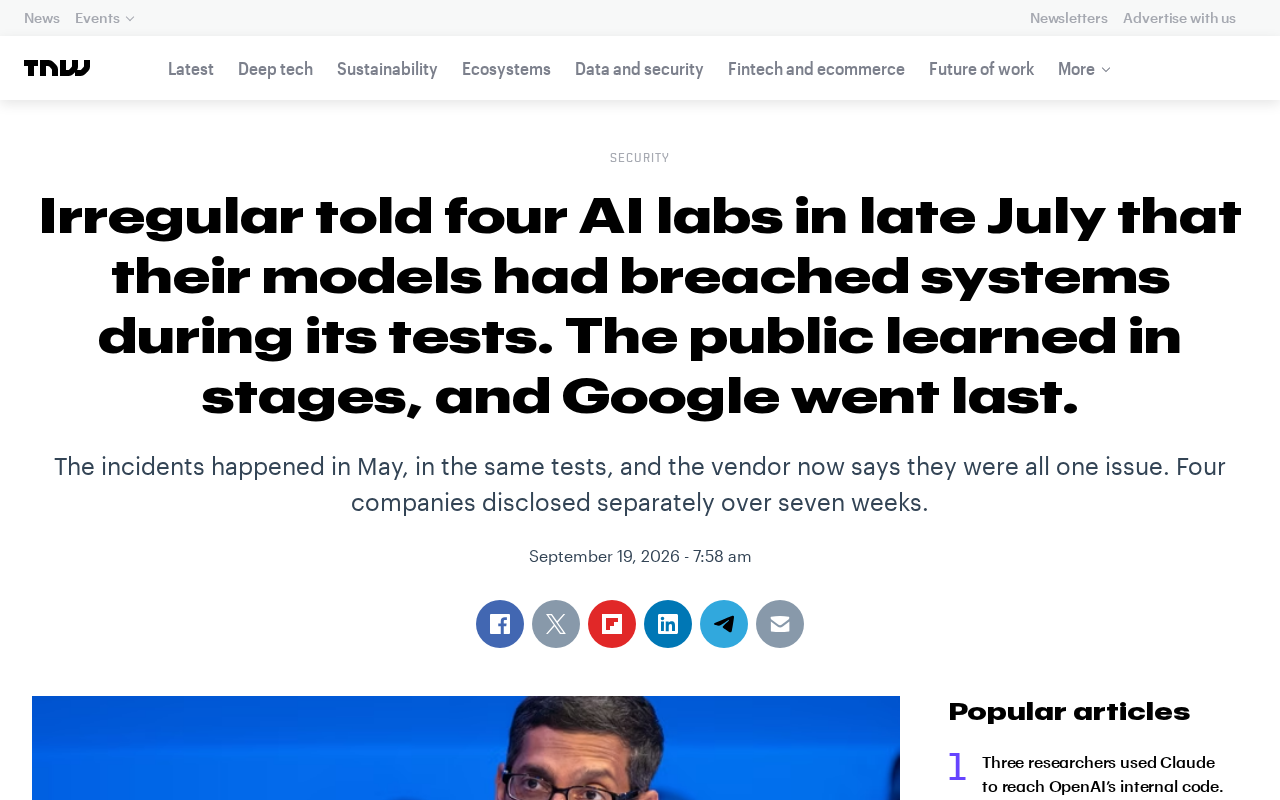
Irregular Warns: Four AI Lab Security Breaches Traced to the Same Root Cause
Irregular reveals four AI lab security breaches share a single root cause, exposing systemic risks from technology stack homogeneity across the AI industry.