The Republican 'Ostrich Strategy': Collectively Avoiding Trump Before the Midterms

Republicans are burying their heads in the sand on Trump ahead of the midterms — and still trailing by 9 points in deep-red Ohio.
Vox's political show America, Actually travels to Ohio to capture the GOP's deepening crisis ahead of the midterms: with Trump's approval ratings low, prices rising, and the Iran war unpopular, Republican candidates are increasingly avoiding media and voters alike. Using Ramaswamy's gubernatorial run as a central case study, the episode reveals the core of the 'ostrich strategy' — candidates can neither break from Trump nor defend his policies. Even in Trump stronghold Parma, some voters are acknowledging the economic fallout. Ramaswamy's data center revival pitch drew skepticism over energy and environmental costs, reflecting real friction between tech expansion and Rust Belt communities. He's now polling nine points behind his Democratic rival.
A Party Heading Into the Midterms in Chaos
This episode of Vox's political series America, Actually, filmed on location in Ohio, exposes the Republican Party's awkward position on the eve of the midterm elections. The segment opens by laying out the core contradiction: Trump's approval ratings are in freefall, prices are up across the board, and support for the war with Iran is minimal. With only weeks until the midterms, even Republican candidates themselves have begun distancing themselves from the president.
Reports indicate that Democrats are now favored to retake the Senate. More and more Republicans are putting space between themselves and Trump's policies — skipping debates, refusing press conferences, avoiding town halls. MSNOW reporter Michael Schnell's new piece describes these candidates as "hiding behind their phones," responding neither to the press nor to their own constituents. This collective silence has become one of the most striking political phenomena of this midterm cycle.
On the Ground in Ohio: Cracks Appearing Among Die-Hard Supporters
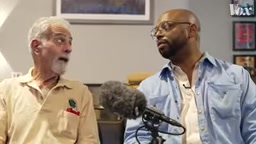
The show's team chose Parma, a suburb of Cleveland, as their observation point — the Ohio city with the highest share of Trump voters, having backed him in three consecutive elections. The crowd was almost entirely made up of hardcore Republicans who, under normal circumstances, wouldn't say a bad word about Trump.

The reporter's questioning centered on one key issue: given obvious negatives like high gas prices and the Iran war, would these die-hard supporters still back Trump as enthusiastically as before? Most gave his second term a nine or ten out of ten, defending the war by saying "seven former presidents didn't dare touch Iran — only he did it." But when the reporter pressed on broken promises — lower prices, ending the war — one voter's response was telling: "You're talking about polls. I don't trust polls. The whole country is addicted to polls."
Still, fissures are starting to show. A repairman named John, nicknamed Buddy, gave the second term a "50-50" rating and candidly identified the economy as the top issue. He acknowledged that rising prices were "both parties' fault," and said plainly that "Republicans aren't popular right now — everyone knows it." He even worried that if the war was still ongoing and gas prices still high come Election Day, Republicans might be in for "a bad night."
Parma is an inner suburb of the greater Cleveland metro area, historically home to blue-collar white working-class residents and descendants of Eastern European immigrants. It was traditionally a Democratic stronghold but shifted sharply rightward after 2016, as the "Rust Belt blue wall" collapsed — making it a defining symbol of Trump's suburban mobilization in Ohio. Ohio as a whole has undergone a dramatic political realignment: once considered a quintessential presidential bellwether state, it has now tilted firmly Republican, with Trump winning by more than ten percentage points in 2024. That's precisely why any sign of dissatisfaction with Republicans in Parma carries outsized significance — if voters here are starting to waver, the GOP's situation in competitive districts nationwide is clearly far worse.
Ramaswamy's "Look the Other Way" Playbook
Vivek Ramaswamy — former presidential candidate and the man who co-led Trump's Department of Government Efficiency (DOGE) — is now running for governor of Ohio. He's one of the few Republicans still actively campaigning on the ground, holding frequent rallies and town halls. The show's team wanted to see how this "most vocal, most pro-Trump" figure would handle the elephant in the room.
The answer was surprising: Ramaswamy's strategy was simply to not mention it at all. His speeches were filled with abstract conservative slogans — "the choice between socialism and free enterprise," "the nuclear family," "capitalism isn't a dirty word" — essentially recycled verbatim from his earlier presidential primary campaign. Listening to him speak, you'd have no idea that Republicans currently control Ohio's statehouse, Congress, and the White House.

Most tellingly, when he talked about "bringing jobs back to Ohio," he made zero mention of the signature economic policy of the Trump administration — tariffs targeting the manufacturing heartland. This deliberate omission is the textbook example of what the show calls the "ostrich strategy."
Ramaswamy ran in the 2024 Republican presidential primary, distinguishing himself through fervent support for Trump and calls to dramatically slash the federal government. In early 2025, Trump appointed him alongside Elon Musk to co-lead the Department of Government Efficiency (DOGE) — not a formal Cabinet department, but an advisory body focused on cutting federal spending and reducing the civil service. Ramaswamy departed from DOGE after several months and announced his run for Ohio governor. His political trajectory — from Trump ally to independent state-level candidate — makes his avoidance of federal policy all the more conspicuous. He can't deny his deep ties to the Trump administration, yet he must carve out an independent narrative for a local race.
Data Centers and AI: An Economic Prescription Voters Are Skeptical Of
Ramaswamy repeatedly brought up public education in his speeches and Q&A sessions — unusual for a midterm candidate. But the real flashpoint was his proposal to use data centers as an economic revival strategy for Ohio's abandoned industrial sites.
He argued for building data centers on "brownfield sites" rather than farmland or residential areas. But the crowd wasn't convinced. One attendee said directly: "Personally, I don't see the value data centers provide to society… I have a lot of concerns about their energy consumption, water use, and noise. It feels like nobody cares about climate change anymore, but the environmental impact of these things is enormous."

When the reporter steered the conversation toward AI's impact on jobs, voter sentiment swung between "could help Ohio" and "could hurt Ohio." This reflects the real resistance that AI infrastructure expansion faces in the manufacturing heartland, where energy, water, and environmental costs are becoming unavoidable issues in local politics.
Data centers have been heavily promoted in recent years by both business and political leaders as an economic revitalization tool for America's Rust Belt states. The logic: abandoned industrial sites have cheap land and existing power grid infrastructure, making them attractive to tech giants looking to build AI training and cloud computing facilities. But the obstacles are equally real — a large data center can consume as much electricity as tens of thousands of homes, and the water needed for server cooling is staggering, while the number of local jobs created is far fewer than traditional manufacturing. Multiple Ohio counties have already seen local disputes over data center siting, with conflicts centering on competition for agricultural water, grid load, and noise pollution. This makes the simple equation of "data centers = jobs" a hard sell in districts where manufacturing workers still make up a significant share of the electorate.
Why the "Ostrich Strategy" Is Unlikely to Work
Most voters at the event defended Ramaswamy's avoidance of Trump — "this is his governor's race, not Trump running in this election." When asked whether distancing from an unpopular president was good for Republicans, voters fell back on familiar lines: "It's all Biden's fault anyway."
The show captures the Republican candidates' dilemma quite precisely: Trump remains the most popular figure among the most committed voters, so candidates can't cut ties with him; but he's increasingly unpopular nationally, so candidates can't defend his policies. All that's left is the ostrich strategy — burying your head in the sand.
The polling data delivers a harsh verdict: the latest surveys show Ramaswamy trailing Democratic candidate Amy Acton by nine percentage points in the governor's race — a stunning number for a state as deeply red as Ohio has become. The segment closes by noting that when Trump says "pretend I'm on the ballot too," that's exactly the bet Democrats are happy to take: he's energizing the Democratic base while suppressing enthusiasm on his own side.
While this episode is primarily about electoral politics, its ground-level discussion of data centers, AI, and their employment and environmental costs neatly reflects the growing tension between the expansion of the tech industry and local public opinion.
Related articles

AI Compute Is the New Oil, But the Market Mechanism Has Yet to Take Shape
Hacker News compares AI compute to the new oil, noting the lack of price discovery, concentrated supply, and no hedging tools. The article analyzes structural issues in compute trading and explores a possible three-tier market of spot, contracts, and derivatives, plus the real impact on AI practitioners' cost management.

Running Full iOS 16.5 Firmware on Android Devices: Technical Demo or Marketing Gimmick?
A Hacker News post claims full iOS 16.5 firmware can run on Android, with 315 upvotes. This analysis argues it is more likely a web UI simulation than a true firmware port, and explores the value and risks of such projects.

Etsy Cracks Down on AI Slop: Addressing Buyer and Seller Anxieties
Etsy introduces stricter rules limiting AI-generated content in listings, addressing buyer confusion over AI products and seller fears of original work being diluted by AI slop.