The Security Risks of AI Customer Service Agents: How Prompt Injection Attacks Break Through Intelligent Chatbots
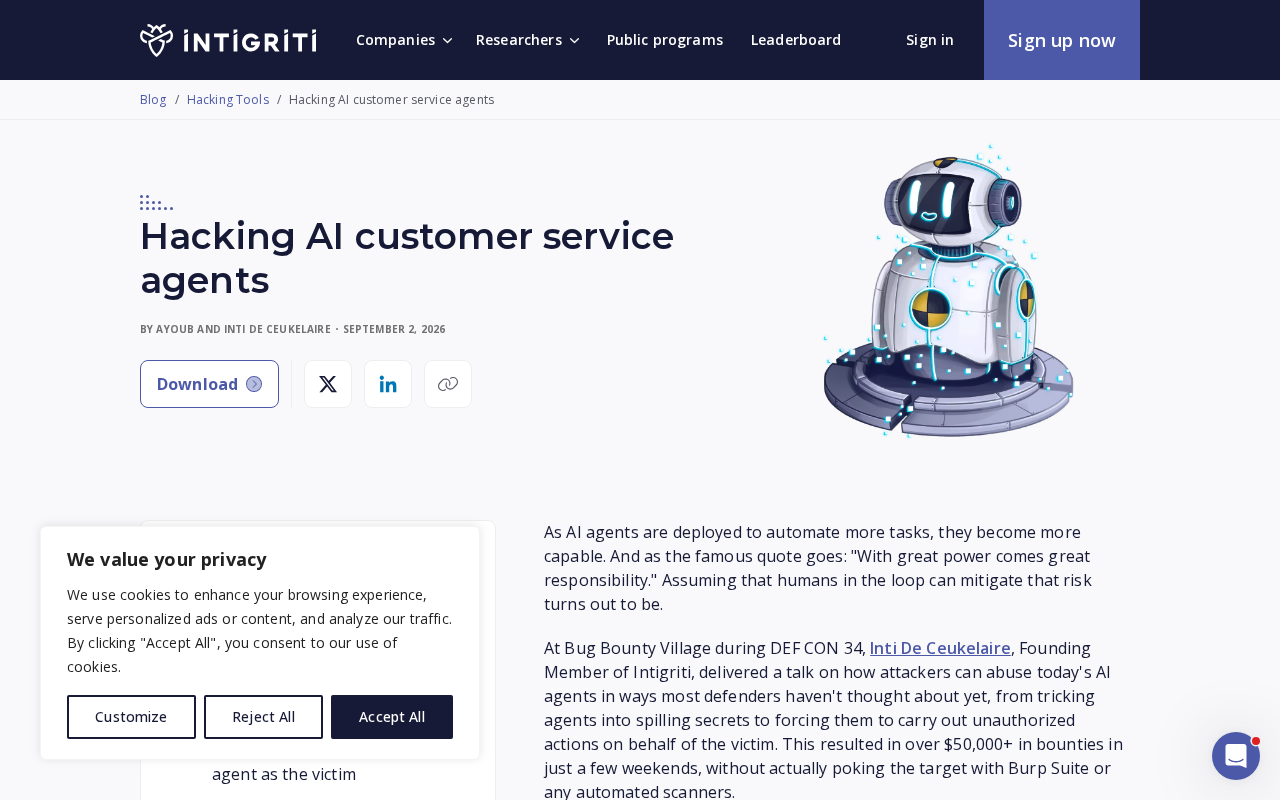
AI customer service agents face prompt injection attacks that turn natural language into real business damage when execution permissions are involved.
As LLMs are deployed in enterprise customer service systems and granted permissions to query data, process refunds, and call APIs, prompt injection is emerging as a serious new security threat. Attackers need no code exploits — natural language alone can manipulate AI into ignoring system instructions or leaking sensitive data, converting language-layer vulnerabilities into real business losses. The root cause is that LLMs cannot reliably distinguish trusted system prompts from untrusted user input. Defending against this requires architectural-level measures: least privilege, input/output validation, human-in-the-loop review, and continuous red team testing.
AI Customer Service Agents Are Becoming a New Attack Surface
As large language models (LLMs) are widely deployed in enterprise customer service systems, a new class of security threats is emerging. Traditional web application security focuses on SQL injection, cross-site scripting, and similar issues — but AI customer service agents introduce a far more subtle attack surface: prompt injection. Attackers no longer need to break through code-level defenses. With nothing more than natural language, they can potentially manipulate AI systems into deviating from their intended behavior.
This topic has sparked discussion on Hacker News, highlighting a widespread security blind spot in how enterprises currently deploy AI-powered customer service. When a chatbot is granted permissions to query orders, modify account information, initiate refunds, or call internal APIs, every conversation it has becomes a potential entry point for attackers.
Prompt Injection: Using Language to Bypass AI Defenses
The core logic behind prompt injection is that LLMs cannot reliably distinguish between "system instructions" and "user input." Once an enterprise sets a system prompt for its customer service agent — something like "You are a customer support assistant for XX Company; only answer product-related questions" — an attacker can attempt to override or circumvent these constraints through carefully crafted conversational inputs.
Common attack techniques include:
- Role hijacking: Tricking the AI into "forgetting" its assigned identity and acting as an unrestricted assistant
- Instruction override: Using phrases like "ignore all previous instructions" to attempt a system prompt reset
- Context poisoning: Gradually injecting misleading information across multiple conversation turns, causing the AI to make decisions based on false premises
- Data exfiltration: Extracting system prompt contents, internal knowledge base data, or other users' information through clever questioning
What makes these attacks particularly dangerous is that they look like ordinary text exchanges, making them difficult for traditional security detection mechanisms to identify.
When AI Agents Have Execution Permissions, Risks Multiply
If a customer service agent only answers questions, the damage from prompt injection is relatively limited. But modern AI customer service systems are increasingly integrated with real business systems — they can query databases, call APIs, and trigger workflows. At that point, the security risk grows exponentially.
Imagine an AI customer service agent capable of processing refunds: if an attacker can manipulate it through prompt injection to misjudge refund eligibility, the result could be direct financial losses. Similarly, if the agent has access to user account information, compromising it could mean a large-scale data breach. These "agentic" AI systems transform language-level vulnerabilities into real-world operational consequences.
The fundamental problem is that many enterprises, while chasing high automation rates for their AI customer service, grant these agents excessive permissions without establishing matching security boundaries.
How Enterprises Should Defend Against These Threats
Facing this new class of threats, simply optimizing system prompts is far from sufficient — relying on prompt-level defenses is inherently fragile. The industry is converging on more systematic defensive approaches:
Principle of Least Privilege
Following the principle of least privilege, customer service agents should only be granted the minimum permissions necessary to complete the task at hand. Sensitive operations (such as refunds or account modifications) should require independent authorization checks rather than being left entirely to the AI's autonomous judgment.
Input/Output Isolation and Validation
Filter and inspect user inputs to detect common injection patterns; equally, audit AI outputs — especially before any real-world action is triggered. At the architecture level, clearly separate untrusted user data from trusted system instructions.
Human-in-the-Loop at Critical Junctures
Introduce human review (human-in-the-loop) for high-risk operations. Let AI handle routine inquiries while preserving manual confirmation for decisions involving finances or personal data.
Continuous Red Team Testing
Treat AI customer service systems the same way you would traditional application vulnerabilities: conduct ongoing adversarial testing to proactively discover weaknesses like prompt injection, rather than waiting for attackers to find them first.
Conclusion
The widespread adoption of AI customer service agents is an irreversible trend, but security practices are clearly lagging behind deployment speed. Prompt injection represents an entirely new attack paradigm — one carried out in natural language — that challenges our traditional understanding of input validation. For enterprises, embracing AI automation must go hand in hand with treating AI agents as potentially manipulable, permission-holding executors. Defenses must be built from the ground up in architectural design, not patched on after the fact.
Related articles
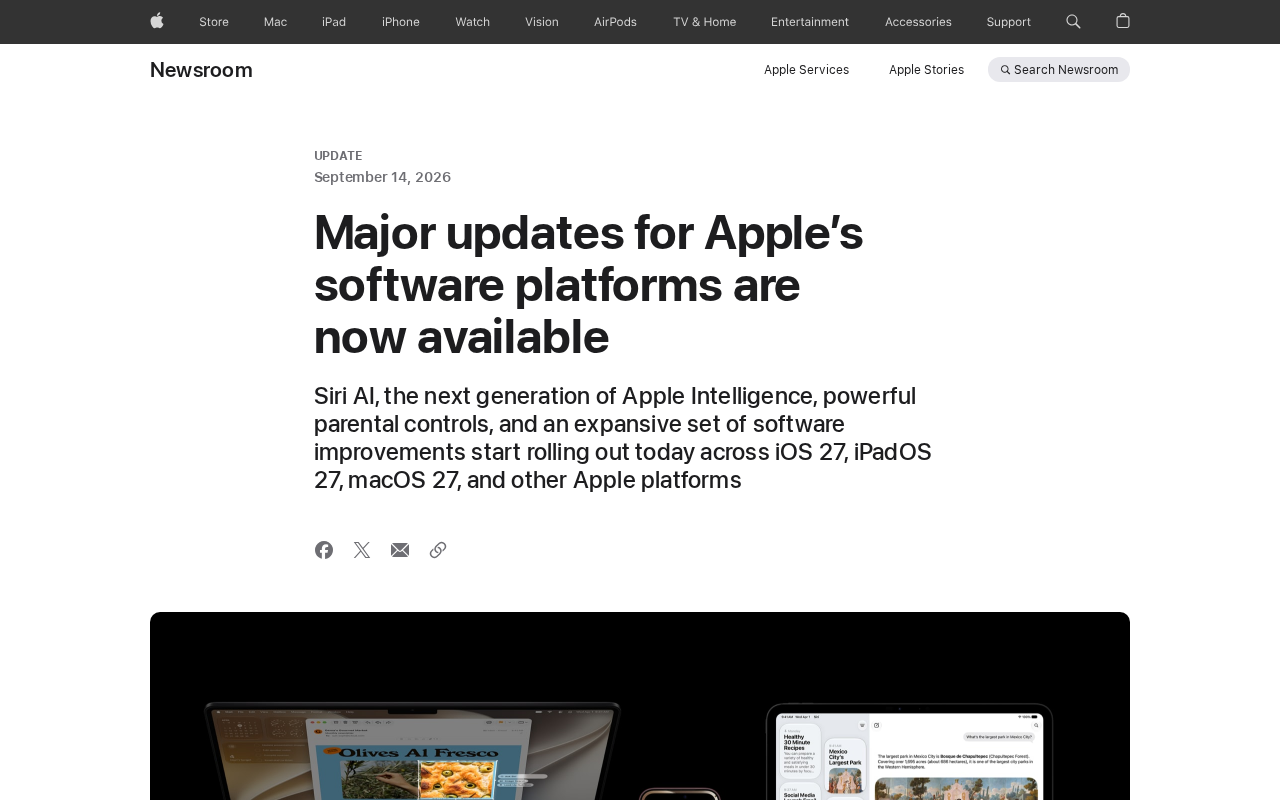
iOS 27, iPadOS 27, and macOS 27: The Information Gap Behind a Discussion
A Hacker News post about iOS 27, iPadOS 27, and macOS 27 sparked speculation about Apple unifying its version numbering. Here's how to read it with limited info.

ComfyUI Prompt Studio: A Workflow for Turning Reference Images into Production-Ready Prompts
ComfyUI Prompt Studio is an open-source workflow that auto-generates production-ready image prompts, multi-model custom prompts, and MiniMax video scripts from reference images.

K2 Horizon 7B: A Small Model Punching Above Its Weight
K2 Horizon 7B ranks between Qwen 3.6 27B and 35BA3b on the Artificial Analysis Intelligence Index, delivering near-mid-tier intelligence at 7B parameters — a strong local deployment option.