The Smart Home 'Graveyard' Keeps Growing: The Fragile Reality of Connected Devices

Smart home devices are quietly dying as manufacturers abandon cloud services, leaving consumers with expensive bricks.
This article examines the smart home industry's persistent "device graveyard" problem: connected devices lose core functionality — or fail entirely — when manufacturers shut down services, get acquired, or go under. The root cause is an architecture that ties critical features to proprietary cloud backends, meaning a device's lifespan is determined by business decisions, not hardware quality. Maintaining cloud services for discontinued products is pure cost with no revenue upside, making them easy targets when capital gets tight. Consumers, meanwhile, pay a one-time purchase price while unknowingly assuming the risk of service termination at any time. The article points to three solutions: local-control-capable device architectures, open interoperability standards like Matter, and clearer long-term support commitments from manufacturers.
From Big Promises to Mass Abandonment
A decade ago, the smart home was painted as one of tech's most imaginative consumer visions: lights that sense your arrival, locks that recognize family members, thermostats that learn your schedule, refrigerators that remind you to restock. Manufacturers rushed to stake their claim, with startups and tech giants alike racing to launch connected devices in a bid to own the home as the "last great platform."
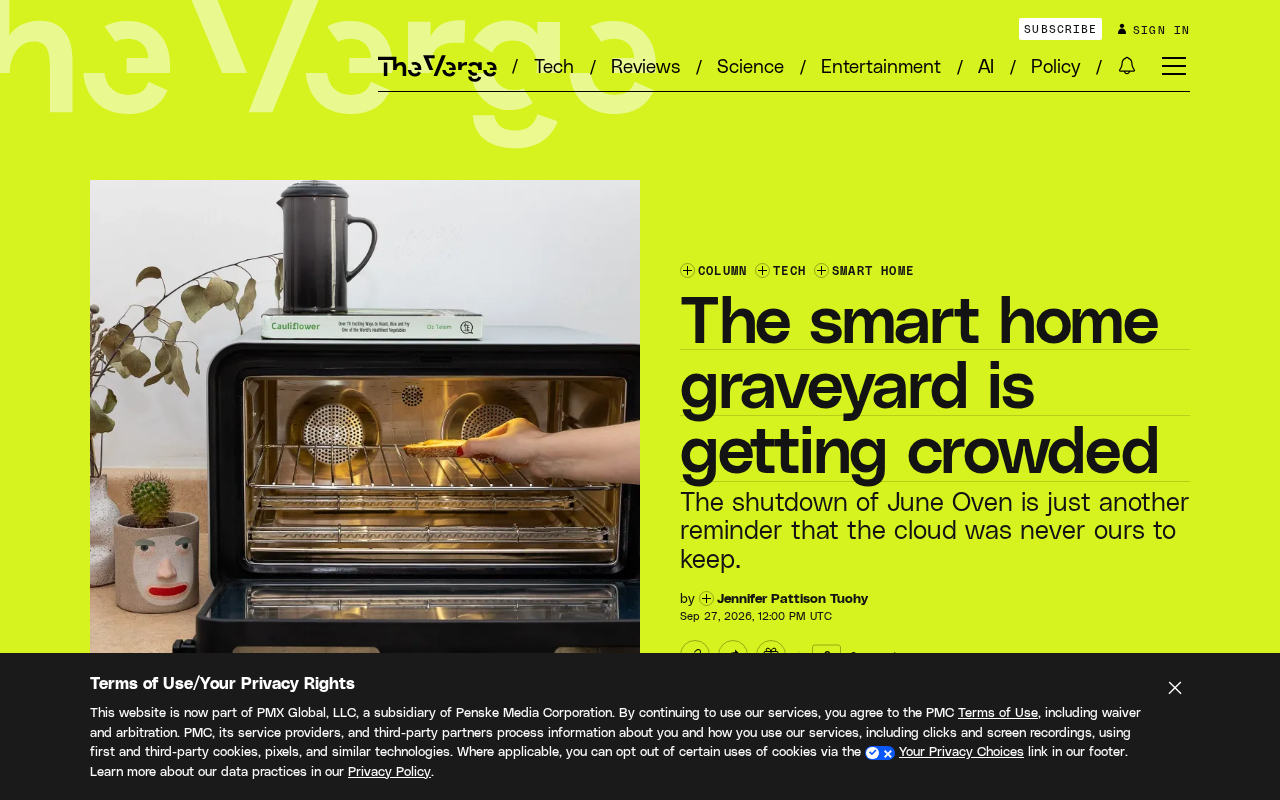
Yet, as The Verge noted in its weekly column The Stepback, many of the devices that once promised to connect everything are now being consigned to an ever-growing "smart home graveyard." Product lines have been axed, cloud services shut down, acquisitions left products in limbo — and a vast number of connected devices already sitting in people's homes are slowly turning into bricks.
Cloud Dependency Is the Root of the Problem
The defining difference between smart home devices and traditional appliances is that their core functionality typically depends on the manufacturer's cloud services. An ordinary lamp still works after a power cycle. But a smart light that requires network authentication and app control can lose most — or all — of its functionality the moment its backend servers go dark.
This architecture means a device's "lifespan" is no longer determined by hardware quality, but by the manufacturer's business decisions. When a company exits a product line, gets acquired, or simply shuts down, the device a customer paid good money for can instantly lose its value. This is precisely the "fragile state" the column highlights — you think you own a physical object, but what you actually have is a subscription to a service that can be terminated at any time.
The industry has a term for this: "software-defined obsolescence." Unlike traditional hardware degradation, connected devices can fail immediately — while still in perfect physical condition — simply because a service has been discontinued. Landmark cases include the Revolv smart home hub, which was forcibly shut down in 2016 after being acquired by Nest (Google), bricking users' devices overnight; and Insteon, which suddenly ceased operations in 2022, instantly disabling the home automation systems of tens of thousands of users. These cases expose a structural contradiction: consumers pay as if they're buying a physical product, but they're simultaneously purchasing access to an ongoing service. Legally, most countries have no clear regulations requiring manufacturers to maintain service support for devices already sold, and companies can use terms buried in user agreements to shut down services with virtually no liability.
Why Manufacturers Keep Abandoning Devices They've Already Sold
From a business perspective, maintaining cloud services for a discontinued product line is an ongoing cost with no return. Servers, security updates, and customer support all require investment, while those devices can no longer generate new revenue. When growth slows and capital markets tighten, companies often choose to cut their losses and redirect resources toward still-profitable businesses.
Acquisitions and consolidation are also major drivers. When large companies buy smart home startups, they're often after the talent or patents — not the products themselves. Once absorbed into a larger corporate structure, the original product lines are frequently marginalized or shut down entirely. For users, this means their original purchase decision was built on a platform that could disappear at any moment.
Consumers Are Left Holding Hidden Risk
The cost of this expanding graveyard is ultimately borne by consumers. When buying a smart device, few people stop to assess whether the manufacturer will still be maintaining that service five years down the road. People naturally assume electronics will last for years, but the real "shelf life" of a connected device may be far shorter than expected.
The deeper problem is the erosion of trust. As more users experience devices turning into bricks, the credibility of the entire smart home category suffers. Consumers grow more cautious — some even retreating to traditional, non-cloud-dependent devices — which in turn undermines the healthy development of the industry as a whole.
What Needs to Change
Escaping the graveyard requires the industry to shift in several directions. Devices should retain local control capabilities wherever possible, so that core functions continue working even if cloud services are shut down. Open standards — such as the Matter interoperability protocol — help reduce the risk posed by any single manufacturer's failure. Manufacturers should also make clearer, longer-term commitments about how long they'll support their products.
For everyday consumers, the practical approach is to prioritize products that support local control, have active user communities, or adopt open standards — and to approach devices that are entirely dependent on a proprietary cloud with healthy skepticism. The smart home vision remains compelling, but the category can only truly take root in people's homes — and stay there — when "smart" no longer means "fragile."
Matter is a smart home interoperability protocol led by the Connectivity Standards Alliance (CSA, formerly the Zigbee Alliance) and backed by major players including Apple, Google, Amazon, and Samsung. Its 1.0 specification was officially released in 2022. The core goal is to break down manufacturer ecosystem silos, enabling devices from different brands to discover and control each other, while supporting direct local-network communication without requiring traffic to pass through any manufacturer's cloud. In theory, this means that even if a manufacturer shuts down its cloud service, Matter-based devices can continue operating through a local network via a Matter-compatible smart home hub (such as Apple Home, Google Home, or Amazon Echo). That said, Matter is still in the early stages of adoption — not all device categories are covered yet, and upgrading older devices for compatibility still depends on manufacturer willingness. For users who prioritize long-term usability, checking whether a device carries Matter certification is a concrete and practical factor to consider at the point of purchase.
Related articles

FlyEnv Plugin Review: Visually Running llama.cpp and Managing GGUF Models
FlyEnv launches the official llama.cpp plugin with side-by-side Metal runtime management, public GGUF repository indexing with file type labels, and visual configuration of context, threads, and GPU layers—saving templates and speculative decoding with each model for one-click local LLM inference.
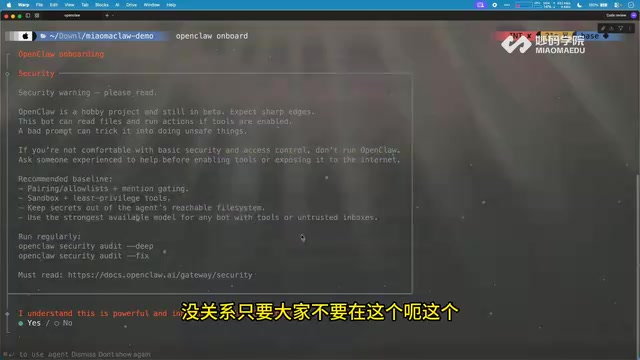
How Can Frontend Developers Advance into AI Agent Development? Deconstructing System-Level Agent Architecture from OpenClaw
Starting from the OpenClaw demo in a Bilibili open class, this article breaks down the three-layer architecture and universal formula of system-level AI agents, and analyzes the path for frontend developers to enter agent development based on TypeScript, including plugin-based design and security/memory layer challenges, with an interview answer framework.
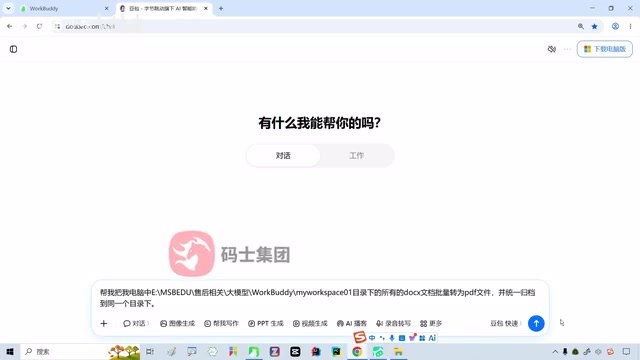
WorkBuddy in Action: How AI Agents Automate Batch File Conversion and Archiving
Bilibili creator Teacher Shanyao tests WorkBuddy vs. Doubao on batch file conversion, showing how AI Agents move from "giving solutions" to "direct execution," with a full workflow and credit cost reference.