The Stronger the Automation, the Worse the Problem: NASA Research Reveals Skill Degradation in the AI Era

AI takes over routine work but erodes human judgment—practice manually on a regular basis, like a pilot.
Drawing on the Air France 447 crash and NASA's pilot experiment, the article reveals the automation paradox: automation takes over simple, repetitive work but leaves the rare difficult moments to humans, and repetitive practice is exactly what keeps people sharp. Polish doctors' unassisted detection rates fell by about one-fifth after using AI; students' proctored test scores dropped from 80% to 60%; investment analyst Jordan skipped the reasoning process and lost the 'why.' The Harvard-BCG study shows AI delivers 25% speed and 40% higher quality, but on a test where AI might be wrong, accuracy was 19 percentage points lower—the gap lies in judgment. The author suggests picking key skills to practice regularly without AI, trying first and then comparing with AI's answers, and staying engaged while AI works.
Title
The Stronger the Automation, the Worse the Problem: NASA Research Reveals Skill Degradation in the AI Era
Meta Description
NASA research reveals the automation paradox: AI takes over simple work but erodes human judgment. From Air France 447 to declining doctor detection rates to a Harvard study of 758 people, an analysis of AI-induced cognitive atrophy and coping strategies.
Article Content
On June 1, 2009, the autopilot on Air France Flight 447 suddenly disengaged, handing control back to the crew. The pilots had grown accustomed to relying on the autopilot. Four minutes later, the plane plunged into the Atlantic, killing 228 people. Pilots with over twenty thousand hours of experience didn't realize they were part of a larger experiment: let the machine do almost all the work, then wait and see what goes wrong. Today, AI is pushing that experiment out to ordinary office workers at scale.
AI Is Replicating Aviation's Automation Paradox
This story comes from a YouTube creator's breakdown of NASA research. It reveals a counterintuitive pattern: automation takes over the simple, repetitive parts of the work but leaves the rare, difficult moments to humans—and those repetitive tasks are precisely what keeps people sharp. British psychologist Lisanne Bainbridge predicted this back in 1983. While studying power plants and factory control rooms, she found that automation can make the hard parts of a job even harder.
This pattern has a new version in the workplace. Jordan, a 26-year-old investment analyst, uses AI to build draft financial models, write memos, and summarize earnings calls—producing twice as much as his manager. But 18 months later, when a client's CFO asked him why he assumed margins could hold next year, all he knew was that the model said so—he didn't know why. He had never built that reasoning process himself.
The automation paradox is a classic concept in cognitive engineering, referring to the fact that the higher the degree of automation, the harder it becomes for human operators to maintain the necessary vigilance and skills. The mechanism: automation reduces the load of routine operations, putting humans in a state of low arousal. Once the system fails, operators must suddenly switch from passive monitoring to active intervention—and at that moment they lack both situational awareness and recent practice. Bainbridge's 1983 paper "Ironies of Automation" is regarded as the foundational work in this field. She pointed out that automation does not eliminate human work but redistributes it into monitoring, anomaly diagnosis, and emergency handling—precisely the tasks most dependent on experience. The subsequent research on "automation complacency" and "skill decay" in aviation continues this line of inquiry.
Evidence from Medicine and Education
This isn't just a story. According to research cited in the video, in Poland, experienced doctors using AI-assisted colonoscopy saw their precancerous lesion detection rate without AI assistance drop from 28.4% to 22.4%—a decline of about one-fifth. And they had performed thousands of these procedures.
Data from millions of math exercises on an online learning platform shows the same shape: students got faster at problems they could paste directly into a chatbot at home, but their scores on proctored tests dropped from about 80% correct to about 60%. A Goldman Sachs partner in charge of AI work gave this phenomenon a name on the company podcast: cognitive atrophy. What those doctors lost were already-established skills, while Jordan skipped the years in which skills are built.
Cognitive atrophy borrows the metaphor of muscle disuse atrophy, referring to the decline of a cognitive ability because it goes unused for a long time. In AI-assisted scenarios, it typically manifests in three forms: first, skill degradation, such as doctors weakening their own ability to identify lesions because they rely on AI prompts; second, metacognitive degradation, where individuals become less accurate at judging "whether they know"; third, reduced transferability, where they cannot reproduce their prior performance without AI. Unlike simple forgetting, cognitive atrophy often occurs while users still subjectively feel competent, making it harder to notice on their own. Researchers recommend periodic unassisted testing to monitor this kind of degradation.
The NASA Experiment: What Degrades Is Thinking, Not Operating
Aviation spent 30 years validating Bainbridge's prediction. In 2013, the FAA required airlines to have pilots fly manually more often. In 2014, NASA researchers put 16 experienced pilots into flight simulators with automation turned off. Unexpectedly, their manual flying skills held up quite well, even after long periods without practice. What actually degraded was thinking ability—tracking the aircraft's position without a map display, and diagnosing what went wrong during a failure. And the pilots who zoned out while the computer was flying showed the worst degradation in thinking ability.

Jordan's hands are fine too—he can run any formula in a spreadsheet. But what he lost was the "why" behind the margin assumption. That is exactly the type of skill AI takes over in the workplace: reasoning, judgment, and the ability to notice something is off.
Short-Term Gains and the Cost to Judgment
A study by Harvard and Boston Consulting Group had 758 consultants complete realistic work tasks, some with GPT-4 and some without. On tasks AI is good at, consultants using AI finished about 25% faster and scored over 40% higher on work quality. But in a test the researchers designed where AI might analyze incorrectly, consultants using AI were 19 percentage points less likely to give the correct answer. The gap lies in judgment: knowing when to trust an answer and when to verify it.
The video's creator emphasizes that the evidence is still early: the colonoscopy study is observational and cannot prove causation; the math study has not yet been peer-reviewed. But the trend is worth watching.

Judgment in this context does not mean general intelligence, but the ability to decide whether to accept, verify, or overturn an answer when information is incomplete and AI output may be wrong. It involves three steps: an intuitive early warning about whether an answer is reasonable, the ability to trace key assumptions, and the trade-off of choosing verification priorities under time pressure. The 19-percentage-point accuracy gap in the Harvard-BCG study corresponds precisely to the failure of the first step—consultants tend to accept the seemingly coherent analysis AI provides. Judgment is developed through repeatedly completing the reasoning process by hand, so it cannot be made up for by more AI use—it may instead be eroded by it.
Use AI Like a Pilot
Aviation never removed the autopilot, because flying became much safer as a result. The right approach is to use AI the way pilots use autopilot: use it continuously, but be ready for the moment control is handed back. Drawing on cockpit rules, the author offers three suggestions:
- Pick the one or two skills you'd need most when the tool fails, and practice them regularly without AI. Just as pilots fly manually. The author himself always writes the outline and first draft of communications before AI touches them.
- Try first, then ask. Do it yourself first, then compare with AI's answer—the comparison is where learning happens.
- Stay engaged while AI works. The pilots who zoned out showed the worst degradation.
Jordan started "deliberately flying manually": every Friday morning, he keeps AI away and builds a model from a blank spreadsheet. When he gets stuck, he asks AI for hints rather than answers. The cost is lower output on Fridays, and his manager noticed. But four months later, an AI-built deal model had a double-compounding error in the revenue line—every downstream number looked clean—and Jordan caught it in about 30 seconds, because two weeks earlier on a Friday he had built the exact same formula by hand.

Judgment Is the Last Moat in the AI Era
AI makes first drafts cheaper and cheaper, and the value of a first draft keeps falling. What retains value is knowing which version to send, which number looks wrong, and what the client is really asking. That is judgment and taste. Every AI advance gives you more options to choose from, which makes judgment the thing we uniquely can do and that keeps appreciating as tools improve. If you let AI take that over, you'll be in trouble.
The Air France 447 investigation found multiple causes, one of which was that the crew had not practiced the exact moment when the machine hands back control. Jordan got his warning in a meeting room; most of us will get our own warning somewhere in time. The time to practice is while the autopilot is still working.
One-line Summary
AI takes over routine work but erodes human judgment—practice manually on a regular basis, like a pilot.
Paragraph Summary
Drawing on the Air France 447 crash and NASA's pilot experiment, the article reveals the "automation paradox": automation takes over simple, repetitive work but leaves the rare difficult moments to humans, and repetitive practice is exactly what keeps people sharp. Polish doctors' unassisted detection rates fell by about one-fifth after using AI; students' proctored test scores dropped from 80% to 60%; investment analyst Jordan skipped the reasoning process and lost the "why." The Harvard-BCG study shows AI delivers 25% speed and 40% higher quality, but on a test where AI might be wrong, accuracy was 19 percentage points lower—the gap lies in judgment. The author suggests picking key skills to practice regularly without AI, trying first and then comparing with AI's answers, and staying engaged while AI works. Citing Jordan's "deliberate manual flying" catching a model error, the article argues that judgment is the moat that keeps appreciating in the AI era.
Related articles
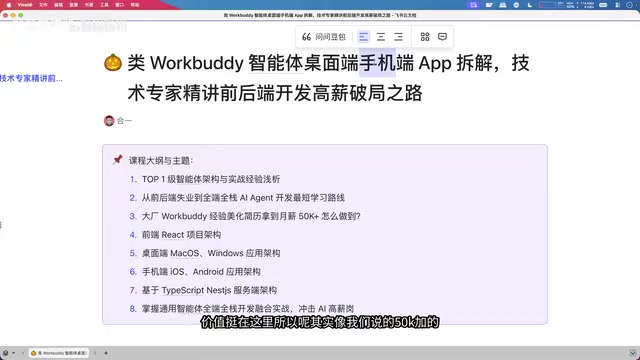
Benchmarking WorkBuddy's Five-Platform Strategy: How Agent Development Can Win Through Differentiated Competition
Starting from benchmarking WorkBuddy, this article analyzes differentiated competition strategies for general-purpose agent development: how five-platform full-stack capabilities (desktop/iOS/Android/H5/web) build job-hunting advantages, and how to leverage big tech products to understand underlying implementations.
Claude Gets Creative: 24 AI Projects Anyone Can Replicate
24 real Claude use cases: from Bluetooth phone finder and 8x faster Wi-Fi to 3D-printed bridges, cancer tools, and food allergy drug design—most free to replicate.
Fleetlayer: A Framework for Scheduling…
Fleetlayer: A Framework for Scheduling Multiple AI Agents Across Machines
Fleetlayer is a framework posted on Hacker News for running large numbers of AI Agents across multiple machines. This article analyzes its positioning, the core challenges of multi-machine multi-Agent scheduling, and the current competitive landscape and project maturity in the multi-Agent infrastructure space.