The Truth About Open-Source AI: You Got the Cake, Not the Recipe
Open weights give you the cake but not the recipe — and the gap is now written into licenses and law.
This article systematically unpacks the deliberately blurred line between "open weights" and true "open source" in AI. Open weights provide only frozen model numbers without training data or code — you can run the model but can't reproduce it. Labs release models freely because it commoditizes their complements and drives revenue to cloud compute. But by summer 2026, labs began embedding revenue thresholds into licenses, and governments in the US, China, and EU each deployed different mechanisms to draw the boundary of openness at "capability." The author's conclusion: open-source AI didn't die recently — it died the day the industry equated "downloading" with "open source."
A real page, open in a browser, hosts the largest model DeepSeek has ever released: 865GB of weights, MIT license, no registration, no queue, no API key required. But scroll to the bottom of the file listing, and you'll notice something missing — no training data, no training scripts. Just a 2KB config file and 64 pre-computed numerical shards. You can run this model, but you cannot rebuild it. These are two very different gifts.
For the past three years, we've been calling this kind of release "open source." But the license actually says something far narrower. This article is about unpacking the deliberately blurred line between "open weights" and true "open source."
What's Actually Inside a Weights File
A model is, at its core, a large collection of numbers — those numbers are the weights. Training is the process of determining those numbers, and it requires three things: data, code to learn from that data, and enormous compute. When a lab releases a model, it can give you any combination of the three. But the vast majority of labs give you only the output of the third — frozen, pre-computed numbers.
The cake analogy fits perfectly: open weights are the cake; true open source, done right, is the cake plus the recipe plus the shopping list. Either way you get to eat the cake, but only one approach lets you bake another one yourself.
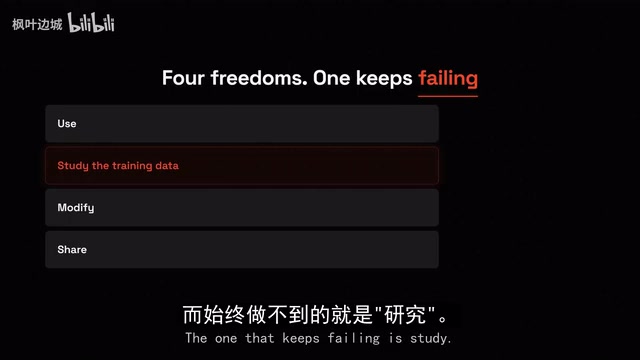
The Open Source Initiative (OSI) has been defining what "open source" means since 1998. It now hosts a dedicated page with an unambiguous title: open weights are not what you think they are. OSI's definition of open-source AI requires four freedoms — use, study, modify, and share. The one that consistently fails is "study": you cannot truly study a system whose training data you've never seen. You can probe it and test it, but you can't trace a wrong answer back to what caused it. If benchmark answers leaked into the training set, the weights won't tell you. Neither will the paper.
It's worth noting that distillation is precisely the technique that enables the "send a cake" strategy to be executed with surgical precision. The core idea behind knowledge distillation is to train a smaller model (the student) on the output probability distributions of a larger model (the teacher), so the student learns to mimic the teacher's behavior rather than learning from raw data from scratch. This means the smaller model indirectly inherits the larger model's "knowledge" at dramatically reduced training cost. For labs, this mechanism allows them to release a reasonably capable small version externally while keeping the true core assets — the large model's weights, training data, and training code — entirely locked away. The more useful the small downloadable model becomes, the deeper the external dependency on the large model grows, because distillation itself creates a structural asymmetry: you can accomplish most tasks with the small model, but the moment you need to raise your ceiling, you have to return to the large model's API.
The Four-Rung Ladder the G7 Drew
This May brought a quiet but pivotal moment. Rather than arguing over the definition of "open source," G7 Digital Ministers spent three months working with the OSI to construct a four-rung ladder.
The bottom rung is "weights available," then "open weights," then "open source AI," and at the top, "open source plus open data" — where you get the training set too.
Nearly every model you've heard of sits on the first or second rung. The top rung is almost empty, and the models that do sit there (like the Allen Institute's OLMo) are precisely the ones rarely discussed in benchmark conversations. In other words, the recipe was never on the table to begin with.
The OLMo series from the Allen Institute for AI (AI2) is the most academically recognized large language model project that comes closest to the "truly open source" definition. It not only releases model weights but also publishes the complete training dataset (Dolma), data processing pipelines, training code, and checkpoints from various stages of training. For the first time, this allows researchers to conduct end-to-end reproduction and auditing of a billion-parameter language model — from data cleaning and sampling ratios to model convergence curves. Yet OLMo's parameter count and capability ceiling are far below the flagship models of commercial labs, which itself illustrates a structural dilemma: the resource investment required for full openness (storage, bandwidth, legal review, data licensing negotiations) is already approaching the limits for nonprofit institutions, while for frontier training runs costing hundreds of millions of dollars, the tension between the cost of full open source and commercial return is nearly irresolvable.
Why Labs Are Willing to Give You the Cake
Given all this, the truly interesting question isn't why they've started holding back — it's why they were ever willing to give the cake away in the first place. A frontier model training run in 2026 costs between $200 million and $500 million. That's clearly not a charitable budget; there has to be a reason that can survive board review.
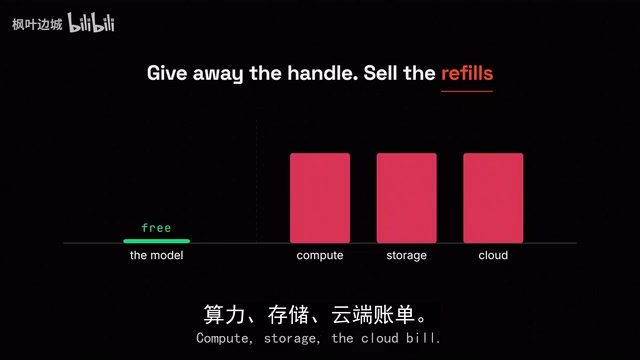
That reason is 24 years old. It comes from an essay Joel Spolsky wrote in 2002 called "Strategy Letter V." He wrote: smart companies work to commoditize their complements. A complement is something people must buy alongside your product; drive its price toward zero and demand for your product rises. Google gave away Android for free and kept every search that runs on top of it. This is the shape of "razor and blades" — give away the handle, make money on the blades.
In AI, the model is the handle. If a freely downloadable model is already good enough, no one can charge a premium for a mediocre one, and the money slides down to the next layer: compute, storage, cloud bills.
Meta has practically written this logic on its face. In April it released Muse Spark — its first frontier model, and the first one without public weights. Four months later it released Muse Glimmer, 30 billion parameters, Apache license, free to download. The model card states directly that it was "distilled" — meaning it was trained to mimic the answers of a larger model, so the free version is actually a compressed copy of the paid one. You get the small copy; they keep the original.
Alibaba's version of the same deal shows up in earnings reports: its AI cloud revenue grew 45% last quarter, with its AI product line delivering triple-digit growth for 12 consecutive quarters. The cloud that runs the models best is its own.
The Distribution Strategy of the Challengers
There's a second reason, and it's less about strategy than about position. Chinese labs weren't initially generous — they were just behind. When you're behind, giving away your model is the cheapest distribution method: first you save on a sales team, then on the cost of building your own serving infrastructure, and then the whole world tests your work for free. Beijing embedded the same logic into national policy, publishing targets for model counts.
But there's a trap embedded here: when you're catching up, openness is a perfect distribution argument; once you've caught up, that argument no longer holds. The entire industry is dancing around one question — what happens the day the free model is just as good as the paid one?
The Numbers Written Into the Licenses
This summer, we started seeing answers.
On July 26, Moonshot released Kimi K3, 2.8 trillion parameters. The first 15 lines of the license read exactly like MIT — until clause two appears: if you are in the business of model services and your revenue in any consecutive 12-month period exceeds $20 million, you must sign a separate agreement with Moonshot before commercializing.
Seventeen days later, Alibaba released 3.8 Max, 2.4 trillion parameters, with a license of the same shape but a higher threshold — $50 million, above which you must contact their business team. This license goes further, defining the category it protects: "AI work assistant" refers to products primarily used for AI-assisted coding or office productivity, then names two examples — both of which belong to Alibaba itself. The license uses product names to protect its author's own products. The model is free, right up until the moment you start competing with the person who wrote the terms.
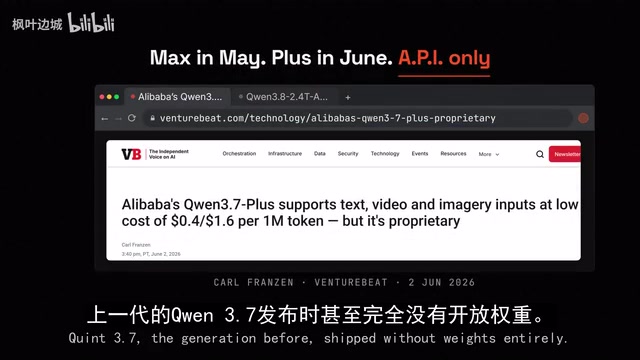
This wasn't even the earliest signal. The previous generation 3.7 skipped weights entirely: the May Max and June Plus were API-only — from the lab that had the loudest voice in the open-source narrative.
Not all labs are pivoting, though. DeepSeek released a 1.6 trillion parameter model in August under a pure MIT license, and it's not an isolated case. So this fracture isn't a China-vs-US divide — it runs between "labs that sell cloud" and "labs that buy reputation."
Licenses with commercial restriction clauses like these are legally referred to as "Source Available Licenses" or "Business Source Licenses" (BSL), and they differ fundamentally from OSI-certified open source licenses like MIT or Apache 2.0. OSI certification requires that licenses not discriminate against any person or field of endeavor, including commercial competitors. The moment a license includes language like "revenue exceeding X requires a separate agreement" or "cannot be used in products competing with the publisher," it is no longer an open source license under OSI standards — even if its first dozen lines are nearly identical to MIT. This kind of "commercial license disguised as MIT" has precedents in the database and infrastructure software world. HashiCorp (Terraform) and Elastic both followed the same path, switching from genuinely open source licenses to versions with added commercial restrictions and triggering community forks as a result. The AI model world is experiencing a similar license drift — except that because the weights themselves are opaque, this crack is harder for ordinary users to detect.
Governments Enter the Picture
The quieter half of the story is that the decision is no longer solely in the labs' hands.
On June 2, the White House signed an executive order on frontier AI, creating a category called "regulated frontier models" with classification criteria that are confidential. Developers can provide government access up to 30 days before release. This is voluntary — the executive order says so in black and white — and there's no licensing requirement. But once a confidential list and a 30-day window exist, releasing a model carries an attached procedure for the first time.
Five weeks later, Reuters reported that China's Ministry of Commerce had sat down with Alibaba, ByteDance, and Z.AI to discuss restricting overseas access to their most powerful models, with Qwen explicitly named. The framework that emerged in those discussions was a three-tier system: basic tools with simple registration, more capable models with security review, and the most sensitive models restricted to domestic use only. But nothing has been finalized — no draft, no date — and Reuters was clear this was discussion, not directive.
What's interesting is that all of this is happening while official political rhetoric points in the opposite direction. In July, Xi Jinping stated at a conference that China must encourage open source and openness — while his Ministry of Commerce was simultaneously studying how to restrict it.
Europe has already written this logic into law. The EU AI Act grants freely available open-source models exemptions from certain documentation obligations, but withdraws that exemption above a training compute threshold of 10²⁵ floating-point operations. Translated: small and open is fine; large and open needs a conversation.
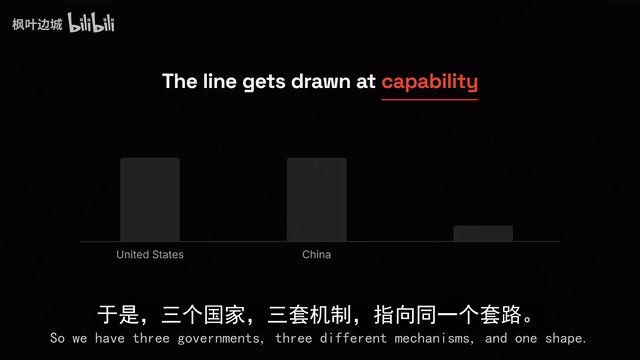
So we have three governments, three different mechanisms, one shape — openness is welcome below a certain line, and that line is drawn at "capability."
The 10²⁵ FLOP (floating-point operations) compute threshold in the EU AI Act represents one of the rare attempts in current regulatory frameworks to quantify "capability" into an enforceable standard. For context: GPT-4's training compute is estimated at roughly 2×10²⁴ to 10²⁵ FLOP, meaning this threshold is roughly calibrated to the training scale of current frontier models. Models exceeding it are classified by the EU as "systemic risk GPAI models" and must meet additional obligations including adversarial testing, serious incident reporting, and cybersecurity measures — at which point the open-source exemption no longer applies. The policy intent of this design is to concentrate regulatory costs on large models that could genuinely cause systemic impact, rather than hampering the ecosystem of smaller open models. Critics point out, however, that FLOP is a proxy metric that can be gamed — highly efficient training algorithms (such as the mixture-of-experts architecture used by DeepSeek) can achieve equivalent capability with less compute, and a compute threshold cannot capture this.
Is Open-Source AI Actually Dying?
In the face of the panic, let me push back: the raw supply signals point in exactly the opposite direction. More open-weight models were released in 2026 than in any previous year. Thinking Machines released a 975-billion-parameter model under Apache, Google released Gemma 4, Meta brought back Glimmer, and Chinese labs broke the trillion-parameter mark with MIT licenses more than once.
Look at what people are actually downloading — that's the number that matters most. Last month on model platforms, Meta's 30-billion-parameter Glimmer was downloaded 665,000 times; Alibaba's 2.4-trillion flagship, just 52,000 times. Do the hardware math and the gap makes sense: those 865GB of weights require roughly seven data center GPUs just to load, before generating a single token. Very few teams have those resources. Most of us have one GPU and a deadline.
So my read is this: open-source AI won't die next year. It actually died the day the industry agreed to call "downloading" the same as "open source" — and that mistake has never been corrected. What's dying right now is "frontier openness," and it's dying on a schedule set by revenue thresholds, not any philosophical commitment.
For the vast majority of people building things, open weights still win — and by a wide margin. The one you can actually run is the 30-billion-parameter distilled version, licensed for free, downloaded at 12 times the rate of the frontier model. But the part that has failed is real: if you need to audit a model, reproduce a result, or prove what it was actually trained on, what was promised was never delivered.
What deserves the frustration isn't any particular company — it's the word "open." It did three years of work that the licenses never volunteered to do, earning vast amounts of trust it never paid for.
Leave you with one thought: every license now has a number written into it — $20 million, $50 million, 10²⁵. And someone reselects those numbers every year. When the year comes that they get smaller, what's your plan?
Related articles
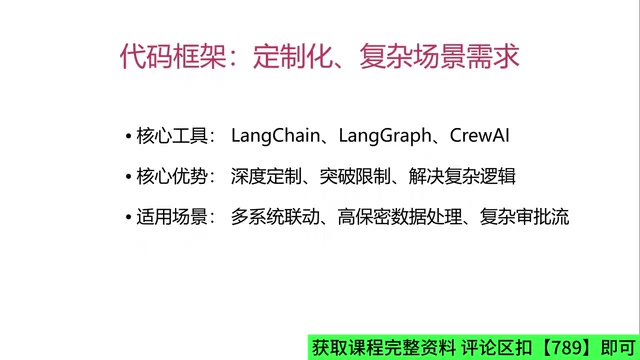
Enterprise AI Agent in Practice: A Dual-Track Strategy with Low-Code and Hardcore Frameworks
A dual-track enterprise AI Agent framework: low-code platforms (Coze/Dify/n8n) and code frameworks (LangChain/LangGraph/CrewAI), covering MCP protocol, nine smart job roles, and four real-world projects.
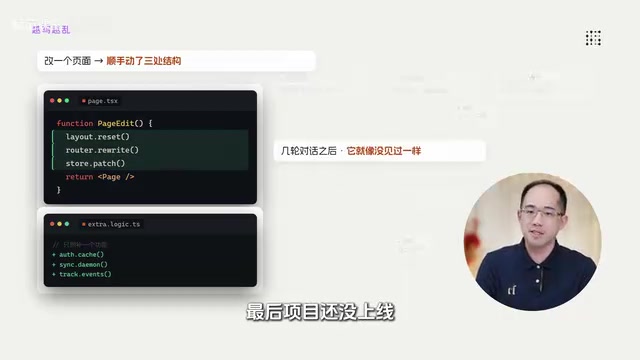
OpenSpec in Practice: Taming AI Code Generation with Spec-Driven Development (SDD)
AI code goes off-rails after 30 minutes? Learn how OpenSpec uses Spec-Driven Development (SDD) to make AI-generated code trackable, verifiable, and deliverable.
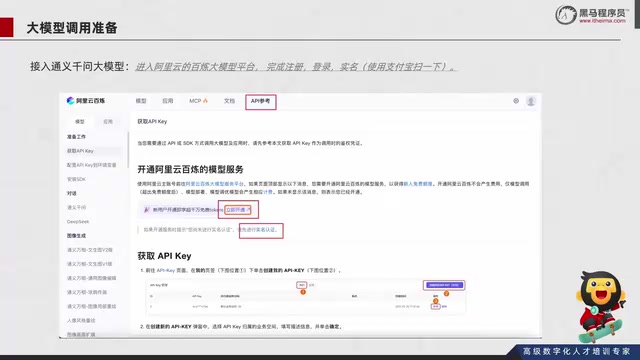
Getting Started with LLM Development: Alibaba Cloud Model Studio Setup and API Key Configuration
A hands-on beginner's guide to LLM development: covers Alibaba Cloud Bailian registration, real-name verification, API Key creation, and free quota management for RAG and Agent development.