Three-Stage Advanced Roadmap for AI LLM Application Development: From Fundamentals to RAG and Agent in Practice

AI LLM application development has three stages—fundamentals, introduction, and hands-on—each with clear pass criteria.
The article breaks AI LLM application development into three stages—foundational principles, RAG and Agent introduction, and hands-on projects—with verifiable pass criteria for each. The foundational stage focuses on system intuition over math; the introductory stage centers on RAG, Agent, and fine-tuning, with design and selection judgment as key; the hands-on stage requires real users and a commercial closed loop, not tutorial demos. The framework serves as a progress ruler to help self-learners avoid skipping stages.
Title
Three-Stage Advanced Roadmap for AI LLM Application Development: From Fundamentals to RAG and Agent in Practice
Meta Description
How to learn AI LLM application development? This article breaks down the three progressive stages of foundational principles, RAG and Agent introduction, and hands-on projects, clarifying the learning focus and pass criteria for each stage to help developers accurately gauge their progress and avoid the common pitfall of only building demos.
Article Content
The learning path for AI LLM application development is often mystified, but stripping away the surface, the core obstacles can be clearly grouped into three stages. A tutorial series from Bilibili breaks this path into three checkpoints—fundamentals, introduction, and hands-on practice—providing developers with a precise self-assessment map. The value of this framework lies not in listing knowledge points, but in defining the pass criteria for each stage—knowing "how much you need to learn to pass" is often more important than knowing "what to learn."
Stage 1: Foundational Principles—No Need to Grind Through Math
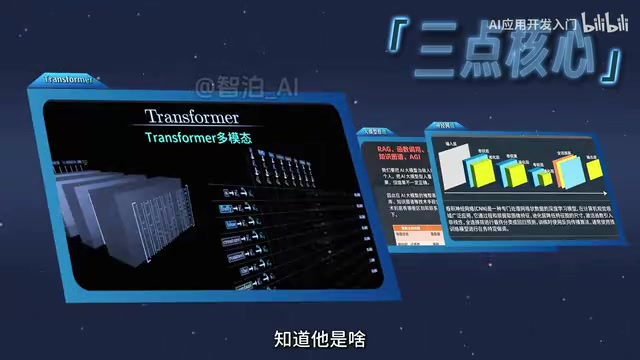
Many people associate "fundamentals" with deriving backpropagation formulas, but practical application development doesn't require you to become an algorithm theory expert. The author explicitly states that at this stage, mastering three points is enough: the basic operating logic of neural networks, what the Transformer architecture does, and how large models themselves work.
The third point is marked as "most critical." The reason is straightforward: the vast majority of current AI applications—multi-turn dialogue, intelligent customer service, knowledge Q&A—are built on predicting LLM behavior. Without understanding how models generate answers, how they lose context, and why they produce hallucinations, subsequent engineering decisions have no foundation. The essence of this stage is building system intuition, not academic expertise.
To clarify: understanding LLM principles doesn't mean being able to train a model from scratch. It's closer to understanding a black box's input-output patterns and capability boundaries—the prerequisite for all upper-layer application design. Skipping this step and directly copying code will leave you without direction when problems arise.
The Transformer architecture is a neural network structure proposed by Google in the 2017 paper "Attention Is All You Need." Its core is the self-attention mechanism, which allows the model to dynamically attend to all other positions in the input sequence when processing each word. Unlike RNNs that process words sequentially, Transformers can compute in parallel, greatly improving training efficiency. Current mainstream LLMs (GPT, Claude, Llama, etc.) are all based on Transformer decoder or encoder-decoder variants. Understanding its basic structure—multi-head attention, positional encoding, feed-forward networks—helps grasp why models can capture long-range dependencies and why context length has limits.
LLM hallucination refers to the model generating content that appears plausible but is factually incorrect or fabricated. The root cause is that the model is essentially a probabilistic next-word predictor, not a factual database; when training data is sparse or prompt information is insufficient, the model fills in with fluent but incorrect content. Hallucinations cannot be completely eliminated—only mitigated through RAG, prompt engineering, output validation, and other means. Understanding the causes of hallucination is a prerequisite for designing reliable AI applications and the key basis for deciding whether external knowledge retrieval is needed.
Stage 2: RAG and Agent—The Watershed of Application Development
Entering the introductory stage, three technologies form the foundation for LLM application engineers: RAG, Agent, and fine-tuning.
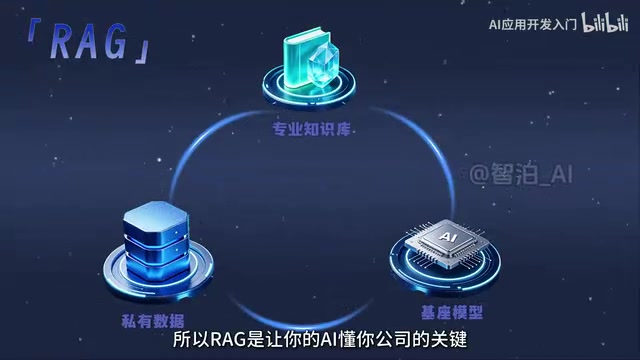
RAG solves the knowledge boundary problem. A company's private data and domain knowledge base cannot all be fed into model training—it's cost-prohibitive and can't keep pace with timeliness. Retrieval-augmented generation lets models dynamically call external knowledge when answering—the standard solution for making AI "understand your company."
Agent is an upgrade in productivity form. It enables models to autonomously plan, call tools, and complete multi-step tasks—automatically writing weekly reports, querying data, sending emails. The author positions it as "the inevitable path of productivity evolution," a judgment fully validated in the current tool-calling ecosystem.
Fine-tuning is placed in a supplementary position. Vertical industries seeking extreme performance can't avoid fine-tuning, but it's costly and often impractical for small companies. The key capability here isn't being able to do fine-tuning, but judging when to use RAG versus when fine-tuning is necessary. Selection judgment is scarcer than hands-on ability.
So what's the standard for passing the introductory stage? The author's definition is quite specific: being able to independently design a solution, implement RAG or Agent, and clearly explain why it was designed that way.

This standard deserves elaboration. Getting code to run is just the passing line; being able to explain architectural trade-offs—why vector retrieval instead of full-text search, why tool calling instead of hardcoding prompts—demonstrates genuine system understanding. Interview follow-up questions often land on this "why."
RAG (Retrieval-Augmented Generation) typically involves: vectorizing the user query, retrieving the most relevant document chunks from an external knowledge base, then concatenating the retrieval results as context into the prompt for the LLM to generate an answer. Its tech stack usually involves embedding models, vector databases (such as Milvus, Pinecone, Chroma), and retrieval strategies (dense retrieval, sparse retrieval, or hybrid retrieval). RAG's advantages are that knowledge can be updated in real time, sources are traceable, and no model retraining is needed—costing far less than fine-tuning. However, RAG's effectiveness depends heavily on retrieval quality and document chunking strategy, and engineering practice often requires tuning for recall and precision.
Agent refers to a system with an LLM as its decision core, completing multi-step tasks through planning, memory, and tool calling. Common architectures include ReAct (Reasoning + Acting), Plan-and-Execute, and other paradigms. Agents can call external tools (search, calculators, APIs, databases) and dynamically adjust next actions based on execution results. Unlike single-turn Q&A, Agents emphasize autonomy and closed-loop feedback, but this brings engineering challenges in reliability, loop control, and cost control. Current Agent deployments are mostly seen in automated workflows, customer service ticket processing, and data analysis assistants.
Fine-tuning refers to continuing to train a pretrained LLM with domain- or task-specific data, shifting model parameters toward the target distribution. Common approaches include full-parameter fine-tuning and parameter-efficient fine-tuning (such as LoRA, QLoRA), the latter greatly lowering VRAM and compute thresholds. Fine-tuning excels at injecting style, format, and domain terminology, but is uneconomical for frequently updated knowledge—each knowledge change requires retraining. Therefore the industry typically follows a "RAG first, fine-tuning later" selection order: RAG addresses knowledge timeliness and private data access, while fine-tuning addresses behavior alignment and output stability. Judging when fine-tuning is necessary depends on whether the task requires the model to internalize specific expression patterns and whether retrieval solutions cannot meet latency or stability requirements.
Stage 3: Hands-on Projects Must Close the Commercial Loop
A common pitfall in the third stage: doing a few tutorial demos and assuming you have hands-on experience. The author describes the typical scenario—a resume lists project experience, but the candidate stumbles on the first HR question.
The root of the problem lies in the nature of the project. Tutorial demos have standard answers; real projects don't. This stage requires building projects with real users that close the commercial loop. The author's examples are specific: for AI search, landing precise Q&A similar to Zhihu's direct-answer feature; for AI image processing, optimizing recommendation strategies similar to Baidu Images to improve click-through rates.

The core distinction here is "toy" versus "product." Toy projects validate technical feasibility; product projects validate engineering capability under real constraints—latency, cost, user feedback, performance evaluation. The gap between an advanced demo and a real project in an interviewer's eyes isn't code volume, but whether it has been tempered through real pipelines.
Practical Value of the Three-Stage Framework
The reference value of this path is that it provides a verifiable progress ruler. The ruler for the foundational stage is whether you can explain model behavior; for the introductory stage, whether you can independently complete a RAG or Agent solution with architectural decisions; for the hands-on stage, whether the project has real users and a closed loop. The three rulers progress layer by layer, each pointing to "understanding" rather than "completion."
For self-learners, the most common mistakes are grinding through theory in the first stage or padding with demos in the third stage. The author's advice is to tackle them one by one at the right pace—even beginners can get through the entire pipeline, provided they don't skip stages.
One-line Summary
AI LLM application development has three stages—fundamentals, introduction, and hands-on—each with clear pass criteria.
Paragraph Summary
The article breaks the learning path for AI LLM application development into three stages—foundational principles, RAG and Agent introduction, and hands-on projects—setting verifiable pass criteria for each. The foundational stage only requires grasping neural network operating logic, Transformer architecture, and LLM principles, focusing on building system intuition rather than mathematical derivation; the introductory stage centers on RAG, Agent, and fine-tuning, with core capabilities being selection judgment and architectural explanation, and the standard being able to independently design solutions and articulate trade-off rationale; the hands-on stage requires projects with real users and a commercial closed loop, not tutorial demos. The framework's value lies in providing a progress ruler to help self-learners avoid grinding theory or padding with toy projects.
Related articles

Free Unlimited Claude Code Solution: Agnes AI + CC Switch Setup Guide
No paid subscription needed — pair the free AI platform Agnes AI with the open-source tool CC Switch to provide a backend for Claude Code, enabling unlimited free calls to text, image, and video models. This guide covers the full setup, test results, and usage boundaries.

A Complete Zero-Cost Guide to Getting Started with Claude Code for Beginners in China
A beginner's guide to Claude Code for users in China: two installation methods (command line and IDE plugin), full configuration steps for replacing the official API with the free domestic LongCat model, and a hands-on demo of building a small tool with natural language, plus tips.

When the NSA Gets Involved: The AI Supply Chain Crisis Behind Open-Source CVEs and API Key Hijacking
Multiple open-source projects disclosed severe CVEs in one day, PHP flaws alarmed the FBI, and Railway and OpenCode were breached with API keys stolen. This article breaks down the vulnerability window, AI-accelerated exploitation, and the AI supply chain crisis behind the API key black market, with a developer defense checklist.