Tidal Cracks Down on AI Music: Mass Removal of Fully AI-Generated Tracks
Tidal bans and removes millions of fully AI-generated tracks, allowing AI-assisted creation, setting AI music boundaries for streaming platforms.
Music streaming platform Tidal announced it will ban and remove millions of entirely AI-generated tracks to counter "AI slop," becoming one of the first platforms to draw a clear red line on AI music. Its policy uses "human involvement" as the criterion, allowing AI-assisted creation such as arrangement suggestions, mixing optimization, or inspiration while rejecting fully generated tracks lacking substantive human creativity. The article notes that tools like Suno and Udio have caused a surge in AI tracks of varying quality, inflating catalogs and diluting recommendation algorithms. Tidal's large-scale content purge aims to maintain its musical character and user experience, sending an industry signal that may prompt other platforms to follow, though timelines and detection methods remain unresolved.
Music streaming platform Tidal is taking aggressive action against the flood of AI-generated music. According to RSS sources, Tidal has announced it will ban and remove millions of tracks that are entirely AI-generated, in response to the impact of "AI slop" on the platform. This move makes Tidal one of the first streaming platforms to clearly draw a red line on AI music.
Tidal's New AI Music Rules: Fully Generated Banned, Assisted Creation Allowed
Tidal's policy is not a blanket rejection of AI. The company explicitly states it will still accept songs created with AI assistance—the key lies in the boundary between "assisted" and "fully generated." In other words, creators using AI tools for arrangement suggestions, mixing optimization, or inspiration are still permitted, but tracks that are entirely AI-generated and lack substantive human creativity will be turned away.
This distinction is quite representative in current AI music governance. With the proliferation of AI music generation tools like Suno and Udio, the number of AI tracks on streaming platforms has surged, with wildly varying quality. Tidal has chosen "human involvement" as its criterion rather than simply banning all AI-related works.
Suno and Udio are currently the most representative AI music generation platforms—users can generate songs complete with vocals, accompaniment, and full arrangements simply by entering text prompts. Their rapid rise has significantly lowered the barrier to music production and directly led to a surge of AI tracks on streaming platforms. Meanwhile, major record labels like Universal Music have filed copyright lawsuits against both platforms, with the core dispute being whether their training data used copyrighted recordings without authorization. This background explains why streaming platforms need to take a clear stance on AI music: on one hand, they must deal with their catalogs being flooded by mass-generated content; on the other, they must balance copyright compliance with the creator ecosystem. Tidal's approach of drawing the line at "human involvement" is precisely a compromise formed under this industry tension.
Why "Millions of Tracks"? The AI Slop Inundation Problem
The original report uses the phrase "AI slop inundates music streaming" to describe the current situation—AI junk content is flooding music streaming. This is no exaggeration. Generative AI tools have dramatically lowered the barrier to music creation; anyone can mass-produce tracks by simply entering prompts and upload them to streaming platforms. The result is rapid catalog expansion and the risk of recommendation algorithms being diluted by low-quality content.
For Tidal, removing millions of tracks means a large-scale content purge. Behind this action is the platform's effort to maintain its musical character and user experience. When users struggle to find genuinely valuable works amid a sea of AI-generated content, both the platform's recommendation quality and brand trust suffer.
"AI slop" is a pejorative term that emerged alongside the spread of generative AI, referring to the massive volume of low-quality digital output that is mass-produced by AI and lacks substantive content value. The term combines "AI" with "slop" (originally meaning swill or inferior feed), first gaining popularity in text and image domains before extending to music, video, and other content forms. Unlike the neutral descriptor "AI-generated content," "AI slop" carries an explicitly negative evaluation, emphasizing low cost, high volume, severe homogeneity, and the tendency to chase traffic and recommendation slots rather than express creative intent. In the music streaming context, AI slop is typically characterized by formulaic melodies, templated arrangements, and enormous upload volumes, which easily dilute the overall quality of a platform's catalog and challenge the effectiveness of recommendation algorithms. Understanding this term helps grasp exactly what Tidal's policy targets.
Industry Signal: Streaming Platforms Begin Drawing Boundaries for AI Music
Tidal's move sends a clear signal: streaming platforms are no longer taking a wait-and-see approach to AI music. Although the report does not mention a specific implementation timeline or technical detection methods, the stated commitment to "ban and remove" is clear enough in itself.
From an industry perspective, this policy could trigger a chain reaction. Whether other platforms follow suit, how to define "AI-assisted" versus "fully AI-generated," and how to practically identify millions of tracks are all unresolved challenges. Tidal's attempt will provide a reference sample for the entire music streaming industry—platforms need to find their own balance between embracing AI technology and safeguarding music quality.
For independent musicians and creators, Tidal's new rules also convey a clear expectation: AI can be a tool, but it cannot replace creation itself.
One-line Summary
Tidal bans and removes millions of fully AI-generated tracks while allowing AI-assisted creation, drawing boundaries for AI music on streaming platforms.
Paragraph Summary
Music streaming platform Tidal has announced it will ban and remove millions of entirely AI-generated tracks to counter the impact of "AI slop," becoming one of the first streaming platforms to clearly draw a red line on AI music. Its policy is not a blanket rejection of AI but uses "human involvement" as the criterion, allowing assisted creation through AI arrangement suggestions, mixing optimization, or inspiration while rejecting fully generated tracks lacking substantive human creativity. The article notes that the proliferation of tools like Suno and Udio has led to a surge in AI tracks of varying quality, inflating platform catalogs and diluting recommendation algorithm effectiveness. Tidal's large-scale content purge aims to maintain its musical character and user experience, and its stance sends an industry signal that may prompt other platforms to follow, though specific timelines and technical detection methods remain unresolved.
Related articles

GLM-5.4 Released: How a 750B Model Achieves Stronger Reasoning
Zhipu AI releases GLM-5.4, a 750B model that boosts reasoning by running the middle 28 layers twice. GPQA Diamond rises from 47.58 to 56.26, with 1M token context and weights to be open-sourced after safety hardening.
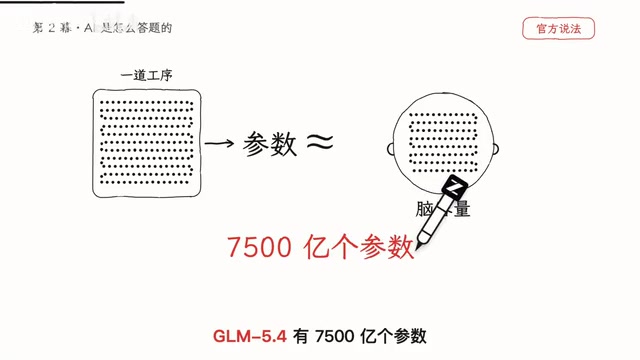
Understanding GLM 5.4 in 8 Minutes: How Loop Transformer Makes AI Smarter Without More Parameters
GLM 5.4 didn't grow its parameters yet got smarter. Using the memorizer-vs-reasoner analogy, this article explains how Loop Transformer runs the middle 28 steps twice, how gated progressive update and two other techniques stabilize the second pass, and how generalized Coding uses code to command 3D, mechanical design, and game development — with official comparison data and open questions.
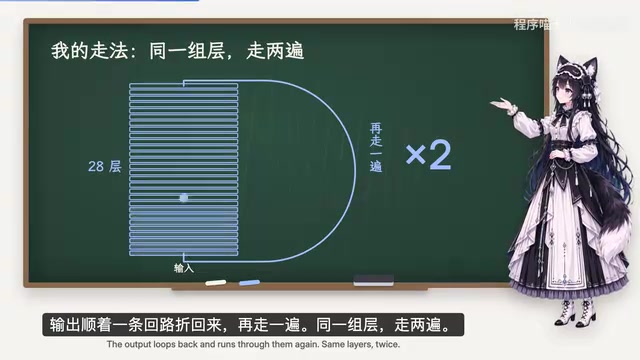
GLM-5.4 Released: An In-Depth Look at Zhipu's First Loop Transformer Flagship Model
Zhipu releases GLM-5.4, its first Loop Transformer flagship. Built on GLM-5 with 28 layers looped twice—no extra params, ~10% more compute, stronger math and long-context reasoning.