TikTok Service Outage Analysis: Stability Challenges for Short-Video Platforms
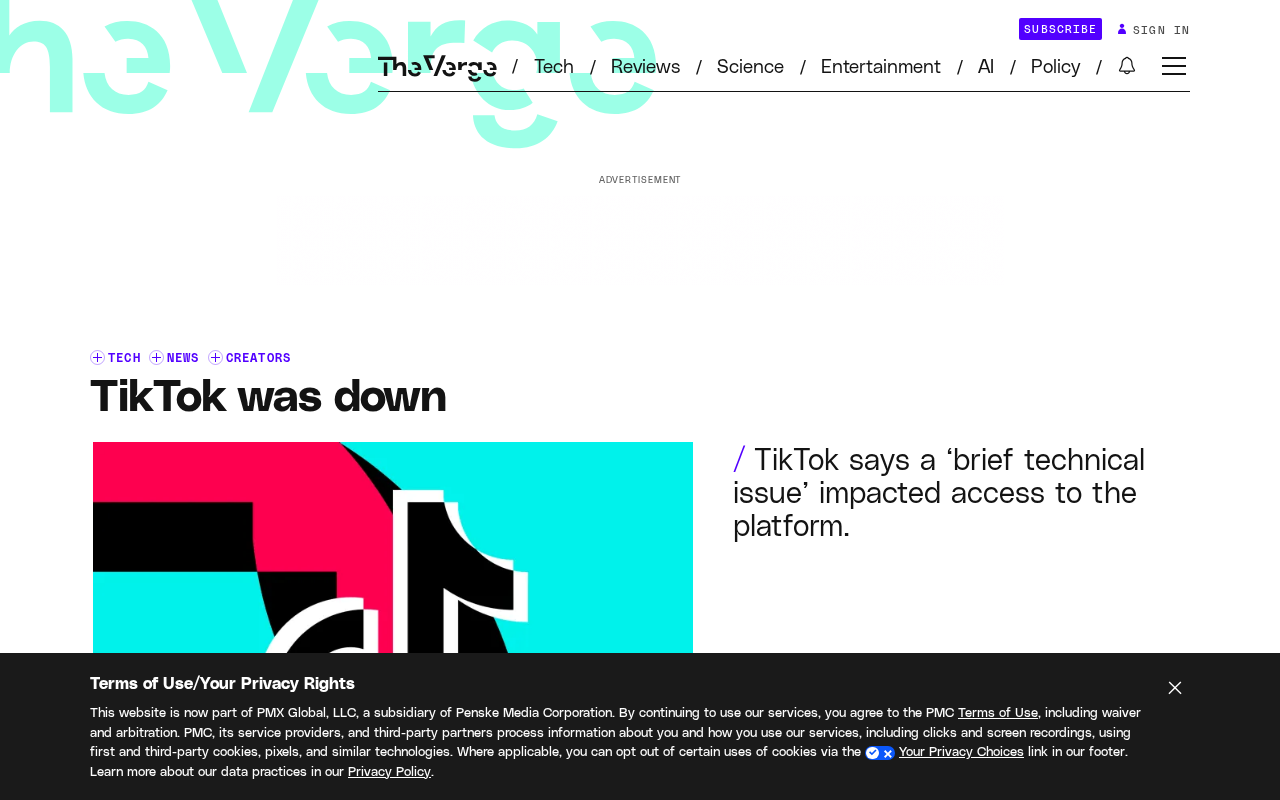
TikTok's brief multi-platform outage highlights the technical and commercial value of service stability for short-video platforms.
TikTok experienced service anomalies early Tuesday, with iPhone feed videos failing to load and search results missing on iOS, Android, and web. The multi-platform impact suggests a server-side cause. The article analyzes user experience and platform trust, technical architecture challenges, and industry competition—noting that CDN, databases, recommendation services, and API gateways are all potential failure points, and that service reliability directly ties to ad impressions, e-commerce conversions, and creator income. It recommends strengthening multi-active data centers, intelligent traffic scheduling, and transparent communication.
Incident Recap: TikTok Experiences Brief Service Disruption
According to RSS sources, TikTok experienced service anomalies early Tuesday, with users reporting failed video loading, missing search results, and broken favorites functionality. Specifically, videos sometimes failed to load in the iPhone "For You" feed, and search results occasionally went missing on iOS, Android apps, and the web. The outage affected core features, though reports did not specify the duration or scope of the impact.
As a leading global short-video platform, any service fluctuation at TikTok draws widespread attention. Although this incident appeared brief, it once again brings the stability of large-scale internet services to the forefront.
Impact: A Dual Test of User Experience and Platform Trust
From the user side, failed video loading directly cuts off the content consumption path, while search anomalies hinder proactive discovery. For groups that rely on TikTok for socializing, entertainment, or even content creation, even a brief interruption can cause inconvenience. The fact that the outage affected multiple platforms (iOS, Android, Web) suggests the problem may lie on the server side rather than in local networks.
Building platform trust requires long-term stable performance, and a single outage can erode user confidence. Although TikTok has not disclosed the cause, such incidents typically prompt teams to reflect on redundancy design and incident response mechanisms.
Technical Perspective: Inherent Stability Challenges for Short-Video Platforms
Short-video platforms must handle massive video streams, real-time recommendations, and search indexes, making their tech stacks complex. Common failure points include CDN edge node anomalies, database query timeouts, recommendation algorithm service degradation, and API gateway rate limiting. The multi-platform feature impact in this case may stem from a brief unavailability of backend service clusters.
Large platforms typically adopt microservices architecture and disaster recovery designs, but completely avoiding failures is nearly impossible. The key lies in rapid diagnosis and recovery, as well as reducing user anxiety through status pages and transparent communication. TikTok did not mention an official response in the reports, which may have affected crisis communication effectiveness.
Microservices Architecture and Disaster Recovery Design
Microservices architecture breaks a large application into multiple independently deployable, loosely coupled small services (such as user service, recommendation service, video transcoding service), each of which can be scaled and fault-isolated independently. The advantage is that a single service failure won't directly bring down the entire system, but the trade-off is longer inter-service call chains, where timeouts or unavailability at any link can trigger cascading failures. Disaster recovery design improves overall availability through multi-replica deployment, cross-availability-zone redundancy, and circuit breaking/degradation (quickly returning fallback results when downstream services are abnormal rather than waiting indefinitely). Short-video platforms also typically maintain a Status Page to inform the public of outage progress, reducing user anxiety caused by information asymmetry.
CDN Edge Nodes and API Gateway Rate Limiting
A CDN (Content Delivery Network) caches video segments at edge nodes deployed worldwide, enabling users to access content nearby, reducing origin server pressure and playback latency. Edge node anomalies or cache invalidation can cause video loading failures. The API gateway is the unified entry point for all client requests, handling authentication, routing, and rate limiting; when sudden traffic exceeds thresholds, rate-limiting policies proactively reject some requests to protect the backend, manifesting as empty search results or unavailable features. These two types of components are high-incidence areas for short-video platform failures and are the first checkpoints when troubleshooting server-side issues.
Industry Implications: Service Reliability Is an Invisible Barrier in Platform Competition
For platforms with billions of daily active users, stability is directly tied to commercial interests—ad impressions, e-commerce conversions, and creator income all depend on service availability. Although this incident did not cause widespread panic, it reminds practitioners: while pursuing feature innovation and algorithm optimization, infrastructure robustness cannot be overlooked.
In the future, as AI recommendations and real-time interactions deepen, platforms' dependence on computing and network resources will only increase. Building multi-active data centers, intelligent traffic scheduling, and automated failover will become standard capabilities for top players.
Conclusion
TikTok's brief outage did not escalate into a major incident, but it sounded an alarm for the industry. In today's fiercely competitive short-video landscape, the baseline of user experience is service stability. Only by solidifying the technical foundation can the innovation flywheel keep spinning.
One-line Summary
TikTok's brief multi-platform outage highlights the technical and commercial value of service stability for short-video platforms.
Paragraph Summary
TikTok experienced service anomalies early Tuesday, with iPhone feed videos failing to load, search results missing on iOS, Android, and web, and favorites functionality broken. The multi-platform impact suggests a server-side cause. The article analyzes three dimensions: user experience and platform trust, technical architecture challenges, and industry competition. Short-video platforms have complex tech stacks, with CDN, databases, recommendation services, and API gateways all potential failure points; microservices and disaster recovery designs can mitigate but not eliminate failures. Service reliability is directly tied to ad impressions, e-commerce conversions, and creator income, making it an invisible competitive barrier. The article notes that TikTok did not provide an official response in the reports, which may have affected crisis communication, and recommends that leading platforms strengthen multi-active data centers, intelligent traffic scheduling, and transparent communication.
Related articles
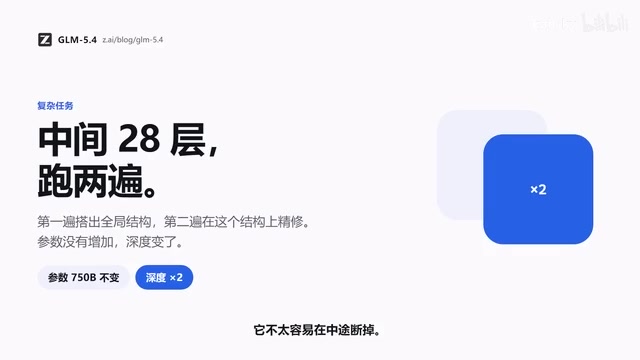
GLM-5.4 Released: How a 750B Model Achieves Stronger Reasoning
Zhipu AI releases GLM-5.4, a 750B model that boosts reasoning by running the middle 28 layers twice. GPQA Diamond rises from 47.58 to 56.26, with 1M token context and weights to be open-sourced after safety hardening.
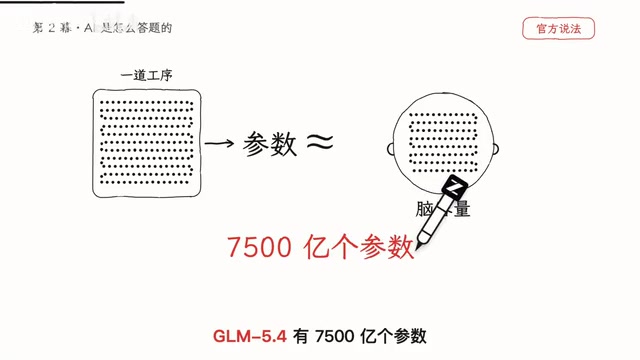
Understanding GLM 5.4 in 8 Minutes: How Loop Transformer Makes AI Smarter Without More Parameters
GLM 5.4 didn't grow its parameters yet got smarter. Using the memorizer-vs-reasoner analogy, this article explains how Loop Transformer runs the middle 28 steps twice, how gated progressive update and two other techniques stabilize the second pass, and how generalized Coding uses code to command 3D, mechanical design, and game development — with official comparison data and open questions.
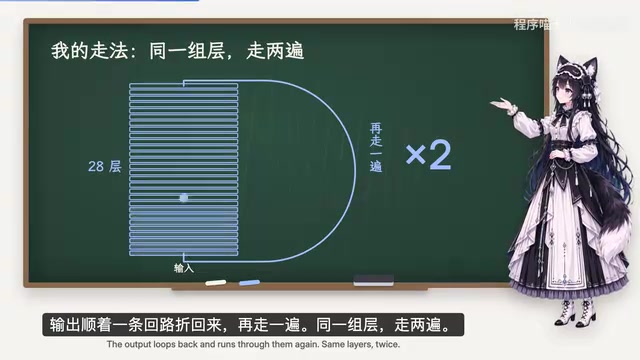
GLM-5.4 Released: An In-Depth Look at Zhipu's First Loop Transformer Flagship Model
Zhipu releases GLM-5.4, its first Loop Transformer flagship. Built on GLM-5 with 28 layers looped twice—no extra params, ~10% more compute, stronger math and long-context reasoning.