Toki Coordination: The AI That Schedules Your Meetings Like a Real Executive Assistant
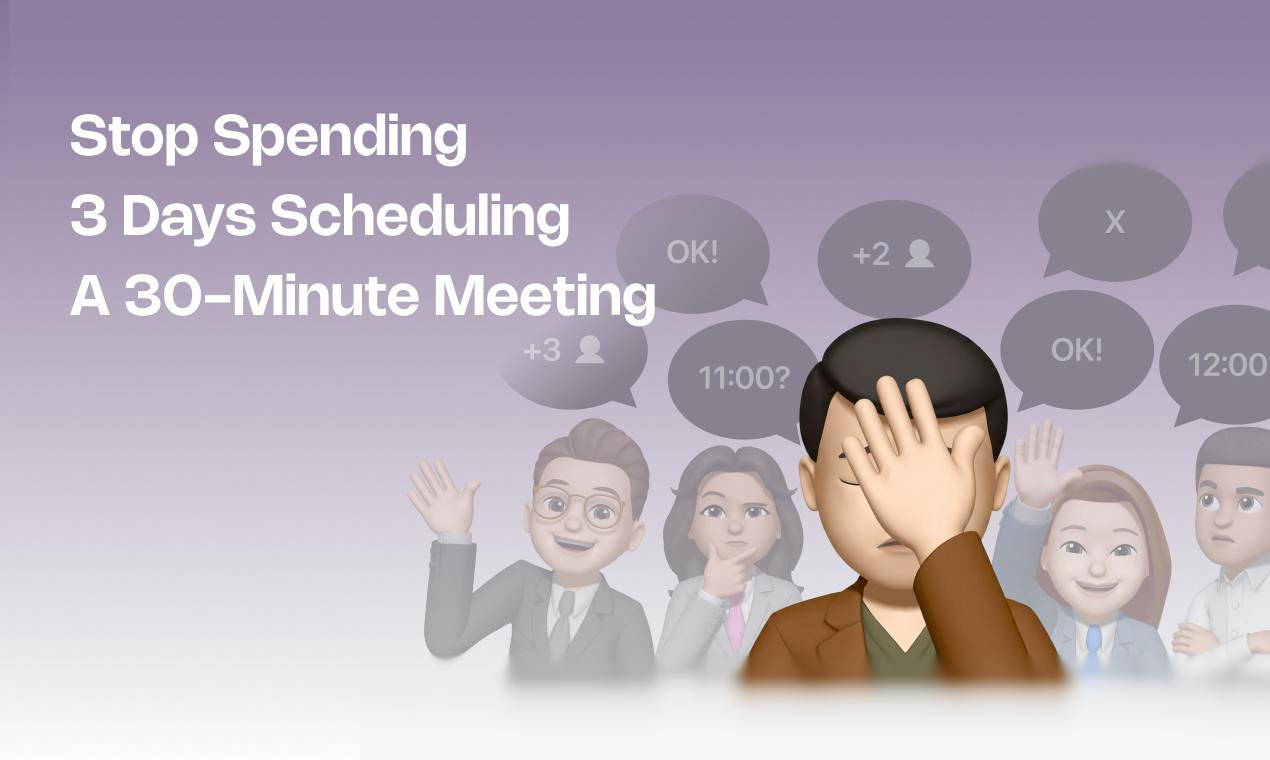
Toki uses AI agents to automate multi-party meeting scheduling, offered free as a virtual executive assistant.
Toki Coordination, ranked third on Product Hunt at launch, positions itself as a "virtual executive assistant" tackling the high-frequency, low-efficiency pain point of multi-person meeting scheduling. Unlike one-way tools like Calendly, Toki handles two-way and multi-party time negotiation — automatically emailing attendees, finding mutually available slots, following up, and sending invites with no manual intervention. It also extends into personal time management, including protecting focus time, remembering user preferences, and assisting with priority-setting. The product is completely free, positioning against the tens of thousands of dollars a human EA would cost. Key adoption challenges include recipient acceptance of AI-sent emails, calendar data privacy, and reliable handling of complex scenarios like cross-timezone conflicts and cascading rescheduling.
In team environments, scheduling what seems like a simple 30-minute multi-person meeting can easily eat up days — back-and-forth confirmations, last-minute cancellations that send you back to square one. Toki Coordination, ranked third on Product Hunt, aims to end this inefficiency with a "virtual executive assistant."
What Problem Is Toki Solving?
Meeting scheduling is one of the most common yet tedious pain points for knowledge workers. Toki's product positioning targets this scenario directly: it positions itself as a genuine executive assistant, taking ownership of the entire meeting coordination workflow.
According to the official description, Toki proactively emails attendees, negotiates a time that works for everyone, follows up when needed, and ultimately sends out the calendar invite. This means users no longer have to play the role of "the person in the group chat chasing everyone for availability" — the whole task is offloaded to an AI agent.
The core value proposition is automated negotiation. Traditional scheduling tools (like Calendly and its alternatives) essentially ask the other party to pick from slots you've made available. Toki emphasizes two-way and even multi-party time negotiation — when someone cancels, it can reorganize the coordination process rather than forcing you to start from scratch.
Beyond Scheduling: Time Management and Prioritization
Toki extends its feature set beyond meeting coordination into personal time management. According to the product description, it helps users "protect your time," architect your schedule, remember personal preferences, and assist in prioritizing the most important tasks and urgent deadlines.
This combination of features paints the picture of a more complete "AI schedule manager" rather than a simple booking tool. Remembering preferences means it gradually learns about you over time — for example, that you don't like morning meetings or want to block out daily focus time — and automatically factors these constraints into coordination.
This kind of proactive agency is one of the most important directions in current AI applications: rather than waiting for commands, it understands your goals and executes a series of actions on your behalf. Meeting coordination happens to be a use case with clearly defined boundaries, explicit rules, and high enough frequency to serve as an ideal proving ground for AI agent utility.
A note on Agentic AI: Agentic AI is one of the core paradigms driving real-world LLM adoption today, and it differs from traditional "Q&A AI" in a fundamental way: it doesn't just respond to a single instruction, but autonomously plans multi-step tasks, makes decisions mid-execution, and takes actions in external environments (like email or calendar APIs). Meeting coordination is a natural fit for this paradigm — the full workflow involves sending emails, waiting for replies, parsing available time slots, handling conflicts, triggering follow-ups, and more. Each step requires dynamic decision-making based on the previous result, not simply executing a pre-written script. This is why similar scenarios (flight rebooking, customer support ticket handling) have become prime testing grounds for AI agent products.
Pricing Strategy and Market Positioning
Toki leads with a compelling contrast in its messaging: hiring a real human executive assistant used to cost "tens of thousands of dollars" — and now this service is free.
This pricing strategy is worth paying attention to. Free means an extremely low barrier to try, which helps rapidly accumulate users and usage data — and for a product that needs to learn user preferences and relies on real meeting coordination scenarios to refine the experience, user scale and data feedback are critical. Of course, how a free product eventually monetizes (subscriptions, enterprise plans, per-use billing, etc.) remains an open question.
Based on Product Hunt metrics, Toki launched to 107 upvotes and 12 comments, landing in third place for the day across the Productivity, Calendar, and Artificial Intelligence categories. This level of traction suggests that the need for "AI to schedule my meetings" genuinely resonates with the market.
Competitive context: The "AI scheduling coordination" space isn't uncharted territory. Tools like Calendly have already deeply penetrated the workplace, but they're fundamentally "one-way time sharing" — you send a link and the other person picks from fixed slots. Closer competitors to Toki's positioning include x.ai (now shut down), Clara, and Reclaim.ai. x.ai once offered AI-powered meeting coordination via email assistant, while Clara focused on enterprise-grade virtual assistants — both ran into challenges at the monetization stage. This history suggests that replicating a "real human assistant experience" is technically non-trivial, and while a free strategy attracts users, it also requires finding a sustainable business model.
Questions Worth Thinking About
Handing meeting coordination to an AI agent still involves plenty of details that can make or break the experience in practice.
First, the naturalness and trustworthiness of email communication. When Toki sends emails on your behalf to external clients or partners to negotiate a time, how receptive will recipients be? Whether the tone is appropriate and whether messages might be flagged as spam will directly impact coordination success rates.
Second, calendar permissions and privacy. To enable automated scheduling and time protection, the tool necessarily needs access to users' calendar data, which raises requirements around data security and permissions management.
Third, handling complex scenarios. Cross-timezone meetings, multi-party scheduling conflicts, and cascading effects of last-minute changes — these are precisely what makes manual scheduling so painful, and also where an AI assistant can deliver real value. Whether the product can reliably handle these edge cases will determine whether it's a "fun demo" or a "genuinely time-saving tool."
Takeaway
Toki Coordination addresses a high-frequency, well-defined pain point, using an AI agent approach to reimagine the meeting coordination workflow, and lowers the barrier to entry with a free pricing model. For teams and managers who regularly need to organize multi-person meetings, it offers an automation solution worth trying. Whether it can deliver on its promise of feeling "like a real human assistant" ultimately depends on how it performs in real, complex coordination scenarios.
Related articles
AI Agent Fundamentals: The Three Core Components — Brain, Memory, and Tools
A beginner's guide to AI Agents: covering the three core components (brain, memory, tools), four stages of LLM deployment, and why Agents matter for real business use cases.

Boycotting Software That Doesn't Support Linux: One Developer's Philosophy of Choice
A Linux-only developer shares his philosophy of boycotting non-Linux software — without sacrificing productivity — and explains how coding agents like Claude Code are closing the gap with commercial tools.
Why Do All AI-Generated Projects Look the Same? The Aesthetic Homogenization Problem in Vibe Coding
Why do vibe coding projects all use purple gradients and dark glassmorphism? We break down the technical roots of AI aesthetic homogenization and how to escape it.